Cat Behavior Change: Causes & What to Do
When Your Cat Stops Acting Like Themselves — It’s Never 'Just Being Moody'
\nIf you’ve found yourself asking why is my cats behavior change, you’re not overreacting — you’re noticing something vital. Cats are masters of disguise: they mask pain, anxiety, and illness with silence or subtle shifts long before symptoms become obvious. A cat who suddenly avoids petting, starts yowling at night, stops using the litter box, or hides for hours isn’t ‘being difficult’ — they’re communicating distress in the only language they have. And according to the American Association of Feline Practitioners (AAFP), over 60% of cats exhibiting new behavioral changes have an underlying medical condition — many of which are treatable if caught early. Ignoring these signals doesn’t buy time; it risks irreversible decline.
\n\n1. The Medical-Mimic Trap: When Behavior Changes Are Pain in Disguise
\nCats don’t limp when they have arthritis. They stop jumping onto the windowsill. They don’t whine with dental disease — they drop food, chew on one side, or stop grooming their face. These aren’t ‘personality quirks’; they’re functional adaptations to discomfort. Dr. Sarah Wooten, DVM and certified feline specialist, explains: ‘Cats with chronic kidney disease often develop increased vocalization at night — not because they’re confused, but because uremic toxins affect brain function and cause disorientation. Owners mistake it for senility, when intervention could extend quality of life by months or years.’
\nCommon medical culprits behind sudden behavior shifts include:
\n- \n
- Hypertension (often secondary to kidney disease or hyperthyroidism) — causes restlessness, staring into space, or aggression \n
- Osteoarthritis — leads to decreased activity, reluctance to use stairs or litter boxes with high sides, or irritability when touched \n
- Dental disease — manifests as food dropping, bad breath, pawing at mouth, or withdrawal during head/neck handling \n
- Hyperthyroidism — triggers weight loss despite increased appetite, hyperactivity, nighttime vocalization, and increased thirst/urination \n
- Cognitive dysfunction syndrome (CDS) — appears in cats over 15, with symptoms like confusion, inappropriate elimination, altered sleep-wake cycles, and reduced interaction \n
Here’s what to do: Rule out medical causes first. Schedule a full veterinary exam — including bloodwork (CBC, chemistry panel, T4), urinalysis, blood pressure check, and oral exam — even if your cat seems ‘otherwise fine.’ Don’t wait for ‘obvious’ signs. As Dr. Wooten emphasizes: ‘If the behavior changed, the body likely changed first.’
\n\n2. The Stress Spectrum: From Subtle Shifts to Full-Blown Avoidance
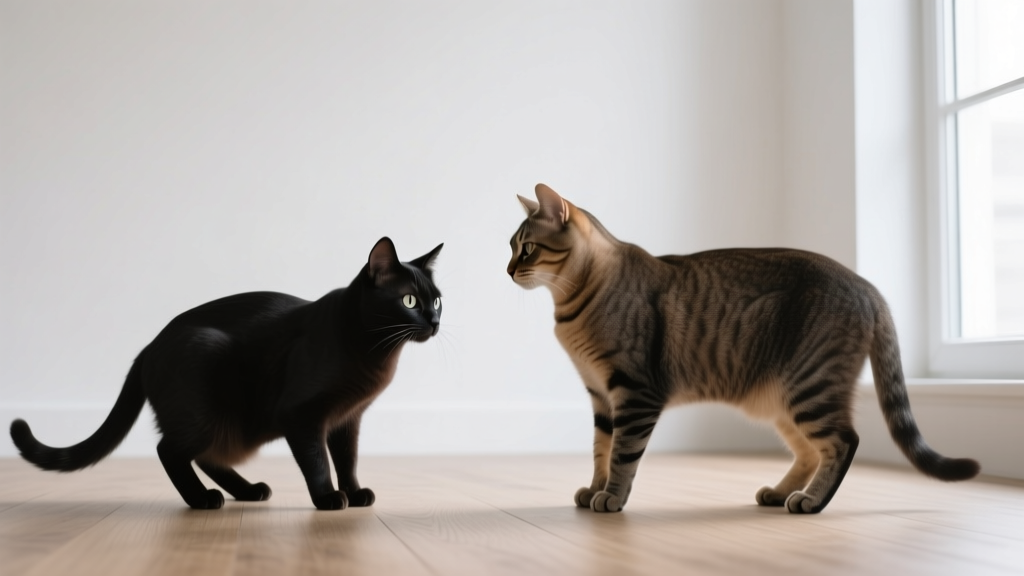
\nCats don’t experience stress like humans do — they don’t ‘vent’ or ‘process’ it. They respond physiologically: elevated cortisol suppresses immunity, alters digestion, and rewires neural pathways over time. What looks like ‘grumpiness’ may be chronic stress eroding your cat’s resilience. Environmental triggers are often invisible to us but overwhelming to them: a new Wi-Fi router emitting low-frequency hums, a neighbor’s cat visible through the window, rearranged furniture disrupting scent maps, or even inconsistent feeding times.
\nA landmark 2022 study published in Frontiers in Veterinary Science tracked 142 indoor cats over six months and found that 78% of those exhibiting increased hiding, overgrooming, or urine marking had at least one identifiable environmental stressor — and 61% showed measurable improvement within 10 days of targeted intervention (e.g., adding vertical space, installing motion-activated deterrents for outdoor cats, or introducing pheromone diffusers).
\nActionable stress-reduction strategies:
\n- \n
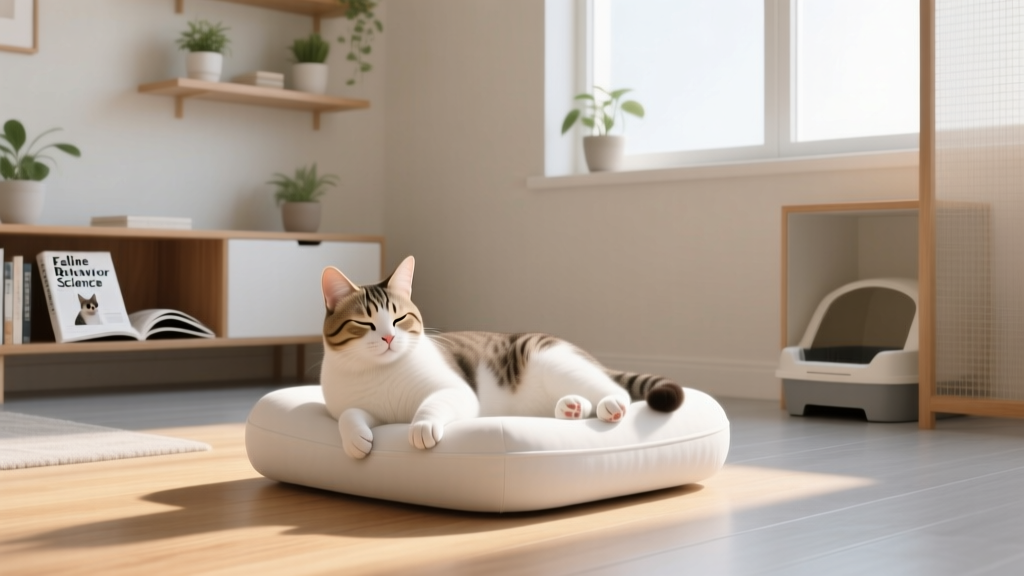
- Create ‘safe zones’: Each cat needs at least one quiet, elevated, enclosed retreat (e.g., a covered cat bed on a shelf) with no foot traffic, near a window (with opaque film if outdoor cats trigger anxiety). \n
- Respect scent sovereignty: Never clean litter boxes with citrus- or pine-scented cleaners — cats associate those smells with danger. Use unscented enzymatic cleaners only. \n
- Introduce novelty gradually: New toys should be rotated weekly — not dumped all at once. Introduce new people or pets via scent-swapping (rubbing a cloth on the newcomer, then placing it near your cat’s bed) before visual contact. \n
- Feed for calm: Use puzzle feeders for 80% of daily calories — this mimics natural hunting rhythm and lowers cortisol. Avoid free-feeding kibble, which spikes insulin and can exacerbate anxiety-related pacing. \n
3. Life Stage Transitions: Aging, Adolescence, and the ‘Silent Shift’
\nBehavioral change isn’t always urgent — sometimes it’s evolutionary. Kittens mature into adolescents (4–12 months) with surging hormones, leading to increased play aggression, territorial marking, or testing boundaries. Senior cats (11+ years) undergo neurological, sensory, and metabolic shifts that alter how they perceive and interact with the world — but these changes are rarely abrupt. If the shift feels sudden, it’s likely not age alone.
\nConsider this real-world case: Luna, a 14-year-old domestic shorthair, began avoiding her favorite sunbeam spot and started sleeping under the bed. Her owner assumed ‘old age.’ A vet visit revealed severe osteoarthritis in her right hip — confirmed via radiographs and response to a trial of buprenorphine. After treatment, Luna returned to her sunbeam within 4 days. Her ‘age-related withdrawal’ was pain-driven.
\nKey developmental milestones and expectations:
\n- \n
- Kittens (0–6 months): Normal behavior includes biting during play, chewing cords, and exploring via mouth — not aggression. Redirect with toys, never punish. \n
- Adolescents (6–18 months): May test hierarchy, spray (if intact), or become more independent. Spaying/neutering before 5 months reduces spraying risk by 90% (UC Davis School of Veterinary Medicine). \n
- Seniors (11+ years): Expect slower movement, longer naps, and mild hearing/vision loss — but not house-soiling, disorientation in familiar rooms, or sudden vocalization. Those signal pathology. \n
4. The Human Factor: How Your Actions (and Inactions) Shape Their World
\nWe underestimate how deeply our routines anchor feline security. Cats thrive on predictability — not rigidity. A 2023 Cornell Feline Health Center survey found that cats whose owners worked remotely had 37% fewer stress-related behaviors than those with unpredictable schedules — not because of more attention, but because of consistent meal times, litter box cleaning, and ambient noise patterns.
\nYet even well-meaning care can backfire. For example:
\n- \n
- Over-petting: Most cats tolerate only 2–4 seconds of stroking before feeling trapped. Signs of overload: tail flicking, flattened ears, skin twitching, or sudden biting. Stop *before* the warning — reward calmness with treats, not persistence. \n
- Ignoring vocal cues: Meowing for food is learned behavior — but persistent, plaintive meowing at night in seniors warrants medical workup (see hypertension/CDS above). \n
- Misreading body language: A slow blink = trust. A direct stare = challenge. A tail held high with a quiver = greeting. Misinterpreting these fuels frustration on both sides. \n
The most powerful tool you own isn’t medication or supplements — it’s observation. Keep a simple log: date/time, behavior observed, duration, context (e.g., ‘10:15 p.m., loud yowl lasting 90 sec, after furnace kicked on’). Patterns emerge in 3–5 days — and that log becomes your strongest diagnostic asset at the vet.
\n\n| Behavior Change | \nPossible Cause Category | \nUrgency Level | \nFirst Action Step | \nTimeframe for Vet Visit | \n
|---|---|---|---|---|
| Urinating outside the litter box (new onset) | \nMedical (UTI, stones, kidney disease) OR Stress (litter box location, type, cleanliness) | \nHigh | \nCheck litter box hygiene, try different substrate, rule out urinary blockage (palpate abdomen — if distended or painful, ER immediately) | \nWithin 24 hours if straining, blood in urine, or no urination | \n
| Sudden aggression toward people or other pets | \nMedical (pain, neurologic issue) OR Fear-based (unseen trigger, past trauma) | \nHigh | \nDo NOT punish or force interaction. Note timing, location, and provoking factors. Observe for limping, squinting, or sensitivity to touch. | \nWithin 48 hours — especially if no prior history | \n
| Increased vocalization (especially at night) | \nMedical (hypertension, CDS, hyperthyroidism) OR Behavioral (boredom, attention-seeking) | \nModerate-High | \nRecord audio/video of episodes. Check for concurrent weight loss, increased thirst, or restlessness. | \nWithin 7 days — but sooner if weight loss or lethargy present | \n
| Excessive grooming or hair loss | \nMedical (allergies, parasites, pain) OR Psychological (stress-induced) | \nModerate | \nCheck skin for fleas, scabs, or redness. Note if grooming focuses on one area (suggests localized pain). | \nWithin 10 days — unless raw skin or open sores appear | \n
| Withdrawal/hiding >24 hours | \nMedical (pain, nausea, fever) OR Acute stress (move, visitor, storm) | \nHigh | \nEnsure access to food/water/litter in quiet location. Monitor breathing rate (normal: 20–30 breaths/min) and gum color (should be pink). | \nWithin 24 hours if no eating/drinking or labored breathing | \n
Frequently Asked Questions
\nIs my cat depressed — and can cats even get depression?
\nCats don’t experience clinical depression as humans do — there’s no diagnostic criteria or neurotransmitter-based model validated in felines. What we label ‘depression’ is almost always undiagnosed pain, chronic stress, or cognitive decline. True behavioral apathy — lack of interest in food, play, or interaction — is a red flag requiring immediate medical evaluation, not mood-lifting supplements. Focus on identifying root causes, not labeling emotions.
\nCould a change in food cause behavior changes?
\nYes — but indirectly. Sudden diet changes can cause gastrointestinal upset (leading to irritability or hiding), while food allergies rarely manifest as itchiness or ear infections — not behavior shifts. However, diets deficient in taurine or B vitamins *can* cause neurological symptoms (e.g., seizures, disorientation). Always transition foods over 7–10 days, and choose AAFCO-certified formulas. If behavior changes coincide with a new food, revert to the old diet for 5 days and observe — but don’t delay vet work if symptoms persist.
\nMy cat used to be affectionate and now avoids me — did I do something wrong?
\nAlmost certainly not. Cats don’t hold grudges or withdraw out of ‘punishment.’ This shift signals either physical discomfort (e.g., arthritis makes being held painful), sensory decline (hearing loss means they startle easily), or environmental stress (e.g., your perfume changed, or your work-from-home schedule ended). Rebuild trust slowly: sit nearby without demanding interaction, offer treats at a distance, and let them approach on their terms. Forced affection worsens avoidance.
\nShould I get a second cat to keep my lonely one company?
\nNot without extreme caution. Cats are facultatively social — some thrive with companions, most prefer stable, low-stimulus environments. Introducing a second cat increases stress for *both* animals and is a top trigger for urine marking, aggression, and resource guarding. A 2021 study in Applied Animal Behaviour Science found that 68% of multi-cat households reported at least one cat showing chronic stress behaviors post-introduction. If loneliness is suspected, enrich your current cat’s environment first — vertical space, interactive play, and window perches often fulfill social needs more effectively than another cat.
\nCan cats develop PTSD after a traumatic event?
\nWhile ‘PTSD’ isn’t a formal diagnosis in veterinary behavior, cats absolutely retain trauma memories. Events like car accidents, attacks by dogs, or prolonged boarding can lead to lasting hypervigilance, startle responses, or avoidance of specific locations/sounds. Recovery requires patience, environmental safety, and often veterinary behaviorist support. Medications like gabapentin (for anxiety) or fluoxetine (for chronic fear) may be prescribed — but never without a full medical workup first.
\nCommon Myths About Cat Behavior Changes
\nMyth #1: “Cats are just moody — it’ll pass.”
Reality: Mood is a human construct. Cats act consistently unless something in their internal or external world has shifted. ‘Moody’ is a dismissal of communication — and delays critical care.
Myth #2: “If they’re eating and pooping, they must be fine.”
Reality: Many cats with advanced kidney disease, diabetes, or cancer maintain appetite and bowel function until late stages. Weight loss, coat dullness, or subtle lethargy often precede GI symptoms — and are easily missed without baseline tracking.
Related Topics (Internal Link Suggestions)
\n- \n
- Cat Litter Box Problems — suggested anchor text: "why is my cat peeing outside the litter box" \n
- Senior Cat Care Guide — suggested anchor text: "signs of aging in cats and what to do" \n
- Feline Stress Relief Techniques — suggested anchor text: "how to calm a stressed cat naturally" \n
- Cat Aggression Causes and Solutions — suggested anchor text: "why is my cat suddenly aggressive" \n
- Veterinary Behaviorist vs. Trainer — suggested anchor text: "when to see a cat behavior specialist" \n
Your Next Step Isn’t Guesswork — It’s Ground Truth
\nYou’ve already done the hardest part: noticing. Now channel that awareness into action. Start today with the 3-day observation log — track behavior, timing, and context in a notes app or notebook. Then, call your veterinarian and say these exact words: ‘My cat’s behavior has changed, and I’d like a full senior wellness panel — including blood pressure and thyroid testing.’ Don’t apologize. Don’t downplay. You’re not ‘overreacting’ — you’re practicing proactive guardianship. Early detection transforms outcomes: 89% of cats with treatable conditions (like hyperthyroidism or dental disease) return to baseline behavior within 2–4 weeks of appropriate intervention. Your vigilance isn’t worry — it’s love made visible. And that’s the most powerful medicine of all.