Why Is My Cat's Behavior Change? 7 Urgent But Overlooked...
When Your Cat Stops Acting Like Themselves — It’s Never ‘Just Being Moody’
If you’ve recently asked yourself, why is my cat's behavior change, you’re not overreacting — you’re noticing something vital. Cats are masters of disguise: they mask illness, fear, and distress so effectively that even attentive owners miss early warnings. A sudden shift — like avoiding your lap, excessive grooming, nighttime yowling, or aggression toward a previously tolerated dog — isn’t random. It’s communication. And unlike dogs, cats rarely shout; they whisper through subtle behavioral shifts. Ignoring these whispers can delay critical care, worsen anxiety, or fracture your bond. In fact, a 2023 study published in Journal of Feline Medicine and Surgery found that 68% of cats presented for behavioral concerns had at least one undiagnosed medical condition — most commonly osteoarthritis, dental disease, or hyperthyroidism. This article cuts through the guesswork. We’ll walk you through evidence-based, veterinarian-vetted reasons behind your cat’s changed behavior — with clear, actionable steps, timelines, and red flags that demand immediate attention.
1. The Silent Pain Factor: When Medical Issues Masquerade as 'Bad Behavior'
Let’s start with the most urgent possibility: your cat isn’t misbehaving — they’re hurting. Cats instinctively suppress signs of vulnerability. So instead of limping or vocalizing pain, they may withdraw, stop jumping onto favorite perches, urinate outside the litter box (due to pelvic discomfort), or become irritable when touched. Dr. Sarah Wooten, DVM and veterinary consultant for the American Animal Hospital Association, emphasizes: “A cat who hisses when you pick them up, avoids being petted along the spine, or grooms obsessively in one spot is often telling you, ‘Something hurts here.’” Common culprits include:
- Osteoarthritis — affects up to 90% of cats over age 12, yet fewer than 15% receive treatment because symptoms are behavioral: reluctance to climb, stiffness after napping, reduced play.
- Dental disease — present in ~70% of cats by age 3; causes chronic oral pain that manifests as dropping food, bad breath, pawing at mouth, or sudden food refusal.
- Hyperthyroidism — increases metabolism, causing restlessness, weight loss despite appetite, and nighttime vocalization — often mistaken for ‘senility’ or ‘attention-seeking.’
- Chronic kidney disease (CKD) — early stages trigger nausea, leading to hiding, decreased grooming, and litter box avoidance due to abdominal discomfort.
Here’s what to do *tonight*: Perform a gentle ‘touch test.’ Starting at the head, lightly stroke down each side of the spine, press gently on shoulder blades and hips, open the mouth just enough to check gums (should be pink, not pale or yellowed), and observe if your cat tenses, flinches, or pulls away. Note any asymmetry — one ear held lower, one leg slightly tucked. These aren’t diagnoses, but clues your vet needs.
2. Environmental Stressors: The Invisible Triggers You Can’t See (But Your Cat Feels Deeply)
Cats don’t adapt to change the way humans do. To them, a new couch, a relocated litter box, or even a different brand of laundry detergent emits unfamiliar scents that signal danger. According to certified feline behaviorist Mikel Delgado, PhD, “Cats live in a world of scent geography. Altering that map — even subtly — can trigger chronic low-grade stress that erodes confidence and reshapes behavior over weeks.” Real-world examples include:
- A neighbor’s new outdoor cat visible through the window — triggering territorial anxiety that shows up as urine marking or over-grooming.
- Construction noise next door — causing hypervigilance, sleep disruption, and redirected aggression toward household members.
- Introducing a new pet or baby — where your cat’s ‘withdrawal’ is actually a strategic retreat to conserve energy and avoid perceived threats.
Behavioral shifts linked to environment often follow a pattern: gradual onset, context-specific triggers (e.g., only near windows or at night), and co-occurring signs like dilated pupils, flattened ears, or rapid tail flicks. Unlike medical causes, these changes may improve with targeted environmental enrichment — but only if you identify the specific stressor first. Try keeping a ‘behavior log’ for 7 days: note time, location, duration, what preceded it (e.g., vacuum running, guest arriving), and your cat’s body language. Patterns emerge fast — and they’re your roadmap to resolution.
3. Life Stage Transitions: What ‘Senior Moments’ and Teenage Turbulence Really Look Like
Behavior doesn’t change in isolation — it evolves with age. Kittens (under 6 months) explore with bold curiosity; adolescents (6–18 months) test boundaries and may display inconsistent sociability; mature adults (2–10 years) settle into predictable rhythms; seniors (11+ years) experience neurological, sensory, and metabolic shifts that directly impact behavior. Yet many owners misinterpret age-related changes:
- Cognitive dysfunction syndrome (CDS) — affects ~55% of cats aged 15+, causing disorientation (staring at walls, getting ‘stuck’ in corners), altered sleep-wake cycles (yowling at 3 a.m.), and decreased interaction. Not ‘dementia’ in the human sense — but a treatable neurochemical imbalance.
- Sensory decline — hearing loss makes cats jumpy at sudden movements; vision changes cause hesitation on stairs or misjudging jumps — both mistaken for ‘grumpiness’ or ‘clumsiness.’
- Hormonal shifts — intact males may spray or roam; spayed females can develop anxiety-linked overgrooming post-spay due to cortisol dysregulation.
Dr. Tony Buffington, Professor Emeritus at Ohio State University’s College of Veterinary Medicine, stresses: “Age-related behavior changes are never ‘just part of getting old.’ They’re data points. Every change has a mechanism — and many are modifiable with diet, medication, or environmental tweaks.” For example, a 2022 clinical trial showed that senior cats fed a diet enriched with antioxidants and medium-chain triglycerides (MCTs) demonstrated 40% greater engagement in interactive play and reduced nighttime vocalization after 12 weeks — proving biology, not inevitability, drives the shift.
4. The Social Equation: How Household Dynamics Shape Your Cat’s Actions
Your cat doesn’t live in a vacuum — they’re constantly interpreting social cues from every human and animal in their orbit. Behavior changes often reflect relationship recalibrations, especially after life events:
- Owner absence or schedule shifts — returning to office work after remote work can trigger separation anxiety, manifesting as destructive scratching, vocalization, or inappropriate elimination.
- New family members or pets — even ‘friendly’ introductions cause resource competition. A cat may stop using the litter box not out of spite, but because they associate it with tension near the new dog’s feeding area.
- Human emotional states — studies confirm cats detect human cortisol levels and heart rate variability. Chronic owner stress correlates strongly with increased feline alopecia (overgrooming) and vigilance behaviors.
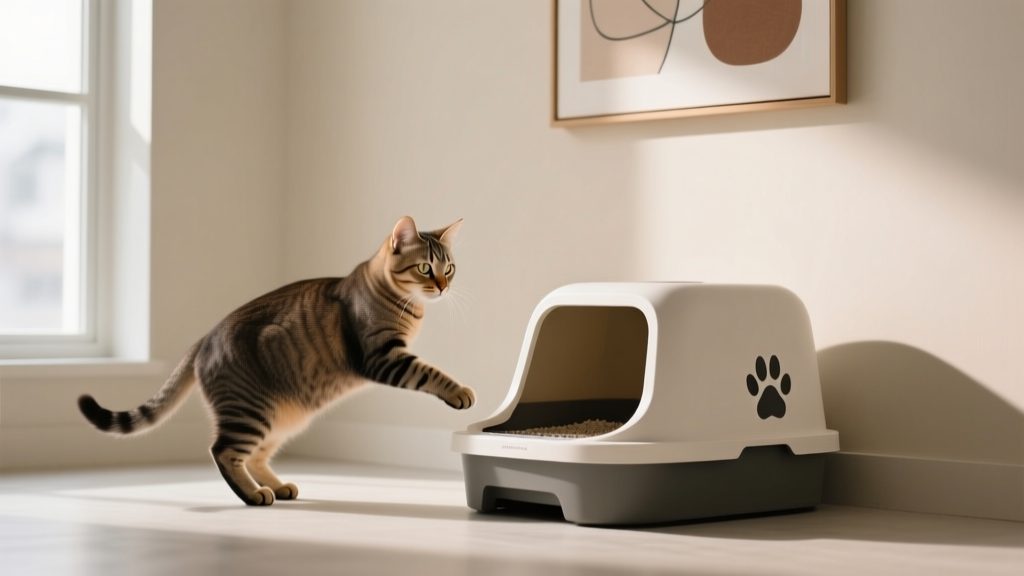
Action step: Audit your home’s ‘resource map.’ Cats need multiple, separated stations for the Five Pillars of a Healthy Feline Environment (per the AAFP/ISFM guidelines): litter boxes (one per cat +1), food/water (separated, quiet locations), scratching posts (vertical + horizontal), resting spots (elevated + covered), and play areas. If two cats share one litter box in a high-traffic hallway, ‘litter box avoidance’ isn’t defiance — it’s a rational safety decision.
| Timeline | Key Behavioral Signs | Recommended Action | Urgency Level |
|---|---|---|---|
| Within 24 hours | Sudden aggression, collapse, seizures, inability to urinate, blood in urine/stool | Immediate emergency vet visit — do not wait | Critical |
| 2–7 days | New litter box avoidance, excessive vocalization, hiding >12 hrs/day, refusing all food | Schedule vet appointment within 48 hrs; begin touch test & behavior log | High |
| 1–3 weeks | Reduced play, less greeting, overgrooming one area, sleeping in new locations | Complete environmental audit; consult certified feline behaviorist; discuss senior bloodwork with vet | Moderate |
| 1+ month | Gradual withdrawal, slower movement, weight loss/gain, increased irritability | Full geriatric panel (thyroid, kidney, liver, CBC); consider video consult with behavior specialist | Monitor & Plan |
Frequently Asked Questions
Is my cat’s behavior change a sign of depression?
Cats don’t experience clinical depression like humans — but they absolutely suffer from chronic stress, anxiety, and learned helplessness. What looks like ‘sadness’ (lethargy, lack of interest) is usually a physiological response to unmet needs: inadequate stimulation, unresolved pain, or persistent fear. True improvement comes from addressing root causes — not labeling emotions. As Dr. Delgado notes, “We don’t medicate ‘depression’ in cats. We treat pain, enrich environments, and restore predictability.”
Could a diet change cause sudden behavior shifts?
Yes — but indirectly. Switching foods too quickly can cause GI upset (nausea, gas), leading to irritability or hiding. More significantly, nutrient deficiencies (e.g., low taurine, B12, or omega-3s) impair neurological function over time. A 2021 study found cats fed ultra-processed kibble for >2 years showed higher baseline cortisol and reduced exploratory behavior vs. those on whole-prey or hydrolyzed protein diets. Always transition food over 7–10 days, and consult your vet before switching for behavioral reasons.
How long should I wait before seeing a vet about behavior changes?
Don’t wait. Any sustained change lasting >48 hours warrants investigation. As Dr. Wooten advises: “If your cat hasn’t been themselves for two days, that’s long enough for pain to escalate or stress to become maladaptive. Early intervention prevents secondary issues — like cystitis from litter box avoidance or skin infections from overgrooming.” Even ‘mild’ changes deserve documentation and professional input.
Can indoor-only cats get stressed enough to change behavior?
Absolutely — and they often experience *more* chronic stress than outdoor cats. Indoor cats face unpredictable stimuli (vacuum cleaners, delivery people, loud TVs) with no escape route. Their stress isn’t about ‘boredom’ — it’s about lack of control. Enrichment isn’t optional; it’s biological necessity. Providing vertical space, puzzle feeders, and daily interactive play reduces stress markers (like cortisol in saliva) by up to 62%, per a 2020 UC Davis study.
Will getting another cat fix my current cat’s behavior change?
Rarely — and often worsens it. Introducing a new cat adds massive social pressure, especially for older or anxious individuals. Behavior changes triggered by loneliness are uncommon; most stem from medical or environmental factors. If companionship is truly needed, adoption should follow a slow, scent-based introduction protocol (3+ weeks) and only after ruling out underlying causes. Rushing this risks lifelong inter-cat conflict.
Common Myths About Cat Behavior Changes
Myth #1: “Cats are solitary — so sudden withdrawal is normal.”
Truth: While cats are facultatively social (choosing relationships), they form deep, stable bonds with trusted humans and animals. Withdrawal signals distress — not independence. Wild felids maintain social groups; domestic cats evolved to cohabit with humans and other cats when resources and safety allow.
Myth #2: “If they’re eating and pooping, they must be fine.”
Truth: Many cats with severe arthritis, dental abscesses, or early kidney disease maintain appetite and elimination — while suffering silently. Appetite is the last thing to go in chronic conditions. Relying solely on these two metrics misses 80% of early-stage issues.
Related Topics (Internal Link Suggestions)
- Signs of cat pain you’re missing — suggested anchor text: "subtle signs your cat is in pain"
- How to introduce a new cat safely — suggested anchor text: "step-by-step cat introduction guide"
- Best calming supplements for anxious cats — suggested anchor text: "vet-recommended cat anxiety aids"
- Senior cat care checklist — suggested anchor text: "comprehensive senior cat wellness plan"
- Litter box problems solved — suggested anchor text: "why cats stop using the litter box"
Next Steps: From Confusion to Clarity — Start Tonight
You now know why is my cat's behavior change isn’t a mystery — it’s a layered signal system requiring compassionate detective work. Don’t self-diagnose, but don’t delay either. Your first action? Grab your phone and film a 60-second video of your cat moving normally — walking, jumping (if they still do), and interacting. Then, perform the gentle touch test and jot down one observation from your behavior log. Email that video and notes to your vet *before* your appointment — it gives them objective data to assess. Most importantly: stop blaming your cat. Their behavior is information — not attitude. With patience, observation, and professional support, nearly every behavior shift is reversible, manageable, or treatable. Your cat isn’t broken. They’re asking for help — in the only language they have.