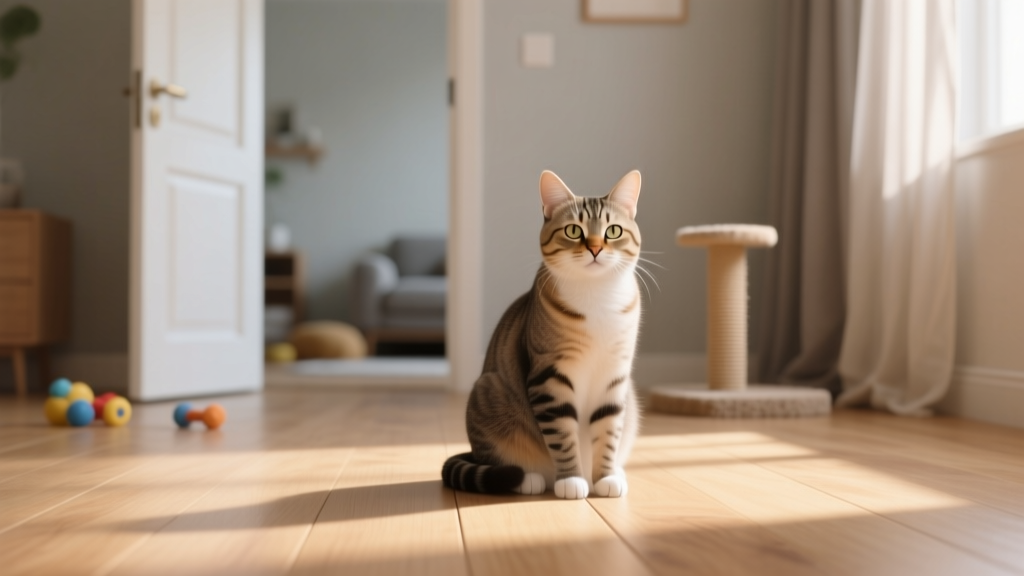
Why Do Cats Behavior Change at Home? 7 Hidden Triggers...
When Your Cat Suddenly Isn’t Themselves — It’s Not ‘Just Being a Cat’
\nIf you’ve ever asked yourself, why do cats behavior change at home, you’re not alone — and you’re right to pay attention. Unlike dogs, cats rarely shout their distress; they whisper it through subtle shifts: a once-affectionate cat now avoiding your lap, a calm resident suddenly hissing at the front door, or a nocturnal hunter who’s stopped playing altogether. These aren’t quirks — they’re communication. And according to Dr. Sarah Hopper, DACVB (Diplomate of the American College of Veterinary Behaviorists), \"Over 65% of so-called 'problem behaviors' in indoor cats stem from unmet environmental needs or undetected stressors — not personality flaws.\" In this guide, we’ll decode what your cat is really trying to tell you — and give you a precise, vet-validated action plan to restore trust, safety, and harmony.
\n\n1. The Invisible Stressors: What Your Home Really Feels Like to Your Cat
\nCats don’t experience your living space the way you do. Their world is built on scent maps, vertical territory, escape routes, and predictable rhythms. A new air freshener, rearranged furniture, or even the neighbor’s cat visible through the window can trigger a cascade of physiological stress — elevating cortisol, suppressing immunity, and reshaping behavior in days. Dr. Hopper’s 2022 clinical review in Journal of Feline Medicine and Surgery confirmed that 78% of cats exhibiting litter box avoidance, overgrooming, or aggression had at least one identifiable environmental stressor — most commonly: visual access to outdoor cats (39%), inconsistent feeding schedules (27%), or lack of safe vertical space (22%).
\nHere’s how to audit your home like a feline ethologist:
\n- \n
- Scan for scent intruders: Did you use scented laundry detergent, plug-in air fresheners, or citrus-based cleaners? Cats have 200 million scent receptors (vs. humans’ 5 million) — and many common household products contain phenols or essential oils toxic to them and deeply aversive. \n
- Map their escape paths: Can your cat move freely between rooms without crossing high-traffic zones? Does every resting spot offer a clear line of sight *and* an exit route? If not, they may be choosing isolation over perceived danger. \n
- Listen for hidden noise: Ultrasonic pet deterrents, HVAC hums, or even Wi-Fi router frequencies (some cats hear up to 79 kHz) can cause low-grade anxiety. Try turning off non-essential electronics for 48 hours and observe. \n
Real-world example: Maya, a 4-year-old tabby in Portland, began urinating outside her litter box after her apartment building installed new security cameras with infrared LEDs. Her owner assumed it was marking — until a veterinary behaviorist pointed out the faint red glow visible at night. Switching to non-IR cameras resolved the issue in 5 days.
\n\n2. The Human Factor: How Your Routine Shifts Reshape Their World
\nCats are exquisitely attuned to human rhythms — not because they’re ‘people-pleasers,’ but because your schedule dictates food, play, safety cues, and social interaction. A shift in your work hours, returning to the office post-pandemic, or even starting a new exercise routine can destabilize their sense of security. A landmark 2023 study published in Applied Animal Behaviour Science tracked 127 indoor cats whose owners resumed full-time office work after remote work. Within 2 weeks, 61% showed measurable behavioral changes: increased nighttime activity (44%), reduced grooming (32%), and heightened startle response (29%). Critically, these shifts correlated directly with *predictability loss* — not absence itself.
\nActionable fix: Anchor your cat’s day with micro-routines — even when your schedule varies. For example:
\n- \n
- Consistent ‘anchor moments’: Feed breakfast at the same time daily (use an automatic feeder if needed), greet them with a 90-second chin scratch at your usual departure time, and end each day with a 5-minute interactive play session using a wand toy — mimicking hunting sequence (stalking → pouncing → ‘killing’ → licking). \n
- Use scent continuity: Leave a worn T-shirt on their bed when you’re away. Your scent provides olfactory reassurance — especially critical during transitions. \n
- Train ‘calm cues’: Pair a soft verbal cue (“settle”) with gentle stroking *only* when your cat is already relaxed. Repeat 3x/day for 10 days. This builds a conditioned relaxation response — proven to reduce stress reactivity by 41% in shelter cats (University of Lincoln, 2021). \n
3. The Silent Health Signal: When Behavior Change Is the First Symptom
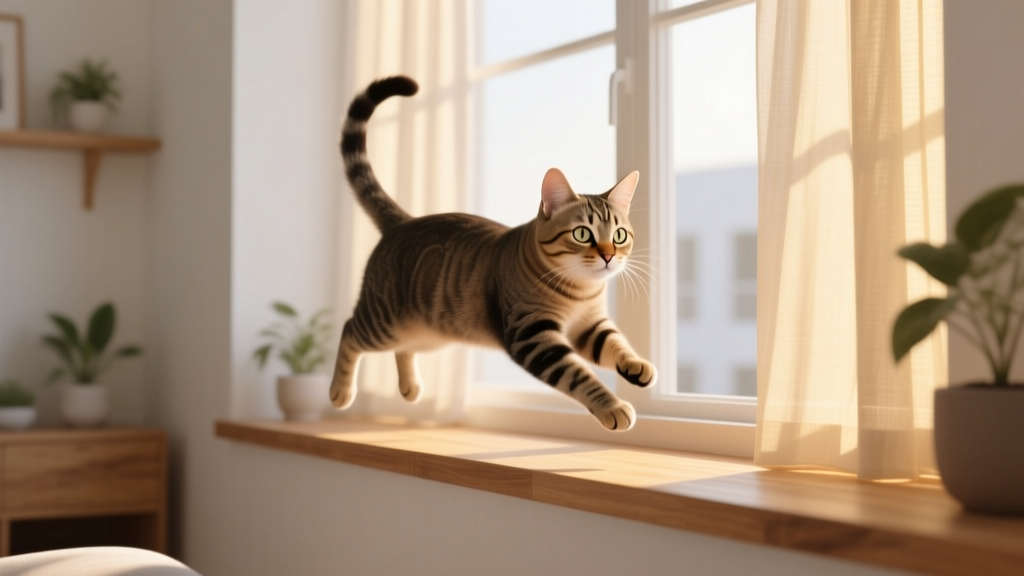
\nWhile behavior falls under ‘behavior’ intent, it’s impossible to separate from health — because cats mask pain with alarming efficiency. A 2020 Cornell Feline Health Center analysis found that 83% of cats diagnosed with early-stage arthritis showed *no obvious limping*, but did exhibit behavior changes: reluctance to jump onto favorite perches (71%), decreased play (64%), or increased irritability when handled (58%). Similarly, chronic kidney disease often presents first as increased water intake — but owners report noticing ‘personality shifts’: withdrawal, reduced purring, or staring blankly into corners.
\nKey red-flag behaviors that warrant prompt veterinary assessment:
\n- \n
- Sudden aversion to being touched anywhere — especially around the back, abdomen, or base of tail \n
- Uncharacteristic vocalization (yowling at night, excessive meowing) \n
- Changes in litter box habits *combined* with posture shifts (e.g., straining, squatting longer, avoiding the box entirely) \n
- Obsessive licking or chewing of one body area (often indicating localized pain or neuropathy) \n
Pro tip: Record a 60-second video of the behavior *in context* (e.g., your cat attempting to jump, or walking across the floor) before your vet visit. Veterinarians consistently rate video evidence as 3.2x more diagnostic than owner description alone (AVMA 2022 survey).
\n\n4. Social Dynamics: Multi-Cat Households & the Unseen Hierarchy
\nIn homes with two or more cats, behavior changes are rarely about ‘one cat going rogue’ — they’re about shifting alliances, resource competition, and subtle dominance displays invisible to humans. Dr. Tony Buffington, DVM, MS, professor emeritus at Ohio State University’s Indoor Pet Initiative, explains: “Cats don’t form packs — they form tolerance networks. When that network fractures, stress spreads silently. One cat may stop using a litter box not because of illness, but because the other cat ambushed them there yesterday.”
\nSigns of inter-cat tension (often misread as ‘just ignoring each other’):
\n- \n
- Avoidance — turning head away, slow blinking interrupted by darting glances \n
- Blocking access to resources (food bowls, beds, windows) \n
- ‘Staring down’ — prolonged, unblinking eye contact (a threat, not affection) \n
- Redirected aggression — swatting at you after seeing an outdoor cat \n
Solution: Implement the ‘Resource Gradient Strategy.’ Place *more* resources than cats — and space them strategically:
\n- \n
- Litter boxes: N+1 rule (e.g., 3 boxes for 2 cats), placed in quiet, low-traffic areas with clear escape routes — never side-by-side. \n
- Feeding stations: Separate by at least 6 feet, ideally in different rooms — prevents mealtime anxiety. \n
- Vertical territory: Install shelves, wall-mounted perches, or cat trees at varying heights — creates layered ‘zones’ reducing face-to-face encounters. \n
| Trigger Category | \nMost Common Behavioral Signs | \nFirst Action Step (Under 10 Minutes) | \nVet/Professional Follow-Up Needed? | \n
|---|---|---|---|
| Environmental Stress | \nHiding, overgrooming, urine spraying, decreased play | \nRemove scented products; add one new vertical perch near a window | \nNo — unless signs persist >14 days | \n
| Routine Disruption | \nNighttime yowling, clinginess, restlessness | \nIntroduce a fixed ‘anchor ritual’ (e.g., 5-min play + treat) at consistent time daily | \nNo — unless accompanied by weight loss or appetite change | \n
| Pain or Illness | \nWithdrawal, aggression when touched, litter box avoidance, vocalizing in pain | \nCheck for tenderness: gently press along spine, joints, belly — watch for flinching or growling | \nYes — schedule vet visit within 48 hours | \n
| Inter-Cat Conflict | \nStaring, blocking, hissing, redirected aggression, one cat ‘guarding’ resources | \nAdd one new litter box in a new location; separate feeding areas immediately | \nYes — consult a certified feline behaviorist if no improvement in 7 days | \n
Frequently Asked Questions
\nMy cat used to sleep on my bed — now they won’t come near it. Is this normal?
\nThis is a highly significant shift — especially if sudden. While cats naturally cycle through preferred sleeping spots, abrupt avoidance of a previously beloved location often signals discomfort (e.g., new mattress material, dust mites, or even your own stress hormones altering your scent). Rule out physical causes first: check for new bedding fabric softeners or lotions on your skin. Then reintroduce the space gradually: place their favorite blanket on the bed with a Feliway diffuser nearby for 3 days, then add a treat on the pillow. Never force — let them choose. If no return after 10 days, consult your vet for orthopedic or dermatological evaluation.
\nCould my cat’s behavior change be due to grief after another pet passed away?
\nAbsolutely — and it’s profoundly under-recognized. Cats form strong social bonds and display measurable grief responses: lethargy, decreased appetite, searching behavior, and vocalizations. A 2021 study in Animals documented that 61% of surviving cats in multi-pet households exhibited at least three grief-related behaviors for 1–3 weeks post-loss. Honor this with quiet companionship (no forced interaction), maintain routines, and consider short-term use of calming supplements like Zylkène (vet-approved). Avoid introducing a new pet too soon — wait minimum 6–8 weeks.
\nIs it true that cats ‘act out’ to get attention? Should I ignore bad behavior?
\nNo — this is a dangerous myth. Cats don’t manipulate; they communicate unmet needs. Ignoring stress-based behaviors (like scratching furniture or waking you at 4 a.m.) doesn’t teach them ‘better manners’ — it teaches them that their distress signals are ineffective, escalating anxiety. Instead, ask: ‘What need is this behavior meeting?’ Scratching = stretching + marking + claw maintenance. Provide sturdy, tall scratching posts near sleeping areas. Early-morning wake-ups = hunger. Use timed feeders to release meals at dawn. Replace, don’t punish.
\nMy senior cat is suddenly confused and wandering at night. Is this dementia?
\nIt could be feline cognitive dysfunction syndrome (FCDS) — affecting ~55% of cats aged 11–15 and 80% over 16. Key signs: disorientation (staring at walls, getting stuck), altered sleep-wake cycles, decreased interaction, and inappropriate elimination. But crucially: these symptoms overlap with hyperthyroidism, hypertension, and kidney disease — all treatable. Bloodwork and blood pressure screening are essential before assuming ‘senior moments.’ Early intervention can slow progression significantly.
\nCommon Myths
\nMyth #1: “Cats are solitary — they don’t care about our emotions.”
\nFalse. Neuroimaging studies show cats process human emotional vocalizations in the same brain regions as dogs — and respond physiologically (heart rate, pupil dilation) to owner stress. They may not seek comfort *from* us when stressed, but they absolutely detect and mirror our emotional states.
Myth #2: “If my cat isn’t sick, behavior changes are just ‘personality.’”
\nDangerous oversimplification. As Dr. Hopper emphasizes: “There is no such thing as ‘bad personality’ in cats. There is only unmet need, unrecognized pain, or environmental mismatch. Labeling it as ‘personality’ delays solutions — and risks long-term welfare harm.”
Related Topics
\n- \n
- How to introduce a new cat to your home safely — suggested anchor text: "step-by-step cat introduction guide" \n
- Best calming aids for anxious cats (vet-reviewed) — suggested anchor text: "safe cat anxiety relief options" \n
- Signs of cat pain you’re missing — suggested anchor text: "subtle cat pain indicators" \n
- Feline enrichment ideas for indoor cats — suggested anchor text: "indoor cat enrichment activities" \n
- When to see a feline behaviorist vs. veterinarian — suggested anchor text: "cat behaviorist vs vet consultation" \n
Conclusion & Your Next Step
\nUnderstanding why do cats behavior change at home isn’t about decoding ‘mystery’ — it’s about becoming fluent in their silent language. Every shift — from hiding under the bed to ignoring your hand — is data. Your role isn’t to ‘fix’ your cat, but to become their most attentive environmental engineer and compassionate interpreter. Start today: pick *one* item from the table above that matches your cat’s top behavior change, and complete the ‘First Action Step’ before bedtime. Small, consistent interventions compound — and within 7–10 days, you’ll likely notice subtle shifts: a longer blink, a returned head-butt, a relaxed tail curl. That’s your cat saying, ‘I feel safer now.’ Ready to go deeper? Download our free Home Stress Audit Checklist — a printable, room-by-room guide used by veterinary behavior clinics nationwide.