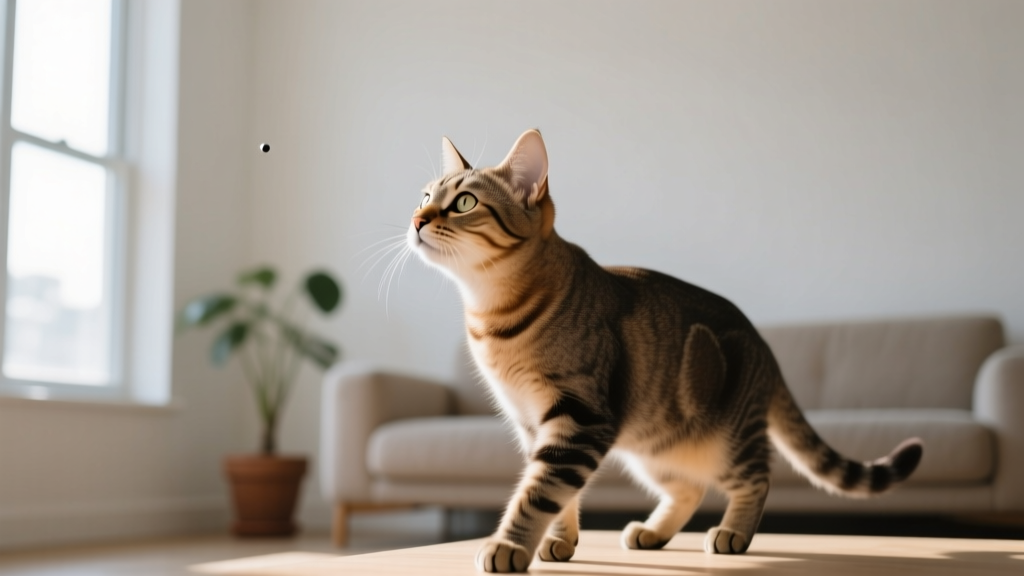
Why Do Cats Behavior Change? 7 Hidden Triggers You’re...
Why This Matters More Than Ever
If you’ve ever asked yourself, why do cats behavior change, you’re not alone — and you’re likely already noticing subtle red flags: your once-affectionate cat now hides for hours, stops using the litter box despite being healthy, or suddenly hisses at family members she’s known for years. These aren’t ‘personality quirks’ — they’re urgent, biologically rooted signals. Modern indoor cat lifestyles (with 83% of U.S. cats living exclusively indoors, per AVMA data) have created unprecedented behavioral pressure points: chronic low-grade stress, sensory deprivation, and mismatched social expectations. Ignoring these shifts doesn’t just risk your bond — it increases risk of stress-related illness like idiopathic cystitis, overgrooming dermatitis, or even early-onset cognitive dysfunction. The good news? Over 90% of sudden or sustained behavior changes are reversible when traced to their true root cause — if you know where and how to look.
1. Pain Is the #1 Silent Driver — And It’s Often Invisible
Cats evolved to mask discomfort — a survival instinct that makes pain the most frequently overlooked explanation for behavior change. A 2022 study in the Journal of Feline Medicine and Surgery found that 68% of cats diagnosed with osteoarthritis showed no obvious limping — yet exhibited clear behavioral shifts: reduced jumping, increased irritability, avoidance of handling, or inappropriate urination outside the litter box. Why? Because climbing into the box requires hip flexion; being touched near inflamed joints triggers defensive aggression; and urinary urgency may be misinterpreted as ‘spite.’
Dr. Sarah Wooten, DVM and veterinary consultant for the International Cat Care Foundation, emphasizes: “If your cat’s behavior changes after age 7, assume pain until proven otherwise — especially if the change is gradual, inconsistent, or worsens at night.”
What to do:
- Observe micro-movements: Does your cat hesitate before leaping onto the couch? Does she shift weight unevenly while standing? Does she groom less around her shoulders or hips?
- Perform the ‘touch test’ gently: Lightly run fingers along spine, base of tail, and shoulder blades. Flinching, muscle tightening, or ear flattening signals localized discomfort.
- Request diagnostic imaging: Ask your vet for digital radiographs or an orthopedic exam — not just bloodwork. Blood panels rarely detect early joint disease or dental resorptive lesions (a leading cause of oral pain).
2. Environmental Stressors: The ‘Invisible Cage’ of Modern Cat Life
Unlike dogs, cats are territorial, solitary hunters — not pack animals. Yet most homes force them into unnatural cohabitation: multi-cat households without adequate vertical space, shared litter boxes, loud appliances, unpredictable visitor traffic, or even Wi-Fi router frequencies (which emit ultrasonic noise some cats perceive). According to Dr. Mikel Delgado, certified cat behaviorist and researcher at UC Davis, “Cats don’t get ‘used to’ chronic stress — they adapt by shutting down. That’s why behavior changes often appear as withdrawal, overgrooming, or ‘selective’ aggression (e.g., only biting when picked up).”
Real-world case: Luna, a 4-year-old tabby, began urine-marking doorways after her owner installed smart-home speakers. Audio analysis revealed the devices emitted 22 kHz pulses — above human hearing but well within feline range (45–64 kHz). Removing them resolved marking in 11 days.
Actionable fixes:
- Create at least one ‘safe zone’ per cat: a quiet room with window perch, covered bed, and separate litter box — inaccessible to other pets or children.
- Use pheromone support strategically: Feliway Optimum diffusers target both anxiety and territorial stress — but must be placed where cats spend time, not just in hallways.
- Introduce novelty gradually: Rotate toys weekly, add cardboard tunnels, or use food puzzles — not for enrichment alone, but to restore predatory agency, which directly lowers cortisol.
3. Cognitive Decline & Sensory Loss: Not Just for ‘Old’ Cats
Feline cognitive dysfunction syndrome (CDS) affects up to 55% of cats aged 11–15 and 80% over age 16 — but signs often begin subtly at 8–10 years. Unlike dogs, cats rarely ‘stare into space’ or wander aimlessly. Instead, they exhibit contextual confusion: forgetting where the litter box is located (despite perfect vision), vocalizing at night for no apparent reason, or failing to recognize familiar people. Crucially, CDS is frequently compounded by undiagnosed hearing loss (especially high-frequency sounds like a child’s voice or rustling plastic) or retinal degeneration — making environments feel unpredictable and threatening.
A landmark 2023 Cornell Feline Health Center study tracked 127 senior cats over 18 months. Those receiving daily antioxidant supplementation (vitamin E, selenium, and omega-3s) showed 42% slower progression of disorientation and vocalization behaviors versus controls — but only when combined with environmental predictability (e.g., consistent feeding times, unchanged litter box location).
Early intervention checklist:
- Test hearing: Clap softly behind your cat while she’s facing away — no ear twitch? Schedule BAER testing.
- Assess vision: Shine a penlight — does pupil constrict symmetrically? Watch for missed jumps or bumping into furniture corners.
- Establish routine anchors: Feed, play, and bedtime at same time daily. Use tactile cues (e.g., gentle stroke pattern before meals) to reinforce predictability.
4. Social Dynamics & Relationship Shifts: When Humans Change, Cats React
Cats form deep, individualized attachments — and they notice *everything*. A new baby, a partner moving in, remote work schedules, divorce, or even your own untreated anxiety alters household energy in ways cats register physiologically. Cortisol levels in cats rise measurably when owners report high stress (per a 2021 University of Lincoln study), triggering behaviors like excessive kneading, suckling on fabric, or sudden aggression during petting — not because the cat is ‘jealous,’ but because her stress-regulation system is overloaded.
Mini-case: Oliver, a 6-year-old neutered male, began swatting at his owner’s ankles after she started working from home full-time. Video analysis revealed he’d lost 73% of his solo playtime and was attempting to initiate interactive play — misread as aggression. Introducing two 15-minute structured play sessions daily (using wand toys to mimic prey movement) eliminated swatting in under 10 days.
Key relational adjustments:
- Re-establish ‘cat-led’ interaction: Let your cat initiate contact. If she rubs your leg, respond with slow blinks and chin scritches — not picking her up.
- Protect downtime: Cats need 12–16 hours of uninterrupted sleep. Use baby gates or closed doors to safeguard napping zones during household chaos.
- Track your own stress: Use a simple journal for 3 days — note your mood, caffeine intake, screen time, and your cat’s behavior. Patterns often reveal surprising links.
| Trigger Category | Most Common Behavioral Signs | Vet-Recommended First Action | Expected Timeline for Improvement* |
|---|---|---|---|
| Pain (Arthritis, Dental, GI) | Reduced mobility, litter box avoidance, decreased grooming, growling when touched | Schedule orthopedic + dental exam; request digital X-rays | 3–14 days (if pain managed effectively) |
| Environmental Stress | Urine marking, overgrooming, hiding, hypervigilance, aggression toward visitors | Implement 3-zone resource mapping (litter, food, resting) + Feliway Optimum | 7–21 days (requires consistency) |
| Cognitive/Sensory Decline | Night vocalization, spatial confusion, staring at walls, decreased responsiveness | BAER hearing test + fundic eye exam + antioxidant supplement trial | 4–12 weeks (neuroplasticity response) |
| Human-Driven Change | Attention-seeking aggression, suckling, excessive vocalization, clinginess | Restore predictable play/feeding schedule + dedicated ‘cat time’ blocks | 5–10 days (if routine re-established) |
*Timelines assume no underlying progressive disease and adherence to recommended actions. Always rule out medical causes first.
Frequently Asked Questions
Is sudden aggression always a sign of illness?
Not always — but it should *always* prompt a veterinary exam first. True ‘idiopathic’ aggression (no medical cause) is rare (<5% of cases per American Veterinary Society of Animal Behavior). More commonly, aggression masks pain (e.g., arthritis flare-up), hyperthyroidism-induced irritability, or neurological issues. Once medical causes are excluded, a certified feline behaviorist can assess triggers and develop a desensitization plan — never punish aggression, as it reinforces fear.
My cat stopped purring — is that normal?
Purring isn’t just for contentment — cats also purr when injured, stressed, or in labor (vibrations at 25–150 Hz promote bone and tissue healing). A sudden *loss* of purring, especially paired with lethargy or appetite changes, warrants investigation. Some cats simply ‘outgrow’ purring as kittens — but if it disappears abruptly in an adult, consider laryngeal inflammation, respiratory infection, or chronic stress suppressing vocalization pathways.
Can diet really affect my cat’s behavior?
Yes — profoundly. High-carbohydrate dry foods spike insulin and can contribute to irritability and restlessness. Deficiencies in taurine (essential for neural function) or B vitamins impair neurotransmitter synthesis. A 2020 RCVS study found cats fed exclusively wet, species-appropriate diets showed 37% fewer anxiety-related behaviors (excessive licking, pacing) over 6 months. Always transition diets slowly and consult your vet before adding supplements — excess vitamin A or D can be toxic.
How long should I wait before seeing a behaviorist?
Don’t wait. Contact a board-certified veterinary behaviorist (DACVB) or IAABC-certified feline behavior consultant *immediately* if behavior changes persist beyond 72 hours *after* ruling out acute medical issues. Delaying intervention allows maladaptive patterns to solidify neurologically — what starts as situational anxiety can become generalized fear in as little as 2–3 weeks. Early support prevents escalation to self-injury or irreversible relationship damage.
Will getting another cat fix my lonely-looking cat?
Rarely — and often makes things worse. Cats are facultatively social, meaning they *choose* companionship, not require it. Introducing a second cat without proper scent-swapping, barrier introductions, and resource doubling risks severe territorial stress, redirected aggression, and chronic anxiety. If your cat seems withdrawn, first address environment, routine, and health — then consider fostering (not adopting) temporarily to gauge compatibility.
Common Myths About Cat Behavior Changes
Myth #1: “Cats act out of spite or revenge.”
Cats lack the cognitive framework for moral judgment or retaliatory intent. What looks like ‘revenge’ (e.g., peeing on your bed after you return from vacation) is almost always stress-induced marking — triggered by your absence altering scent security, not anger. Their brains process threat and safety, not fairness.
Myth #2: “If my cat eats and uses the litter box, she must be fine.”
This is dangerously misleading. Up to 40% of cats with chronic kidney disease or hyperthyroidism maintain normal appetite and elimination *for months* while experiencing significant pain or metabolic distress — manifesting instead as behavioral shifts like nighttime yowling, restlessness, or hiding. Appetite and litter box use are necessary but insufficient health indicators.
Related Topics (Internal Link Suggestions)
- Signs of cat pain you’re missing — suggested anchor text: "subtle signs your cat is in pain"
- Feline cognitive dysfunction guide — suggested anchor text: "is my senior cat showing dementia signs?"
- Multi-cat household stress solutions — suggested anchor text: "how to reduce tension between cats"
- Better cat litter box setup — suggested anchor text: "litter box placement mistakes"
- Best calming supplements for cats — suggested anchor text: "vet-approved anxiety relief for cats"
Your Next Step Starts Today — No Waiting Required
You now know that why do cats behavior change is never random — it’s your cat’s clearest, most urgent language. Don’t dismiss it as ‘just a phase’ or blame yourself. Start tonight: pick *one* action from this article — whether it’s observing your cat’s gait at dawn, moving the litter box away from the washing machine, or scheduling that overdue dental checkup. Small, evidence-based interventions compound rapidly. And remember: every behavior shift is a question, not a verdict. Your calm attention, paired with professional guidance, is the most powerful tool you have. Ready to decode your cat’s next signal? Download our free Behavior Change Tracker (PDF) — includes printable symptom logs, vet question prompts, and timeline benchmarks used by top feline specialists.