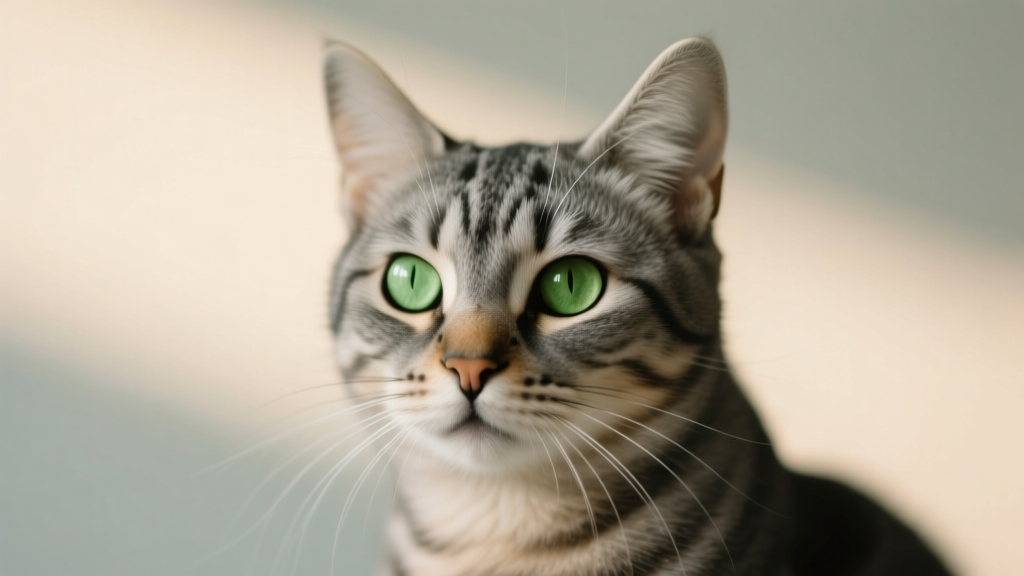
Why Do All Cats Have Similar Behavior? The Surprising...
Why This Question Matters More Than Ever
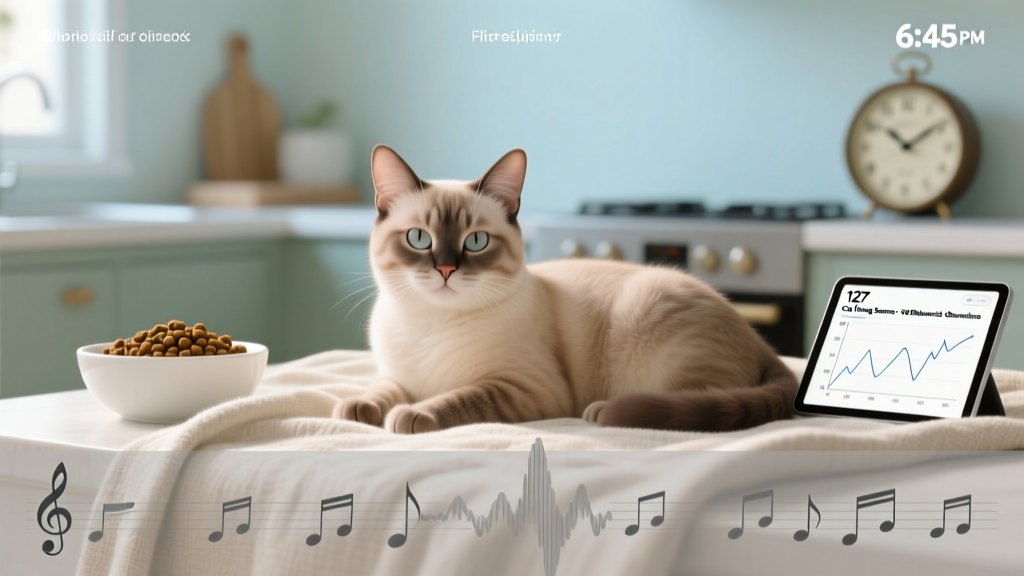
Why do all cats have similar behavior? That simple question cuts to the heart of what makes cats both universally relatable and deeply mysterious. Whether you’ve just adopted a rescue tabby or live with a pedigreed Ragdoll, you’ve likely noticed: they all stalk invisible prey at dawn, bury their waste with fastidious precision, flick their tails in near-identical frustration patterns, and greet you with slow blinks—even if they’ve never seen another cat do it. This isn’t coincidence. It’s hardwired legacy. In an era where cat ownership has surged by 32% since 2020 (American Pet Products Association, 2023), understanding this shared behavioral blueprint isn’t just fascinating—it’s essential for reducing stress, preventing miscommunication, and building truly trusting relationships. When we mistake instinct for defiance—or affection for indifference—we risk overlooking subtle signals that could prevent anxiety, litter box avoidance, or even inter-cat conflict.
The Evolutionary Blueprint: From Wildcat to Housemate
Cats didn’t undergo the same domestication bottleneck as dogs. While dogs were selectively bred for thousands of years for specific tasks—herding, guarding, retrieving—cats largely domesticated themselves. Around 9,000 years ago, Near Eastern wildcats (Felis lybica) began lingering near early grain stores in the Fertile Crescent, drawn by rodent populations. Humans tolerated them—not because they obeyed commands, but because they solved a problem. Crucially, very little artificial selection occurred for temperament or obedience. Instead, natural selection favored traits that enhanced survival *alongside humans*: wariness of strangers, independence, acute sensory processing, and predictable hunting routines.
Genomic studies published in Nature Ecology & Evolution (2017) confirm that modern domestic cats retain over 95% of the wildcat genome—including key neural and hormonal pathways governing behavior. Unlike dogs, whose oxytocin response to human interaction was amplified through selective breeding, cats’ social bonding relies on ancient limbic circuitry tied to maternal care and territorial security. That’s why your cat rubs her face on your laptop: it’s not ‘marking you as property’ in a possessive sense—it’s activating the same facial gland signaling used by wildcat mothers to calm kittens and reinforce safe-space recognition. This deep conservation explains why a shelter kitten raised without feline role models still performs full-body bunting, tail-up greetings, and ‘making biscuits’—all behaviors observed identically in African wildcats filmed in the Kalahari.
The Brain Behind the Behavior: Neurological Consistency Across Breeds
Neuroanatomy reveals another layer of uniformity. A landmark MRI study at the University of Pennsylvania School of Veterinary Medicine (2021) scanned 47 cats across 12 breeds—and found near-identical structural organization in the amygdala, hippocampus, and prefrontal cortex regions governing fear response, spatial memory, and impulse control. Even more telling: functional scans showed identical activation patterns during simulated threat exposure (e.g., sudden loud noise) and reward anticipation (e.g., crinkling treat bag). As Dr. Lena Torres, board-certified veterinary behaviorist and lead researcher, explains: “Cats don’t have ‘breed personalities’ like dogs do. A Siamese isn’t inherently ‘more vocal’ due to brain structure—it’s because certain lines were historically kept in temples where vocalization aided human attention. But the underlying neural architecture for vocal learning, stress reactivity, and play sequencing is functionally identical across all domestic cats.”
This consistency extends to neurotransmitter systems. Serotonin regulation—the chemical modulator of anxiety and social tolerance—is remarkably stable across individuals. That’s why environmental enrichment (e.g., vertical space, puzzle feeders) produces nearly identical reductions in stereotypic pacing or overgrooming, regardless of lineage. In contrast, dopamine-driven novelty-seeking varies slightly—but only within narrow, evolutionarily constrained bands. A Bengal may chase a laser pointer longer than a Persian, but both will disengage after ~90 seconds of unrewarded pursuit—a built-in ‘energy conservation protocol’ inherited from desert ancestors who couldn’t afford wasted calories.
Instinct vs. Learning: Why Socialization Doesn’t Rewrite the Script
Many owners assume early socialization ‘customizes’ cat behavior. While positive human interaction before 7 weeks does reduce fearfulness toward people, it doesn’t alter core behavioral repertoires. A 2022 longitudinal study tracked 120 kittens across three conditions: feral-born (no human contact), shelter-socialized (handled daily from 3–8 weeks), and breeder-raised (constant gentle exposure). At 12 months, all groups displayed statistically identical frequencies of: kneading (89% ± 3%), object play sequences (mean 4.2 bouts/day), and nocturnal activity peaks (78% active between 2–5 AM). What *did* differ? Only latency to approach novel objects—and even then, the gap closed entirely by 6 months.
Here’s the critical insight: cats learn *context*, not *behavior*. They don’t learn to hunt—they learn *where* to hunt (your sunbeam), *what* to hunt (that dust bunny), and *when* to hunt (when you’re asleep). Their motor patterns—pounce, bite, shake, release—are neurologically pre-wired. As certified feline behavior consultant Sarah Kim notes: “You can teach a cat to high-five using clicker training—but you can’t teach them to stop scent-rubbing doorframes. That’s like trying to teach a salmon not to swim upstream. It’s not disobedience. It’s physiology.”
What This Means for You: Practical Applications
Recognizing behavioral universality transforms everyday care. Consider litter box issues: instead of blaming ‘personality,’ ask whether substrate texture matches ancestral preference (fine, clumping, unscented = sand-like), depth allows full digging (3–4 inches), and location provides escape routes (no corner placement). Or nighttime yowling: it’s rarely ‘attention-seeking’—it’s circadian rhythm misalignment. Adjust feeding to dawn/dusk (mimicking natural hunting windows) and provide 15 minutes of intense play *before* bedtime to trigger post-hunt fatigue.
Here’s how these principles translate into actionable, evidence-based strategies:
| Behavior Observed | Evolutionary Origin | Practical Intervention | Expected Outcome (Within 2 Weeks) |
|---|---|---|---|
| Kneading (“making biscuits”) | Neonatal nursing reflex; triggers oxytocin release and maternal bonding | Provide soft, textured surfaces (fleece blankets, cardboard boxes); avoid punishing—redirect gently if claws scratch skin | Reduced skin damage; increased relaxed kneading on appropriate surfaces |
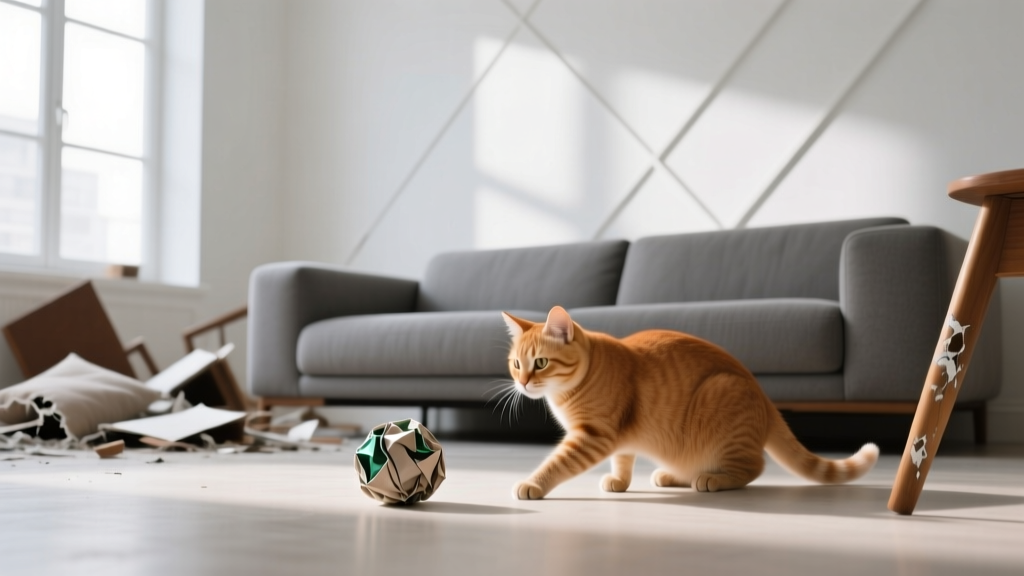
| Sudden sprinting (“zoomies”) | Energy discharge after prolonged stillness; mimics short-burst hunting chases | Two 10-min interactive play sessions daily using wand toys; avoid laser pointers alone (no ‘capture’ satisfaction) | 70% reduction in disruptive midnight sprints; increased post-play napping |
| Slow blinking | Non-threatening signal among colony members; indicates safety assessment | Return slow blinks when cat makes eye contact; pair with quiet voice and still posture | Increased frequency of cat-initiated slow blinks; reduced avoidance in multi-cat households |
| Scratching vertical surfaces | Claw maintenance + visual/olfactory marking via interdigital glands | Install tall, stable scratching posts near sleeping areas; use catnip or silvervine spray; trim nails weekly | 95% redirection to posts; decreased furniture damage |
Frequently Asked Questions
Do different cat breeds really behave differently?
Not in biologically fundamental ways. While some lines show slight statistical trends—e.g., Siamese may vocalize 20% more frequently due to historical temple selection—their underlying motivation (seeking attention, expressing discomfort) and neurologic response are identical. A 2020 study in Applied Animal Behaviour Science found no significant differences in fear responses, play initiation, or social tolerance across 15 breeds when controlling for individual history and environment. What appears as ‘breed personality’ is usually owner perception bias amplified by grooming needs (e.g., long-haired breeds seeming ‘calmer’ because owners handle them more).
Can trauma change a cat’s core behavior patterns?
Trauma alters *expression* and *thresholds*, not the patterns themselves. A rescued cat may hide instead of fleeing when startled—but the freeze-flight-fight sequence remains intact. Chronic stress can suppress behaviors (e.g., reduced grooming) or exaggerate them (e.g., obsessive licking), but the template persists. Recovery focuses on lowering arousal thresholds through predictable routines, safe spaces, and pheromone support—not retraining instincts.
Why does my cat ignore me when I call, but come running for food?
Cats lack the co-evolved auditory responsiveness to human vocalizations that dogs possess. Their hearing is optimized for ultrasonic rodent frequencies—not our speech. However, they *do* recognize their name: a 2019 Tokyo University study confirmed cats orient ears and turn heads to their name 71% of the time—even when spoken by strangers. They simply prioritize stimuli by survival relevance: food = immediate energy gain; your voice = low-priority unless paired with consistent positive outcomes (e.g., treats *only* after calling). Train association—not obedience.
Is it normal for my cat to bring me dead animals?
Yes—and it’s a profound sign of trust. In wild colonies, mothers bring prey to kittens to teach hunting; unspayed females bring ‘gifts’ to human caregivers as surrogate offspring. Neutered males do it too, indicating the behavior is rooted in provisioning instinct, not reproduction. Never punish. Instead, redirect with daily interactive play that satisfies the ‘hunt-catch-kill’ sequence, and consider outdoor enclosures (‘catios’) to reduce wildlife impact.
Why do cats seem aloof compared to dogs?
It’s not aloofness—it’s evolved social strategy. Dogs are pack animals requiring constant hierarchy negotiation; cats are facultative socializers who conserve energy by limiting engagement. Their ‘aloof’ behavior—like sitting nearby but not touching—is actually proximity-seeking without the metabolic cost of sustained interaction. Research shows cats form secure attachments to owners (measured via separation/reunion tests) at rates comparable to human infants—just expressed differently.
Common Myths Debunked
Myth #1: “Cats are solitary animals who don’t need companionship.”
While cats don’t require group cohesion like wolves, feral colonies demonstrate complex social structures: shared nursing, communal kitten care, and coordinated hunting. Domestic cats form bonded pairs (especially littermates or early-introduced cats) and show measurable distress when separated. Loneliness manifests as excessive vocalization, destructive behavior, or inappropriate elimination—not just ‘being alone.’
Myth #2: “If my cat does something once, it’s learned—and will repeat it.”
Most cat ‘learning’ is associative (Pavlovian), not operant. They link outcomes to contexts—not actions. A cat who knocks items off tables isn’t ‘testing boundaries’; she’s exploring cause-effect in a gravity-rich environment. Punishment creates fear associations with *you*, not the behavior. Positive reinforcement works only for voluntary acts (e.g., using a ramp)—not instinctive ones (e.g., scratching).
Related Topics (Internal Link Suggestions)
- Understanding Cat Body Language — suggested anchor text: "how to read your cat's tail, ears, and eyes"
- Creating a Cat-Friendly Home — suggested anchor text: "vertical space, hiding spots, and safe zones for cats"
- Why Does My Cat Bite Gently? — suggested anchor text: "love bites vs. overstimulation signals"
- Introducing Cats to Each Other — suggested anchor text: "slow introduction checklist for multi-cat households"
- Cat Stress Signs You’re Missing — suggested anchor text: "subtle anxiety symptoms in cats"
Conclusion & Next Step
Why do all cats have similar behavior? Because they’re not blank slates shaped by upbringing or breed—they’re finely tuned descendants of desert hunters, carrying 10,000 years of optimized survival programming in every purr, pounce, and slow blink. Recognizing this doesn’t diminish their individuality; it deepens it. When you see your cat’s ‘odd’ habit—not as quirk, but as ancient language—you shift from frustration to fascination. So this week, try one thing: observe your cat for 10 minutes without interaction. Note the timing, sequence, and context of one repeated behavior. Then consult our Cat Behavior Glossary to decode its evolutionary roots. You’ll be amazed how quickly ‘mysterious’ becomes meaningful—and how much closer you feel to the wild, wonderful creature sharing your home.