Why Cats Walk Across Your Keyboard While Working
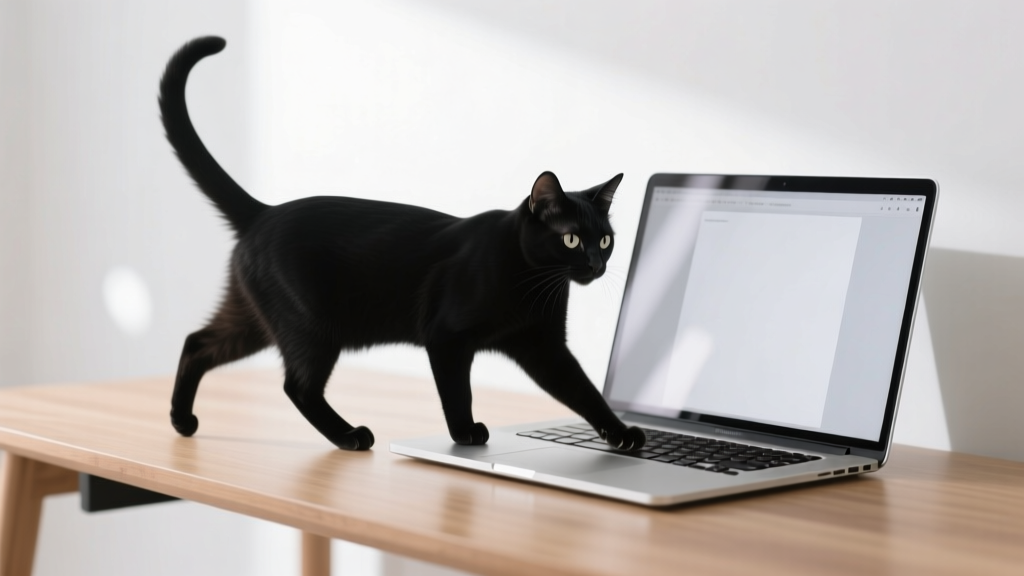
You sit down with a fresh cup of coffee, determined to knock out “just one quick email.” Your laptop wakes up, your fingers find home row… and then a warm, determined loaf-with-legs strolls directly across your keyboard. Suddenly your draft reads: “Hiiiiiii;;;;; 9o0p” and your cat is standing on the spacebar like they’re guarding a sacred temple.
If you live with a cat, you’ve probably experienced this exact moment: the purposeful keyboard march, the sit-right-on-the-keys nap, or the gentle paw taps that somehow manage to open six tabs and mute your microphone in a meeting. It feels personal. It feels strategic. And honestly? Sometimes it feels a little hilarious.
Here’s the good news: in most cases, your cat isn’t trying to sabotage your career. They’re doing something that makes perfect sense in cat logic—and understanding that logic can make working from home (or anywhere) much smoother.
1) The science and evolution behind the keyboard stroll
To a cat, your keyboard is more than a tool. It’s a warm, textured, attention-rich “hotspot” in the middle of their most important resource: you.
Cats are drawn to:
- Warmth: Laptops and keyboards can hold heat. Cats are heat-seeking experts; warmth helps them conserve energy—an instinct rooted in survival.
- High-value territory: Cats are territorial, and they use scent and positioning to claim important spaces. Your desk is a central “activity zone” where you focus intensely.
- Predictable rituals: Many cats love routines. If you work at the same time each day, your cat learns that “keyboard time” is a reliable opportunity for interaction.
- Social bonding through proximity: Cats aren’t solitary robots; they form social attachments. Being physically close—especially in your direct line of sight—is a strong bonding strategy.
There’s also a subtle evolutionary angle: cats are excellent at noticing where attention goes. If your eyes, hands, and voice are all aimed at the laptop, the laptop becomes the most powerful “magnet” in the room. Stepping on it is the fastest way to redirect your attention back to them. Not evil—efficient.
2) What the behavior looks like in different contexts (and what it’s telling you)
Not all keyboard-walking is the same. The context matters, and your cat’s body language is the key to decoding it.
The “I’m helping” stroll
What you see: Your cat calmly walks across the keys, maybe rubs their cheek on the screen edge, then turns around like they’re choosing a perfect spot.
What it usually means: Friendly social involvement. Your cat is inserting themselves into your activity the way they would in a shared sleeping pile: “We do this together.”
The “Pay attention to me now” interruption
What you see: Sudden keyboard invasion right when you start typing. They may paw at your hands, nudge your wrist, or stare at your face.
What it usually means: Attention-seeking, often because your cat has learned a simple equation: keyboard = human engagement. If you’ve ever laughed, talked to them, or scooped them up when they do it, you’ve accidentally reinforced the behavior (no judgment—most of us do).
The “This spot is mine” sit-down
What you see: Your cat plops directly on the keyboard or laptop, sometimes with a slow blink, sometimes with a dramatic sigh.
What it usually means: Comfort + resource claiming. Your scent is there, the surface is inviting, and it places them in prime social position. This is often a mix of affection and territory: “I belong here with you.”
The “I’m bored and I found buttons” tap-tap
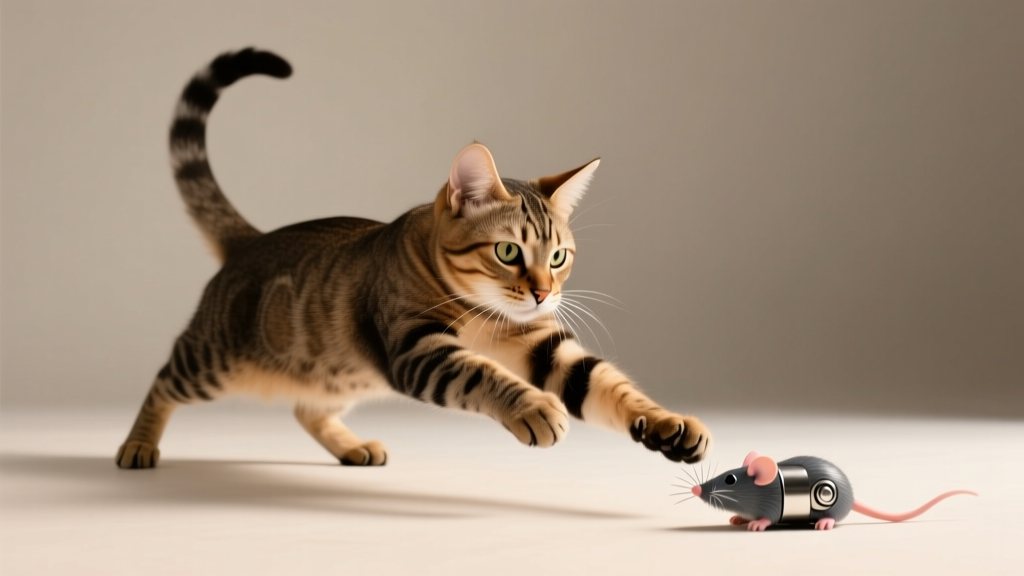
What you see: Investigative pawing, hunting-style crouches, or batting at the cursor moving on screen.
What it usually means: Play/curiosity. The moving cursor can trigger prey-chase instincts. If your cat is young or energetic, your laptop becomes an interactive toy.
The “I’m stressed and I need closeness” hover
What you see: Your cat sticks close, repeatedly returns to the keyboard, vocalizes more than usual, or seems unable to settle elsewhere.
What it usually means: Seeking reassurance. Changes in routine, new people, loud construction, or even you being extra busy can push a cat to seek more contact.
3) What this says about your cat’s mood and feelings
Keyboard walking is often one of these emotional messages:
- Affection and bonding: “I like being near you.” Many cats choose proximity over distance when they feel secure.
- Curiosity: “What are you focused on?” Cats are information-gatherers. Your intense attention is interesting.
- Frustration or unmet needs: “I need something—play, food, a clean litter box, or attention.”
- FOMO (fear of missing out): “You’re doing something important without me.”
- Comfort-seeking: “This is warm and smells like you.”
Look for the rest of the body language: a loose tail, relaxed ears, and slow blinks usually point to calm connection. A twitchy tail, pinned ears, or sudden swats can hint at overstimulation or irritation—sometimes from too much petting, sometimes from being shooed away repeatedly.
4) Related behaviors you might notice
If your cat loves your keyboard, you might also see:
- Sitting on your book or paperwork (same idea: your attention is on it, so they put themselves on it).
- Rubbing cheeks on your monitor edges (facial pheromones mark “safe, familiar territory”).
- Sleeping on freshly folded laundry (warmth + your scent + prime real estate).
- Walking between you and your phone (a tiny social “interrupt” that works).
- Nibbling your pen or tapping your hands (play behavior plus attention-seeking).
From your cat’s perspective, these aren’t random quirks—they’re consistent strategies: occupy the focus point, gain proximity, and strengthen the social connection.
5) When it’s normal… and when it might be a concern
Usually normal: A cat who occasionally walks across your keyboard, seems relaxed, and can be redirected without escalating.
Potential concern signs include:
- Sudden increase in clinginess paired with hiding, appetite changes, or unusual vocalization.
- Restlessness that doesn’t improve with play or enrichment.
- Aggression when moved (hissing, biting, swatting) that’s new or intense.
- Compulsive-seeming repetition where your cat can’t settle anywhere else.
If your cat’s keyboard obsession is new and accompanied by other changes—drinking more, eating less, litter box issues, weight changes—consider a vet check. Sometimes “attention-seeking” is actually “I don’t feel right and I want to be close.”
6) How to respond (without accidentally training a tiny keyboard tyrant)
You don’t have to choose between your cat and your workflow. The goal is to meet the need behind the behavior, then set up a better option.
Offer an approved “desk buddy” spot
- Place a cat bed or folded blanket beside your keyboard (or on a shelf at desk height).
- Add warmth with a microwavable pet-safe heat pad or a heated cat bed (low setting, supervised initially).
- Make it rewarding: toss a treat onto that spot when your cat chooses it.
This works because it gives your cat what they want—proximity and comfort—without the keystroke chaos.
Schedule micro-breaks on purpose
If your cat reliably interrupts at certain times, build in a 3–5 minute “cat break” before an important call or focused session: a wand-toy sprint, a quick grooming session, or a snack puzzle. Meeting their social/play needs proactively reduces “emergency keyboard visits.”
Use gentle, consistent redirection
Avoid dramatic reactions (laughing, yelling, big flailing gestures) if you don’t want the behavior to become a game. Calmly lift your cat, place them on the approved spot, and reward when they stay there. Consistency is everything.
Make the keyboard less irresistible
- Close the laptop during breaks (removes heat and the “sit here” platform).
- Use a keyboard cover or a spare “decoy keyboard” your cat can stand on safely.
- Adjust the environment: a window perch near your desk can compete strongly with the keyboard because it offers entertainment (birds, squirrels, neighborhood drama).
When it’s okay to encourage it
If you find it endearing and it doesn’t interfere too much, you can absolutely treat it as a bonding ritual—just give it a container. Invite your cat up during a planned break, let them rub and purr, then guide them to their spot before you return to typing. Cats thrive when the rules are predictable and kind.
7) Fun facts and research-y tidbits (cat behaviorist edition)
- Cats communicate with scent more than we realize: cheek rubbing deposits pheromones that help them label an area as familiar and safe. Your desk can become part of their “comfort map.”
- Warm surfaces are biologically valuable: cats naturally seek temperatures that help them conserve energy. That’s why sunbeams are sacred—and laptops are suspiciously popular.
- Attention is a powerful reinforcer: even “No!” can function as attention. If your cat is socially motivated, any response may increase the odds they try again.
- Many cats prefer parallel companionship: they don’t always want constant petting; they want to be near you while you do your thing. Keyboard walking is sometimes an awkward attempt at shared time.
8) FAQ: Common questions about cats and keyboards
Is my cat jealous of my laptop?
In human terms, it can look like jealousy. In cat terms, it’s more often resource competition for attention and access. Your cat sees the laptop as the object that reliably “steals” your focus, so they insert themselves into that loop.
Why does my cat only do it when I’m on a video call?
Calls change your voice, posture, and energy. You may speak more animatedly, laugh, or react sharply—making it extra interesting. Also, your cat may have learned that calls are long and your attention is “locked,” so they escalate their strategy.
Should I punish my cat for walking on my keyboard?
No. Punishment tends to create stress or avoidance without teaching a better option. Instead, set up an appealing alternative spot and reward your cat for using it. You’ll get better behavior with less tension.
What if my cat bites my hands when I type?
That’s usually play, frustration, or overstimulation. Increase daily interactive play (especially wand-toy sessions), add enrichment (food puzzles, climbing spots), and redirect hands-biting to appropriate toys. If biting is sudden or intense, consider a vet check to rule out pain.
Will my cat grow out of this behavior?
Some cats mellow with age, but many keep the habit because it works. If you change the payoff—more reward for the cat bed, less attention for the keyboard—most cats adapt quickly.
Can I train my cat to stay off the desk entirely?
Sometimes, but it’s often easier to train “where to go” than “never go.” A designated perch near your workspace (or a bed on one corner of the desk) usually leads to better long-term peace than a total ban.
At the end of the day, your cat walking across your keyboard is usually a clumsy little love letter: “You’re important, and I want to be part of whatever you’re doing.” With a bit of feline-friendly strategy—warm alternatives, proactive play, and calm redirection—you can protect your productivity and keep the relationship sweet.
Does your cat prefer the spacebar, the trackpad, or the dramatic full-body laptop flop? Share your funniest keyboard-crashing stories (and any clever solutions) with the Cat Lovers Base community at catloversbase.com.