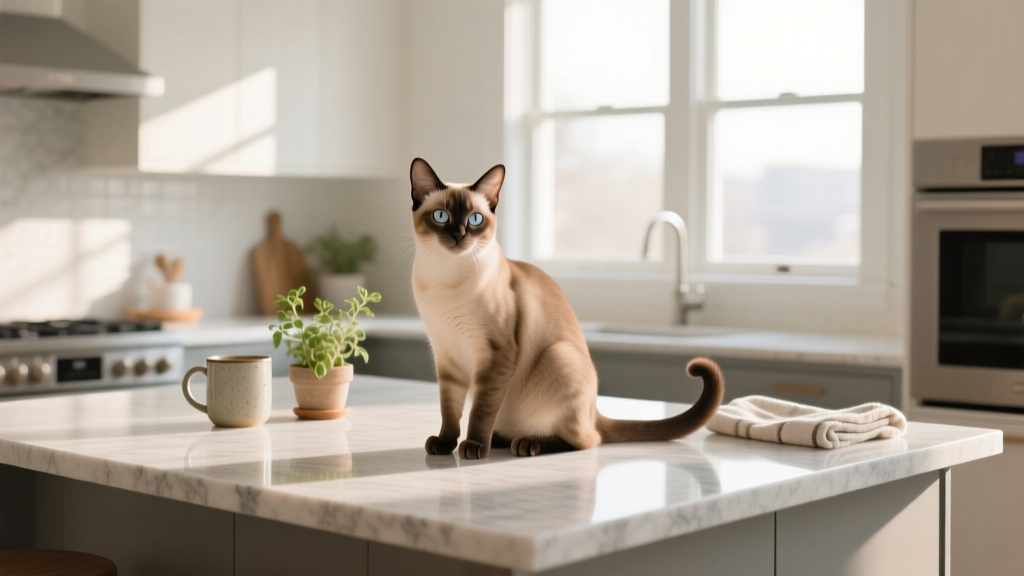
Why Cats Sit on the Kitchen Island Counter
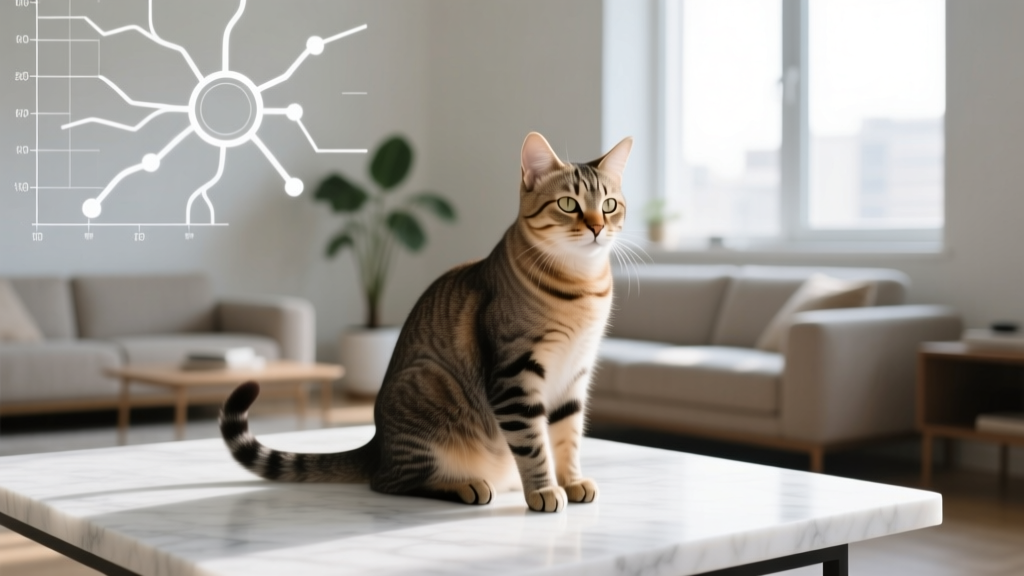
You turn your back for ten seconds to rinse a dish, and when you look up… there’s your cat. Planted like a tiny statue on the kitchen island, tail wrapped neatly around their paws, watching you with an expression that says, “Yes, I belong here.” Maybe they’re inches from the chopping board. Maybe they’re perched beside the fruit bowl like an oddly judgmental centerpiece. And if you shoo them down, they pop right back up the moment you open the fridge.
If you’ve ever wondered why your cat is so determined to claim the most “not for cats” spot in the house, you’re in good company. Counter-sitting isn’t your cat being random or stubborn (well… not only that). It’s a behavior with deep roots in feline instincts, daily routines, and the social dynamics of your home.
1) The Scientific (and Evolutionary) Reason Cats Love High Places
Cats are built for climbing and surveying. Their wild ancestors survived by choosing vantage points—places where they could spot prey, detect danger, and rest without being surprised. Height equals information. Information equals safety.
In a modern home, the kitchen island counter can function like a perfect “observation deck.” It’s often central, open, and elevated. From there, your cat can track:
- Your movements (the most interesting “wildlife” in the house)
- Other pets entering and leaving the room
- Sounds and smells from the fridge, oven, and sink
- Potential food opportunities (because… kitchen)
There’s also a sensory component. Cats are curious investigators, and the kitchen is a buffet of scents: meat, butter, soap, crumbs, and even the smell of your hands after chopping herbs. To a cat, that’s like scrolling an endlessly updated newsfeed.
2) Why the Kitchen Island Specifically? A Breakdown by Context
Not all counters are created equal. Cats tend to pick the ones that “work” for their goals. Here are the most common motivations behind the kitchen island obsession.
They Want to Be Where the Action Is
Kitchens are high-traffic zones. If you’re cooking, unpacking groceries, making coffee, or chatting with family, the kitchen is basically a social hub. Your cat may be there because you’re there—especially if they’re bonded to you and enjoy being close.
Common scenario: You’re chopping vegetables and your cat hops up, sits just out of reach, and watches your hands like you’re performing magic. This isn’t always about stealing food; often it’s “I want to be included.”
It’s Warm (and Sometimes Slightly Toasty)
Cats adore warmth. The kitchen may offer heat sources: sunlight pooling on the counter, residual warmth near appliances, or that cozy “people are cooking” ambient heat. If your island counter catches afternoon sun, it becomes prime real estate.
They’re Seeking a Predictable Routine
Cats are pattern experts. If you always make breakfast at 7 a.m., your cat learns that the kitchen island is where Important Things happen. Sitting there can be a way to say, “I know the schedule. I’m ready.”
Common scenario: Your cat takes their position the moment you touch the coffee grinder or open the pantry. They’re not psychic—they’ve simply memorized the sequence that often leads to treats, food, or attention.
They’re Managing Territory (Quietly, but Firmly)
In multi-pet homes, height is power—not aggressive power, but social leverage. A cat on a counter can observe another cat or dog while remaining out of reach. It’s a safe “control tower.”
If you’ve noticed your cat chooses the island most when another pet is nearby, they may be using the counter to feel secure.
It’s a Great Launchpad (and Cats Love Efficiency)
Cats often plan routes through the home like an obstacle course. The island might connect to the fridge top, cabinets, shelves, or a window ledge. If your cat uses it as a stepping stone, the counter isn’t the destination—it’s part of the path.
They’re Hoping for Snacks (Let’s Be Honest)
Yes, food can be a major factor. Kitchens smell like opportunity, and counters are where food appears. Your cat might be waiting for cheese shreds, chicken bits, or the moment you turn around and leave a butter wrapper unattended.
This doesn’t necessarily mean your cat is “food-obsessed.” It means they’re an opportunistic hunter in a home where hunting looks like monitoring meal prep.
3) What It Says About Your Cat’s Mood and Feelings
Where your cat sits and how they sit can tell you a lot. A kitchen island perch can mean different things depending on body language and timing.
- Relaxed and content: Soft eyes, slow blinks, tail loosely wrapped, maybe a little loaf position. They feel safe and included.
- Curious and engaged: Ears forward, head tracking your hands, sniffing the air. They’re stimulated by activity and smells.
- Seeking connection: Meowing, rubbing your arm, stepping on your cutting board (classic). They want attention or interaction.
- Insecure or watchful: Crouched posture, wide eyes, ears swiveling, sitting higher than usual when guests or another pet is around. They’re using height to feel in control.
- Overstimulated or demanding: Persistent vocalizing, pawing at food, swatting, jumping up repeatedly even after being removed. They may be frustrated or have learned that persistence pays off.
The key is to look at the whole picture: your cat’s posture, what’s happening in the room, and what typically follows (do they get fed right after? do you pick them up? do they get scolded?). Cats are always collecting data about what works.
4) Related Behaviors You Might Also Notice
If your cat loves the kitchen island, you might also see:
- Following you from room to room (especially at meal times)
- Jumping onto the refrigerator or cabinets for an even higher view
- “Supervising” chores—laundry monitoring is a common side gig
- Counter-surfing (sniffing, licking, sampling unattended food)
- Knocking items off the counter to test gravity and your reaction
- Claiming other elevated “social” spots like desks, nightstands, or bathroom sinks
These behaviors often stem from the same needs: curiosity, security, social contact, and a love of vantage points.
5) When Sitting on the Counter Is Normal vs. a Concern
In most homes, counter-sitting is normal cat behavior. That said, a few situations deserve extra attention.
Usually Normal
- Your cat jumps up occasionally, especially during cooking or family activity.
- They sit calmly and watch without getting into trouble.
- They also have other high places (cat tree, shelves) and aren’t fixated.
Potentially Concerning
- Sudden new behavior: A cat who never jumped up before now insists on the counter daily. This could indicate stress, insecurity, or a change in the household.
- Compulsive pacing or vocalizing: Constant restlessness on counters can signal anxiety or unmet needs.
- Danger-seeking: Jumping near hot burners, sharp knives, or repeatedly trying to access toxic foods (like onions, garlic, or dough) requires immediate management.
- Senior cats struggling: If an older cat is jumping up and then hesitating, slipping, or showing stiffness, pain or mobility issues could be present.
If you’re seeing major changes, it’s worth considering a vet check (especially for older cats) and evaluating stressors: new pets, new schedules, construction noises, or changes in feeding routines.
6) Tips for Responding (and Keeping Everyone Safe)
You’ve got two main options: redirect the behavior to safer places, or allow it under certain conditions. Either way, consistency matters more than intensity. Cats don’t respond well to random punishment; they respond to patterns.
Create a “Yes Spot” Near the Kitchen
If your cat wants to be part of kitchen life, give them an approved perch nearby:
- A tall cat tree positioned where they can see the island
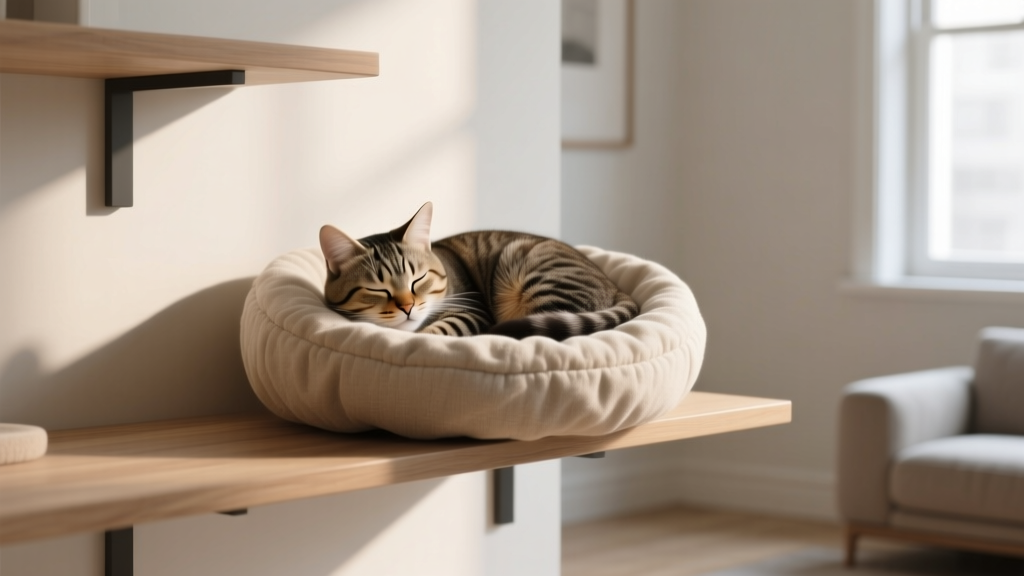
- A wall shelf or window perch in the kitchen/dining area
- A sturdy barstool with a non-slip mat (if safe and stable)
Then reinforce it: toss a treat onto the perch, pet them there, or feed meals nearby. You’re telling your cat, “You can be with me—just over here.”
Make the Counter Less Rewarding (Without Drama)
- Remove the payoff: Don’t offer food from the counter, and avoid “accidental” rewards like petting them every time they jump up (if your goal is fewer counter visits).
- Increase enrichment: Play sessions before cooking can reduce “attention-demanding” counter jumps.
- Manage temptations: Keep food covered, wipe crumbs, and store enticing items quickly.
Use Safe Deterrents if Needed
If counter access is dangerous in your home, you can try humane, non-scary barriers:
- Temporarily block access with clean baking sheets or trays (some cats dislike unstable footing)
- Use double-sided tape or a texture mat on the edge (only if your cat isn’t prone to chewing it)
- Close the kitchen during active cooking if safety is a concern
Avoid anything that frightens or startles intensely (like yelling or chasing). That can increase anxiety and sometimes makes the counter feel even more important—a “high-stakes” zone.
Teach an Alternate Behavior
You can train a simple cue like “mat” or “perch” using treats. When you begin cooking, guide your cat to their spot and reward them there. Over time, the routine becomes: “When humans cook, I go to my perch and good things happen.” Cats love predictable bargains.
7) Fun Facts and Research-Style Nuggets
- Cats use height to reduce conflict. In multi-cat environments, vertical space is one of the best ways to lower tension because it allows cats to share territory without constantly crossing paths.
- Smell is a huge driver. Cats have a powerful sense of smell and a specialized organ (the vomeronasal organ) that helps them interpret chemical cues. The kitchen is essentially an information-rich scent map.
- Your reaction can train the behavior. Even “negative” attention can be rewarding to some cats. If counter-jumping reliably makes you talk, look, and move toward them, the behavior can strengthen.
- Warmth-seeking is serious business. Many cats prefer warmer ambient temperatures than humans do, which is why sunny counters and kitchen heat zones become cat magnets.
8) FAQ: Cats on Kitchen Counters
Is it unhygienic to let my cat sit on the kitchen island?
From a food safety perspective, it can be. If you allow counter access, sanitize surfaces before cooking and consider using cutting boards and food prep mats consistently. Many cat owners choose a compromise: “cat allowed when no food prep is happening.”
Why does my cat jump up the second I start cooking?
Cue association. Your cat has learned that cooking sounds and movements predict interesting outcomes: smells, attention, sometimes food. They’re responding to a routine they trust (and hope to influence).
My cat only sits on the counter when guests come over—why?
Height can be a safety strategy. Guests are loud, unpredictable, and sometimes grabby. Your cat may be choosing the counter as a calm observation point where they can monitor the situation without being approached.
How do I stop counter-surfing without stressing my cat out?
Give them a better option (a perch with a view), remove food rewards, and reinforce the alternative spot. If your cat is anxious or bored, add play and puzzle feeders. The goal is to meet the underlying need, not just block the behavior.
Do cats sit on counters to dominate me?
Not in the “I am your boss” sense. Cats seek safety, information, warmth, and proximity. Counter sitting can look like a power move, but it’s usually a comfort move—or a snack-investment strategy.
Should I ever punish my cat for being on the counter?
Punishment tends to teach “avoid the human,” not “avoid the counter.” It can also increase stress and sneakier counter behavior when you’re not around. Calm redirection and consistent routines work better for most cats.
If your cat has claimed your kitchen island like it came with their adoption papers, you’re seeing a mix of instinct, curiosity, and social bonding in action. With a few tweaks—more vertical “yes spaces,” safer kitchen management, and clear routines—you can keep your cat involved without turning meal prep into a daily negotiation.
Does your cat sit like a regal judge on the island, or do they treat it like a snack surveillance station? Share your funniest kitchen-counter stories (and your best solutions) with the Cat Lovers Base community at catloversbase.com.