Why Cats Sit on the Home Office Chair Armrest
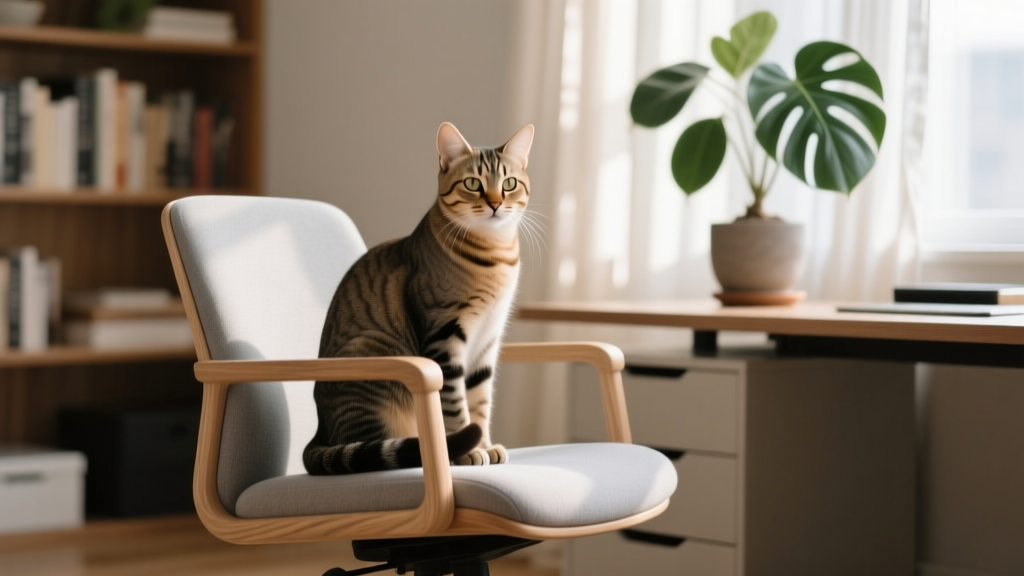
You finally get in the zone. Coffee? Check. Tabs open? Check. The email you’ve been avoiding is staring you down… and then—thump. A warm, furry presence appears on the armrest of your office chair like it owns the place. Your cat settles in, tail tucked neatly, eyes half-closed, whiskers relaxed, positioned exactly where your mouse arm needs to move.
If you work from home, you’ve probably accepted this as part of your job description: employee, snack provider, and armrest real estate manager. But this odd little habit is actually packed with meaning. Your cat isn’t just being random or “clingy.” Sitting on the chair armrest hits multiple feline priorities at once—safety, warmth, social connection, information gathering, and (yes) gentle control of your attention.
1) The scientific and evolutionary “why”
Cats are both predators and prey. That combination shapes almost everything they do. In the wild, a small hunter wants two things at the same time: a good view and a quick escape route. The armrest of a chair is basically a perfect micro-perch—slightly elevated, stable, and positioned next to a trusted “big creature” (you) who can function as a living security system.
From an evolutionary perspective, a perch offers:
- Height advantage: Even a few inches up improves a cat’s view of the room. Cats feel safer when they can monitor entrances and movement.
- Control of distance: Sitting near you but not on you gives your cat the option to engage or disengage without feeling trapped.
- Access to information: Cats are curious observers. They like to watch what you do, what you touch, and what changes in the environment.
- Shared scent space: Cats communicate heavily through scent. Your chair, your clothing, and the “work zone” smell like you—and your cat may be adding their own scent to blend the social group’s odor.
Think of the armrest as a lookout post that just happens to be attached to your body’s daily routine.
2) A detailed breakdown: different contexts, different motivations
The same behavior can mean different things depending on what’s happening around it. Here are the most common “armrest agendas” cats have.
A. The “I want to be close, not smothered” sit
Many cats enjoy proximity but prefer to keep their paws to themselves. The armrest is the perfect compromise: close enough to feel connected, far enough to keep personal space. If your cat sits quietly, blinks slowly, and occasionally leans a shoulder into your arm, you’re seeing social bonding in a very cat-like form.
B. The “monitoring station” sit
Does your cat choose the armrest that faces the door or hallway? That’s not a coincidence. Cats often position themselves to watch entrances, windows, or the most “active” part of the home. While you’re focusing on work, your cat is running “security.” (Their fee is paid in chin scratches.)
C. The “heat and comfort” sit
Some home office setups create tiny warm zones: a computer tower venting heat, sunlight hitting the chair, a blanket draped over the back. If your cat rotates between the armrest, the laptop area, and a sunny patch on the floor, comfort may be the main driver. Cats are heat seekers with whiskers.
D. The “attention steering” sit
Your cat learns quickly: armrest seat = you notice them. Even if you gently nudge them away, you still looked, spoke, or touched—mission accomplished. Cats are excellent at repeating behaviors that reliably produce interaction. If the armrest sit comes with a deliberate tail flick across your keyboard hand, it may be polite-ish attention seeking.
E. The “this is mine too” sit
Cats don’t think in human ownership terms, but they do care about territory and resources. Your work chair is a high-value resource: it smells like you, it moves, it gives height, and it’s always in use. Sitting on the armrest can be your cat’s way of claiming shared space in a multi-species household.
F. The “I’m managing your routine” sit
Cats love patterns. If you always sit down at 9:00 a.m., your cat may show up as part of the ritual. This can be comforting for them—predictability feels safe—and it can also be their way of reminding you that breaks, snacks, and petting sessions should occur on schedule.
3) What it means about your cat’s mood and feelings
Armrest sitting is usually a positive sign, but body language tells you whether your cat is relaxed, needy, overstimulated, or on high alert.
- Relaxed and content: Soft eyes, slow blinks, paws tucked, tail resting still or gently curled. This is “I like being near you.”
- Affectionate and socially seeking: Head-butting your arm, rubbing cheeks on the chair edge, kneading the armrest, purring with a loose posture. This is bonding and scent-marking.
- Curious and engaged: Upright ears, head turns following sounds, occasional chirps. This is “I’m supervising.”
- Mildly frustrated or demanding: Persistent meowing, paw taps on your forearm, tail flicking faster, staring at you then at the food area. This is a request—possibly one you’ve accidentally trained.
- Anxious or watchful: Crouched posture, tense muscles, wide pupils, ears swiveling rapidly, frequent scanning. This suggests your cat is using you as a safe anchor while they feel uncertain.
If your cat chooses the armrest instead of hiding, that often means they trust you enough to stay out in the open—even if they’re unsure about something.
4) Related behaviors you might also notice
Armrest sitting rarely happens alone. It tends to come with a whole “office assistant” package:
- Sitting on the keyboard or laptop: Warmth + attention + blocking your hands (effective strategy, questionable ethics).
- Parking on papers: Cats like textured surfaces and enjoy placing their scent where your attention goes.
- Rubbing on chair corners: Cheek glands leave friendly social scent marks—your cat is labeling the work zone as part of the family territory.
- Following you between rooms during breaks: Many cats enjoy “parallel living,” simply being near you as you move through tasks.
- Gentle nips or paw pats when you stop petting: Sometimes this is a request for more interaction; sometimes it’s a sign they’re getting overstimulated and need space.
5) When it’s normal vs. when it might be a concern
Most of the time, armrest sitting is normal, affectionate, and even beneficial—it can mean your cat feels safe enough to hang out in your busiest space. Still, a few situations deserve a closer look.
Normal (and often adorable)
- Your cat is relaxed, social, and returns to normal activities (eating, playing, resting).
- The behavior is consistent with their personality (clingy cats cling; independent cats supervise from a distance).
- They can be redirected without stress if needed.
Potentially concerning
- Sudden clinginess or constant shadowing: A big change in attachment can signal stress, pain, or illness.
- Restlessness, vocalizing, inability to settle: Consider anxiety triggers (new noises, pets outside, construction, schedule changes).
- Aggression from the armrest: Swatting when you move, guarding the chair, or biting when approached can suggest resource guarding, fear, or overstimulation.
- Other symptoms: Appetite changes, litter box issues, hiding, weight loss, excessive grooming, or decreased activity—pairing behavior change with physical signs warrants a vet check.
If the armrest becomes your cat’s only “safe spot,” it can also indicate they don’t have enough appropriate perches or quiet resting areas elsewhere.
6) Tips for responding to (or encouraging) the behavior
You don’t have to choose between productivity and a happy cat. You can often get both with a few small tweaks.
Create a “yes spot” near your chair
- Add a nearby perch: A small cat tree, window perch, or sturdy shelf near your desk gives your cat a legal lookout spot.
- Try a chair-side bed: Place a cushioned cat bed on a nearby table or on the floor beside you. Some cats prefer being close at your level.
- Use a folded blanket on the armrest: If you don’t mind them there but want more comfort (and less slipping), give traction and warmth.
Reward the behavior you like
If you’d rather your cat sit on a nearby perch than the armrest, reward the perch heavily at first: treats, praise, or a short petting session when they choose it. Cats repeat what works.
Build office breaks into your cat’s day
A 3–5 minute play session with a wand toy before a meeting can reduce “armrest interruptions” later. Predatory play is stress relief. Follow play with a small snack for the classic hunt-eat-groom-sleep rhythm.
Avoid accidental training
If your cat meows from the armrest and you immediately feed them, you’ve taught a very smart system: armrest = food button. If you want to reduce demand behavior, meet needs on a schedule and reward calm, quiet moments instead.
Stay gentle with boundaries
If you need them off the armrest, avoid pushing or scolding. Calmly stand up, lure them to a perch with a treat, or toss a toy away from the desk. The goal is to redirect without making the chair area feel like a conflict zone.
7) Fun facts and research-backed tidbits
- Cats use scent as social glue. Rubbing their cheeks on objects deposits pheromones from facial glands, which are associated with familiarity and comfort. That chair armrest can become a reassuring “group scent” hub.
- Height reduces stress for many cats. Behavior studies and shelter enrichment programs consistently find that vertical space (perches, shelves, cat trees) helps cats feel more secure and show more relaxed behaviors.
- Cats love predictable routines. Domestic cats often synchronize their activity with human household patterns. Your office schedule can become part of their daily map of the world.
- They’re masters of “social proximity.” Many cats show affection by being near you rather than directly on you—armrest sitting can be a perfect example of cat-style companionship.
FAQ: Common questions about cats and chair armrests
Is my cat sitting on the armrest because they’re jealous of my computer?
Why the armrest and not my lap?
Some cats find laps too confining or too warm, or they dislike being restrained by arm movement. The armrest offers closeness with an easy exit. It can also feel more stable to cats who prefer to keep all four paws under them.
My cat sits on the armrest and bites when I pet them—why?
This can be overstimulation (petting feels good until it suddenly doesn’t), or it can be a sign your cat is tense and using the armrest as a watch post. Try shorter pet sessions, slower strokes around the cheeks and chin, and stop before your cat’s tail starts flicking or their skin begins twitching.
How do I stop my cat from knocking my mouse hand while they’re on the armrest?
Give them a nearby alternative perch at the same height (or slightly higher) and reward it consistently. You can also place a folded blanket on the armrest to define “their” area and shift them a few inches back from your elbow zone.
Is it a bad sign if my cat follows me to my office constantly?
Not automatically. Many cats enjoy companionship and routine. It’s more concerning if the clinginess is new, intense, or paired with appetite changes, hiding, litter box changes, or vocal distress. When in doubt, check in with your vet and consider recent stressors in the home.
Could my cat be doing this because they’re anxious?
Yes, sometimes. The armrest can function as a “safe base” next to a trusted person. If you notice wide pupils, a crouched posture, frequent scanning, or startle responses, look for triggers (noises outside, visitors, new pets) and add more vertical safe zones and quiet resting places.
One last look at the armrest mystery
When your cat chooses the office chair armrest, they’re often saying: “I like you, I trust this spot, I want to be included, and I’d also like to keep an eye on everything.” It’s a small behavior with big emotional content—part bonding ritual, part lookout duty, part cozy habit.
Does your cat perch like a tiny supervisor during Zoom calls, or do they strategically place their tail directly across your keyboard at the worst possible moment? Share your funniest and sweetest home office cat stories with the Cat Lovers Base community at catloversbase.com.