Why Cats Sit on the Deck Chair Cushion
You step outside with your coffee, ready for a quiet moment on the patio. The birds are doing their morning gossip, the air smells like sunshine and leaves… and there it is: your deck chair cushion, occupied. Not by you, obviously. By your cat—curled into a perfect little cinnamon roll right in the center, as if they booked the seat weeks ago.
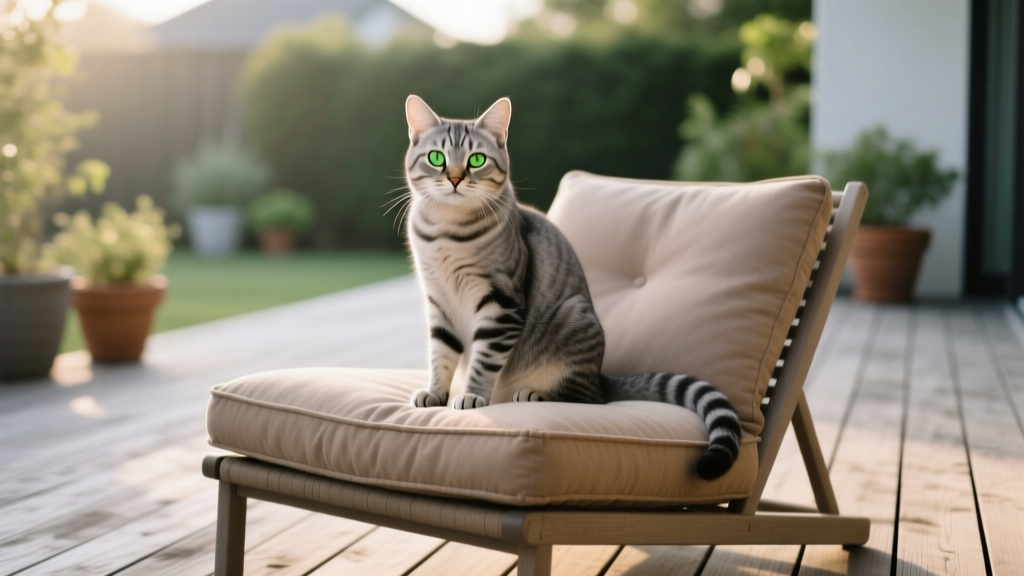
You gently shoo them. They blink slowly, stretch one paw like a tiny royal wave, and resettle with even more commitment. Or maybe they don’t even curl up—they just sit there, upright, calm, surveying the yard like a neighborhood supervisor.
If you’ve ever wondered why your cat is so magnetically drawn to that particular cushion, you’re not imagining it. Deck chair cushions are basically a feline “best of” collection: warmth, height, comfort, scent, and a prime viewing platform—wrapped up in one soft square.
The Scientific (and Evolutionary) Reasons Cats Love That Cushion
Cats are small predators and cautious prey, which means their brains are built to constantly ask: “Is this safe? Is this comfortable? Can I see everything? Does it smell like me?” A deck chair cushion often answers “yes” to all of the above.
- Thermoregulation: Cats prefer warm resting spots because warmth helps conserve energy. Even outdoor cats and indoor cats alike gravitate toward heat sources. Cushions hold warmth better than hard surfaces like wood or metal.
- Security and vantage point: Elevated spots let cats monitor their surroundings while keeping a little distance from potential threats (or annoying siblings—human or feline).
- Scent and territory: Cats communicate through scent. Sitting and resting transfers facial and body scents onto surfaces, subtly marking a spot as “mine.” If you sit there too, all the better—now it smells like the family.
- Comfort with control: Soft surfaces reduce pressure on joints and allow a cat to settle in quickly. A cushion provides comfort without forcing vulnerability the way a deep bed sometimes can.
In other words, your deck chair cushion isn’t random—it’s a well-chosen outpost.
What’s Going On Here? Contexts That Change the Meaning
“Cat on cushion” is one behavior, but the reason can shift depending on what else is happening in their environment and body language. Here are the most common scenarios I see as a behavior-focused cat person:
1) The Cushion Is the Warmest Spot in the Yard
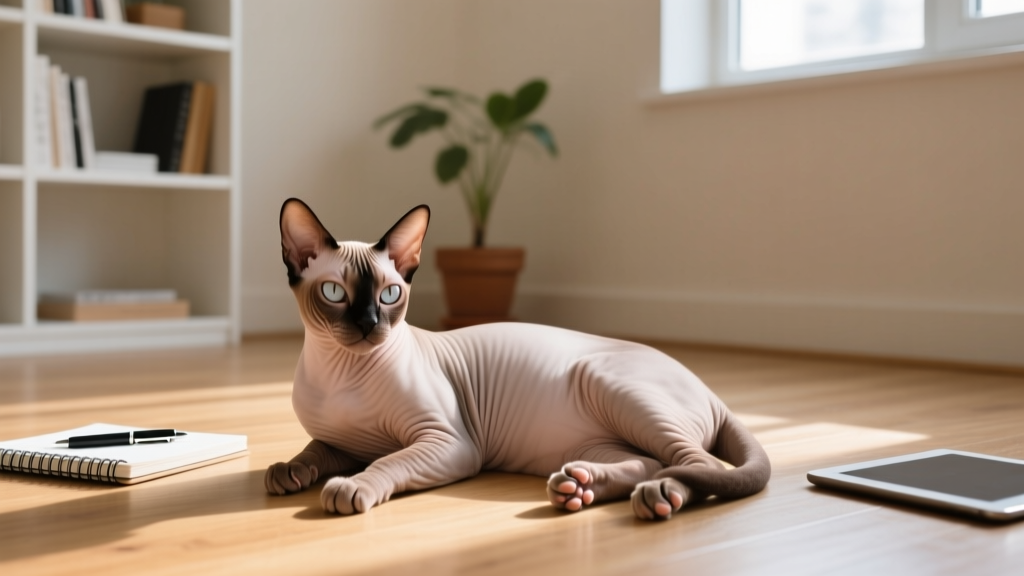
If the sun hits that chair just right—especially in the morning or late afternoon—your cat may be using it as a personal solar panel. You’ll often see the “loaf” posture (paws tucked under, eyes half-closed) or a full-body sprawl with the belly angled toward the warmth.
2) Your Cat Is Using It as a Watchtower
Some cats sit upright on the cushion like they’re on shift. They’re not necessarily resting; they’re observing. This is common if there are birds, squirrels, neighborhood cats, or foot traffic nearby. The cushion adds comfort, and the chair adds height—perfect for calm surveillance.
3) It Smells Like You (and That’s the Point)
If you tend to sit there regularly, your cat may be drawn to your scent. Cats often seek out familiar smells when they want comfort. This is especially common when you’ve been away, you’ve had a stressful day, or your household routine has changed.
4) It’s the “Best Seat” Because It’s Socially Important
Cats are more socially aware than they get credit for. If the deck chair is where people gather, chat, or relax, the cushion becomes a social hub. Some cats park themselves there to be included—or to lightly control the flow of attention like a fuzzy bouncer.
5) The Cushion Feels Safe Underfoot
Outdoor surfaces can be unpredictable: hot decking, rough textures, damp boards, wobbly furniture. Cushions provide stable, comfortable footing. Older cats, cats with arthritis, or cats who are naturally cautious may choose the cushion because it feels secure.
6) They’re Claiming It (Yes, Even From You)
If your cat plops down on the cushion right after you stand up, that can be a mix of warmth, scent, and a subtle territorial statement: “This spot is valuable, and I agree with your taste.” It’s not spite. It’s resource appreciation.
What It Says About Your Cat’s Mood and Feelings
Body language is the difference between “relaxing in a favorite spot” and “I’m on alert, do not touch.” Here are quick cues to read while your cat sits on the cushion:
- Relaxed and content: Soft eyes, slow blinks, ears neutral, tail loosely wrapped or resting still, body tucked or comfortably stretched.
- Social and inviting: Looking at you with soft eyes, shifting position as you approach, offering a head-butt or staying put while purring.
- Alert but calm: Upright posture, ears rotating toward sounds, focused gaze, tail still. They’re “watching,” not worrying.
- Anxious or defensive: Tense body, ears flattened or angled out sharply, tail flicking, sudden freezing when you come near. The cushion might be a safety station.
- Overheated or uncomfortable: Panting (rare but important), lying stretched out with limbs extended, seeking shade abruptly, moving frequently.
The same cushion can be a nap zone, a lookout post, or a comfort object—depending on your cat’s emotional state.
Related Behaviors You Might Also Notice
If your cat loves the deck chair cushion, you may see a few “cousin behaviors” that come from the same instincts:
- Sitting on your laptop, book, or folded laundry: Warmth, scent, and a prime location where your attention lives.
- Choosing the highest chair at the table: Vantage point plus social inclusion.
- Stealing your seat the moment you get up: Heat + scent + “this is clearly the best place.”
- Rubbing cheeks on patio furniture legs: Facial pheromones marking familiar territory outdoors.
- Patrolling and perching near doors/windows: Monitoring boundaries is very cat.
These behaviors are connected by one theme: cats curate their environment to feel safe, comfortable, and in-the-know.
When Sitting on the Cushion Is Normal (and When It Might Be a Concern)
Most of the time, a cat on a deck chair cushion is peak normal. But context matters. Consider a deeper look if you notice:
- Sudden clinginess or constant following: Could be stress, boredom, or a medical issue making them seek reassurance.
- Hiding outdoors and refusing to come inside: Might indicate fear of something inside the home (new pet, loud noise, conflict) or changes in routine.
- Restlessness on the cushion: Constant repositioning, inability to settle, or vocalizing can signal discomfort or pain.
- Heat-related signs: Drooling, panting, lethargy, bright red gums, or weakness in hot weather—seek veterinary help immediately.
- A stiff posture or difficulty jumping up/down: Could point to arthritis or injury. Cats often “choose” soft surfaces when joints hurt.
If anything about the behavior feels off for your individual cat—frequency, intensity, body language, or timing—trust that instinct and check in with your vet.
How to Respond (and How to Encourage the Good Parts)
You don’t need to “fix” this behavior. You can use it to make your cat’s world richer and your relationship smoother.
Make the Cushion a Safe, Positive Spot
- Offer a dedicated outdoor-friendly pad or blanket on one chair so your cat has an approved “seat.” (Bonus: easier cleaning.)
- Add shade options nearby—an umbrella, covered area, or second chair in shade—so they can regulate temperature.
- Respect the perch when they’re clearly resting. If you need the seat, lure them gently with a treat or wand toy rather than pushing them off.
Use It as a Bonding Opportunity
- Slow blink at them from your chair. Many cats slow blink back, which is essentially a “we’re good” signal.
- Sit nearby instead of taking the exact spot. Companionable proximity is a big deal in cat language.
- Reward calm social behavior with a treat or a gentle cheek scratch if they enjoy touch.
Prevent Unwanted Habits Without Drama
- If outdoor access is unsupervised, reconsider. A catio, harness time, or supervised patio sessions reduce risk (wildlife, toxins, neighborhood cats).
- If your cat becomes possessive of the chair, create multiple equivalent “best spots” so resources aren’t scarce.
Fun Facts and Research-Backed Nuggets
- Cats are heat seekers by design: Domestic cats have a higher preferred ambient temperature than humans. That’s one reason they gravitate toward sunlit cushions while you’re reaching for a light sweater.
- Scent is social glue: Cats use scent to create a “group smell.” When your cat rests where you rest, it can be part comfort, part social belonging—like wearing the same team jersey, but with cheeks.
- Vantage points reduce stress: In multi-cat homes, access to elevated resting spots is associated with improved cohabitation. A deck chair can act like outdoor “vertical territory,” even if it’s only a foot or two higher.
FAQ: Common Questions About Cats and Deck Chair Cushions
1) Is my cat being possessive when they take my seat?
Usually it’s not “dominance.” It’s a mix of warmth, comfort, and scent. That seat is a high-value resource, and your cat agrees with your choice. If you see growling, swatting, or blocking behavior, add more comfy alternatives and avoid turning it into a daily conflict.
2) Why does my cat sit on the cushion but not in their bed?
Many cat beds are too warm, too enclosed, or in the wrong location. Cats often prefer “social sleep” (near you) or “strategic sleep” (where they can see entrances). Try moving the bed near the patio door or placing a familiar-smelling blanket in it.
3) My cat only does this when guests come over—why?
The cushion may be a safe observation point. Some cats cope with social uncertainty by supervising from a comfortable perch. If your cat seems tense (tail flicking, ears pinned, pupils wide), reduce pressure—don’t encourage strangers to approach or pet.
4) Should I stop my cat from sitting on outdoor furniture?
If it’s safe and clean, it’s generally fine. The bigger question is outdoor safety: fleas/ticks prevention, toxic plants, hot surfaces, and neighborhood risks. If you prefer they don’t use the furniture, offer a more appealing alternative (a designated cushion or chair) and reward them for choosing it.
5) Why does my cat knead the deck cushion before sitting?
Kneading is a comfort behavior tied to kittenhood and relaxation. It can also help cats test the softness and “prepare” the spot. If claws are an issue, add a thick blanket or provide a scratching surface nearby.
6) My older cat suddenly started living on the patio cushion—should I worry?
It can be normal (warmer spot, softer surface), but sudden changes in resting patterns can also hint at pain, arthritis, or stress. If you notice stiffness, reduced jumping, changes in appetite, or hiding, schedule a vet check.
Your cat sitting on the deck chair cushion is one of those small daily mysteries that makes living with cats so entertaining. It’s comfort, strategy, and emotion all in one tidy little loaf—plus a hint of “thank you for warming this up for me.”
Does your cat claim a particular patio chair, cushion, or outdoor perch like it’s their personal throne? Share your funniest (or most puzzling) cushion-sitting stories with the Cat Lovers Base community at catloversbase.com.