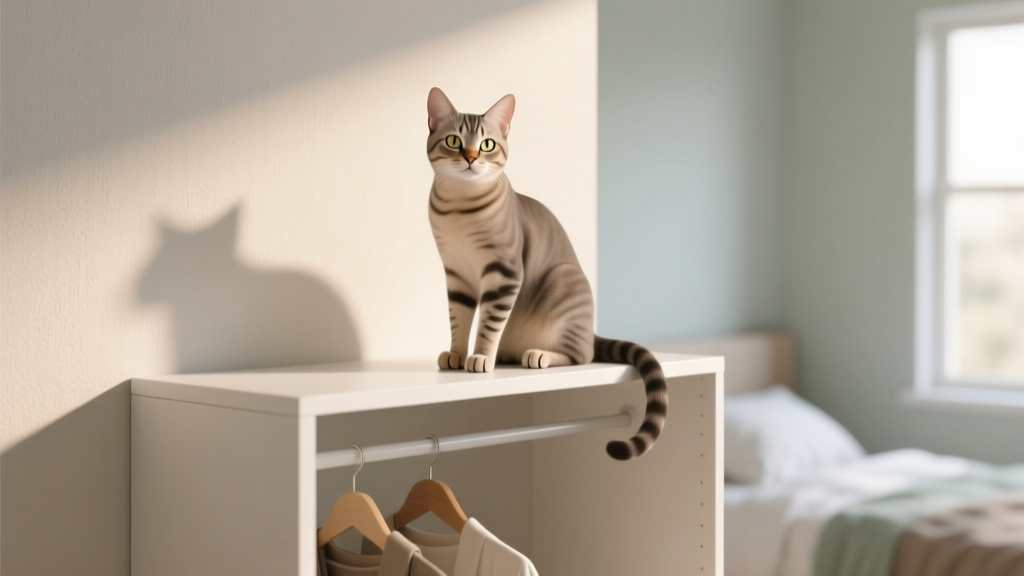
Why Cats Sit on the Closet Shelf Top Level
You open the closet to grab a hoodie and—surprise—two glowing eyes stare back at you from the top shelf. Your cat is loafed up between a stack of towels and a shoebox like they pay rent up there. Sometimes they blink slowly. Sometimes they look mildly offended that you dared to disturb their penthouse suite. And somehow, out of every cozy spot in your house, the highest closet shelf is the one they’ve crowned “best seat in the building.”
If this sounds familiar, you’re not alone. Cats have very good reasons for choosing the closet shelf top level, and most of them make perfect sense once you see your home the way a cat does: as a landscape of vantage points, hiding places, scent zones, and “do not disturb” areas.
1) The scientific (and wonderfully cat-like) reasons behind it
Cats are both predators and prey in evolutionary terms. Even our plush, indoor-only companions carry instincts shaped by thousands of years of needing to hunt efficiently while avoiding bigger animals. That double identity creates a strong preference for two things:
- High ground for safety and surveillance
- Enclosed or semi-enclosed spaces for concealment and calm
The top closet shelf often delivers both. From up high, your cat can watch the room, hear household activity, and stay out of reach of dogs, kids, robot vacuums, and well-meaning humans who want “just one cuddle.” The closet itself adds another bonus: it’s a scent-rich, low-traffic area that feels like a small, private den.
There’s also the simple physics of warmth. Heat rises, and upper shelves can be a little cozier—especially in winter or in homes with less consistent heating.
2) A detailed breakdown: different “closet shelf” motivations in real life
Not every cat sits on the top shelf for the same reason. Context matters. Here are the most common scenarios cat owners recognize.
The “I’m the neighborhood watch” perch
Your cat chooses the top shelf when the house is busy—guests are over, a delivery arrives, or the kids are racing through the hallway. From their elevated spot, they can monitor everything without being in the middle of it. Cats like to gather information before they commit to action. The top shelf is a perfect observation deck.
What it looks like: ears swiveling, eyes half-open but tracking movement, body relaxed yet ready to shift positions.
The “quiet cave” retreat
Closets are usually calmer than the living room or kitchen. The top shelf adds an “out of the way” feeling. Many cats use it as a decompression space after a stressor—like a loud vacuum session, a visitor, a thunderstorm, or a change in routine.
What it looks like: a tight loaf, tucked paws, face turned away, long stillness, possibly sleeping more deeply than usual.
The “this smells like my people” comfort zone
Closets are packed with your scent: jackets, sweaters, bedding, and shoes. Cats are scent-driven. If your cat is bonded to you, lying near your smell can be genuinely soothing. It’s one reason cats nap on laundry piles, inside suitcases, and—yes—on the closet shelf above your favorite scarf.
What it looks like: kneading, purring, head rubbing on clothing, slow blinking if you look up at them.
The “temperature and texture” preference
Some closet shelves are lined with soft blankets, stacked towels, or the perfect cardboard box. Even a plain shelf can feel good if it’s stable, slightly warm, and offers a secure edge to lean against. Cats like a surface that supports their whole body and doesn’t wobble.
What it looks like: frequent repositioning until they get “just right,” then a dramatic flop into stillness.
The “I need space from the other cat” strategy
In multi-cat homes, vertical space is social currency. If your cat wants to avoid another cat (or keep an eye on them), the top shelf becomes a safe lane. It can reduce direct confrontations and help a more timid cat feel in control.
What it looks like: the shelf becomes “their” spot, and they may hesitate to come down if the other cat is nearby.
3) What sitting on the top closet shelf says about your cat’s mood
This behavior is often normal and healthy. The meaning comes from body language and timing.
- Content and secure: relaxed loaf, slow blinks, grooming, or napping. They’re choosing a favorite hangout.
- Curious and engaged: upright posture, ears forward, tail wrapped neatly, watching you get dressed like it’s a documentary.
- Overstimulated or needing a break: ears slightly to the side, less interest in interaction, choosing height to avoid contact.
- Anxious or hiding: crouched tightly, wide eyes, very still, reluctant to come down even for treats. This suggests the closet shelf is being used as a refuge.
- Possessive or defensive: stiff body, growling if approached, swatting when someone reaches in. Less common, but it can happen if they feel their safe spot is threatened.
A helpful mindset: your cat isn’t “being weird.” They’re self-managing their comfort level the way a skilled little creature would.
4) Related behaviors you might also notice
If your cat loves the top closet shelf, you may see other classic “vertical and hidden” habits:
- Perching on the refrigerator or kitchen cabinets
- Sleeping on the highest cat tree platform (especially the one closest to a doorway)
- Choosing boxes, baskets, and drawers as nap spots
- Hiding in closets during loud events (vacuuming, parties, thunderstorms)
- Following you into the bedroom and settling near clothing or shoes for scent-comfort
- “Meercat mode”—sitting upright to see above obstacles
These are all variations on the same themes: safety, information gathering, scent security, and control of distance.
5) When the closet shelf habit is normal… and when it might be a concern
Usually normal:
- Your cat uses the shelf as one of several hangout spots.
- They come down for meals, play, and litter box use.
- They’re relaxed up there and still socially connected (slow blinks, greeting you, normal routines).
Potentially concerning: consider a closer look (and possibly a vet call) if you notice any of the following:
- Sudden increase in hiding or spending most of the day on the shelf when they didn’t before.
- Not eating, drinking, or using the litter box normally—hiding can be a sign of pain or illness.
- Limping or difficulty jumping yet still trying to reach the shelf (cats can be determined even when it hurts).
- New aggression or fear around normal household activity.
- Breathing changes or low energy paired with withdrawal.
Also consider environmental stressors: a new pet, construction noise, new baby, schedule changes, or outdoor cats visible through windows can all increase “high hiding” behavior.
6) How to respond (and how to encourage it safely)
You don’t need to “fix” this habit—your cat is meeting a legitimate need. The goal is to make it safe and to expand their options so the closet shelf isn’t the only sanctuary.
Make the closet shelf safer
- Stabilize the surface: remove wobbly stacks, sharp objects, and anything that could slide.
- Add traction: a folded blanket or shelf liner helps prevent slips during the jump up or down.
- Create a clear landing zone: keep the floor area below open so your cat can jump safely.
- Check for hazards: mothballs, essential oils, loose strings, plastic bags, and small items that could be chewed.
Give them “approved” vertical space elsewhere
If the closet shelf is your cat’s only high option, they’ll guard it like treasure. Add alternatives:
- A tall cat tree near a window
- A wall shelf or cat wall system
- A sturdy bookcase top with a bed (if safe and allowed)
Respect the safe zone
If your cat goes to the top shelf to decompress, avoid reaching up and pulling them down for cuddles. That can teach them the closet isn’t safe after all. Instead, talk softly, blink slowly, and let them choose when to rejoin.
Use it as a relationship builder
Try this: when your cat is perched up there and relaxed, toss a treat gently onto the shelf (not at your cat). Over time, they learn that your presence near the closet predicts good things—without pressure. You’re building trust from a distance, which cats deeply appreciate.
If it’s stress-related, address the stress
- Increase predictable play sessions (short, daily hunting-style play is gold).
- Provide multiple litter boxes and feeding stations in multi-cat homes.
- Offer hiding beds at ground level too, so height isn’t the only “escape.”
7) Fun facts and research-flavored nuggets
- Cats use height to manage social distance. Vertical space is a peaceful way for cats to share a home without constant face-to-face interaction.
- Hiding is a normal coping strategy. In shelter and home settings, cats often choose concealed locations when they feel uncertain—then explore more once they feel safe.
- Closets are scent libraries. Your clothes hold a dense mix of familiar odors. For many cats, familiar scent = security.
- High resting spots can support better rest. When a cat feels protected from surprise approaches, they can relax more deeply—important for overall wellbeing.
8) FAQ: common questions about cats on the top closet shelf
Is my cat hiding because they’re mad at me?
Usually, no. Cats don’t “punish” the way humans imagine. If your cat retreats to the closet shelf, they’re more likely seeking quiet, safety, or personal space. Look at the bigger picture: any recent changes, noise, visitors, or schedule shifts?
Should I block off the closet so my cat stops doing this?
If it’s safe and your cat is healthy, blocking access often removes a coping tool. A better approach is to make the shelf safe and also provide other high or enclosed options. Block it only if there are hazards you can’t eliminate.
My cat won’t come down when I call. Are they stuck?
Most cats are capable of getting down, but they may hesitate if the landing zone feels risky or if something “down there” worries them (another pet, a loud appliance, slippery flooring). Add a chair or stool as a step, and keep the area calm and open.
Why does my cat choose the closet shelf instead of the expensive cat bed I bought?
Cat beds are cozy, but they don’t always offer height, privacy, or your scent. Try placing a worn T-shirt in the bed and moving it to a higher, quieter spot. Sometimes the location matters more than the bed.
Could this mean my cat is sick?
It can, especially if the behavior is new and paired with appetite changes, litter box changes, low energy, or hiding more than usual. Cats are experts at concealing discomfort. When in doubt, a vet check is wise.
How can I tell if my cat is anxious up there or just relaxing?
Relaxed cats look soft: slow blinks, gentle grooming, loose posture, dozing. Anxious cats look tight: crouched body, wide eyes, frozen stillness, ears angled back, and they may avoid treats or interaction.
Closing thoughts
The top closet shelf is more than a random quirk—it’s a feline “multi-tool”: a lookout tower, a scent-soaked comfort zone, and a peaceful hideaway all in one. When you view it through cat psychology, it’s actually a sign your cat is smartly arranging their environment to feel safe and in control.
Does your cat have a favorite “why are you up there?” spot—closet shelf, fridge top, or the mysterious corner above the cabinets? Share your story (and your cat’s funniest perch preferences) with the Cat Lovers Base community at catloversbase.com.