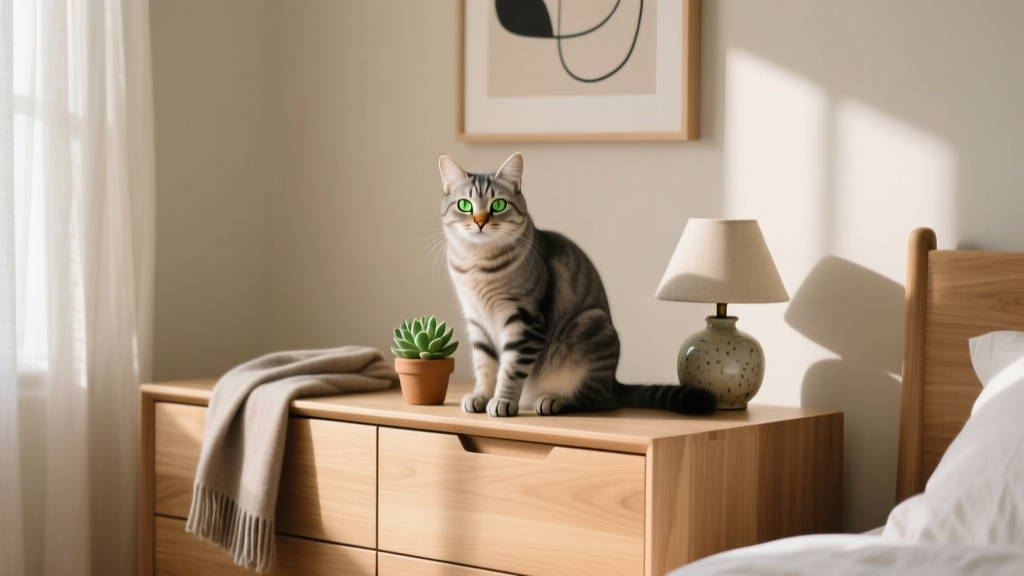
Why Cats Sit on the Bedroom Dresser Top
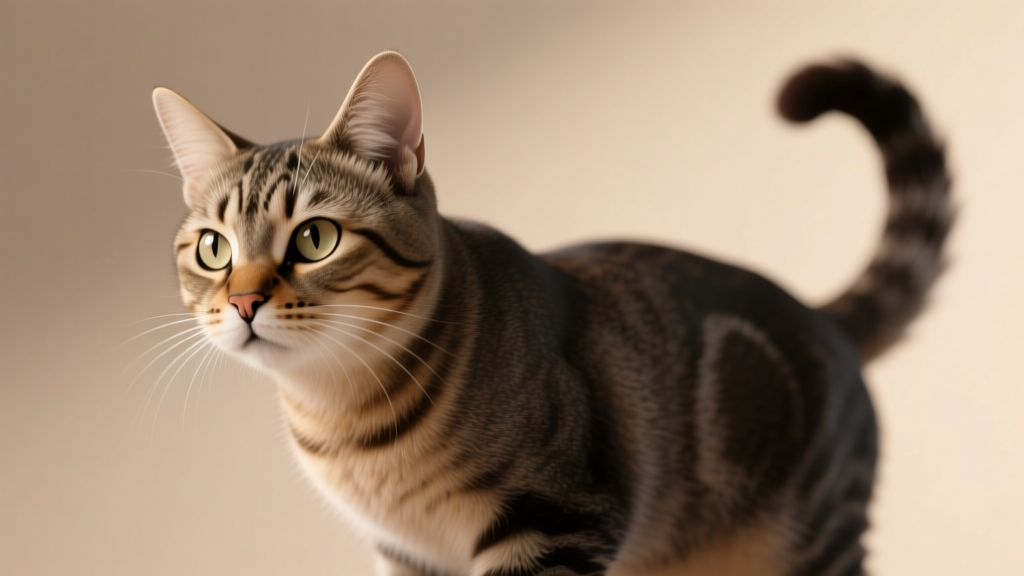
You’re getting ready for bed, the room is quiet, and you notice it again: your cat is perched on top of the bedroom dresser like a tiny, furry gargoyle. Maybe they’re loafed neatly between your folded sweaters. Maybe they’re stretched along the edge with their tail dangling like a curtain tieback. Maybe they’re staring directly at you while you brush your teeth, as if you’re the one being supervised.
If you’ve ever wondered, “Why the dresser? Why that spot?” you’re not alone. Dresser-top sitting is one of those classic cat behaviors that looks random until you view it through a feline lens. From up high, your cat isn’t just hanging out—they’re gathering information, feeling secure, claiming territory, and sometimes… trying to manage you.
1) The Scientific (and Evolutionary) Reason: Height = Safety + Information
Cats are small predators. In the wild (and in their instincts), being small comes with two realities:
- They hunt. They like to watch, stalk, and pounce.
- They can be hunted. Even confident cats carry the wiring that says, “Stay aware. Stay safe.”
Elevated spots solve both. From a height, a cat can:
- See more of the environment with less effort.
- Control distance—they can observe without being in the middle of the action.
- Reduce surprise approaches from other pets or people.
- Feel secure because they’re harder to corner.
Your bedroom dresser is basically a ready-made lookout tower: stable, familiar, and often positioned with a great view of the bed (prime human activity) and the doorway (prime “what’s coming in?” monitoring).
2) A Detailed Breakdown: Different “Dresser Cat” Contexts (and What’s Going On)
Not all dresser sits mean the same thing. The meaning depends on timing, body language, and what’s happening in the home.
They sit up there during bedtime routines
If your cat appears on the dresser when you change clothes, wash your face, or settle into bed, they may be:
- Tracking predictable routines (cats love patterns).
- Positioning for attention without being too needy.
- Keeping you in view—a low-key attachment behavior.
Example: Your cat watches you turn off lamps and fluff pillows, blinking slowly like a tiny sleep coach. They’re not “doing nothing.” They’re monitoring the family’s nightly transition.
They sit up there when guests are over (or the house is noisy)
For many cats, height is a stress-management tool. A dresser top can be a “safe zone” that’s close enough to observe but far enough to avoid interaction.
- Shy cats use elevation to feel in control.
- Sensitive cats use it to reduce social pressure.
Example: The doorbell rings and your cat vanishes… then reappears on the dresser, half hidden behind a lamp, peeking like, “I’m here, but don’t look at me.”
They sit up there at dawn and stare at you
This one is famous. The dresser becomes a launchpad for “wake up” strategies:
- Direct staring (subtle intimidation technique).
- Gentle meows that escalate over time.
- Object testing (the slow paw toward your water glass).
From the dresser, your cat can see if you’re awake while staying just out of easy reach—very efficient.
They sit up there after you’ve moved furniture or changed bedding
Cats are scent and territory experts. When something changes, they often “audit” the room from a strategic spot.
- They’re checking the environment for novelty and safety.
- They’re re-establishing ownership by occupying a key location.
They sit on the dresser specifically where your clothes are
This isn’t just because your shirts are soft (though yes, softness matters). Your clothing smells like you, and your cat is strongly tuned to familiar scents.
- Comfort: Your scent can be calming.
- Social bonding: Cats mingle scents to form a “group smell.”
- Territory: They may be adding their own scent to yours, like a shared signature.
3) What Dresser Sitting Says About Your Cat’s Mood and Feelings
Your cat’s body language on the dresser is your best clue. Here are common “dresser moods”:
- Relaxed loaf, slow blinks, soft face: Content and secure. This is a “I like this room and I like you” vibe.
- Upright sit, ears forward, tail gently wrapped: Curious and engaged. They’re watching and processing.
- Crouched body, tucked paws, ears swiveling, wide eyes: Vigilant or mildly anxious. Height is helping them cope.
- Tail flicking, ears angled sideways, intense staring: Overstimulated or annoyed—often seen if another pet is nearby or if they’re guarding space.
- Exaggerated stillness, “statue mode”: Listening. Cats can freeze to analyze sound (outside footsteps, a heater click, another cat moving).
In many homes, the dresser is where cats go to feel informed. And for a cat, feeling informed often equals feeling safe.
4) Related Behaviors You Might Also Notice
If your cat loves the dresser top, you may see other “elevation and oversight” behaviors, such as:
- Sitting on the fridge like they pay rent.
- Perching on the back of the couch to keep tabs on the whole room.
- Claiming the highest cat tree platform as their “office.”
- Following you from room to room but watching from a distance rather than being underfoot.
- Supervising showers from the vanity or hamper (because clearly you need supervision).
These behaviors often cluster together in cats who are confident observers—or cats who feel better when they can control proximity.
5) When It’s Normal (and When It Might Be a Concern)
Normal dresser sitting usually looks calm, routine-based, and flexible. Your cat may hop up, hang out, hop down, and still use other spots in the room.
It may be a concern if dresser sitting is new, intense, or paired with other changes. Watch for:
- Sudden hiding or constant vigilance (possible stressor in the home).
- Avoiding the floor entirely (pain, arthritis, or fear of another pet).
- Increased vocalizing, agitation, or startle response (anxiety, environmental change, or conflict).
- Difficulty jumping up or down (mobility issues).
- Guarding the dresser—hissing, swatting, or blocking another cat (territorial tension).
If your cat is older and suddenly chooses higher perches or struggles to access them, it’s worth discussing with a veterinarian—especially if you also notice stiffness, missed jumps, or changes in grooming.
6) Tips for Responding to (or Encouraging) the Behavior
If dresser sitting is safe and not disruptive, it’s usually a healthy, normal choice. That said, you can make it work better for both of you.
Make the dresser top safe
- Remove breakables or secure them with museum putty if needed.
- Provide a stable mat or folded blanket to prevent slipping and make it comfy.
- Avoid strong scents (some cleaners or air fresheners can be overwhelming to cats).
Offer a “yes spot” nearby
If you’d rather your cat not lounge on clothing or knock items over, give them an alternative:
- A cat tree in the bedroom positioned near the dresser’s view line.
- A wall shelf perch (cat-specific shelves can be fantastic).
- A window perch if the bedroom has a good view.
The key is matching what the dresser offers: elevation plus a good vantage point.
If they’re using the dresser to demand breakfast, change the game
- Don’t reward the stare-down with immediate feeding. If possible, wait for a quiet moment.
- Use an automatic feeder for early meals so you’re not the food dispenser at dawn.
- Add evening enrichment (play sessions, puzzle feeders) to reduce early-morning energy spikes.
If they’re up there because they’re stressed, add “confidence furniture”
- Multiple vertical options in different rooms help cats feel less trapped.
- More hiding spots (covered beds, boxes) can reduce the need to “escape upward.”
- For multi-cat homes: create multiple elevated stations so one cat can’t monopolize the high ground.
7) Fun Facts and Research-Style Nuggets About High Perches
- Cats use height to manage social contact. Being elevated allows them to choose interaction rather than endure it. This is one reason vertical space is often recommended in cat behavior and shelter design discussions.
- “Resource control” matters to cats. A dresser with a view of the doorway can function like a strategic checkpoint—your cat can monitor movement without physically blocking anyone.
- Vertical territory expands perceived space. To a cat, a small bedroom with shelves, a dresser perch, and a cat tree feels bigger and more navigable than the same room with only floor-level options.
- Observation is enrichment. Watching you fold laundry, brush hair, and open drawers is mentally stimulating. Cats are natural pattern detectors; routines are like little predictable “stories” they can follow.
8) FAQ: Common Questions Cat Owners Ask
Is my cat sitting on the dresser because they’re dominant?
Usually, no. Height can look like “dominance” to humans, but for cats it’s more often about safety, comfort, and information. In multi-cat homes, though, a cat may use high-value spots to control access or avoid others—more “resource strategy” than a power fantasy.
Why does my cat sit on the dresser and just stare at me?
Staring can mean curiosity, anticipation (especially if you often feed or pet them next), or simple monitoring. Check the rest of their body language: relaxed eyes and slow blinks are friendly; tense posture and tail flicks can signal irritation or overstimulation.
Should I stop my cat from jumping on the dresser?
If it’s safe and not causing problems, it’s fine to allow. If you need to discourage it (breakables, hygiene concerns, nighttime noise), provide an equally appealing alternative perch nearby and make the dresser less rewarding (clear the space, block access temporarily, or use double-sided tape on the edge for a short training period—many cats dislike sticky surfaces).
Why does my cat choose the dresser instead of the bed with me?
Some cats enjoy closeness but don’t love full-body contact all the time. The dresser lets them be near you while maintaining personal space. It can also be warmer or cooler depending on airflow, or simply have a better view of the doorway.
My cat is older—could dresser sitting be related to aging?
Possibly. Some older cats still love height, but arthritis or stiffness can make jumping uncomfortable. If you notice hesitation, misjudged jumps, or reluctance to jump down, ask your veterinarian about pain management and consider adding steps or a ramp to their favorite perch.
Why does my cat sit on the dresser when I’m getting dressed?
Because you’re fascinating. Also because movement, fabric, and routine are interesting, and your scent is strong there. Many cats also learn that “getting dressed” predicts you leaving—so they show up to monitor and, sometimes, lobby for attention before you go.
9) The Takeaway: Your Cat Isn’t Being Weird—They’re Being Strategic
The bedroom dresser top is a cat’s perfect combination of lookout point, comfort zone, and relationship hub. It lets your cat feel safe, stay involved in your world, and choose how close they want to be. When you understand that, dresser sitting stops being a quirky mystery and starts looking like what it is: a smart cat using the environment to meet very normal feline needs.
Does your cat have a specific dresser routine—like claiming one exact corner, knocking over the same object, or supervising you like a tiny night manager? Share your stories (and the funniest details) with fellow cat people on catloversbase.com.