Why Cats Sit on the Basement Landing Area
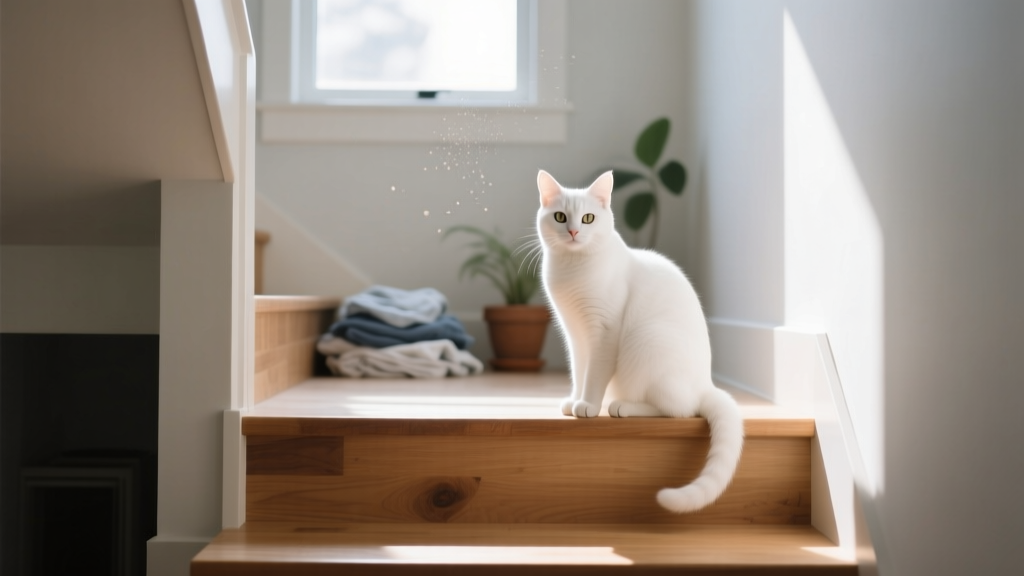
You’re carrying a laundry basket downstairs, trying not to trip, and there they are: your cat, parked like a tiny, silent bouncer on the basement landing. Not fully upstairs, not fully down. Just… stationed. You step around them (because of course you do), and they blink slowly as if to say, “Yes, I live here too.”
If your cat treats the basement landing like a VIP lounge, a guard post, or an oddly specific hangout spot, you’re not alone. This is one of those classic cat behaviors that feels random until you look at it through a cat’s eyes—and through the lens of feline instincts.
1) The scientific (and evolutionary) “why” behind the basement landing obsession
Cats are both predators and prey in the wild. That dual identity shapes everything about how they choose spaces. A basement landing—especially the little platform between floors or at the bottom/top of stairs—often checks several boxes that make a cat feel secure and in control:
- It’s a natural choke point. Landings are bottlenecks. In animal behavior terms, they’re “high-traffic junctions.” If you wanted to monitor movement in and out of a territory, you’d pick a spot where everyone has to pass. Cats do the same.
- It offers a vantage point with quick escape routes. On a landing, your cat can see who’s coming from above and below. If anything feels off, stairs provide an instant exit in either direction.
- It’s often quieter and more predictable than main living areas. Basements tend to have fewer sudden noises (TV, doorbell, kids sprinting, kitchen clatter). Even if your basement is busy, the landing itself is usually calmer than the center of the action.
- Scent control. Cats are scent-focused. Landings pick up household odor “traffic” because everyone passes through. Your cat sitting there is a way of soaking in information—and leaving a little of their own scent signature behind.
- Temperature and airflow are different there. Basements can be cooler, and stairwells often have distinct airflow patterns. A cat may choose a landing because it’s a comfortable microclimate: a cool spot in summer, a warm spot near a vent in winter.
In short: the basement landing can feel like the command center of the home. Cats love command centers.
2) A detailed breakdown: different contexts, different reasons
Not every landing-sit is the same. The meaning changes depending on what else is happening in your household—and in your cat’s body language.
The “Hall Monitor” Sit
Scenario: Your cat sits upright on the landing, alert but calm, eyes tracking you as you move. They might shift position slightly when someone passes.
Likely reason: Territorial monitoring. Your cat is keeping tabs on movement and maintaining a sense of control over the home’s “border.” This is especially common in multi-person homes where comings and goings are frequent.
The “Sentinel” Sit (aka: Something’s Different)
Scenario: Your cat sits on the landing and stares down into the basement, ears rotating, body still. Or they sit there more often after a change—new appliance noises, construction, a mouse problem, a new pet.
Likely reason: Investigation and vigilance. Cats are extremely sensitive to novel sounds and scents—furnace clicks, water heaters, sump pumps, dryer thumps. If your basement has a “mystery noise,” your cat may be gathering intel.
The “I’m Waiting for You” Sit
Scenario: Your cat appears when you head toward the basement and sits on the landing like a supervisor. They may meow once, then settle.
Likely reason: Social bonding and routine. Some cats shadow their people in a low-key way. Sitting on the landing lets them be near you without committing to going all the way down (basements can feel risky to cautious cats).
The “Cool Spot” Sprawl
Scenario: Your cat is pancaked across the landing, belly down, paws tucked or stretched, looking blissfully uninterested in everything.
Likely reason: Comfort and thermoregulation. That landing surface might be cooler tile, concrete, or simply in the path of a draft. Many cats become part-time meteorologists when choosing nap locations.
The “Boundary Negotiation” Sit (multi-cat homes)
Scenario: One cat sits on the landing while another hesitates at the top of the stairs. There’s staring, maybe a slow tail flick, maybe one cat chooses a different route.
Likely reason: Social dynamics and resource control. Stairs and landings can become “claimable” real estate. This doesn’t always mean aggression; sometimes it’s just cats communicating, “This is my zone right now.”
3) What this behavior can mean about your cat’s mood and feelings
Body language tells you whether the landing sit is relaxation, curiosity, or tension. Here are common signals:
- Relaxed and content: Slow blinks, loosely draped tail, paws tucked, ears neutral. This is a safe-space sit. Your cat feels secure enough to rest in a semi-public area.
- Curious and investigative: Ears swiveling, head slightly lowered as they listen, occasional sniffing, posture upright. Your cat is “reading” the basement like a newspaper.
- Mildly stressed or on edge: Tail flicking, tense shoulders, wide pupils, low crouch, ears angled sideways. Something about that space feels uncertain—noise, scent, another animal’s presence.
- Possessive or controlling (sometimes): Blocking the path, staring at another pet, stiff posture, slow deliberate tail movement. This can be resource guarding of space or a confidence display.
A helpful rule: if your cat looks soft and sleepy, it’s probably comfort. If they look frozen and hyper-alert, it’s probably vigilance.
4) Related behaviors you might also notice
Basement-landing cats often have a whole “stairwell personality.” You may also see:
- Stair-sprinting (“the zoomies” on steps). Stairs are excellent for dramatic bursts of speed and play-hunting practice.
- Rolling or rubbing on the edge of the landing. Scent-marking with facial glands and body rubs: “This route is mine.”
- Pausing mid-stair to look back at you. That’s a check-in—part social bonding, part making sure you’re following the script.
- Staring into the basement like it contains ancient secrets. Usually it contains a furnace. To a cat, it contains a story.
- Blocking the stairs at the exact moment you’re carrying something heavy. Not personal. Probably. (Okay, sometimes it feels personal.)
5) When sitting on the basement landing is normal vs. a concern
Most of the time, this behavior is perfectly normal. It’s a cat choosing a strategic, comfortable spot. But there are situations where a sudden change in landing behavior deserves attention.
Likely normal
- Your cat has always liked the stairs/landing and seems relaxed.
- They use it as a nap spot during warm weather.
- They sit there when the household is busy and retreating makes sense.
- They’re simply watching you come and go—calmly.
Potentially concerning (especially if new)
- Sudden hiding on the landing when they previously socialized upstairs—could indicate stress, conflict with another pet, or illness.
- Staring and vocalizing at the basement with agitation—could be hearing critters, reacting to a new mechanical sound, or anxiety.
- Reluctance to climb stairs plus lingering on the landing—may suggest pain (arthritis, injury) or fear after a slip.
- Guarding the landing aggressively (hissing, swatting, blocking access)—can signal social tension in multi-cat homes.
- Increased thirst/urination, appetite changes, lethargy along with location changes—worth a vet check.
If the landing becomes your cat’s “all day, every day” spot and they’re avoiding normal activities, treat it as a clue—not a quirk.
6) Tips for responding to (or encouraging) the behavior
You don’t need to “fix” a cat sitting on the basement landing. But you can make it safer, more enriching, and less inconvenient for humans with laundry baskets.
Make the landing comfortable and cat-friendly
- Add a non-slip mat or runner. Cats can be cautious on slick surfaces. Better traction increases confidence and reduces falls.
- Offer a designated perch. A small bed, folded blanket, or low cat tree near the landing gives them an “official” spot that’s not directly underfoot.
- Consider lighting. A dim stairwell can feel spooky. A soft nightlight can help cats (and humans) navigate more calmly.
Work with their instincts
- Turn it into a calm observation zone. If your cat likes that vantage point, you can add a scratching post nearby. Scratching is both stress relief and scent marking.
- Use interactive play upstairs. If your cat is stationed there out of boredom, a 5–10 minute wand-toy session can satisfy the “hunt” cycle and reduce sentinel duty.
- Reward relaxed behavior. If they’re calmly sitting (not blocking), toss a treat past them so they step aside and learn that moving away from the path is a good deal.
Reduce conflict in multi-cat homes
- Create alternate routes and resources. Multiple litter boxes, multiple feeding stations, and multiple resting spots reduce stairway “gatekeeping.”
- Interrupt staring contests gently. Use a toy toss or treat scatter to break tension without punishment. Punishment increases anxiety and often worsens guarding.
Safety tip (because cats love being underfoot)
If your cat consistently parks where you could trip, teach a “move” routine: approach, pause, toss a treat to the side, and walk through. With repetition, many cats start relocating automatically when they hear footsteps on stairs.
7) Fun facts and research-flavored insights
- Cats are masters of “micro-territories.” While dogs may think in whole rooms or yards, cats often think in routes, corners, thresholds, and perches. A landing is a classic micro-territory: small, strategic, meaningful.
- Thresholds matter. In many species, boundary areas are information-rich. For cats, the edge between spaces (upstairs/downstairs) can be more interesting than either space alone.
- Stairs amplify sound and scent. Stairwells can funnel noises and air currents. What seems “quiet” to you might be a high-definition sensory experience to your cat.
- Observation is enrichment. For indoor cats especially, watching household movement can be a form of mental stimulation—like “cat TV,” but with real humans.
8) FAQ: Common questions about cats and basement landings
Why does my cat sit on the basement landing and stare?
Usually they’re listening or smelling something you can’t detect easily—mechanical sounds, airflow changes, or even tiny critters. If the staring comes with tense posture, tail flicking, or vocalizing, check for new noises (furnace cycles, pipes) or signs of pests.
Is my cat guarding the basement?
Sometimes, yes—though “guarding” in cats often means monitoring and controlling access to a high-traffic spot. If other pets are being blocked or bullied, you’re seeing a resource-control behavior and may need to add more routes/resources and reduce competition.
Why does my cat only sit there when I go downstairs?
That’s often social attachment plus routine. Your cat may enjoy escorting you or keeping you in sight while you disappear into the basement. Many cats prefer to be adjacent to you rather than on top of you—think quiet companionship.
My cat suddenly started hanging out on the landing. Should I worry?
Not automatically, but sudden location changes can signal stress, conflict, or discomfort. Look for other changes (appetite, litter box habits, hiding, irritability). If anything else seems “off,” a vet check is wise—and consider household stressors like new pets, renovations, or schedule changes.
How do I stop my cat from sitting on the landing where I might trip?
Avoid scolding (it can make the stairs feel unsafe). Instead, provide a more appealing spot nearby (bed or perch) and use treat-tossing to teach a habit of moving aside when you approach. Also add a runner or mat to reduce slipping—for both of you.
Does this mean my cat likes the basement?
Not necessarily. They may like the landing because it’s a controlled “in-between” space. Some cats enjoy basements; others prefer to supervise from the threshold where they can retreat quickly.
Cats don’t pick spots at random—they pick spots that make sense to their instincts. If your cat loves the basement landing, they may be seeking comfort, information, control, or simply the perfect breeze. Once you start noticing how strategic that little platform is, it’s hard not to see it as a tiny feline headquarters.
Does your cat have a favorite “in-between” spot—stairs, landings, hallways, doorway thresholds? Share your cat’s funniest basement-landing habits and stories with the Cat Lovers Base community at catloversbase.com.