Why Cats Sit on Newspapers You're Reading
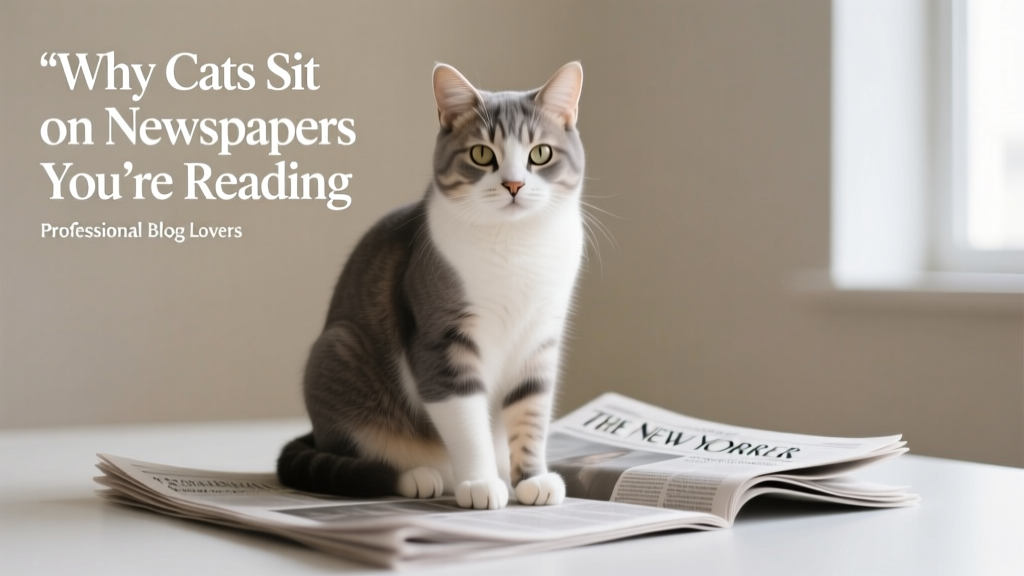
You’ve finally settled in. Coffee? Check. The day’s newspaper (or that glossy magazine you’ve been saving)? Check. You open it up, the pages make that satisfying crackle… and thump—your cat appears like they’ve been summoned by the sound of printed paper. One deliberate paw. A careful step. Then a full-body flop right across the headline you were trying to read. Bonus points if they make intense eye contact as if to say, “Yes, I see you. No, you may not continue.”
If you live with a cat, you’ve probably experienced this tiny domestic takeover. It can be funny, annoying, and strangely heart-melting all at once. And it’s not random. Cats sit on newspapers (and books, laptops, knitting projects, and anything else you’re focusing on) for reasons that make a lot of sense in cat logic.
1) The scientific (and evolutionary) reasons cats do this
Cats are experts at using the environment to meet three core needs: security, comfort, and social connection. A newspaper happens to check all three boxes.
It’s a warm-ish, cozy platform. Paper can hold and reflect a bit of heat, especially if it’s been in your hands or sitting in a sunlit spot. Many cats are heat-seekers by design—conserving energy is part of being a small predator that evolved to hunt in short bursts rather than run long distances.
It’s a “safe base” in the open. Cats love having a defined spot to sit—something that creates a boundary. Even a thin layer of paper can feel like a “place” in a room. In nature, cats choose resting spots that offer a good view of their surroundings and minimize surprise approaches. A newspaper placed in the middle of your attention zone becomes a perfect little stage for surveillance.
It’s a social strategy that works. Cats repeat behaviors that get results. If sitting on your newspaper reliably makes you look at them, talk to them, laugh, pet them, or try to move them (which is still interaction), then the behavior is reinforced. Cats don’t need a complex agenda. If a tactic consistently produces attention, it becomes part of the routine.
It smells like you. Cats navigate the world through scent like we navigate it through sight. Your hands, your clothes, your furniture—those carry your scent signature. When you’re reading, your smell is strong in that space. Sitting on your newspaper may be your cat’s way of blending their scent with yours, strengthening the “group scent” that makes a home feel safe to them.
2) A detailed breakdown: different contexts, different motives
The same behavior can mean slightly different things depending on what’s going on around it. Here are the most common “newspaper sits” and what they tend to be about.
The “You’re busy, so I’m sitting here” sit
This is the classic: you’re focused, still, and not interacting. Cats are keen observers—your cat knows the newspaper is holding your attention. By sitting on it, they become the center of that attention.
What it looks like: strolling over calmly, plopping down with confidence, then watching your face.
The “Warm spot” sit
If the paper is in a sunny patch, near a vent, or freshly handled, your cat might be using it like a heating pad—an extremely flat, crinkly heating pad.
What it looks like: kneading, curling up, eyes half-closed, purring, minimal interest in your reaction.
The “Crinkle enrichment” sit
Some cats love the texture and sound of paper. It’s novel, it’s responsive, and it triggers curiosity. A newspaper is basically a giant, socially acceptable rustle-toy.
What it looks like: pawing at the edges, pouncing, biting corners, sliding into place dramatically.
The “Scent mixing” sit
If your cat rubs their cheeks on the paper, kneads it, or circles before sitting, they may be doing a scent-based bonding ritual.
What it looks like: cheek rubbing, chin rubbing, slow blinks, then a settled sprawl.
The “I want something” sit
Sometimes the newspaper isn’t the point. It’s the timing. If your cat does this right before meals, bedtime, or when you’ve been out all day, it can be an attention request—or a reminder of a routine they’d like you to remember.
What it looks like: sitting on the paper, then hopping off and leading you somewhere, or vocalizing with purpose.
3) What this behavior says about your cat’s mood and feelings
Most of the time, a cat sitting on what you’re reading is a good sign. It often means:
- They feel safe with you. Cats don’t lounge in vulnerable positions around people they don’t trust. If they’re relaxed enough to sprawl on your newspaper, you’re part of their safe world.
- They’re socially motivated. Some cats truly enjoy being near their humans and will insert themselves into any activity that seems “important.”
- They’re comfortable asserting gentle boundaries. Cats are not subtle about preferences. “I’d like you to stop that and pay attention to me” is a very cat thing to communicate.
Read the body language for extra clarity:
- Loose body, slow blinking, purring: contentment and connection.
- Tail tip flicking, ears angled sideways: mild frustration or impatience (often “you’ve been ignoring me”).
- Stiff posture, intense staring, blocking your hands: could be overstimulation, resource guarding of the spot, or a cat who’s feeling a bit pushy.
4) Related behaviors you might also notice
If your cat is a newspaper-sitter, you may also have a cat who:
- Sits on laptops (warmth + attention + elevated “platform”).
- Walks across keyboards (efficient interruption strategy, sometimes reinforced by your reaction).
- Flops onto books, puzzles, or craft projects (same “center of attention” principle).
- Claims any new object you bring home (novelty + scent investigation + territory confirmation).
- Prefers boxes, bags, and laundry piles (defined boundaries and comforting textures).
In other words, your cat isn’t “being weird.” They’re being a cat who has learned exactly where your attention lives.
5) When it’s normal… and when it might be a concern
Normal: Your cat sits or lies on the newspaper, purrs, kneads, slow-blinks, rubs their face, or simply wants to be near you. That’s everyday social and comfort behavior.
Potentially concerning:
- Sudden clinginess or interrupting behavior that’s new in an older or usually independent cat (could indicate stress, discomfort, or a medical change).
- Guarding the newspaper or your lap aggressively—hissing, swatting, or biting if you try to move them.
- Compulsive paper-chewing (especially eating paper), which can be a sign of pica, stress, boredom, or nutritional/medical issues.
- Restlessness and inability to settle—pacing, yowling, or repeated interruption that doesn’t resolve with attention or play.
If you see a big behavior change, paper-eating, or aggression, it’s worth a vet check and, if needed, a chat with a certified cat behavior professional. Cats are masters of subtle “something’s off” signals.
6) Tips for responding (without turning it into a battle)
You have options, and none of them require you to “win” against your cat. The goal is to meet the need underneath the behavior.
Create a “yes spot” next to your reading area
Place a small blanket, towel, or cat bed on the couch beside you. Many cats will choose it if it’s close enough to still feel included. If your cat loves paper specifically, put a single sheet of newspaper or packing paper on their spot and let them claim it.
Use strategic reinforcement
If your cat sits on their designated spot, reward with calm pets or a treat. If they sit on your newspaper, avoid big reactions. Move them gently and quietly to the “yes spot,” then reward there. Cats learn patterns fast when the payoff is consistent.
Try a “two-minute connection break”
Some cats interrupt because they’re under-stimulated. Before you start reading, offer:
- 2–5 minutes of wand-toy play (short bursts, then a “catch”)
- a small snack afterward (hunt → eat → groom → sleep is a classic cat cycle)
- or a quick grooming session if your cat enjoys brushing
You’ll often find your cat settles more easily after their social/energy needs are met.
Meet the sensory need
If your cat loves crinkly textures, give them appropriate outlets: crinkle tunnels, paper bags with handles removed, or supervised packing paper. This channels the urge away from your reading material.
If you secretly enjoy it, lean in
Some people find this behavior oddly comforting—a tiny ritual of togetherness. If you don’t mind, you can absolutely let it be part of your routine. Just ensure your cat isn’t chewing or swallowing paper and isn’t becoming pushy or stressed.
7) Fun facts and research-flavored insights
- Cats love defined edges. Studies and observations of feline behavior show cats are drawn to “bounded” spaces—boxes are the famous example, but even tape squares on the floor can attract cats because they create a clear boundary. A newspaper acts like a portable boundary marker.
- Attention is powerful reinforcement. In learning theory terms, behaviors that produce any reliable response—laughing, talking, touching, moving the cat—can increase in frequency. Your cat doesn’t distinguish between “good attention” and “stop that attention” as much as we do.
- Group scent matters. Cats living socially (with humans or other cats) often engage in scent mixing via rubbing and resting in shared spaces. It’s one reason your cat likes your laundry so much: it smells like the “family.”
FAQ: Cats and newspaper-sitting
1) Is my cat jealous of the newspaper?
2) Why does my cat do this only when I’m reading?
Reading makes you still, quiet, and focused—perfect conditions for a cat to approach without startling you. Your cat has also learned that reading time is predictable, so it becomes a convenient moment to request connection.
3) Should I move my cat off the newspaper?
It’s fine to move them gently, especially if you need to read or they’re chewing paper. Keep it calm and consistent. Provide an alternative spot so you’re not just saying “no,” you’re offering a “yes.”
4) My cat bites the newspaper. Is that normal?
Light nibbling or playful mouthing can be normal, especially in younger cats. But persistent chewing or swallowing paper isn’t something to ignore—offer enrichment, reduce stress, and talk to your vet if it continues.
5) Why does my cat purr and knead on the newspaper?
Kneading is a comfort behavior linked to kittenhood, and purring often signals relaxation (though it can also occur with stress or pain). In this context, it usually means your cat finds the texture soothing and feels safe near you.
6) Can I train my cat to stop sitting on what I’m reading?
Yes—most cats respond well to redirecting and rewarding. The key is consistency: reward the alternative spot, keep reactions to the “wrong spot” minimal, and ensure your cat’s play/social needs are being met daily.
If your cat is a dedicated newspaper blocker, consider it a quirky compliment: you’re interesting, your routine is meaningful, and your attention is valuable. With a few small tweaks—an approved nearby perch, a little pre-reading play, and calmer redirection—you can keep your reading time and your cat’s need for connection happily balanced.
Does your cat sprawl across the crossword, sit on the front page like a monarch, or politely choose only the sports section? Share your funniest “my cat vs. my newspaper” stories with the Cat Lovers Base community at catloversbase.com.