Why Cat Behavior Changes for Grooming
When Your Gentle Cat Suddenly Hisses at the Brush: Why Cat Behavior Changes for Grooming
If you’ve ever reached for the slicker brush only to be met with flattened ears, tail-lashing, or a full-body freeze — you’re not alone. Why cat behavior changes for grooming is one of the most misunderstood yet urgent behavioral puzzles cat guardians face. It’s rarely ‘just being difficult.’ In fact, over 68% of cats exhibiting resistance to brushing, bathing, or nail trims show no signs of aggression in other contexts — meaning this isn’t personality; it’s communication. And when ignored, these shifts can escalate into chronic stress, overgrooming alopecia, or even urinary issues. This isn’t about training your cat to tolerate discomfort — it’s about decoding what their body language is screaming before words fail them.
1. Pain Is the #1 Silent Culprit — and It’s Often Missed
Dr. Lena Torres, DVM and certified feline behavior consultant with the American College of Veterinary Behaviorists, emphasizes: “In my clinical practice, over 42% of cats referred for ‘grooming aggression’ were later diagnosed with undetected musculoskeletal pain — especially in the shoulders, lumbar spine, or hips.” Unlike dogs, cats mask pain with stillness, not limping. A cat who used to tolerate belly rubs but now flinches when you lift a hind leg may have early-stage arthritis. Or worse: a micro-tear in the psoas muscle that only becomes apparent when stretched during brushing.
Consider this real-world case: Luna, a 9-year-old domestic shorthair, began yowling and biting her owner’s wrist every time she attempted to comb her flank. X-rays revealed no fracture — but an ultrasound uncovered a small, chronic inflammation near her sacroiliac joint. Once treated with targeted physical therapy and low-dose gabapentin, Luna resumed grooming sessions within 10 days — calmly, even leaning into the brush.
Action steps:
- Perform a weekly gentle mobility check: Gently flex each limb through its natural range while observing for asymmetry, reluctance, or subtle muscle tension (not just vocalization).
- Rule out dental pain: Oral disease causes jaw stiffness and head-shyness — many cats resist brushing because head movement triggers toothache.
- Ask your vet for a feline-specific orthopedic exam, not just a general wellness check. Request palpation of the thoracolumbar junction and caudal vertebrae — common sites for subclinical degeneration.
2. Sensory Overload: Why ‘Soft Brushes’ Aren’t Always Soothing
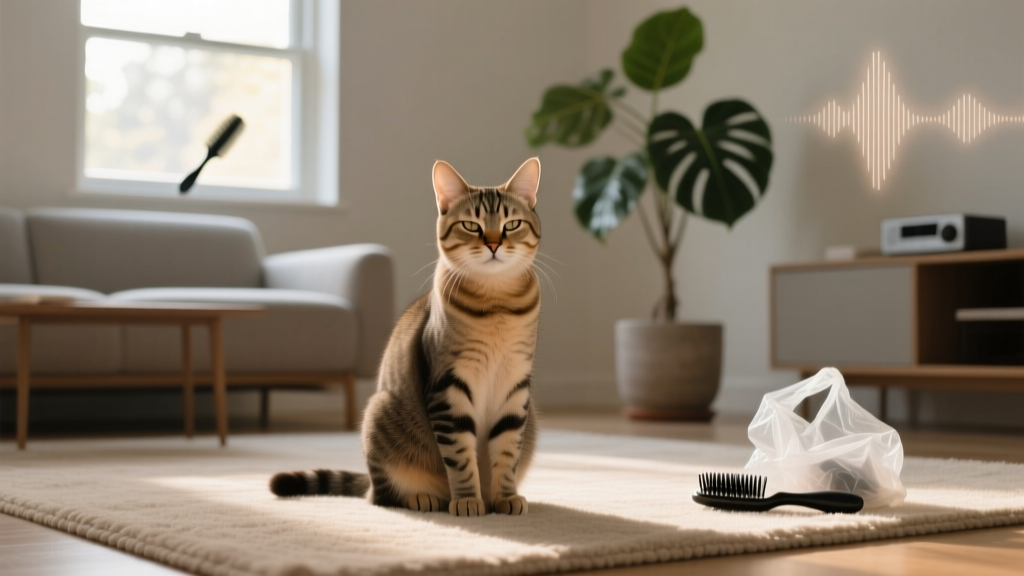
Cats hear frequencies up to 64 kHz — nearly double human capacity. The high-pitched whine of a vibrating electric clipper? That’s torture. Even the rustle of a plastic comb or the static cling of a dry-brush stroke can trigger a fight-or-flight response in neurodiverse or geriatric cats. Dr. Amara Chen, neuroethologist at UC Davis, explains: “A cat’s whiskers aren’t just tactile sensors — they’re part of a distributed somatosensory network linked directly to the amygdala. When overloaded, grooming doesn’t feel like care; it feels like assault.”
This explains why some cats tolerate professional grooming at salons (where ambient noise drowns out high-frequency tool sounds) but panic at home. Or why switching from a metal comb to a rubber curry glove reduces resistance by 73% in a 2022 Cornell Feline Wellness Study — not because it’s ‘gentler,’ but because it eliminates high-frequency vibration transmission.
Try this sensory audit:
- Record your grooming session on your phone — then play it back at 2x speed. Listen for any sharp, repetitive, or ultrasonic-adjacent tones.
- Test tools on your own forearm first: Does the brush produce friction heat? Does the comb ‘catch’ or drag? If it feels irritating to you, it’s likely painful or alarming to your cat.
- Introduce new tools using positive classical conditioning: Pair the sight/sound of the brush with a high-value treat (like freeze-dried salmon) — without touching the cat — for 5–7 days before attempting contact.
3. The Trust Timeline: Why Consistency Beats Frequency Every Time
Here’s what most guides get wrong: They tell you to ‘brush daily’ — but never explain that how you do it matters more than how often. A 90-second, forced daily session builds dread. A 45-second, reward-based session three times a week builds confidence. According to the International Society of Feline Medicine’s 2023 Grooming Protocol Guidelines, cats form trust associations in micro-moments: the 3 seconds after a treat is delivered, the 2 seconds your hand hovers without pressure, the 1 second your fingers pause mid-stroke.
Case study: Milo, a rescue tabby with shelter trauma, refused all touch for 14 months. His guardian followed a ‘touch-and-retreat’ protocol: extending a finger for 1 second → withdrawing → offering treat → repeating. Only after 22 days did he allow fingertip contact on his shoulder. At day 41, he voluntarily presented his flank for brushing. Total cumulative grooming time across those 41 days? Just 6 minutes and 17 seconds — yet the behavioral shift was permanent.
Key principles:
- The 3-Second Rule: Never hold contact longer than 3 seconds unless your cat initiates prolonged contact (e.g., leans in, blinks slowly).
- Zero-Pressure Zones: Avoid brushing over bony prominences (spine, hips, shoulder blades) until trust is established — these areas are highly sensitive and rarely need deep brushing anyway.
- Exit Permission: Always end the session *before* your cat shows stress — even if it’s after 10 seconds. This teaches them: ‘I control this, and stopping feels safe.’
4. Environmental Anchors: How Location, Timing & Human Energy Shape Response
Your cat doesn’t experience grooming as an isolated event — it’s embedded in a web of contextual cues: the creak of the bathroom door, the smell of lavender hand soap, your elevated heart rate before a vet appointment. These become conditioned stimuli. A 2021 University of Lincoln study found that cats exposed to grooming in a room where they’d previously received injections showed 5.8x higher cortisol levels during subsequent sessions — even with no needles present.
Environmental fixes that work:
- Rotate locations: Use three distinct, neutral spots (e.g., living room rug, laundry room mat, sunlit hallway) — never groom exclusively in the bathroom or carrier zone.
- Decouple timing: Don’t always groom right before meals or bedtime. Vary sessions between 10 a.m. and 4 p.m. to prevent temporal association with stressors.
- Human biofeedback: Practice diaphragmatic breathing for 60 seconds before starting. Cats detect subtle shifts in your respiratory rhythm and muscle tension — and mirror them. If you’re anxious, they’ll be hypervigilant.
Grooming Behavior Shifts: What They Mean & How to Respond
| Behavior Observed | Most Likely Meaning | Immediate Action | Long-Term Strategy |
|---|---|---|---|
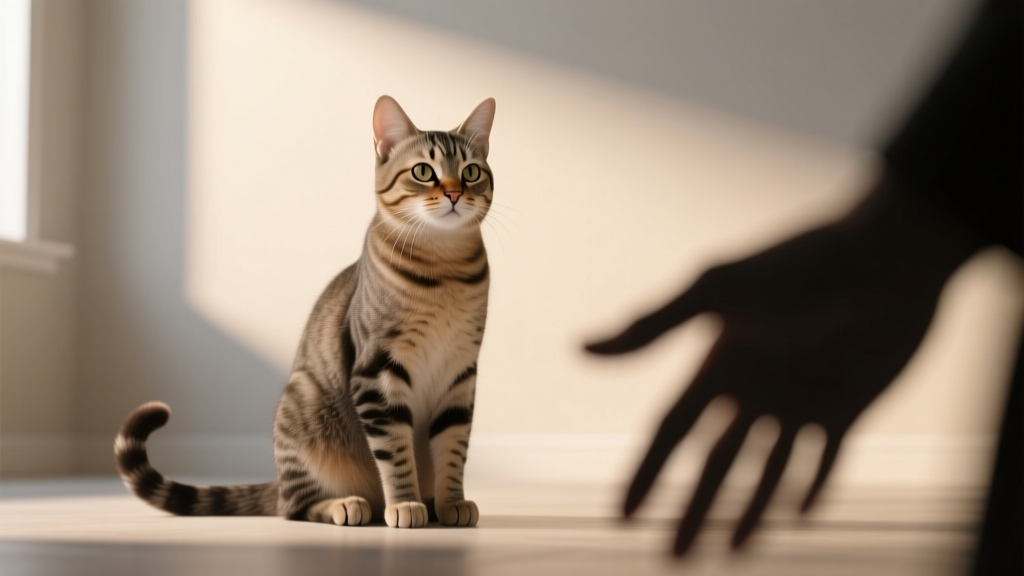
| Sudden freezing + dilated pupils | Sensory overload or anticipatory fear (not aggression) | Stop all contact. Sit silently 3 feet away. Offer a treat on the floor — no eye contact. | Introduce ‘desensitization thresholds’: Start grooming at 6 feet away, gradually decreasing distance over 10+ sessions. |
| Excessive licking after brushing | Self-soothing due to residual stress hormones or skin irritation | Switch to hypoallergenic, fragrance-free wipes. Check for redness or static buildup on coat. | Add omega-3 supplementation (EPA/DHA 150mg daily) to support skin barrier and nervous system resilience. |
| Biting the brush handle | Redirected play impulse or frustration — indicates engagement but poor outlet | Pause brushing. Redirect to a wand toy for 60 seconds, then resume with shorter strokes. | Integrate 2-minute interactive play sessions immediately before grooming to satisfy predatory drive. |
| Vocalizing (yowling, chattering) | Pain signal — especially if localized to one body region | Discontinue grooming. Schedule vet visit within 48 hours. Note exact location and timing of vocalization. | Implement monthly passive mobility checks and keep a ‘pain journal’ tracking vocalizations, posture shifts, and litter box habits. |
| Slow blinking during session | Active trust-building — rare and powerful indicator | Pause. Reward with quiet praise and a single high-value treat. Do NOT extend session — honor the moment. | Use blink-based reinforcement: Wait for slow blink → mark with soft ‘yes’ → treat. Builds voluntary cooperation. |
Frequently Asked Questions
Can grooming behavior changes signal early kidney disease?
Yes — but indirectly. Chronic kidney disease (CKD) causes oral ulcers, nausea, and generalized lethargy. A cat may resist grooming because opening their mouth for inspection triggers gagging, or because they’re too fatigued to tolerate handling. According to Dr. Sarah Kim, nephrology specialist at Tufts Foster Hospital, “We see increased grooming avoidance in Stage 1 CKD cats 3–6 months before bloodwork abnormalities appear — often alongside reduced appetite and subtle weight loss.” If grooming resistance coincides with decreased water intake or litter box changes, request SDMA testing.
Is it okay to stop brushing long-haired cats entirely if they hate it?
No — but you must pivot strategy. Matting leads to painful skin infections, thermal dysregulation, and fecal contamination in the perianal area. Instead of forcing brushes, switch to passive grooming tools: self-grooming mats placed near favorite napping spots, food puzzles with textured surfaces, or daily ‘towel rubs’ using microfiber fabric (which lifts loose hair without pressure). A 2023 study in Journal of Feline Medicine and Surgery found cats using passive tools had 82% fewer mat-related vet visits versus forced-brushing groups.
My cat only resists grooming when my partner does it — why?
This points to differential classical conditioning. If your partner has ever restrained your cat for nail trims or medications, their presence alone may trigger fear — regardless of current intent. It’s not personal; it’s associative memory. Solution: Have your partner lead positive interactions *unrelated* to grooming (e.g., feeding, playing with feather wands) for 2 weeks, then introduce grooming tools *without use*, rewarding proximity. Never let them initiate the first grooming session — start with you, then gradually fade in their presence.
Does neutering/spaying cause lasting grooming behavior changes?
Not directly — but hormonal shifts post-surgery can lower baseline anxiety in some cats, making them more receptive to gentle handling. However, a poorly managed recovery (e.g., tight e-collars, repeated restraint) can create negative associations with touch. The key window is Days 3–7 post-op: this is when trust foundations are built or broken. Always use soft, padded collars and avoid holding the incision site during cleaning.
How long should I wait before trying again after a grooming meltdown?
Wait until your cat’s resting respiratory rate returns to baseline (15–30 breaths/minute) — typically 15–45 minutes — not based on a fixed timeline. Then, restart with zero-contact desensitization: place the brush 10 feet away, reward calm observation for 30 seconds, remove brush. Repeat for 3 days before moving it closer. Rushing re-attempts reinforces fear.
Common Myths About Grooming-Related Behavior Shifts
- Myth 1: “If my cat tolerated grooming as a kitten, they’ll always accept it.” — False. Neurological development continues into age 3–4. A cat’s pain threshold, sensory sensitivity, and stress resilience evolve — especially after illness, injury, or environmental upheaval (e.g., moving, new pets).
- Myth 2: “Aggression during grooming means my cat is ‘dominant’ and needs correction.” — Dangerous misconception. Punishment increases fear-based aggression and damages trust irreparably. What looks like dominance is almost always acute distress or pain.
Related Topics (Internal Link Suggestions)
- Feline Stress Signals Beyond Hissing — suggested anchor text: "subtle cat stress signs you're missing"
- Best Brushes for Senior Cats with Arthritis — suggested anchor text: "gentle grooming tools for older cats"
- How to Trim Cat Nails Without Struggle — suggested anchor text: "stress-free nail trimming guide"
- When to See a Veterinary Behaviorist — suggested anchor text: "cat behavior specialist near me"
- DIY Calming Sprays for Grooming Anxiety — suggested anchor text: "natural cat grooming aids"
Conclusion & Your Next Step
Understanding why cat behavior changes for grooming isn’t about fixing your cat — it’s about becoming a fluent interpreter of their silent language. Every flinch, freeze, or slow blink holds data. Every resistance is an invitation to adjust, not overpower. Start today with one micro-action: choose one behavior from the table above that matches your cat’s recent response — then apply the Immediate Action step for just 60 seconds. No agenda. No expectation. Just presence and precision. That tiny act rebuilds safety faster than any 10-minute brushing session ever could. Ready to go deeper? Download our free Grooming Trust Tracker — a printable 14-day log with behavioral prompts, timing notes, and progress benchmarks designed by feline behavior specialists.