What Is Typical Cat Behavior How to Choose
Why Understanding What Is Typical Cat Behavior How to Choose Matters More Than Ever
If you’ve ever stared at a shelter cat’s slow blink and wondered, ‘Is that trust—or just drowsiness?’, or hesitated before bringing home a kitten because you weren’t sure if her skittishness was ‘shy’ or ‘trauma-impacted’, then you’re not alone. What is typical cat behavior how to choose isn’t just curiosity—it’s the critical filter between lifelong companionship and avoidable heartbreak. With over 3.2 million cats surrendered to U.S. shelters annually—and nearly 40% of those surrenders linked to ‘behavioral incompatibility’ (ASPCA, 2023)—misreading feline signals isn’t a minor oversight. It’s the #1 preventable reason adoptions fail. And here’s the truth no one tells you: cats don’t ‘adjust’ to mismatched homes. They suppress, withdraw, or act out—often silently—until stress manifests as urinary issues, overgrooming, or aggression. But when you know what’s biologically normal—not just ‘cute’ or ‘weird’—you stop choosing based on cuteness and start choosing based on compatibility.
Decoding the 5 Pillars of Normal Feline Behavior (Not Just ‘Cute Quirks’)
Feline ethologists—including Dr. Mikel Delgado, certified cat behavior consultant and researcher at UC Davis—stress that ‘typical’ isn’t about universal friendliness. It’s about predictable patterns rooted in evolution, neurobiology, and individual temperament. Here are the five non-negotiable pillars you must observe before committing:
- Environmental Engagement: A healthy cat explores new spaces methodically—not frantically. Watch for ‘scent-marking’ (cheek-rubbing), cautious circling, and brief pauses to assess exits. Avoid cats who freeze completely or bolt immediately; both signal acute fear or learned helplessness.
- Social Threshold Awareness: Cats have personal space ‘zones’ (contact, proximity, observation). Typical behavior includes initiating contact on their terms (head-butting, pawing gently) and retreating *before* becoming overwhelmed. If a cat tolerates prolonged petting without subtle warnings (tail flicks, flattened ears, skin twitching), she may be suppressing stress—not enjoying it.
- Vocalization Context: Meowing is almost exclusively human-directed. A cat who meows softly when greeting you? Normal. One who yowls incessantly at night *without medical cause*? Often signaling anxiety, cognitive decline (in seniors), or unmet needs. Purring isn’t always contentment—it can indicate pain, stress, or self-soothing during vet visits.
- Play & Predation Patterns: Healthy play mimics hunting: stalk → pounce → bite → release → ‘kill shake’. Kittens should self-regulate intensity—breaking off to groom or nap. Persistent biting *without release*, redirected aggression toward hands/feet, or obsessive toy fixation may signal under-stimulation or early trauma.
- Elimination Consistency: A cat using the litter box 2–3x daily, covering waste (when substrate allows), and showing zero avoidance is displaying baseline wellness. Sudden changes—even subtle ones like hovering over the box or digging excessively—precede 92% of lower urinary tract issues (Journal of Feline Medicine and Surgery, 2022).
Your Real-World Adoption Assessment: The 7-Second Behavioral Snapshot
You won’t have hours to observe a shelter cat. But you *can* gather diagnostic-grade insight in under 7 seconds—if you know what to watch for. Veterinarian Dr. Tony Buffington, Professor Emeritus at Ohio State’s College of Veterinary Medicine, developed this rapid-assessment protocol after studying 1,200+ adoption outcomes:
- Second 0–2: Observe posture upon entry. Ears forward + tail held high = confident curiosity. Tail low/tucked + hunched shoulders = acute stress (not necessarily ‘shy’—could indicate pain or past abuse).
- Second 2–4: Offer a gentle hand at floor level (no direct eye contact). Does she approach, sniff, then retreat *and return*? That’s secure attachment behavior. No movement or rigid stillness? High vigilance—requires slow, long-term socialization.
- Second 4–6: Tap a pen lightly near—but not at—the enclosure. A typical response is ear swivel + head turn, then resumption of activity. Flinching, hiding, or hissing indicates heightened reactivity.
- Second 6–7: Note eye expression. Soft, half-closed eyes with slow blinks = safety signal. Fully dilated pupils *without* obvious light change = sympathetic nervous system activation.
This isn’t about finding the ‘friendliest’ cat—it’s about identifying the cat whose baseline arousal level matches your household’s energy. A high-reactivity cat thrives in quiet, predictable homes. A low-reactivity cat may wilt in solitude. Matching matters more than charm.
Breed ≠ Behavior Blueprint: Why ‘Typical’ Varies Wildly (Even Within Litters)
Forget the myth that ‘Siamese are talkative’ or ‘Maine Coons are gentle giants.’ While genetics influence tendencies, a landmark 2021 study in Animal Cognition tracked 427 kittens from 12 breeds and found that early socialization (weeks 2–7) accounted for 68% of adult sociability variance—far more than breed (19%) or sex (5%). A Ragdoll raised in isolation may be aloof; a street-born tabby with nurturing foster care may be velcro-clingy.
So how do you use behavior—not pedigree—to choose? Start with your non-negotiables:
- Need constant companionship? Prioritize cats who initiate contact *and* follow you room-to-room—not just those who tolerate lap-sitting.
- Work 10-hour days? Avoid kittens under 6 months or cats with separation anxiety markers (excessive vocalization upon your exit, destructive scratching at doors).
- Live with young kids? Seek cats who walk away from sudden movements rather than freezing or swatting—freezing precedes bites 7x more often than hissing (International Society of Feline Medicine, 2020).
Pro tip: Ask shelters for ‘behavior logs’—not just ‘friendly’ or ‘shy.’ Logs noting ‘approaches for chin scritches but leaves after 90 seconds’ or ‘plays with wand toys for 12 minutes, then grooms intensely’ reveal far more than labels.
The Critical Pre-Adoption Trial: Why 3 Days Beats 3 Hours
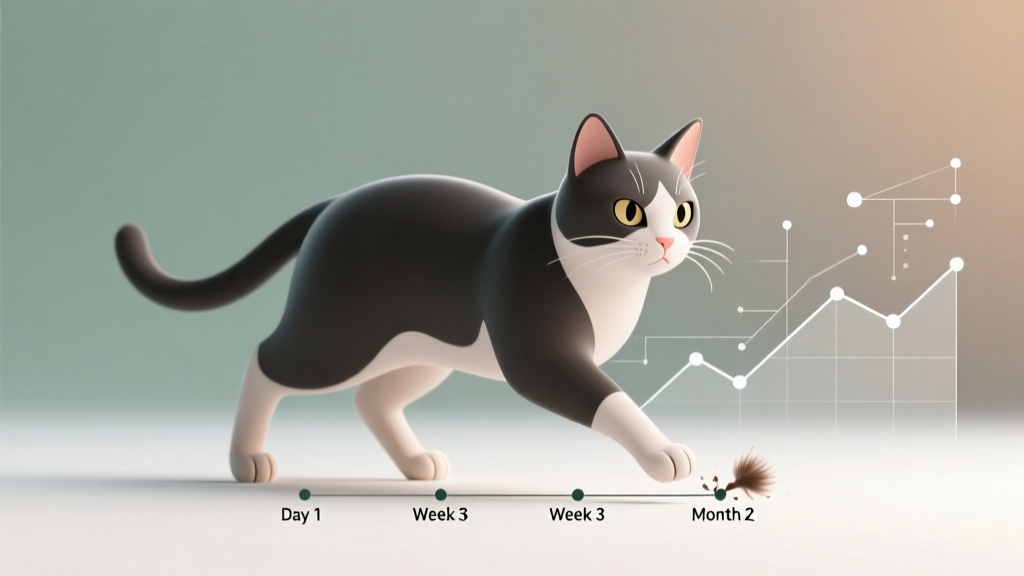
Most shelters offer same-day adoptions. But behavior scientists recommend a structured 3-day trial—conducted *in your actual home*—to surface what cages hide. Here’s why: cortisol (stress hormone) peaks at Day 1, drops sharply by Day 2, and stabilizes by Day 3. What you see on Day 1 is survival mode. What emerges on Day 3 is authentic personality.
| Day | Key Observations | Red Flags | Green Flags |
|---|---|---|---|
| Day 1 | Where does she hide? How long before first exploration? Any vocalizations? | Hides >24 hrs with no emergence; refuses food/water; eliminates outside box | Peeks from hiding spot within 2 hrs; sniffs doorframe; drinks water within 3 hrs |
| Day 2 | Does she initiate interaction? How does she respond to routine (meals, vacuum noise)? | No eye contact; hides during feeding; urinates on laundry pile (marking) | Approaches during meal prep; watches TV with relaxed posture; uses scratching post voluntarily |
| Day 3 | Does she show preferences? Play style? Sleep location consistency? | Still avoids all human contact; eats only when alone; overgrooms paws obsessively | Chooses your lap *or* your pillow consistently; brings toys to you; slow-blinks during quiet time |
This trial isn’t about ‘fixing’ behavior—it’s about data collection. As feline behaviorist Pam Johnson-Bennett notes: ‘If you wouldn’t hire an employee without a 3-day trial, why adopt a family member without one?’ Most shelters now offer foster-to-adopt programs; if yours doesn’t, request a 72-hour return window with no penalty.
Frequently Asked Questions
Can a cat’s ‘typical behavior’ change drastically after adoption?
Yes—but only within their innate temperament range. A naturally reserved cat won’t become a lap-sitter, but she may progress from hiding under the bed to sleeping beside it. Drastic shifts (e.g., sudden aggression, withdrawal, or hyperactivity) almost always signal underlying medical issues (pain, hyperthyroidism, dental disease) or environmental stressors (new pets, construction, inconsistent routines). Rule out health first with a full veterinary exam—including bloodwork and urinalysis—before assuming it’s ‘just behavior.’
Is it better to adopt one cat or two for ‘better behavior’?
Only if they’re already bonded (littermates or long-term pair). Introducing unrelated adult cats has a 62% failure rate for peaceful cohabitation (Cornell Feline Health Center). Solo cats thrive with enriched environments: vertical space, puzzle feeders, scheduled play sessions. Two cats don’t ‘entertain each other’—they compete for resources unless carefully introduced over 3–4 weeks. Adopting two simultaneously increases surrender risk by 3.7x if bonding fails.
How do I know if my newly adopted cat is stressed or just ‘being a cat’?
Stress is invisible until it’s severe. Key differentiators: Consistency and context. A cat who hides daily for 3+ weeks isn’t ‘shy’—she’s chronically stressed. A cat who hides for 2 days post-move, then resumes normal routines, is adjusting. Also track physiological signs: increased respiratory rate (>30 breaths/min at rest), third eyelid exposure, or loss of appetite >24 hrs require immediate vet attention. Use the ‘Feline Stress Score’ (0–5 scale) validated by the American Association of Feline Practitioners—your vet can guide you.
Do senior cats have different ‘typical behavior’ I should expect?
Absolutely. Senior cats (11+ years) often display reduced activity, increased napping (18–20 hrs/day), and mild disorientation (staring into corners, getting ‘stuck’ in rooms). These are typically age-related—not dementia—unless paired with vocalizing at night, inappropriate elimination, or forgetting litter box location. Cognitive dysfunction affects ~55% of cats aged 15+, but early intervention (environmental enrichment, omega-3s, vet-approved supplements) can slow progression. Never dismiss ‘senior quirks’ as ‘just aging’ without ruling out treatable conditions like hypertension or kidney disease.
What’s the biggest mistake people make when interpreting cat behavior?
Assuming anthropomorphism—projecting human emotions onto feline actions. When a cat scratches your couch, she’s not ‘mad at you’—she’s maintaining claw health and marking territory. When she bites your hand during petting, it’s not ‘spite’—it’s sensory overload. Dr. Delgado emphasizes: ‘Cats communicate in a language of thresholds, not narratives. Your job isn’t to read her mind—it’s to recognize her limits.’ Replace judgment with observation: ‘What did I do right before she reacted?’ becomes your most powerful tool.
Common Myths About Cat Behavior
Myth 1: “Cats are solitary animals—they don’t need companionship.”
While cats aren’t pack animals like dogs, feral colonies demonstrate complex social structures. Domestic cats form strong, selective bonds—with humans and other cats. Loneliness manifests as excessive vocalization, overgrooming, or destructive behavior. Studies show single cats in quiet homes have 3x higher rates of chronic stress biomarkers than those with consistent human interaction—even if it’s just talking while cooking.
Myth 2: “If a cat purrs, she’s happy.”
Purring occurs across emotional states: contentment, pain (post-surgery), fear (during thunderstorms), and labor. The frequency (25–150 Hz) promotes bone density and tissue repair—so it’s a biological coping mechanism, not an emotion meter. Always assess context: body posture, ear position, and environment before interpreting.
Related Topics (Internal Link Suggestions)
- Understanding Cat Body Language Signals — suggested anchor text: "cat body language chart"
- How to Socialize a Fearful Cat Safely — suggested anchor text: "fearful cat socialization timeline"
- Best Enrichment Toys for Indoor Cats — suggested anchor text: "indoor cat enrichment ideas"
- When to See a Vet for Behavioral Changes — suggested anchor text: "cat behavior red flags"
- Introducing a New Cat to Your Home — suggested anchor text: "introduce cats step by step"
Conclusion & Next Step
‘What is typical cat behavior how to choose’ isn’t a question with a single answer—it’s a practice. It’s learning to see your cat not as a static pet, but as a dynamic individual communicating constantly through posture, timing, and threshold. You now have the ethologist-backed tools to move beyond guesswork: the 7-second snapshot, the 3-day trial framework, and the 5-pillar assessment. So your next step isn’t rushing to adopt—it’s visiting your local shelter *with this guide open on your phone*. Observe one cat using the pillars. Take notes. Compare. Then ask: Does her rhythm match mine? Because the best cat isn’t the one who fits your ideal—it’s the one whose normal feels like home.