What Is Normal Cat Behavior? 12 Subtle Signs You’re...
Why Understanding What Is Normal Cat Behavior Changes Everything
\nIf you’ve ever stared at your cat mid-stare-down, wondered why they knead your sweater at 3 a.m., or panicked when they suddenly bolted across the living room like a furry missile — you’re not alone. What is normal cat behavior isn’t just trivia; it’s the foundational language that unlocks trust, prevents unnecessary vet visits, and transforms cohabitation from polite tolerance into genuine companionship. In fact, a 2023 Cornell Feline Health Center study found that over 68% of first-time cat owners misinterpret at least three common behaviors — leading to avoidable stress for both human and feline. And here’s the truth no one tells you: most ‘weird’ cat habits aren’t weird at all. They’re evolutionary adaptations, sensory expressions, and deeply ingrained communication strategies honed over 9,000 years of domestication. This guide cuts through the noise — grounded in veterinary ethology, shelter behaviorist fieldwork, and real-world case studies — to help you distinguish true red flags from perfectly healthy feline quirkiness.
\n\nDecoding the 5 Core Pillars of Healthy Feline Behavior
\nCats don’t operate on human social logic — and that’s where confusion begins. Rather than judging actions through our lens (e.g., “hiding = sad”), we must interpret them through theirs: as expressions of safety, control, resource security, and sensory processing. Dr. Sarah Hargreaves, a board-certified veterinary behaviorist with the American College of Veterinary Behaviorists, emphasizes: “Normal cat behavior isn’t about frequency or intensity alone — it’s about consistency, context, and absence of distress signals.” Let’s break down the five non-negotiable pillars:
\n\n- \n
- Environmental Control: Cats thrive when they can choose their location, posture, and proximity. A cat who rotates napping spots daily, perches high to survey, or retreats to a cardboard box isn’t anxious — they’re exercising species-appropriate autonomy. \n
- Temporal Rhythms: True crepuscularity (peak activity at dawn/dusk) is biologically hardwired. Midnight zoomies followed by 14 hours of deep sleep? Not insomnia — optimal circadian alignment. \n
- Communication Nuance: Tail flicks, ear orientation, pupil dilation, and even whisker angle convey layered meaning. A slow blink isn’t ‘cute’ — it’s a deliberate, low-risk signal of non-threat, equivalent to saying “I trust you enough to close my eyes.” \n
- Resource-Based Rituals: Food, water, litter, and sleeping areas are neurologically linked to security. Consistent use of the same bowl, meticulous paw-washing after meals, or burying kibble? All signs of stable internal regulation. \n
- Play as Practice: Stalking, pouncing, and ‘killing’ toys aren’t aggression — they’re neural maintenance. Kittens who don’t engage in predatory sequences by 12 weeks often develop redirected aggression later. Adult cats who retain this drive into senior years show stronger cognitive resilience (per a 2022 University of Lincoln longitudinal study). \n
When ‘Normal’ Crosses Into ‘Concerning’: The 7-Point Behavioral Baseline Check
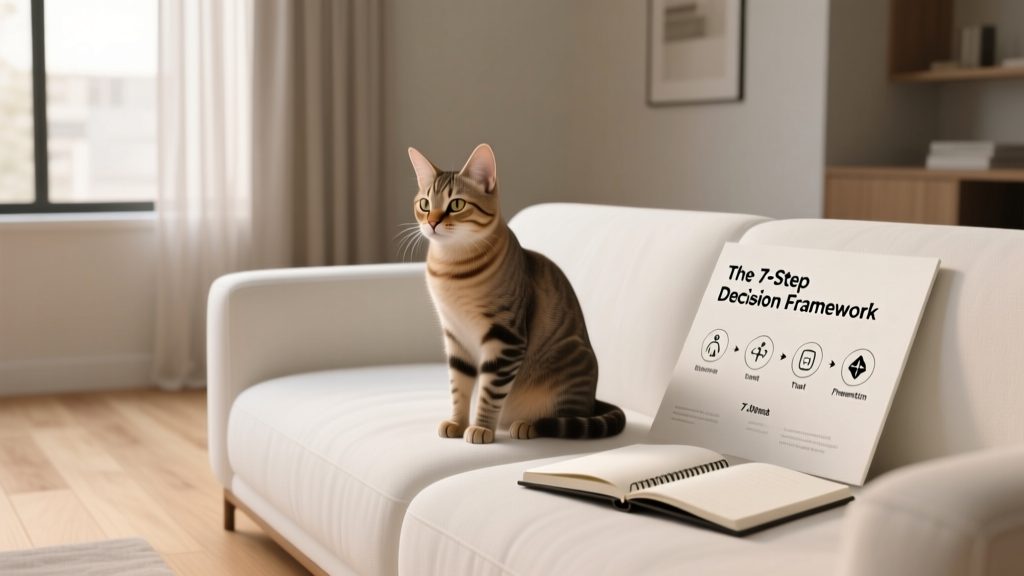
\nInstead of asking “Is this normal?”, ask: “Has this changed — and does it come with secondary signals?” Veterinarians and certified cat behavior consultants use a structured baseline assessment before diagnosing issues. Below is the exact 7-point framework used by the International Association of Animal Behavior Consultants (IAABC):
\n\n- \n
- Appetite & Hydration Consistency: Minor fluctuations are fine — but skipping >2 meals, drinking significantly more/less, or refusing favorite foods for >48 hours warrants investigation. \n
- Litter Box Reliability: Occasional misses happen. But consistent avoidance, vocalizing while eliminating, or straining >2x/day signals pain or anxiety — not ‘spite.’ \n
- Social Threshold Shifts: A formerly affectionate cat hiding for >3 days, hissing at familiar people, or avoiding gentle touch may be experiencing pain (e.g., arthritis) or environmental stress (e.g., new pet, construction noise). \n
- Vocalization Pattern Change: Increased yowling at night in seniors often indicates cognitive decline or hypertension. Sudden silence in a typically chatty cat? Could mean oral pain or respiratory distress. \n
- Grooming Extremes: Over-grooming (bald patches, skin abrasions) or under-grooming (matted fur, greasy coat) are top red flags — frequently tied to pain, anxiety, or endocrine disease. \n
- Exploratory Drive: A cat who stops investigating new objects, avoids previously loved perches, or freezes at doorway thresholds may be experiencing chronic stress or neurological change. \n
- Play Motivation: If your cat hasn’t initiated interactive play in >2 weeks — and isn’t geriatric (>15 years) — schedule a vet visit. Loss of predatory interest correlates strongly with early renal or thyroid dysfunction. \n
The Hidden Language of Body Signals: Beyond the Tail Wag
\nMost cat owners fixate on tail position — but tail language is only 20% of the story. Feline communication is multimodal: ears, eyes, whiskers, posture, and vocal tone combine into complex sentences. Consider this real case from Seattle Humane’s behavior team:
\n\n\"Luna, a 4-year-old tabby, was surrendered for ‘aggression’ after swatting her owner during petting. Video review revealed classic overstimulation: flattened ears at 7 seconds, rapid tail tip flick at 12 seconds, dilated pupils at 15 seconds — all ignored. After implementing 3-second petting intervals with clear exit cues, Luna’s ‘attacks’ stopped within 4 days.\"\n\n
Here’s how to read the full signal stack:
\n\n- \n
- Ears forward + slow blink + upright tail with quiver: Deep contentment and greeting (the feline ‘I love you’) \n
- Ears slightly back + half-closed eyes + low, slow tail sweep: Mild annoyance — stop petting now \n
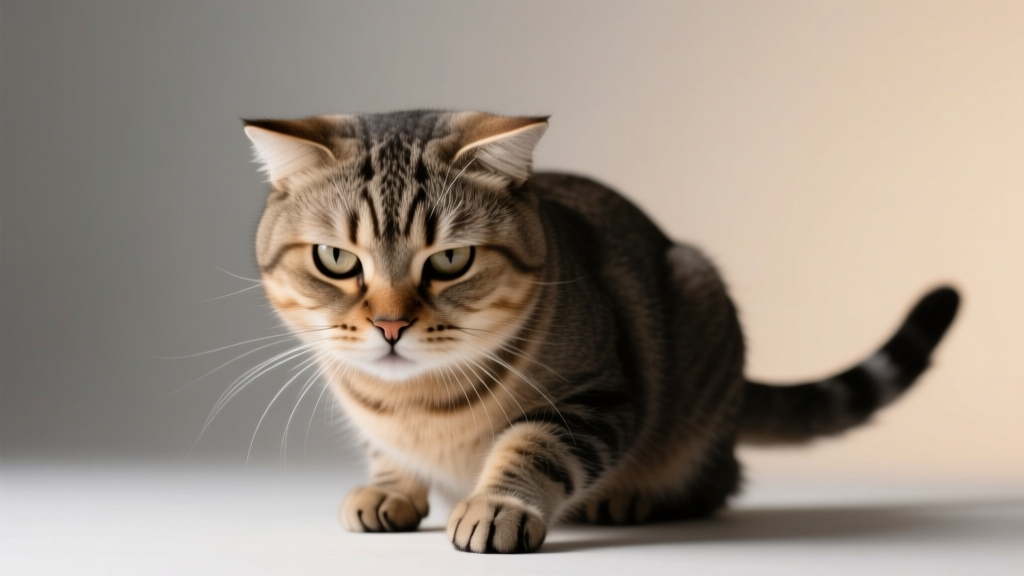
- Ears pinned flat + wide pupils + crouched stance + rapid tail thump: Imminent defensive action — create space immediately \n
- Ears neutral + whiskers forward + head bunting + purring: Active bonding and scent-marking — you’re officially family \n
- Ears twitching rapidly + darting eyes + stiff legs: Hypervigilance — likely triggered by unseen stimuli (ultrasonic sounds, distant birds, air currents) \n
Pro tip: Record 30 seconds of your cat’s ‘odd’ behavior. Watch it back at 0.5x speed — you’ll spot micro-signals invisible in real time.
\n\nWhat Is Normal Cat Behavior Across Life Stages — And Why It Matters
\nA ‘normal’ 8-week-old kitten looks nothing like a ‘normal’ 12-year-old senior — and conflating the two causes massive misdiagnosis. Here’s how expectations shift:
\n\n| Life Stage | \nKey Normal Behaviors | \nCommon Misinterpretations | \nVet Check Trigger | \n
|---|---|---|---|
| Kitten (0–6 months) | \nNon-stop play-fighting, biting hands/feet, chewing cords, erratic sleep cycles, frequent elimination (every 2–4 hrs), vocal ‘mewling’ for attention | \n“They’re aggressive” / “They don’t like me” / “They’re broken” | \nNo consistent litter use by 16 weeks; weight loss >10%; lethargy >24 hrs | \n
| Adolescent (6–24 months) | \nIncreased territorial marking (spraying in unneutered males), boundary testing, selective affection, ‘testing’ furniture with claws, heightened curiosity | \n“They’re rebellious” / “They’re ignoring me” / “They hate their carrier” | \nSpraying after neutering; destructive scratching paired with hiding; refusal to eat for >36 hrs | \n
| Adult (2–10 years) | \nStable routines, predictable play windows, strong preference for specific resting spots, consistent grooming, moderate vocalization, clear social hierarchy with other pets | \n“They’re bored” / “They’re depressed” / “They’re lazy” | \nAny abrupt routine disruption lasting >72 hrs; excessive grooming focused on one area; nighttime vocalization onset | \n
| Senior (10+ years) | \nMorning stiffness, reduced jumping height, increased napping (18–20 hrs/day), mild disorientation, quieter vocalizations, slower movement, ‘staring’ episodes | \n“They’re senile” / “They’re giving up” / “They’re mad at me” | \nUrinating outside box >3x/week; pacing/confusion at night; weight loss >5% in 1 month; persistent vocalization | \n
Frequently Asked Questions
\nDo cats really ignore us — or are they just being selective?
\nNeither — and both. Cats don’t ‘ignore’ humans in the way dogs do. Their attention is governed by stimulus relevance, not social obligation. A 2021 study in Animal Cognition showed cats orient to their owner’s voice 75% of the time — but only respond physically if the call includes food-related cues or occurs during their active phase. It’s not rejection — it’s prioritization. Think of it like receiving a Slack message while in deep work mode: you see it, acknowledge it internally, but reply only when context allows.
\nWhy does my cat bring me dead animals or toys?
\nThis is a profound gesture of inclusion — not a ‘gift’ in the human sense, but an invitation to participate in the hunt. In multi-cat households, mothers bring prey to kittens to teach skills; unrelated adults do it to recruit allies. When your cat drops a mouse at your feet, they’re saying, “You’re part of my pride. Let’s process this together.” Punishing this behavior suppresses vital hunting instincts and damages trust. Instead, redirect with daily 15-minute interactive play sessions using wand toys — satisfying the sequence (stalk → chase → pounce → kill → dissect) without real prey.
\nIs kneading (‘making biscuits’) always a sign of happiness?
\nMostly — but not exclusively. Kneading originates in kittenhood, stimulating milk flow. In adults, it signals comfort and safety… unless accompanied by tense muscles, flattened ears, or vocal tension. Some cats knead when anxious — it’s a self-soothing mechanism, like human nail-biting. Observe the whole picture: relaxed face + rhythmic motion = contentment. Tense jaw + rapid, shallow kneading = stress response. If the latter persists, assess environmental stressors (litter changes, new scents, visitor frequency).
\nMy cat stares at me silently for minutes. Should I be worried?
\nNot unless it’s paired with other signs. Silent staring is often a form of low-intensity engagement — especially if accompanied by slow blinks. Cats use prolonged eye contact to monitor movement (a survival trait), assess intent, or simply wait for you to fulfill their agenda (food, door opening, lap access). However, if staring is combined with rigid posture, dilated pupils, or freezing when you move — it may indicate fear or pain. Rule out vision issues (cat cataracts often cause ‘fixed gaze’) with a vet ophthalmic exam.
\nIs it normal for cats to sleep so much — up to 20 hours a day?
\nYes — and it’s essential. Cats conserve energy for short, explosive bursts of hunting activity. Their sleep cycles include 25-minute REM phases interspersed with light dozing, allowing rapid arousal if needed. Senior cats sleep more due to decreased metabolism and joint discomfort. But true concern arises when sleep becomes unresponsive (no reaction to loud noises, treats, or petting) or when they sleep in unusual places (cold floors instead of warm beds, inside closets instead of sunny spots) — both potential signs of pain or illness.
\nCommon Myths About What Is Normal Cat Behavior
\nMyth #1: “Cats are aloof and don’t form attachments.”
False. fMRI studies at Kyoto University prove cats experience secure attachment to caregivers — identical to human infants and dogs. In the ‘Strange Situation Test,’ 65% of cats show secure attachment (seeking comfort then returning to exploration), 25% insecure-avoidant, and 10% insecure-resistant. Their expression of attachment is just subtler: following you room-to-room, sitting beside you while you work, or bringing you ‘treasures.’
Myth #2: “If a cat purrs, they must be happy.”
Incorrect. Purring occurs across a wide emotional spectrum — including pain, fear, labor, and healing. The vibration frequency (25–150 Hz) stimulates bone density and tissue repair, making it a biological coping mechanism. Always pair purring with body language: a hunched, shallow-breathing, trembling cat purring in the vet’s office isn’t joyful — they’re using vibration to self-soothe amid distress.
Related Topics (Internal Link Suggestions)
\n- \n
- How to Read Cat Body Language — suggested anchor text: "cat body language guide" \n
- Signs of Stress in Cats — suggested anchor text: "cat stress symptoms" \n
- Why Does My Cat Meow So Much? — suggested anchor text: "excessive cat meowing" \n
- Best Toys for Indoor Cats — suggested anchor text: "indoor cat enrichment" \n
- When to Take Your Cat to the Vet for Behavior Changes — suggested anchor text: "cat behavior vet visit" \n
Your Next Step: Build a Behavior Baseline — In Just 5 Minutes
\nYou now know what is normal cat behavior — but knowledge becomes power only when applied. Your immediate next step isn’t buying gear or changing routines. It’s creating a personalized behavioral baseline. Grab your phone and spend 5 minutes today documenting: (1) Your cat’s favorite nap spot(s), (2) Their go-to greeting behavior (rubbing, chirping, tail-up), (3) Typical play session duration and preferred toy type, (4) Litter box usage times, and (5) Any consistent ‘quirks’ (e.g., licking plastic, staring at walls). Keep this log for 7 days. When something shifts — whether it’s a new habit or a missing one — you’ll have objective data, not just gut feeling. That’s how confident, compassionate cat guardianship begins. And if you notice three or more baseline deviations in one week? That’s your cue to book a vet wellness check — not because something’s wrong, but because you’re finally fluent in their language.