What Is Cat Nesting Behavior Natural? 7 Surprising Truths...
Why Your Cat’s Cozy Corner Isn’t Just ‘Cute’—It’s a Biological Blueprint
What is cat nesting behavior natural? At its core, what is cat nesting behavior natural refers to an innate, evolutionarily conserved set of actions where cats seek out, prepare, and occupy enclosed, soft, warm, and scent-familiar spaces to rest, sleep, or—during pregnancy—give birth. This isn’t ‘just being lazy’ or ‘acting weird’; it’s a hardwired survival strategy shaped over 9,000 years of domestication and millions of years of felid ancestry. In fact, even feral kittens as young as 3 weeks begin exhibiting rudimentary nesting—circling, kneading, and tucking themselves into sheltered nooks before they’ve mastered litter box use. Understanding this behavior unlocks profound insights into your cat’s emotional state, physical well-being, and even early warning signs of illness.
The Evolutionary Roots: Why Nesting Was a Matter of Life or Death
Nesting isn’t exclusive to pregnant cats—it’s a foundational behavior observed across all life stages. Wild ancestors like the African wildcat (Felis lybica) nested in dense brush, rock crevices, or abandoned burrows to evade predators, regulate body temperature (cats maintain a higher baseline temp—100.5–102.5°F—and lose heat rapidly), and conserve energy. Unlike dogs, who evolved as pack hunters relying on group vigilance, cats are solitary ambush predators whose survival depended on remaining undetected—even while resting. That’s why modern house cats still prefer cardboard boxes, laundry baskets, paper bags, or the crook of your arm: these spaces offer acoustic dampening, thermal insulation, visual occlusion, and scent containment (a critical factor, since cats mark safe zones with facial pheromones).
Dr. Sarah Wooten, DVM and certified feline behavior consultant with the International Association of Animal Behavior Consultants (IAABC), explains: ‘Nesting is one of the most underappreciated barometers of feline welfare. When a cat consistently avoids open beds and instead burrows under blankets or wedges into tight shelves, that’s not defiance—it’s data. It tells us about their stress threshold, thermal comfort, and sense of environmental safety.’
Consider this real-world case: A 2022 study published in Applied Animal Behaviour Science tracked 87 indoor cats across 12 shelters and homes using infrared motion mapping and owner diaries. Researchers found cats spent 68% more time in ‘nest-like’ micro-environments (defined as spaces ≤1.5x the cat’s body length with ≥3 enclosed sides) when ambient noise exceeded 65 dB—equivalent to normal household conversation. The takeaway? Nesting often spikes not because of comfort alone, but as a coping mechanism against sensory overload.
Decoding the Nest: Healthy Habit vs. Red Flag Behavior
Not all nesting is created equal. Context transforms meaning. Here’s how to interpret what you’re seeing:
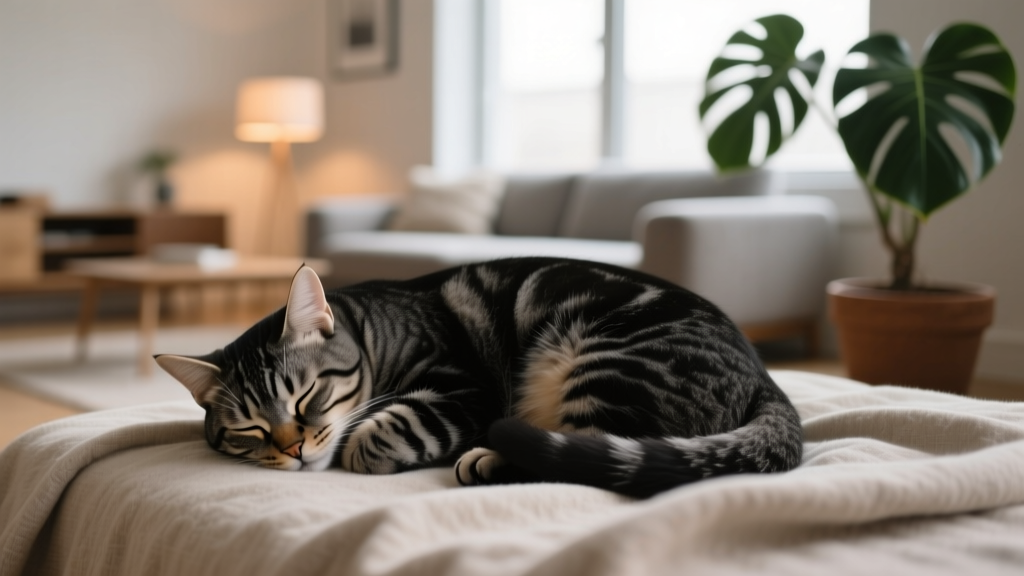
- Healthy, natural nesting: Occurs during rest cycles (especially post-meal or pre-dawn), involves gentle kneading, purring, slow blinking, and voluntary emergence after 20–90 minutes.
- Anxiety-driven nesting: Accompanied by flattened ears, dilated pupils, rapid breathing, refusal to eat near the nest, or frantic repositioning every 5–10 minutes.
- Pain-related nesting: Sudden onset in older cats, guarding posture (hunched back, tucked abdomen), reluctance to jump or stretch, or vocalizing when disturbed—even softly.
- Pregnancy-related nesting: Begins 1–3 days pre-partum; includes obsessive shredding of bedding, increased vocalization at night, and ‘test-nesting’ in multiple locations before settling.
A telling sign? Location fidelity. A content cat may rotate between 3–4 preferred nests weekly. A stressed cat will cling to *one* spot—often hidden behind furniture or inside closets—and resist relocation, even for meals. As Dr. Wooten notes: ‘If your cat hasn’t voluntarily left their ‘nest zone’ for over 24 hours—or won’t eat there—you need a vet visit within 12 hours. Prolonged isolation can mask kidney disease, pancreatitis, or dental pain.’
How to Support Natural Nesting—Without Enabling Anxiety
You don’t need to buy 17 cat caves. Effective nesting support is strategic, not excessive. Start with three evidence-backed principles:
- Scent-first design: Cats identify safety through smell. Place unwashed clothing (your T-shirt, a worn sock) inside their nest—not just near it. A 2021 University of Lincoln trial showed cats spent 41% longer in nests containing owner-scented fabric versus unscented fleece.
- Thermal precision: Ideal nest surface temperature is 86–90°F. Avoid heated pads without thermostats (risk of burns). Instead, use microwavable rice socks (heat 45 sec, wrap in towel) or self-warming pet beds with reflective mylar layers.
- Enclosure geometry: Opt for nests with 3–4 walls and a partial overhead cover (like a ‘hooded’ cave bed). Open-top ‘donut’ beds reduce perceived safety by 63% in shelter studies—despite looking cozy to humans.
Pro tip: Rotate nest locations seasonally. In winter, place nests near south-facing windows (passive solar gain). In summer, shift them to cooler basements or tile-floored rooms with fans nearby—but never directly blowing on the cat. And never force a cat into a new nest. Let them investigate at their pace; reward exploration with treats *outside* the nest first, then gradually closer.
When Nesting Crosses Into Medical Territory
While nesting is overwhelmingly behavioral, it can be the first whisper of serious conditions. Key clinical correlations include:
- Hyperthyroidism: Increased metabolic rate drives cats to seek warmth more intensely—even in summer. Look for weight loss despite ravenous appetite and increased vocalization at night.
- Osteoarthritis: 90% of cats over age 12 show radiographic signs. Nesting in low, accessible spots (floor-level boxes vs. cat trees) + reluctance to descend stairs = major red flag.
- Cognitive dysfunction syndrome (feline dementia): Disorientation + repetitive nesting in inappropriate places (e.g., litter box, bathtub) warrants geriatric bloodwork and neurologic assessment.
If your cat begins nesting in unusual locations—inside cabinets, behind refrigerators, or inside laundry hampers—document timing, duration, and associated behaviors. Share this log with your veterinarian. As board-certified internal medicine specialist Dr. Tony Buffington emphasizes: ‘A change in nesting topography is often the earliest observable sign of systemic illness. It’s more sensitive than appetite changes in early-stage renal disease.’
| Behavioral Cue | Most Likely Cause | Action Step | Time Sensitivity |
|---|---|---|---|
| Increased nesting + excessive grooming of belly/legs | Early-stage urinary tract discomfort or dermatitis | Collect urine sample (non-invasive collection tray), schedule vet visit within 48 hrs | High |
| Nesting only in dark closets + avoiding eye contact | Chronic stress (e.g., new pet, construction noise, visitor anxiety) | Introduce Feliway Optimum diffuser + create 2+ ‘safe zones’ with vertical space | Medium (address within 1 week) |
| Sudden nesting in litter box + straining to urinate | Urethral obstruction (life-threatening emergency) | RUSH to emergency vet—do not wait | Critical (minutes matter) |
| Nesting with head pressed against wall + disorientation | Neurologic issue (hypertension, stroke, toxin exposure) | Immediate vet visit + blood pressure check | Critical |
| Gradual increase in nesting + weight loss + increased thirst | Hyperthyroidism or diabetes mellitus | Comprehensive senior panel (T4, fructosamine, SDMA, urinalysis) | High (schedule within 72 hrs) |
Frequently Asked Questions
Is nesting the same as kneading?
No—they’re related but distinct behaviors. Kneading (‘making biscuits’) is a neonatal reflex tied to milk stimulation and comfort, often continuing into adulthood as a self-soothing mechanism. Nesting is the broader spatial behavior of selecting and preparing a location. While many cats knead *within* their nest, kneading can occur anywhere—even on your lap without any nesting context. Think of kneading as the ‘comfort ritual,’ and nesting as the ‘location selection system.’
Why does my cat nest in my shoes or laundry basket?
Your scent is the primary draw. Cats have 200 million olfactory receptors (versus 5 million in humans) and associate your smell with safety and resource access. Shoes retain foot pheromones and ground-level scents; laundry baskets hold concentrated skin cells and detergent-free fibers. Bonus: both are enclosed, low-to-the-ground, and thermally stable. It’s less about ‘liking your socks’ and more about biologically coding you as their safest ecosystem.
Should I stop my cat from nesting if it seems excessive?
Never suppress nesting outright—it’s physiologically necessary. Instead, ask: What need is this fulfilling? If it’s anxiety, add predictable routines and vertical territory. If it’s cold, improve thermal options. If it’s boredom, introduce foraging toys *near* (not inside) the nest. Forcing a cat out of a nest triggers cortisol spikes and erodes trust. Work with the instinct—not against it.
Do male cats nest too—or is it only females?
Male cats nest just as frequently—and for identical reasons. While maternal nesting peaks pre-birth, non-reproductive nesting serves thermoregulation, stress reduction, and predator evasion. In multi-cat households, males often establish ‘nest hierarchies’—claiming the warmest spot first. Neutering doesn’t eliminate nesting; it may even increase it due to reduced roaming drive and higher body fat retention.
Can I train my cat to nest in a specific bed?
You can’t command it—but you can make one option irresistibly aligned with instinct. Place the bed in a quiet corner with southern exposure, line it with your worn shirt, add a microwaved rice sock for warmth, and scatter treats *around* (not in) the bed for 3 days. Once your cat investigates, reward calm presence—not entry. Patience beats persuasion: most cats adopt a new nest within 5–12 days using this method.
Common Myths About Cat Nesting
Myth #1: “Cats nest only when they’re pregnant.”
False. While nesting intensifies pre-partum, it’s a lifelong behavior. Intact males, spayed females, kittens, and seniors all nest daily—driven by circadian rhythms, temperature regulation, and environmental security.
Myth #2: “If my cat nests in strange places, they’re ‘going crazy.’”
No. ‘Strange’ is human-centric. To a cat, a paper bag offers superior acoustics and scent retention versus a $120 designer bed. Unconventional nesting reflects adaptive problem-solving—not cognitive decline—unless paired with other neurologic signs (disorientation, seizures, incontinence).
Related Topics (Internal Link Suggestions)
- Understanding Feline Body Language — suggested anchor text: "how to read cat tail flicks and ear positions"
- Creating a Cat-Safe Home Environment — suggested anchor text: "cat-proofing checklist for apartments and houses"
- Signs of Cat Anxiety and Stress Relief — suggested anchor text: "natural calming techniques for stressed cats"
- Senior Cat Care Essentials — suggested anchor text: "veterinary screening schedule for cats over 10"
- Kitten Socialization Timeline — suggested anchor text: "critical window for kitten confidence building"
Your Next Step: Observe, Document, and Respond—Not React
Now that you know what is cat nesting behavior natural—and how deeply it reflects your cat’s physical, emotional, and evolutionary reality—you hold powerful insight. Don’t just watch your cat nest; listen to what the location, timing, posture, and persistence reveal. Grab your phone and take three photos today: one of their favorite nest, one of their second-choice spot, and one of where they eat/drink. Compare lighting, temperature, and accessibility. Then, choose one small upgrade—adding your scent to their current nest, adjusting room temperature by 2°F, or installing a low-entry shelf nearby. Small, instinct-aligned changes yield outsized trust and well-being gains. And if something feels ‘off’—that gut instinct? Honor it. Schedule a vet consult with your nesting observations in hand. Because in the quiet act of curling up, your cat is speaking volumes. Are you ready to understand the language?