What Is a Female Cat's Behavior When in Heat? 7 Telltale...
Why This Matters More Than You Think—Right Now
What is a female cat's behavior when in heat? If you’ve just heard your usually quiet companion wail nonstop at 3 a.m., noticed her rubbing insistently against furniture (and your legs), or found small, pungent urine marks on your laundry basket—you’re not imagining things. You’re witnessing one of nature’s most intense hormonal surges in domestic cats. And while many owners assume ‘she’ll settle down soon,’ untreated estrus isn’t just inconvenient—it carries real health risks: pyometra (a life-threatening uterine infection), mammary tumors, and chronic stress that weakens immunity. In fact, according to the American Veterinary Medical Association (AVMA), unspayed cats who experience multiple heat cycles before age 6 months have up to 7x higher risk of developing reproductive cancers. This isn’t just about noise or mess—it’s about welfare, longevity, and peace of mind.
The 7 Signature Behaviors—Decoded & Contextualized
Feline estrus isn’t subtle—and it shouldn’t be. Evolution designed these signals to maximize breeding success. But for indoor pet owners, they’re often misread as ‘bad behavior’ rather than urgent biological communication. Let’s break down each hallmark sign—not just what it looks like, but what it means neurologically and hormonally.
1. Persistent, Loud Vocalization (‘Yowling’)
This isn’t meowing—it’s a guttural, rhythmic, almost distressed-sounding call that can last hours. It peaks during dawn/dusk and intensifies if she hears male cats nearby (even through walls or windows). Dr. Lena Torres, DVM and feline behavior specialist at Cornell Feline Health Center, explains: ‘This vocalization triggers dopamine release in her brain—it’s self-reinforcing. The more she calls, the more she feels compelled to call again. Punishment doesn’t stop it; only hormonal resolution does.’
2. Excessive Affection & Attention-Seeking
Your aloof cat suddenly head-butts your hand, weaves between your ankles, rolls onto her back exposing her belly (often with tail held high), and kneads your lap relentlessly. This mimics mating posture—but crucially, she’s not inviting play or cuddles. She’s signaling receptivity. Misinterpreting this as ‘love’ leads owners to reinforce the behavior unintentionally.
3. Prolonged Rolling & Rubbing
She’ll roll sideways on floors, carpets, or your shoes—sometimes with legs splayed and tail deflected to one side. This deposits pheromones from facial and flank glands, broadcasting her status to any intact male within range. A 2022 study in Applied Animal Behaviour Science confirmed that rolling increases scent dispersion by 400% compared to normal grooming.
4. Urine Marking (Especially on Vertical Surfaces)
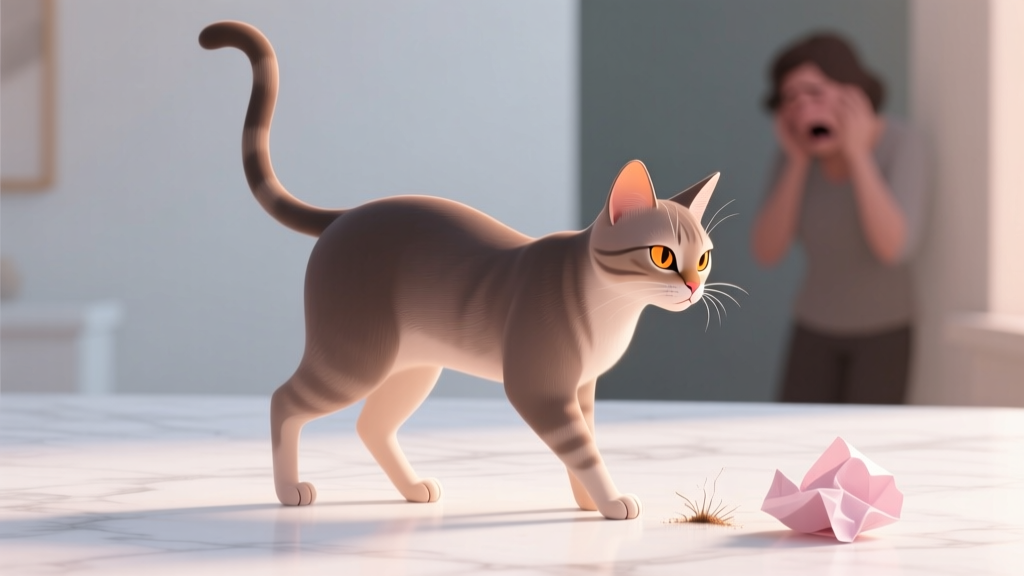
Unlike territorial spraying (which uses tail quivering), heat-related marking involves squatting or backing up to vertical objects (doors, curtains, baseboards) and releasing small amounts of urine laced with estradiol metabolites. The odor is sharp, musky, and distinct—described by owners as ‘burnt sugar meets ammonia.’ This isn’t ‘accidents’—it’s targeted chemical messaging.
5. Restlessness & Pacing
She may pace rooms for 20+ minutes, dart under furniture then reappear, or stare intently out windows. Her heart rate spikes 25–30% above baseline (per telemetry studies), and cortisol levels rise significantly—indicating genuine physiological stress, not ‘just being dramatic.’
6. Increased Grooming—Especially Genital Area
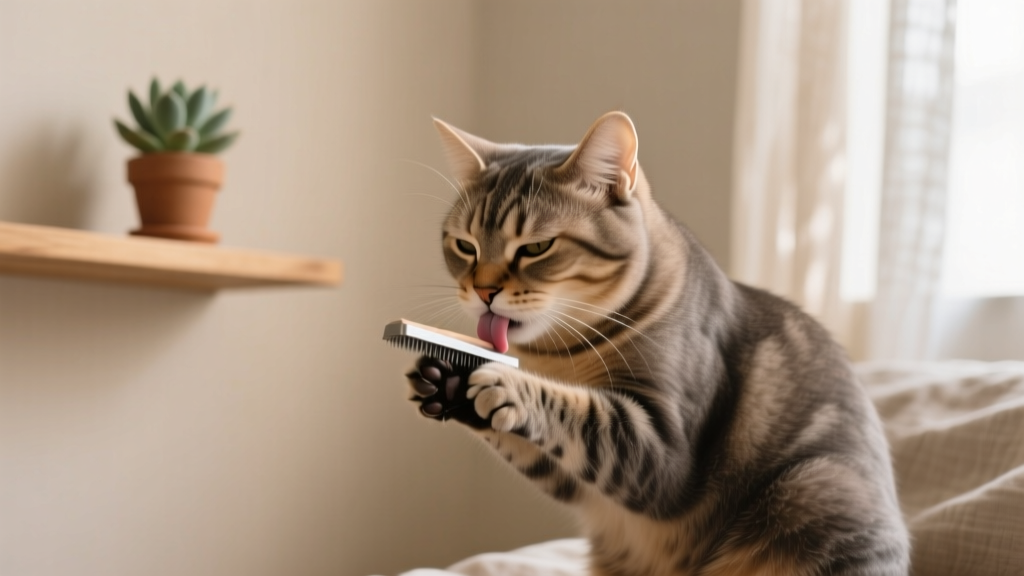
You might notice her licking her perineum obsessively, sometimes causing mild redness or hair loss. This isn’t hygiene—it’s an instinctive attempt to enhance scent dispersal and signal readiness. Vets caution: over-grooming can lead to contact dermatitis or secondary infections if left unchecked.
7. Attempted Escape & ‘Door Darting’
She’ll sit by doors or windows, cry plaintively, and bolt the second an opening appears—even if she’s never gone outside before. One documented case in Portland involved a 9-year-old indoor-only Siamese scaling a 6-foot screen door using sheer determination and claw leverage. This isn’t curiosity—it’s hardwired drive.
Timeline & Triggers: When, How Long, and What Sets It Off
Estrus isn’t random—it follows predictable hormonal rhythms. Most female cats enter their first heat between 4–10 months old, though early-maturing breeds (Siamese, Burmese) may start as young as 16 weeks. Seasonality matters: in temperate zones, peak cycles occur February–October; in equatorial or indoor environments with consistent lighting/temperature, cats can cycle year-round.
A typical heat lasts 4–10 days—but here’s what most owners miss: if she doesn’t mate, she’ll cycle again in 1–3 weeks. This creates ‘heat clusters’—back-to-back cycles that deplete energy reserves and elevate stress hormones chronically. According to Dr. Arjun Patel, reproductive endocrinologist at UC Davis School of Veterinary Medicine, ‘Three consecutive heats without conception increase baseline cortisol by 300% and suppress T-cell activity—making her far more susceptible to upper respiratory infections and dental disease.’
Light exposure is the master trigger: 14+ hours of daily light (natural or artificial) stimulates the hypothalamus to release GnRH, initiating the cascade. That’s why indoor cats on constant LED lighting often cycle more frequently than outdoor counterparts.
Vet-Approved Management Strategies—Beyond ‘Wait It Out’
Many online sources suggest ‘keeping her distracted’ or ‘using calming sprays.’ While well-intentioned, these rarely address root causes—and some (like essential oil diffusers) pose serious toxicity risks. Here’s what actually works, ranked by evidence strength:
- Spaying (Ovariohysterectomy): The gold-standard solution. Per the ASPCA, spaying before first heat reduces mammary tumor risk by 91%. Modern laparoscopic techniques mean same-day discharge and <48-hour recovery for most cats.
- Temporary Hormonal Suppression (Prescription Only): Injectable progestins (e.g., megestrol acetate) can halt estrus for 2–4 months—but carry FDA black-box warnings for diabetes, adrenal suppression, and mammary hyperplasia. Use only as bridge to surgery.
- Environmental Modulation: Reduce light exposure to <12 hours/day for 10–14 days; use blackout curtains in her sleeping area. Pair with white-noise machines to mask outdoor male cat calls—proven in shelter trials to reduce vocalization by 65%.
- Behavioral Support (Not ‘Training’): Provide elevated perches near windows (for visual stimulation without escape risk), rotate puzzle feeders daily, and offer catnip-free alternatives like silver vine or Tatarian honeysuckle—shown in a 2023 University of Lincoln trial to reduce pacing by 52% in heat.
What doesn’t work—and why: Cold compresses, herbal teas, or ‘waiting until she’s older’ are ineffective and potentially dangerous. One client delayed spaying her Maine Coon until age 2 after hearing ‘she needs to mature first’—resulting in pyometra requiring emergency $4,200 surgery.
When to Call Your Vet Immediately
While heat is natural, certain signs indicate complications requiring urgent care:
- Discharge that’s green, yellow, or bloody (not clear/mucoid)
- Loss of appetite lasting >24 hours
- Lethargy beyond typical restlessness
- Abdominal distension or pain when touched
- Fever (>103°F rectally)
These could signal early pyometra, ovarian cysts, or urinary tract obstruction—a rare but fatal emergency in stressed cats.
| Stage | Timeline | Key Behavioral Indicators | Vet-Recommended Action |
|---|---|---|---|
| Proestrus | 1–3 days | Mild restlessness, increased affection, slight vocalization | Begin environmental modulation; schedule spay consult if not already booked |
| Estrus (‘In Heat’) | 4–10 days | Yowling, rolling, marking, escape attempts, lordosis posture | Ensure secure environment; avoid introducing intact males; monitor for distress signs |
| Metestrus | 3–14 days post-estrus | Behavior returns to baseline; possible nesting or mild lethargy | If no pregnancy, confirm spay timing; discuss long-term prevention |
| Anestrus | Variable (weeks to months) | No heat signs; normal activity/appetite | Complete spay if deferred; review vaccination/flea prevention |
Frequently Asked Questions
How long does a female cat stay in heat?
Most cycles last 4–10 days—but if she doesn’t mate, she’ll typically re-enter heat in 1–3 weeks. Without intervention, this can repeat for months, especially in spring/summer. Spaying ends all future cycles permanently.
Can I spay my cat while she’s in heat?
Yes—but it’s more complex. Blood vessels in the reproductive tract are engorged, increasing surgical time and bleeding risk by ~20%. Most vets recommend waiting 2–4 weeks post-heat unless urgent (e.g., pyometra risk). Discuss options with your surgeon.
Do female cats feel pain when in heat?
They don’t experience pain like labor or injury—but the hormonal surge causes significant discomfort: muscle tension, GI upset, insomnia, and anxiety. Think of it like severe PMS amplified 10x. Their stress behaviors are genuine physiological responses—not ‘acting out.’
Will neutering a male cat stop my female’s heat behavior?
No. Male neutering eliminates his ability to impregnate—but it doesn’t affect her hormonal cycle. Her body continues producing estrogen regardless of male presence. Only spaying stops estrus.
Is there a ‘quiet’ heat where she shows no signs?
Rare—but possible, especially in older or overweight cats. However, absence of visible signs doesn’t mean absence of risk. Silent heats still elevate cancer risk and can cause cystic endometrial hyperplasia. Annual exams remain critical.
Common Myths—Debunked with Evidence
Myth #1: “Letting her have one litter is healthy for her.”
False—and dangerous. Zero veterinary organization recommends this. The AVMA states unequivocally: ‘There is no medical or behavioral benefit to allowing a cat to give birth. Each pregnancy increases lifetime risk of mammary carcinoma, dystocia, and eclampsia.’
Myth #2: “She’ll calm down after her first heat.”
Nope. Unspayed cats often become *more* intense with subsequent cycles. Hormonal feedback loops strengthen, and learned behaviors (like door-darting) become habitual. Early spaying prevents this escalation entirely.
Related Topics (Internal Link Suggestions)
- When to spay a kitten — suggested anchor text: "best age to spay a kitten"
- Signs of pyometra in cats — suggested anchor text: "cat pyometra symptoms"
- Cat heat cycle stages explained — suggested anchor text: "feline estrous cycle phases"
- Safe calming aids for cats — suggested anchor text: "vet-approved cat anxiety relief"
- Indoor cat enrichment ideas — suggested anchor text: "mental stimulation for indoor cats"
Conclusion & Your Next Step
Understanding what is a female cat's behavior when in heat isn’t about tolerating inconvenience—it’s about recognizing a critical window for compassionate, proactive care. Every yowl, every mark, every restless night is her biology pleading for resolution. Delaying spaying isn’t ‘giving her time’—it’s exposing her to preventable disease, stress, and suffering. Your next step? Schedule a spay consultation within the next 7 days. Ask your vet about laparoscopic options, pain management protocols, and post-op care kits. Many clinics now offer ‘heat-cycle rescue packages’ with discounted rates and same-week appointments. Your cat’s long-term health—and your household’s harmony—starts with this single, science-backed decision.