Indoor Cat Behavior: Hidden Stress Signals Revealed
Why Understanding What Is a Cat's Behavior for Indoor Cats Has Never Been More Urgent
\nIf you’ve ever watched your indoor cat stare blankly at a wall, suddenly sprint at 3 a.m., or avoid the litter box without apparent cause—you’re not alone. But here’s what most owners miss: what is a cat's behavior for indoor cats isn’t just a list of habits—it’s a complex, instinct-driven language shaped by evolutionary pressures that no apartment, condo, or suburban home fully satisfies. With over 60% of U.S. cats now living exclusively indoors (AVMA, 2023), behavioral issues—including chronic stress, redirected aggression, and inappropriate elimination—are rising faster than veterinary diagnoses can keep pace. And unlike dogs, cats rarely ‘act out’ for attention—they withdraw, suppress, or escalate silently. That means misreading a slow blink as contentment—or mistaking resource guarding for play—can delay intervention by months. This guide cuts through myth and anecdote with actionable insights from feline behaviorists, veterinary ethologists, and real-world case studies from shelters and multi-cat households.
\n\n1. The Instinct Gap: Why Indoor Cats Aren’t ‘Relaxed’—They’re in Low-Grade Survival Mode
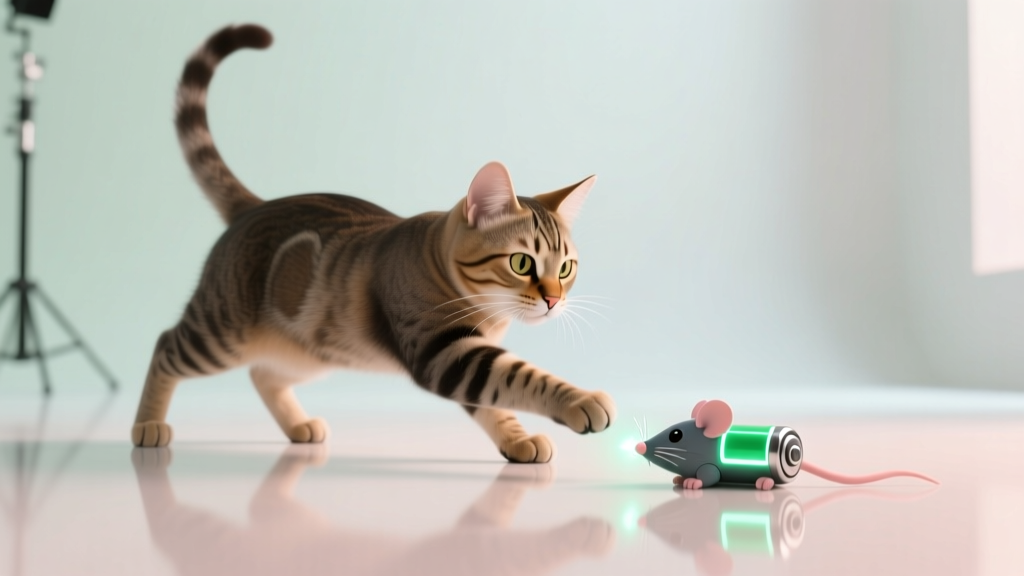
\nIndoor cats aren’t lazy or ‘bored’—they’re chronically under-stimulated in ways that trigger ancient neural pathways. Wild felids spend 30–50% of daylight hours engaged in hunting-related behaviors: scanning, stalking, pouncing, capturing, and consuming prey. Indoor cats perform zero of these sequences—yet their brains still generate the drive. Dr. Sarah Heath, a European Board-Certified Veterinary Behaviourist, explains: ‘When the predatory sequence is truncated—no chase, no capture, no “kill”—cats don’t relax. They displace that energy into overgrooming, tail-chasing, or nocturnal hyperactivity.’
\nThis isn’t speculation. A landmark 2022 study in Applied Animal Behaviour Science tracked 127 indoor cats across 6 months using collar-mounted accelerometers and owner diaries. Results showed cats with zero daily interactive play sessions were 3.8× more likely to develop stereotypic behaviors (e.g., repetitive pacing, fabric sucking) and 2.4× more likely to show urine marking outside the litter box—even when medically cleared.
\nSo what does this look like day-to-day? Not always dramatic. It’s the cat who ‘suddenly’ bites your hand mid-pet (overstimulation from unmet tactile needs), the one who hides for 48 hours after a vacuum cleaner passes (perceived predator threat with no escape route), or the cat who grooms obsessively on one flank (a displacement behavior masking anxiety). These aren’t personality flaws—they’re signals of an environment failing to meet core species-specific needs.
\n\n2. Decoding the 5 Key Behavioral Categories (With Real-Life Examples)
\nInstead of memorizing isolated actions, group indoor cat behaviors into five functional categories—each tied to survival motivation. This makes interpretation intuitive and actionable:
\n- \n
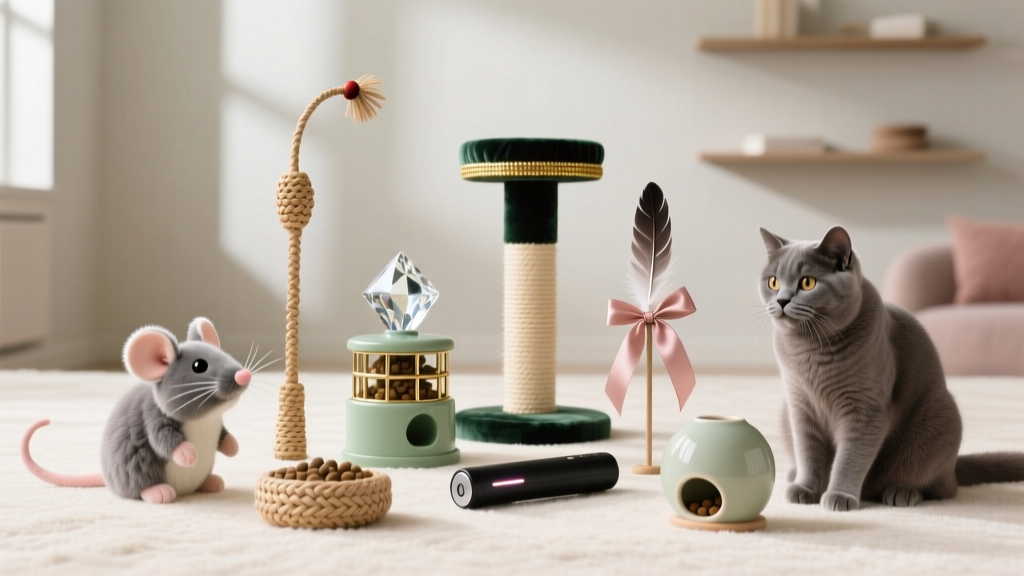
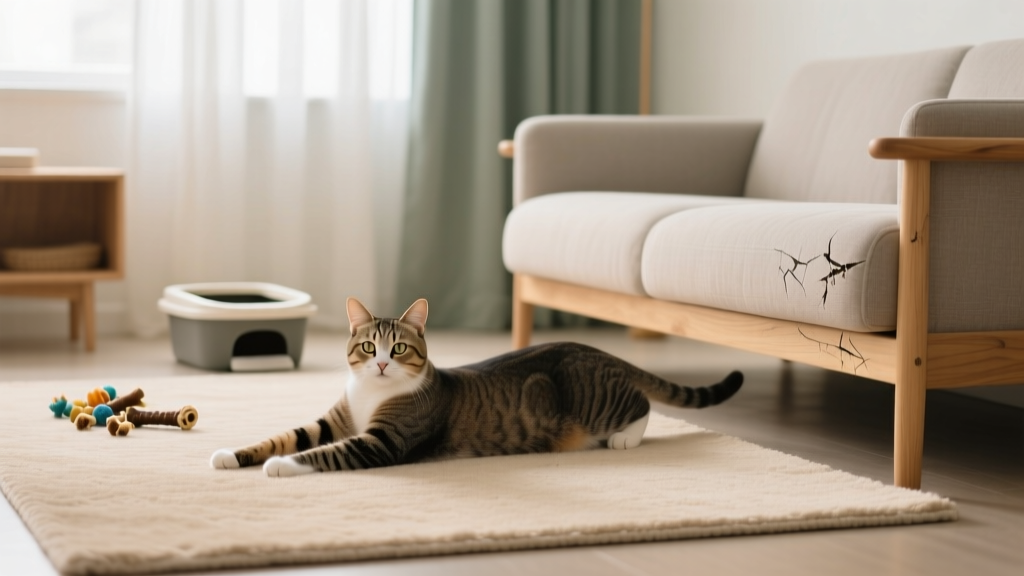
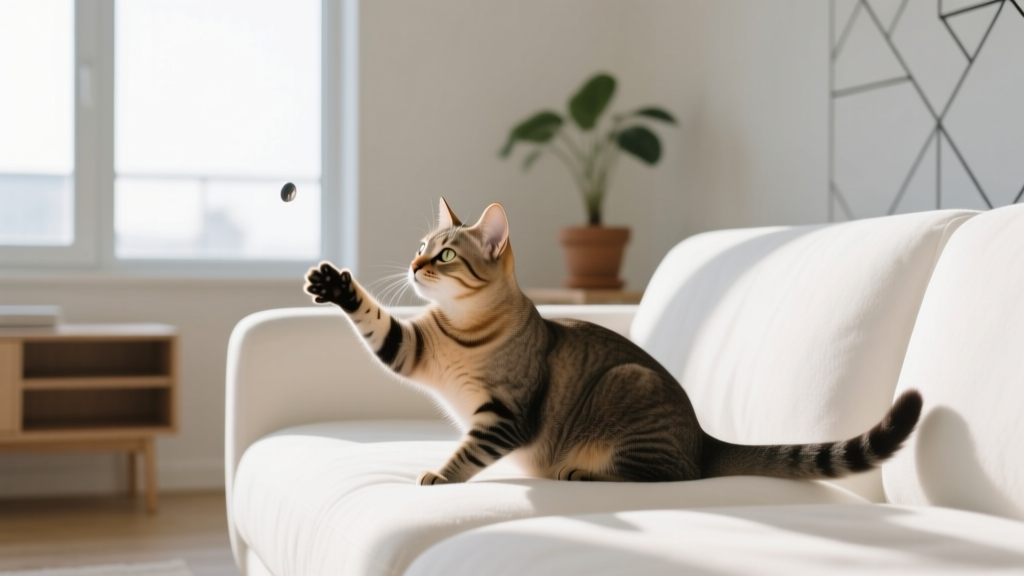
- Hunting & Foraging Behaviors: Pouncing at dust motes, batting toys under furniture, ‘kneading’ blankets, bringing toys to food bowls. What it means: Your cat is practicing motor patterns—but needs structured outlets. A 2021 Cornell Feline Health Center trial found cats given 3x 10-minute daily ‘hunt-eat-play’ sequences (using puzzle feeders + wand toys) showed 67% fewer destructive scratching incidents within 2 weeks. \n
- Communication Signals: Tail position (quivering = excitement; low and twitching = agitation), ear orientation (forward = interest; flattened = fear/anger), pupil dilation (wide = arousal—not always fear), and vocalizations (chirps = high-intensity focus; yowls = distress or hormonal signaling). Note: Purring doesn’t always mean contentment—it occurs during labor, injury, and vet visits as a self-soothing mechanism. \n
- Social & Territorial Behaviors: Rubbing cheeks on furniture (depositing facial pheromones), slow blinking (‘cat kisses’ signaling trust), urine spraying (not toileting—marking vertical surfaces to assert control), and allogrooming (mutual grooming = bonding, but also hierarchy reinforcement). In multi-cat homes, resource guarding (e.g., sitting beside the food bowl while others eat) often precedes aggression if unaddressed. \n
- Stress & Displacement Behaviors: Excessive licking (especially bald patches), tail chasing, chewing non-food items (pica), hiding for >12 hours/day, or sudden startle responses. Crucially, these often appear after environmental changes—like new furniture, guests, or even rearranged litter boxes—even if the cat seemed ‘fine’ initially. \n
- Rest & Sleep Patterns: Indoor cats average 15–20 hours of sleep daily—but quality matters. Deep REM sleep requires safety. If your cat sleeps only in high, hidden spots (top of bookshelves, inside closets), it may indicate perceived vulnerability. Conversely, belly-up naps on open floors signal profound security. \n
3. The Indoor Environment Audit: 9 Non-Negotiable Elements Every Home Needs
\nYou don’t need a $5,000 catio to meet feline needs—you need intentionality. Based on protocols used by certified cat behavior consultants (IAABC-certified), here’s what every indoor space must include:
\n- \n
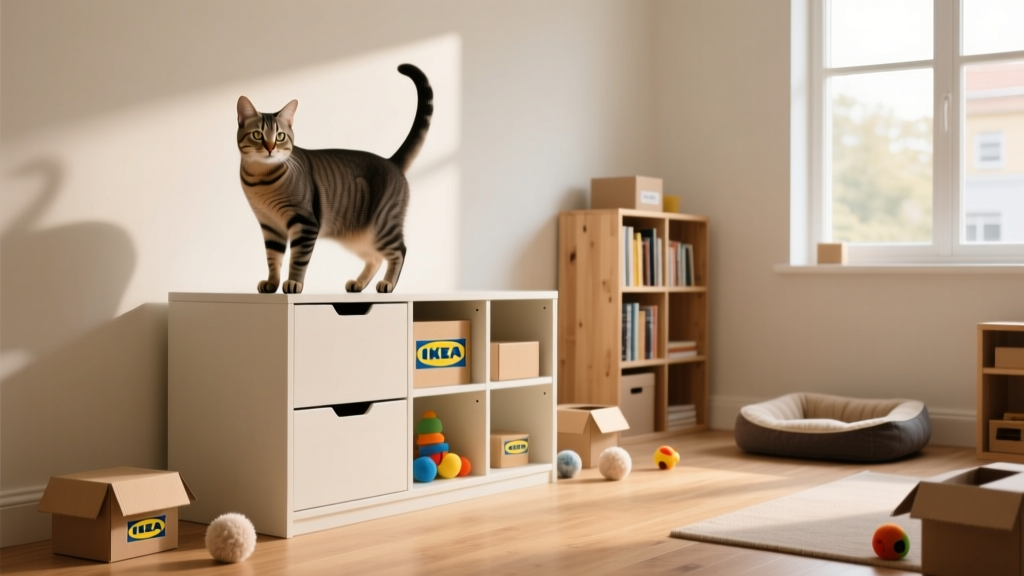
- Vertical territory: At least 3 elevated perches (cat trees, shelves, window sills) at varying heights—critical for surveillance and escape routes. \n
- Safe hideaways: Enclosed, dark, quiet spaces (cardboard boxes, covered beds) placed away from foot traffic and appliances. \n
- Separate resource zones: Litter boxes (1 per cat + 1 extra), food/water stations, and sleeping areas should be >6 feet apart and never clustered—a common trigger for inter-cat tension. \n
- Controlled sensory input: Window perches with bird feeders outside, rotating toy sets (never all out at once), and scheduled ‘quiet hours’ where human noise is minimized. \n
- Predictable routines: Feeding, play, and interaction times within a 30-minute window daily—cats thrive on temporal predictability more than humans realize. \n
A 2023 shelter rehoming study (published in Journal of Feline Medicine and Surgery) found cats placed in foster homes with ≥4 of these elements had a 92% lower relapse rate of stress-induced cystitis within 60 days versus those in standard foster setups.
\n\n4. When ‘Normal’ Behavior Crosses Into Red Flags: A Clinical Threshold Guide
\nNot all unusual behavior is problematic—but some patterns demand veterinary evaluation before assuming it’s ‘just behavior’. Here’s how to triage:
\n| Behavior Observed | \nDuration Threshold | \nMedical Red Flags to Rule Out First | \nBehavioral Intervention Priority | \n
|---|---|---|---|
| Urinating outside the litter box | \n≥2 incidents in 7 days | \nUTI, bladder stones, diabetes, kidney disease (urinalysis & bloodwork required) | \nHigh — 80% of cases have underlying medical causes initially | \n
| Excessive grooming causing hair loss | \n≥15 minutes/day, focused on one area | \nArthritis (pain-induced licking), allergies, skin infections, hyperthyroidism | \nMedium-High — requires dermatology + behavior consult | \n
| Aggression toward people/housemates | \nAny unprovoked bite/scratch breaking skin | \nNeurological disorders, dental pain, metabolic imbalances | \nUrgent — immediate vet exam + certified behaviorist referral | \n
| Withdrawal/hiding >18 hours/day | \nFor >3 consecutive days | \nRespiratory infection, pancreatitis, heart disease (often silent in early stages) | \nHigh — cats hide illness; this is rarely ‘just shy’ | \n
| Nocturnal vocalization (yowling) | \n≥3 nights/week for >2 weeks | \nCognitive dysfunction (feline dementia), hypertension, hyperthyroidism | \nMedium — especially in cats >10 years old | \n
Frequently Asked Questions
\nDo indoor cats get depressed?
\nWhile ‘depression’ isn’t a clinical diagnosis in cats, they absolutely experience chronic stress and anhedonia (loss of pleasure in previously enjoyed activities)—clinically termed ‘feline dysphoria’. Signs include reduced play, appetite changes, social withdrawal, and apathy toward stimuli that once excited them. A 2020 University of Lincoln study confirmed that cats in enriched environments showed significantly higher levels of dopamine metabolites in urine samples versus control groups—suggesting neurochemical impacts of environmental quality.
\nWhy does my indoor cat bite me gently during petting?
\nThis is called ‘petting-induced aggression’—and it’s rarely personal. Cats have a finite tolerance for tactile stimulation (often just 30–60 seconds), governed by nerve sensitivity thresholds. Warning signs include tail flicking, skin rippling, flattened ears, or sudden stillness. Stop petting before the bite occurs—and redirect to interactive play instead. Never punish; it erodes trust and increases anxiety.
\nIs it normal for indoor cats to stare at walls or ‘see things’?
\nYes—if brief and occasional. Cats detect ultraviolet light, hear frequencies up to 64 kHz (vs. humans’ 20 kHz), and perceive motion at speeds 3× faster than ours. What looks like ‘staring at nothing’ may be tracking insects, dust particles, or shadows imperceptible to us. However, prolonged (>5 min), intense staring accompanied by vocalization or head pressing warrants a neurological exam.
\nHow much playtime does an indoor cat really need?
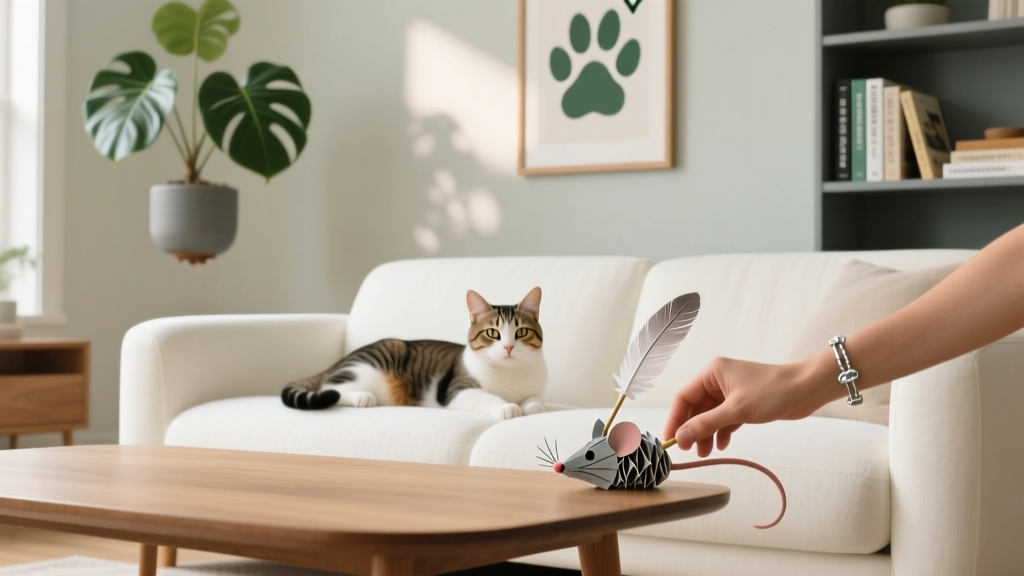
\nMinimum: two 15-minute interactive sessions daily (morning and evening), mimicking dawn/dusk hunting peaks. Each session must involve a wand toy that moves unpredictably—never your hands or feet. Research shows cats engage more deeply when the ‘prey’ disappears briefly (e.g., under furniture) before reappearing. Bonus: end each session with a small meal or treat to complete the hunt-eat-sleep cycle.
\nCan indoor cats develop separation anxiety?
\nAbsolutely—and it’s underdiagnosed. Unlike dogs, cats rarely vocalize distress. Instead, they may over-groom, destroy items only when alone, urinate on owner’s belongings (scent-marking), or exhibit extreme clinginess pre-departure. A 2022 UC Davis survey found 22% of single-cat households reported at least one separation-related behavior. Gradual desensitization (leaving for 30 seconds, then 2 minutes, etc.) paired with enrichment left behind (e.g., timed feeder, puzzle toy) is far more effective than ‘tough love’.
\nCommon Myths About Indoor Cat Behavior
\nMyth #1: “Cats are independent—they don’t need interaction.”
\nReality: Independence ≠ indifference. Cats form secure attachments (confirmed via ‘secure base test’ studies), but express them differently. Ignoring interaction needs leads to learned helplessness—not contentment.
Myth #2: “If my cat eats, uses the litter box, and sleeps, they’re fine.”
\nReality: These are baseline survival functions—not indicators of psychological well-being. A cat can be medically healthy yet behaviorally compromised, increasing long-term disease risk (e.g., stress-induced cystitis).
Related Topics (Internal Link Suggestions)
\n- \n
- Best Puzzle Feeders for Indoor Cats — suggested anchor text: "interactive puzzle feeders for mental stimulation" \n
- How to Introduce a New Cat to an Indoor Household — suggested anchor text: "stress-free multi-cat introduction guide" \n
- Signs of Stress in Cats: A Visual Checklist — suggested anchor text: "cat stress body language chart" \n
- DIY Cat Tree Ideas on a Budget — suggested anchor text: "affordable vertical territory solutions" \n
- Veterinary Behaviorist vs. Trainer: When to Call Whom? — suggested anchor text: "when to seek professional cat behavior help" \n
Your Next Step Starts With One Observation
\nYou now know that what is a cat's behavior for indoor cats isn’t about labeling quirks—it’s about listening to a sophisticated, instinct-driven language we’ve only recently begun to translate. Don’t wait for crisis. Tonight, pick one behavior you’ve wondered about—the midnight zoomies, the slow blink, the persistent window watching—and observe it with fresh eyes: duration, triggers, context, and your cat’s body language. Then, choose one element from the Indoor Environment Audit to implement this week—whether it’s adding a cardboard box fortress, scheduling two 15-minute play sessions, or separating food and litter zones. Small, consistent changes compound. Within 14 days, you’ll notice shifts in confidence, calm, and connection. Because the goal isn’t a ‘perfect’ cat—it’s a cat who feels safe, stimulated, and deeply understood in the world you share.