What Is a Behavioral Adaptation of a Cat? 7 Real
Why Your Cat’s \"Weird\" Habits Aren’t Weird at All — They’re Evolution in Action
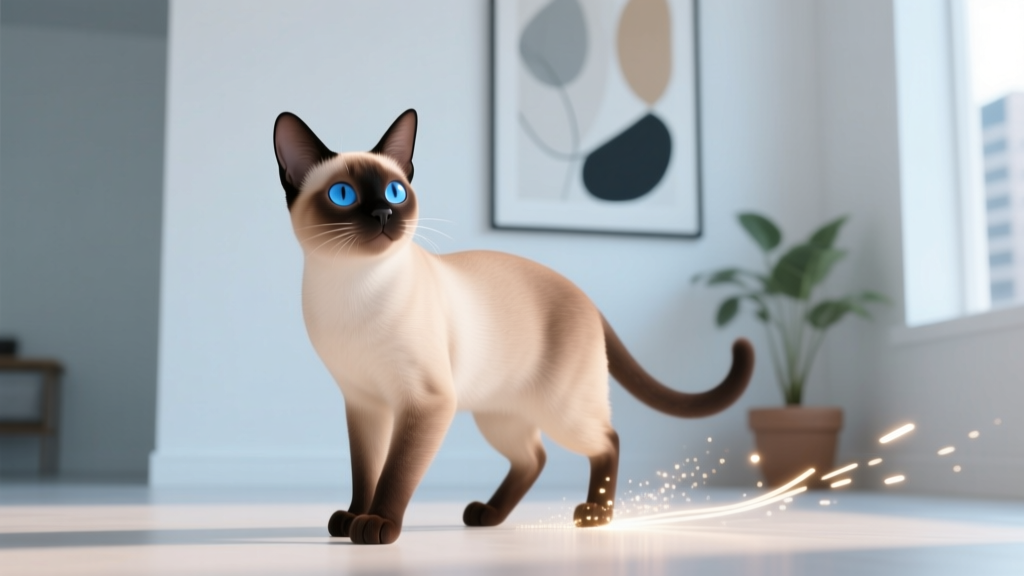
\nWhat is a behavioral adaptation of a cat? It’s any learned or instinctive action that increases a cat’s chances of survival, reproduction, or well-being in its environment — from the silent pounce of a housecat chasing a laser dot to the strategic avoidance of loud noises in multi-pet households. Unlike physical adaptations (like retractable claws), behavioral adaptations are flexible, context-sensitive, and deeply rooted in 9,000+ years of domestication and 30+ million years of felid evolution. And yet, most cat guardians misinterpret these behaviors as 'stubbornness,' 'aloofness,' or even 'defiance' — when in reality, they’re sophisticated survival strategies fine-tuned by natural selection. Understanding them isn’t just fascinating; it’s foundational to reducing stress-related illnesses (like idiopathic cystitis), preventing behavioral euthanasia (still the #1 cause of death for healthy cats under 5), and building genuine trust with your feline companion.
\n\n1. The Instinct–Learning Continuum: How Nature & Nurture Shape Feline Behavior
\nBehavioral adaptations exist on a spectrum between hardwired instinct and socially learned response. Take kneading: kittens knead their mother’s mammary glands to stimulate milk flow — a reflex so ancient it’s present in neonatal kittens blind and deaf. But adult cats continue kneading soft surfaces (your lap, blankets, even dog beds) not because they’re ‘regressing,’ but because the behavior has been co-opted as a self-soothing mechanism tied to safety and contentment. According to Dr. Mikel Delgado, certified cat behavior consultant and researcher at UC Davis, 'Kneading in adults is a reliable indicator of low-threat perception — it’s essentially a feline version of saying, \"I feel safe enough here to be vulnerable.\"'
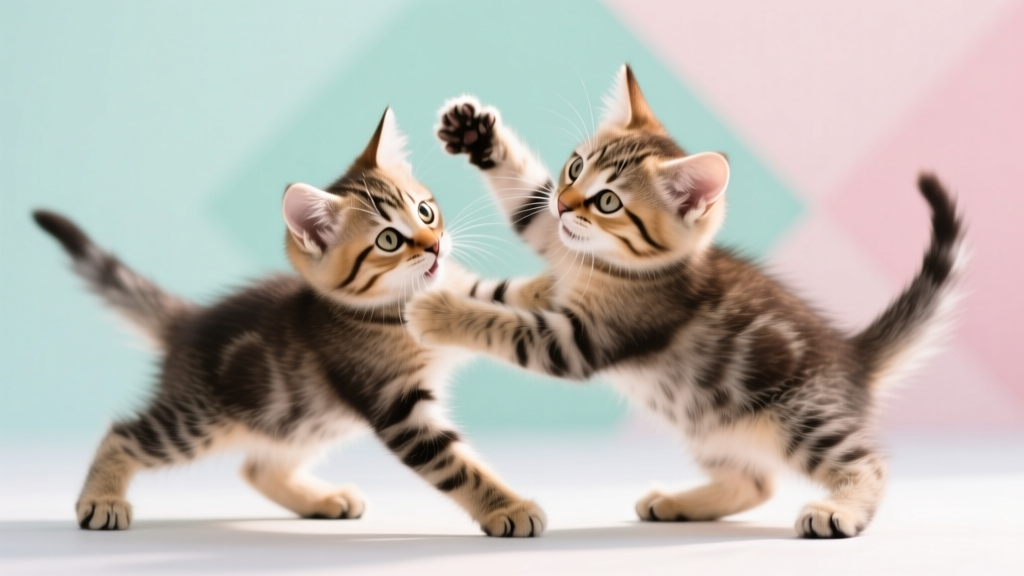
\n\nSimilarly, predatory sequence behaviors — stalk, chase, pounce, bite, kill, dissect, consume — remain intact even in well-fed indoor cats. A 2022 study published in Applied Animal Behaviour Science tracked 127 indoor cats using motion-activated cameras and found that 94% performed full predatory sequences during play sessions — but only 38% did so when toys were highly realistic (feather wands, motorized mice), versus 72% when toys mimicked erratic, unpredictable movement. This proves that while the *drive* is innate, the *expression* depends heavily on environmental enrichment — a critical insight for preventing redirected aggression and obsessive licking.
\n\nHere’s where many owners stumble: assuming behavioral adaptations are ‘fixed.’ They’re not. A feral kitten raised with daily human interaction before 7 weeks old develops significantly more social tolerance than one isolated until 12 weeks — proving neuroplasticity remains high during early development windows. Yet even older cats can reshape behaviors: a 2023 clinical trial at the Cornell Feline Health Center showed that introducing vertical space (cat trees, wall shelves) reduced inter-cat aggression in 68% of multi-cat households within 3 weeks — not by eliminating territorial instincts, but by providing alternative, species-appropriate outlets for resource guarding.
\n\n2. The Top 5 Behavioral Adaptations You See Daily (and What They Signal)
\nLet’s move beyond theory into observable, actionable insights. These aren’t quirks — they’re functional tools your cat uses to navigate the world:
\n\n- \n
- Scent-Marking via Cheek Rubbing: Cats possess facial pheromones (F3) released when rubbing cheeks on furniture, doorframes, or your legs. This isn’t ‘claiming ownership’ in a possessive sense — it’s olfactory anchoring. By depositing calming pheromones, they transform unfamiliar or stressful environments into ‘known-safe zones.’ A 2021 study in Journal of Feline Medicine and Surgery found cats in veterinary waiting rooms who’d previously rubbed against carrier interiors exhibited 42% lower cortisol levels during exams. \n
- Nocturnal/Diurnal Flexibility (Crepuscular Rhythms): Contrary to popular belief, cats aren’t strictly nocturnal. They’re crepuscular — biologically primed for peak activity at dawn and dusk, aligning with prey availability (rodents, birds). Indoor cats adapt this rhythm to household schedules: if you feed at 6 a.m. and 6 p.m., they’ll shift activity to those windows. Ignoring this leads to ‘midnight zoomies’ — not misbehavior, but chronobiological mismatch. \n
- Resource Guarding & Spatial Partitioning: In multi-cat homes, cats rarely share core resources (litter boxes, food bowls, sleeping spots). Instead, they establish temporal and spatial boundaries — e.g., Cat A uses the north litter box from 6–10 a.m., Cat B uses the south box from 10 a.m.–2 p.m. Violating these unspoken agreements triggers stress, not dominance battles. As Dr. Sarah Heath, European Veterinary Specialist in Behavioural Medicine, explains: 'Cats don’t fight over hierarchy — they fight over predictability.' \n
- Grooming as Thermoregulation & Social Bonding: While grooming removes dirt and parasites, it also cools the skin via saliva evaporation (cats lack sweat glands except on paw pads) and redistributes protective oils. Allogrooming (mutual grooming between bonded cats) releases oxytocin and reinforces social cohesion — a vital adaptation for colonies that evolved from solitary ancestors. \n
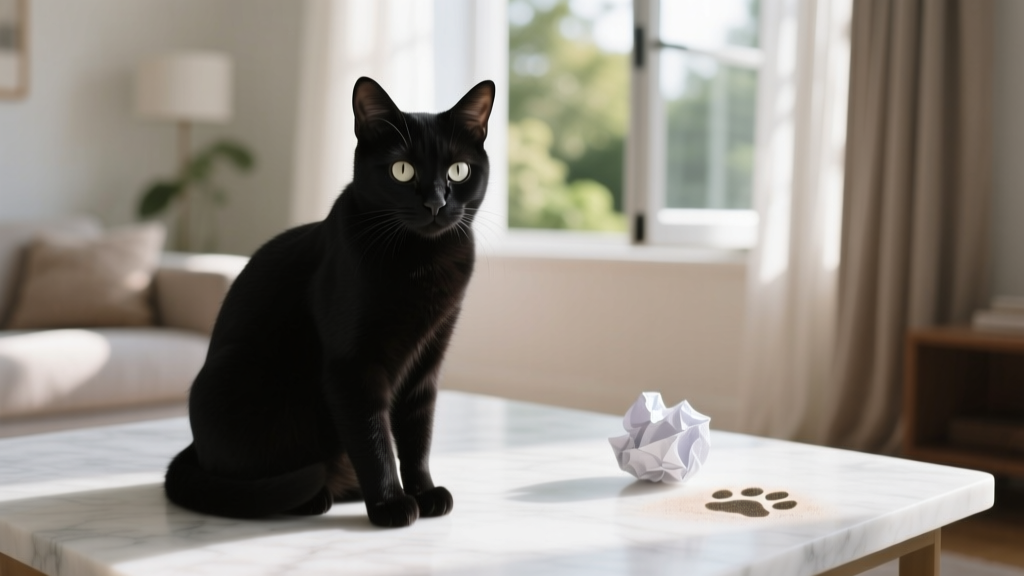
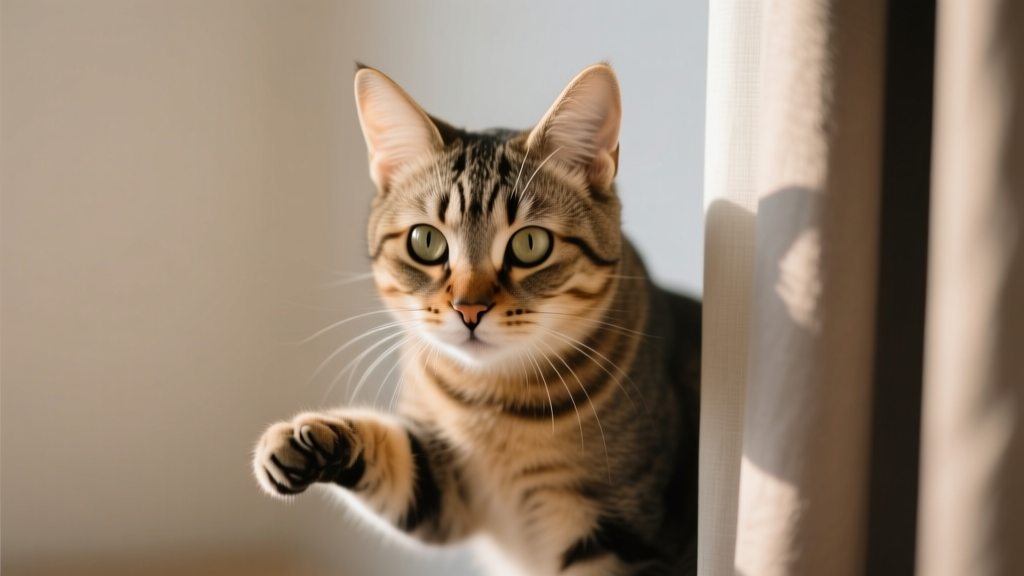
- Object Play Mimicking Hunting: Pouncing on crumpled paper, batting string, or ‘killing’ plush mice isn’t ‘just play.’ It maintains neuromuscular coordination, refines targeting accuracy, and satisfies the predatory sequence’s completion drive. Depriving cats of this outlet correlates strongly with stereotypic behaviors (e.g., wool-sucking, excessive licking) — signs of thwarted behavioral needs, per the 2020 ISFM Consensus Guidelines. \n
3. When Adaptations Go Awry: Recognizing Stress-Induced Behaviors
\nBehavioral adaptations become maladaptive when chronic stress overwhelms coping capacity. Key red flags include:
\n\n- \n
- Over-Grooming Leading to Alopecia: While normal grooming takes ~30–50% of a cat’s day, obsessive licking causing bald patches (especially on belly, inner thighs, or forelegs) signals anxiety — often triggered by subtle changes: new pet, rearranged furniture, or even seasonal light shifts. \n
- Inappropriate Elimination: Urinating outside the box isn’t ‘spite.’ It’s either a medical issue (UTI, arthritis making box entry painful) or a behavioral adaptation gone sideways — such as avoiding a litter box near a noisy appliance (auditory aversion) or marking over a spot where another cat was recently present (olfactory competition). \n
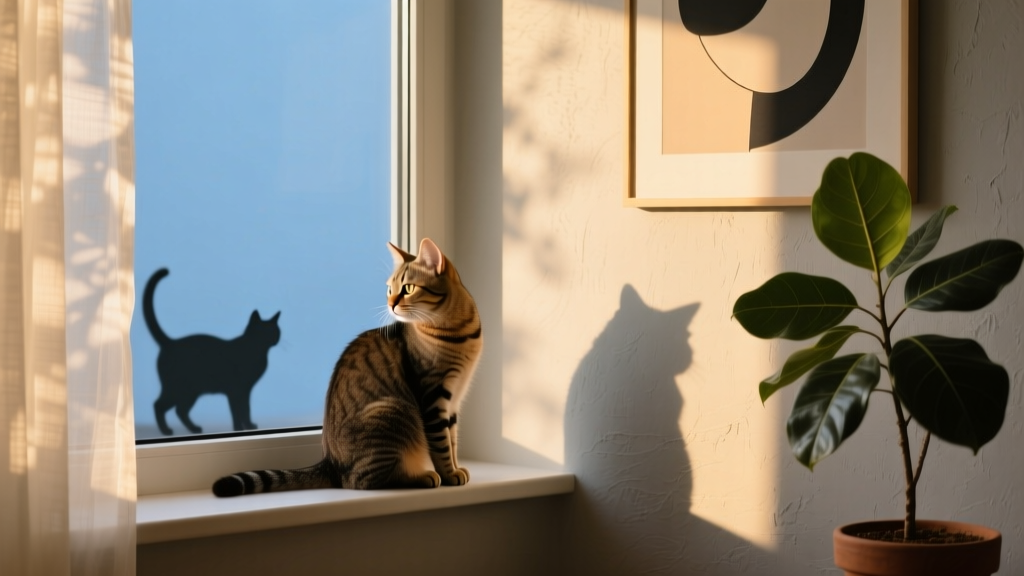
- Redirected Aggression: A cat sees an outdoor cat through the window, becomes aroused, then attacks the nearest moving target — you, a child, or another pet. This isn’t personal; it’s a misdirected predatory surge with no appropriate outlet. \n
The solution isn’t punishment — which erodes trust and worsens stress — but environmental intervention. For example, installing opaque window film to block outdoor cat views reduced redirected aggression episodes by 79% in a 12-week shelter study. Similarly, adding one extra litter box per cat (plus one) — placed in quiet, low-traffic areas with unscented, clumping litter — resolved 63% of inappropriate elimination cases without medication, according to the 2022 AAHA Feline Life Stage Guidelines.
\n\n4. Practical Adaptation Mapping: Turning Insight Into Daily Practice
\nYou don’t need a degree in ethology to support your cat’s behavioral adaptations. Start with this evidence-based framework:
\n\n- \n
- Observe Before Interpreting: Track your cat’s behavior for 3 days using a simple log: time, location, trigger (if visible), duration, and outcome. Note patterns — e.g., does hiding spike after vacuuming? Does kneading increase post-vet visit? \n
- Match Enrichment to Core Drives: Provide outlets for hunting (food puzzles, wand toys), climbing (shelves, cat trees), scratching (cardboard, sisal), and resting (cozy, elevated hideaways). Rotate toys weekly to maintain novelty — cats habituate fast. \n
- Respect Sensory Boundaries: Cats hear frequencies up to 64 kHz (humans max at 20 kHz), detect vibrations through paw pads, and process visual motion 3x faster than us. Avoid sudden movements, loud high-pitched sounds, or forced handling — especially with shy cats. \n
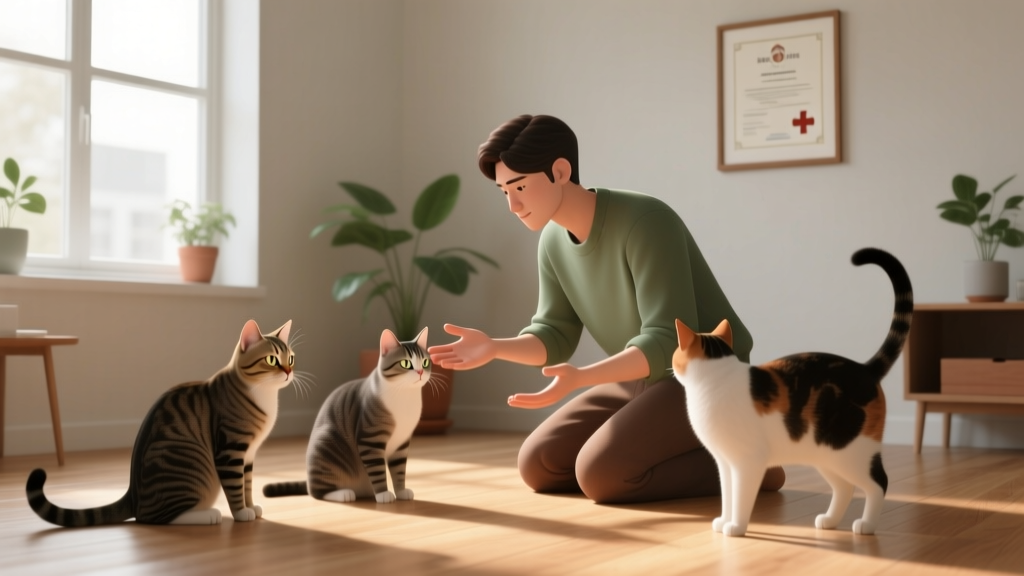
- Use Positive Reinforcement Strategically: Reward desired behaviors *in the moment* with treats, gentle praise, or play — never after the fact. For example, click-and-treat when your cat voluntarily enters a carrier, not when you drag them in. \n
| Behavioral Adaptation | \nEvolutionary Purpose | \nModern Trigger | \nSupport Strategy | \nExpected Outcome Timeline | \n
|---|---|---|---|---|
| Crepuscular Activity Peaks | \nMaximize hunting success during low-light prey activity | \nOwner asleep at dawn/dusk → cat wakes owner | \nPre-dawn feeding (timed feeder), 15-min interactive play session at 5:30 a.m., puzzle feeder at bedtime | \nReduced early-morning vocalization within 5–7 days | \n
| Scent-Marking via Rubbing | \nCreate olfactory security in unstable environments | \nNew baby, renovation, or visitor presence | \nProvide familiar-smelling items (old t-shirt, blanket), use Feliway Classic diffuser in high-traffic zones | \nDecreased anxious pacing/hiding within 3–5 days | \n
| Resource Partitioning | \nAvoid direct conflict over limited resources | \nSingle litter box shared by 2+ cats | \nAdd boxes (n+1 rule), place in separate rooms, use uncovered boxes with 2–3” litter depth | \nFewer avoidance behaviors & box avoidance within 10–14 days | \n
| Allogrooming | \nStrengthen social bonds & reduce parasite load | \nNew cat introduction causing tension | \nParallel brushing sessions (brush both cats simultaneously with separate brushes), shared treat-dispensing toys | \nIncreased mutual sniffing/lying near each other within 2–3 weeks | \n
| Predatory Sequence Completion | \nMaintain physical/mental fitness for survival | \nToy deprivation or exclusively passive toys (stuffed mice) | \nRotate 3–5 interactive toys daily; end sessions with ‘kill’ (let cat ‘catch’ toy); offer food puzzles 2x/day | \nReduced nighttime restlessness & destructive scratching within 7–10 days | \n
Frequently Asked Questions
\nIs kneading a sign my cat loves me?
\nYes — but more precisely, it’s a sign your cat associates you with safety and comfort. Kneading originates from kittenhood nursing behavior, releasing endorphins that induce calm. When adult cats knead you, they’re not seeking milk; they’re activating a neural pathway linked to security. However, if kneading becomes painful (claws extended), gently place a thick blanket on your lap first — never punish the behavior, as it undermines trust.
\nWhy does my cat stare at me without blinking?
\nThis is a feline ‘slow blink’ — a deliberate, relaxed closing of the eyes that signals non-threat and affection. In cat-to-cat communication, direct staring is aggressive; slow blinking is the equivalent of a smile or handshake. Try returning it: lock eyes softly, then slowly close and open your eyes. Many cats will reciprocate, reinforcing your bond. Research from the University of Sussex (2019) confirmed cats are 2x more likely to approach humans who slow-blink vs. those who maintain steady eye contact.
\nDo indoor cats still need to hunt?
\nAbsolutely — and denying this need carries real health consequences. Hunting satisfies deep-seated neurological drives: visual tracking engages the superior colliculus, pouncing activates motor cortex pathways, and ‘killing’ provides dopamine-mediated reward. Without outlets, cats develop frustration-related behaviors (excessive grooming, aggression) or metabolic issues (obesity, diabetes). Aim for 2–3 daily 10–15 minute play sessions that mimic the full predatory sequence — using wand toys, not passive ones.
\nCan I train my cat to stop scratching furniture?
\nYou can’t eliminate scratching — it’s a vital behavioral adaptation for claw maintenance, stretching, and scent-marking. But you *can* redirect it. Place sturdy, vertical scratching posts (sisal or cardboard) beside furniture they target, sprinkle with catnip, and reward use with treats. Cover off-limit areas temporarily with double-sided tape or aluminum foil (textures cats dislike). Never declaw — it’s illegal in 30+ countries and causes chronic pain and mobility issues, per the American Association of Feline Practitioners.
\nIs hissing always aggression?
\nNo — hissing is primarily a distance-increasing signal meaning ‘I’m overwhelmed and need space now.’ It’s a fear-based adaptation, not an offensive threat. Punishing a hissing cat (yelling, spraying water) confirms their fear and damages your relationship. Instead, calmly remove the stressor (e.g., close door, stop petting) and give them quiet time to reset. Once calm, reintroduce gently — perhaps with treats offered from a distance.
\nCommon Myths About Feline Behavioral Adaptations
\nMyth #1: “Cats are aloof because they’re not social animals.”
\nReality: Domestic cats evolved from solitary ancestors, but modern cats form complex, fluid social structures — especially in stable, resource-rich environments. Colony-living cats engage in allogrooming, allorubbing, and communal kitten care. Their ‘aloofness’ is often misread caution, not indifference.
Myth #2: “If my cat doesn’t purr, they’re not happy.”
\nReality: Purring occurs during stress, injury, labor, and contentment — it’s a self-soothing mechanism linked to vibrations at 25–150 Hz, shown to promote tissue regeneration and pain reduction (per a 2001 study in Journal of the Acoustical Society of America). Some cats simply purr less — and that’s perfectly normal.
Related Topics (Internal Link Suggestions)
\n- \n
- How to Introduce a New Cat to Your Household — suggested anchor text: "stress-free cat introduction guide" \n
- Best Food Puzzle Toys for Indoor Cats — suggested anchor text: "top-rated interactive cat feeders" \n
- Understanding Cat Body Language Signals — suggested anchor text: "decoding feline tail flicks and ear positions" \n
- Signs of Anxiety in Cats and How to Help — suggested anchor text: "feline stress symptoms and solutions" \n
- Litter Box Training Troubleshooting — suggested anchor text: "why cats avoid the litter box" \n
Your Next Step: Map One Behavior This Week
\nYou now know what a behavioral adaptation of a cat truly is — not a list of odd habits, but a living archive of evolutionary wisdom encoded in every blink, rub, and pounce. Don’t try to overhaul everything at once. Pick *one* recurring behavior this week — maybe the 5 a.m. yowling, the couch scratching, or the sudden hiding when guests arrive — and apply the Adaptation Guide table above. Observe, adjust, and celebrate small wins. Because when you stop asking ‘Why is my cat doing this?’ and start asking ‘What need is this adaptation meeting?,’ you shift from confusion to connection. Ready to go deeper? Download our free Behavioral Adaptation Tracker (PDF) — includes printable logs, species-appropriate enrichment checklists, and vet-approved calming protocols.