What Does Cat Behavior Mean DIY
Why Decoding Your Cat’s Behavior Yourself Isn’t Just Cute — It’s Critical Care
If you’ve ever stared at your cat mid-stare, wondered why they knead your sweater while ignoring the $80 cat tree, or panicked when they suddenly started peeing outside the litter box — you’re not alone. What does cat behavior mean DIY is more than a curiosity-driven search; it’s the frontline of feline welfare. Cats don’t speak our language — but they broadcast constantly through posture, vocalization, facial expression, and micro-movements. And because they mask illness and distress so effectively (a survival instinct rooted in evolution), misreading their signals isn’t just confusing — it can delay life-saving care. In fact, a 2023 Cornell Feline Health Center study found that 68% of early-stage urinary tract issues and 52% of mild anxiety disorders in cats were first noticed by owners who’d learned to spot subtle behavioral shifts — not by veterinarians during routine exams. This guide gives you the tools, context, and confidence to interpret what your cat is saying — ethically, safely, and without replacing professional care, but empowering you to act faster and smarter.
Your Cat’s Body Language: The 5-Second Signal System
Cats communicate primarily through body language — and most signals happen in under three seconds. Unlike dogs, who evolved to read human faces, cats developed a nuanced visual dialect for conspecifics (other cats) that we’ve only recently begun decoding with rigor. Dr. Mikel Delgado, certified cat behaviorist and researcher at UC Davis, emphasizes: “Cats aren’t ‘mysterious’ — they’re precise. Every twitch, blink, and tail angle serves a function. What looks like ‘random’ behavior is actually highly contextual communication.”
Start with these four foundational zones — observe them *together*, not in isolation:
- Ears: Forward and relaxed = calm curiosity; swiveled sideways = alert but neutral; flattened backward (“airplane ears”) = fear, aggression, or pain.
- Eyes: Wide-open with dilated pupils in low light = normal; sudden dilation in bright light = stress or overstimulation. The slow blink? A deliberate, trusting signal — often called the “cat kiss.”
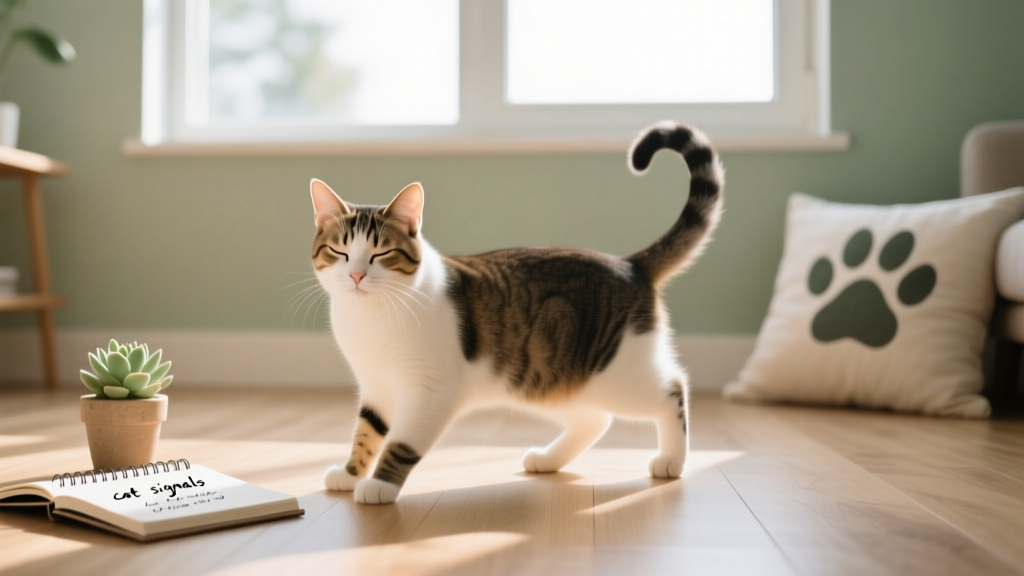
- Tail: Upright with quiver tip = greeting joy; low and tucked = fear or submission; rapid side-to-side flick = rising agitation (not ‘happy wagging’ like dogs); puffed up = defensive panic.
- Posture: Crouched low + flattened body = preparing to flee or hide; arched back + sideways stance = defensive bluff; belly-up exposure = deep trust (not always an invitation to rub — watch for leg tension).
Crucially: Context overrides all. A tail held high in your living room means confidence. That same tail held high while perched on a windowsill, staring at a stray cat outside? That’s territorial vigilance — possibly escalating to redirected aggression if unchecked.
The DIY Behavior Journal: Your Low-Cost, High-Insight Tracking System
Forget expensive apps or AI collars — the most powerful DIY tool is a $3 notebook and 90 seconds a day. Behavioral change is rarely sudden; it’s a slow drift. A journal reveals patterns invisible in real time. Here’s how to build one that delivers clinical-grade insight:
- Log daily basics: Time, location, activity (e.g., “10:15 a.m., kitchen, eating breakfast”), and your cat’s immediate response (e.g., “ignored me, then rubbed flank on fridge door”).
- Track triggers & outcomes: Note environmental changes — new furniture, visitor, thunderstorm, even your own schedule shift. Did your cat stop using the litter box *after* you switched detergents? That’s not coincidence — it’s olfactory aversion.
- Rate intensity on a 1–5 scale: For behaviors like vocalization, hiding, or over-grooming, assign severity (1 = rare/soft, 5 = constant/intense). This reveals escalation before crisis.
- Photograph & timestamp key moments: A video of your cat backing away from the food bowl while flicking ears tells more than “won’t eat.” Upload clips to cloud storage with notes — invaluable for vet consultations.
Real-world case: Luna, a 4-year-old rescue tabby, began yowling at 3 a.m. Her owner logged it for 10 days — discovering every episode followed her partner turning on the hallway light after midnight. The light reflected off a glass cabinet, creating a brief, startling glare. Once the cabinet was covered, yowling stopped. No medication. No rehoming. Just observation + pattern recognition.
Vocalizations Decoded: Beyond ‘Meow’ and ‘Purr’
Cats use over 16 distinct vocalizations — and most are directed *at humans*, not other cats. That’s right: your cat’s meow is a learned, manipulative adaptation for interspecies communication. Dr. Nicholas Dodman, veterinary behaviorist and author of The Dog Who Loved Too Much, confirms: “Cats don’t meow to each other as adults. They meow to us — and they refine those sounds based on our responses.”
Here’s what your cat’s voice is really saying — backed by acoustic analysis studies:
- Short, high-pitched meow: “Hello!” or “I’m here!” — friendly greeting.
- Drawn-out, descending meow: “Feed me NOW” — urgency amplified by pitch drop (like a human baby’s cry).
- Chirp/chatter (rapid teeth-clicking at windows): Captured-prey frustration — not anger. It’s a hardwired hunting sequence, often accompanied by dilated pupils and vibrating tail.
- Purring: Not always contentment. Cats purr when injured, giving birth, or stressed — it’s a self-soothing mechanism linked to frequencies (25–150 Hz) shown to promote bone density and tissue repair (per a 2001 study in Journal of the Acoustical Society of America). Listen for body language: relaxed eyes and kneading = comfort; tense muscles and flattened ears = distress purring.
- Hissing/growling: A clear “back off” warning — never punish this. It’s a safety valve preventing bites or scratches. If frequent, investigate environmental stressors (e.g., unseen outdoor cats visible through windows).
When DIY Ends — And Professional Help Begins
DIY behavior interpretation is powerful — but it has non-negotiable boundaries. Some signs aren’t quirks; they’re red flags demanding urgent veterinary or certified behaviorist intervention. As Dr. Lisa Radosta, board-certified veterinary behaviorist, stresses: “Behavior is the last organ to fail — but often the first to show disease. Never assume ‘it’s just stress’ when physical causes haven’t been ruled out.”
These warrant immediate vet evaluation (within 48 hours):
- Sudden, unexplained aggression toward people or pets (especially if previously gentle)
- House-soiling outside the litter box *with no environmental trigger* (e.g., no new pet, no cleaning product change)
- Excessive grooming leading to bald patches or skin lesions
- Disorientation, staring into space, or walking in circles
- Loss of appetite or thirst lasting >24 hours
For chronic issues (e.g., anxiety, inter-cat conflict), seek a Certified Cat Behavior Consultant (CCBC) — not just a trainer. Only 200+ professionals worldwide hold this credential, requiring 500+ hours of supervised case work and peer-reviewed exams.
| Behavior Observed | Most Likely Meaning (Context-Dependent) | DIY Action Step | When to Seek Help |
|---|---|---|---|
| Slow blinking while making eye contact | Trust, relaxation, social bonding | Return the blink slowly — reinforces safety and connection | None — this is ideal behavior! |
| Kneading with claws extended on soft surfaces | Comfort-seeking (kitten nursing reflex), scent-marking via paw glands | Provide soft blankets; trim nails regularly to prevent fabric damage | If kneading becomes frantic, painful, or occurs on inappropriate surfaces (e.g., your arm) — may indicate anxiety or medical discomfort |
| Bringing dead mice/birds to you | Instinctual teaching behavior — sees you as inept kitten needing survival skills | Thank gently, then dispose calmly. Avoid punishment — it breaks trust and doesn’t stop instinct | If indoor-only cat suddenly hunts — check for screen gaps, open windows, or rodent entry points |
| Scratching furniture vertically | Marking territory (visual + scent), stretching muscles, shedding claw sheaths | Provide sturdy, tall scratching posts near sleeping areas; use catnip or silvervine to attract | If scratching shifts to horizontal surfaces or includes destructive biting — possible pain (e.g., arthritis) or anxiety |
| Urine spraying (small amounts on vertical surfaces) | Stress-related territorial marking — not toileting failure | Identify stressors (new pet, construction noise); use Feliway diffusers; block outdoor cat views | Any spraying after neutering/spaying, or if blood is present — requires urinalysis and vet exam |
Frequently Asked Questions
Can I really tell if my cat is in pain just by watching them?
Yes — but it requires training your eye. Cats hide pain masterfully. Key signs include: reduced jumping (even skipping favorite perches), decreased grooming (especially around hips or back), increased hiding, subtle squinting, or reluctance to be touched in specific areas. A 2022 study in Frontiers in Veterinary Science showed owners correctly identified pain in 73% of cases when taught the ‘Feline Grimace Scale’ — a validated 5-point facial assessment tool. Download the free PDF guide from the International Veterinary Academy of Pain Management.
My cat stares at me for minutes. Are they plotting something?
No — but they’re definitely assessing. Sustained, unblinking eye contact is mildly threatening in cat language. If your cat holds your gaze without blinking, they’re testing boundaries or signaling mild annoyance (e.g., you’re late feeding them). The fix? Break the stare with a slow blink — it resets the interaction as friendly. Bonus: Do this while offering a treat. Within days, your cat may initiate the slow blink first.
Does rubbing against my legs mean my cat loves me?
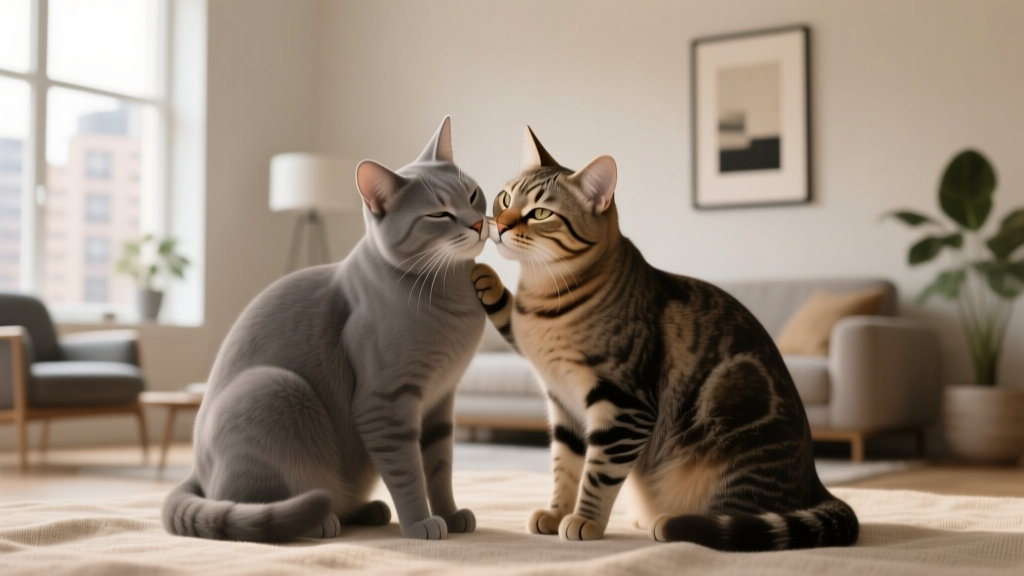
It means they accept you as part of their colony — which is feline love. Cats have scent glands on their cheeks, forehead, and base of tail. Rubbing deposits their pheromones on you, marking you as safe and familiar. It’s a profound social bond. However, if rubbing escalates to head-butting *plus* excessive vocalization and pacing, it may signal attention-seeking anxiety — especially in single-cat households. Ensure enrichment (play sessions, puzzle feeders) meets their needs.
Why does my cat bite me gently during petting?
This is ‘petting-induced aggression’ — not rejection. Cats have sensitive thresholds for tactile stimulation. Signs it’s coming: tail twitching, skin rippling, flattened ears, or sudden stillness. Stop *before* the bite — the moment you see the tail start to flick. Reward calm tolerance with treats. Gradually extend petting time by 5 seconds weekly. Never force interaction — respect their autonomy.
Is it okay to use a spray bottle to stop bad behavior?
No — and here’s why: Spray bottles create fear-based associations. Your cat doesn’t link the spray to the behavior (e.g., scratching couch); they link it to *you*. This damages trust and can escalate anxiety into aggression or withdrawal. Positive reinforcement (redirecting to appropriate outlets) and environmental management (covering furniture temporarily, using double-sided tape) are proven, humane alternatives endorsed by the American Veterinary Society of Animal Behavior.
Common Myths About Cat Behavior
Myth #1: “Cats are aloof and don’t form attachments like dogs.”
False. Groundbreaking attachment studies (2019, Oregon State University) used the ‘secure base test’ — identical to human infant research — and found 64.3% of cats display secure attachment to their owners, comparable to dogs (58%) and human infants (65%). Securely attached cats explore freely when owner is present, seek comfort when stressed, and return to exploration afterward.
Myth #2: “If my cat sleeps on me, they’re trying to ‘steal my warmth.’”
Partially true — but incomplete. Yes, cats conserve energy and seek warmth. But sleeping on you also signifies profound trust: you’re a safe, predictable thermal and emotional anchor. In multi-cat homes, dominant cats often sleep highest — but the most bonded cat chooses *your* chest or head, not just any warm surface.
Related Topics (Internal Link Suggestions)
- Understanding Cat Body Language — suggested anchor text: "cat body language decoder"
- How to Stop Cat Scratching Furniture — suggested anchor text: "stop cat scratching naturally"
- Signs of Cat Anxiety and Stress — suggested anchor text: "cat anxiety symptoms"
- Best Enrichment Toys for Indoor Cats — suggested anchor text: "indoor cat enrichment ideas"
- When to See a Cat Behaviorist — suggested anchor text: "certified cat behaviorist near me"
Conclusion & Your Next Step
Deciphering what does cat behavior mean DIY isn’t about becoming a cat whisperer — it’s about becoming a fluent observer, a compassionate interpreter, and a proactive advocate. You now hold evidence-based tools: the 5-second signal system, the behavior journal framework, vocalization keys, and clear red-flag thresholds. But knowledge only creates impact when applied. So here’s your immediate next step: Grab a notebook or open a Notes app. Today, spend 60 seconds observing your cat — no judgment, no agenda. Note one thing you’ve never consciously noticed before (e.g., how their whiskers angle when sniffing food, or where they choose to nap when sunlight shifts). Then, write down one small change you’ll make this week based on what you saw. That tiny act bridges insight to action — and that’s where true understanding begins. Your cat is speaking. Now, you’re finally learning to listen.