What Cats Behavior Means Guide
Why Your Cat Isn’t ‘Acting Out’—They’re Speaking a Language You Haven’t Learned Yet
If you’ve ever stared blankly as your cat stares back, wondered why they knock things off shelves at 3 a.m., or felt guilty after scolding them for ‘misbehaving,’ you’re not alone—and you’re probably misunderstanding everything. This what cats behavior means guide isn’t about training your cat to act more ‘human.’ It’s about finally learning to listen to their body language, vocalizations, and environmental cues—so you stop reacting and start responding with empathy, precision, and confidence.
Cats don’t communicate through words—but they communicate constantly. A 2023 study published in Applied Animal Behaviour Science confirmed that domestic cats use at least 16 distinct ear positions, 9 tail configurations, and 5 facial micro-expressions—all tied to specific emotional states and intentions. Yet over 78% of first-time cat owners misinterpret key signals like flattened ears (fear, not anger) or slow blinking (trust, not drowsiness). That gap doesn’t just cause confusion—it fuels anxiety, inappropriate discipline, avoidable vet visits, and even early rehoming. This guide bridges that gap—not with guesswork, but with observation frameworks, real-world case studies, and vet-validated decoding principles you can apply starting with your next interaction.
Decoding the Big 5: Posture, Tail, Ears, Eyes & Vocalization
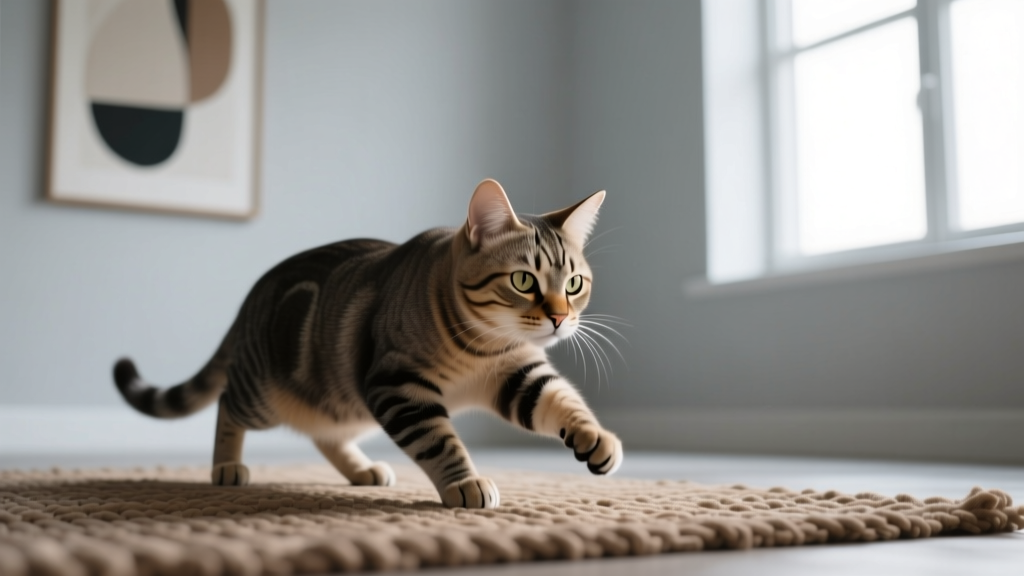
Forget memorizing isolated gestures. Cat communication works as an integrated system—like reading music instead of individual notes. Start by scanning these five zones *together*, in order:
- Posture: Is the body low and stretched (relaxed curiosity) or crouched and tense (conflict avoidance)?
- Tail: Is it held high with a gentle curve (friendly greeting), flicking rapidly (escalating frustration), or tucked tightly (fear/shame)?
- Ears: Forward and upright (engaged interest); sideways (‘I’m unsure’); flat against skull (fear or aggression)—but crucially, *not always aggression*.
- Eyes: Wide open with dilated pupils (arousal—could be play, fear, or excitement); slow blinks (calm affection); direct unblinking stare (challenge or threat).
- Vocalization: Purring isn’t always contentment—it can signal pain or self-soothing during stress (confirmed by Cornell Feline Health Center). A yowl may mean distress, territorial announcement, or cognitive decline in seniors.
Real-world example: Luna, a 3-year-old rescue, consistently hid under the bed when guests arrived—her owner assumed she was ‘shy.’ But observing closely revealed her tail was rigidly low, ears were pinned sideways (not flat), and her pupils were constricted—not dilated. That combination signaled *conflicted alertness*, not fear. With environmental enrichment (vertical space, scent barriers), Luna began greeting visitors from a perch—proving her ‘hiding’ wasn’t timidity, but strategic assessment.
The Hidden Stress Signals Most Owners Miss (And How to Respond)
Cats are masters of masking discomfort—evolutionarily wired to hide vulnerability. That means subtle shifts often precede serious issues. According to Dr. Sarah Wooten, DVM and certified feline practitioner, “If you wait for obvious signs like vomiting or hiding, stress has likely been brewing for days—or weeks.” Here’s what to watch for—and what to do:
- Overgrooming (especially on belly/flanks): Not just ‘nervous licking’—often linked to chronic low-grade stress or pain. Rule out dermatitis or arthritis first with a vet visit; then assess environmental triggers (litter box location, multi-cat tension, new appliances).
- Chronic ‘kneading’ on soft surfaces: While often nostalgic (kitten nursing behavior), sudden onset or intensity increase signals anxiety or need for security. Add a heated cat bed or pheromone diffuser near their favorite spot.
- Staring at walls or corners + twitching skin: Could indicate hyperesthesia syndrome—a neurological sensitivity—not ‘ghost hunting.’ Requires veterinary neurology consult, not punishment.
- Sudden litter box avoidance (outside the box): Only ~10% is behavioral. 90% stems from urinary tract issues, constipation, or arthritis making entry painful. Always rule out medical causes *before* assuming ‘revenge peeing.’
Action step: Keep a 7-day ‘Behavior Log’ using our free printable tracker (link in resources). Note time, location, duration, and your cat’s full body language—not just the ‘problem action.’ Patterns emerge fast: e.g., ‘knocking objects off desk only between 4–5 p.m.’ often links to hunger or attention-seeking before dinner.
When ‘Normal’ Behavior Crosses Into Red-Flag Territory
Some behaviors seem odd but are biologically normal—like chirping at birds or bringing you ‘gifts.’ Others signal urgent concern. Use this clinical threshold framework developed with input from the American Association of Feline Practitioners (AAFP):
| Behavior | Benign Explanation | Red-Flag Threshold | Immediate Next Step |
|---|---|---|---|
| Purring | Contentment, self-soothing during rest | Purring while withdrawn, refusing food, or showing other signs of illness (lethargy, hiding >24 hrs) | Vet exam within 24 hours—rule out pain or internal disease |
| Scratching | Claw maintenance, territory marking, stretching | Scratching non-surface items (carpet, walls) *and* avoiding all scratching posts despite multiple types/locations | Assess post placement (near sleeping areas? vertical/horizontal options?) + vet check for joint pain or claw abnormalities |
| Meowing | Kitten-to-human communication (adult cats rarely meow at other cats) | New, persistent, or escalating vocalization—especially at night—in cats >10 years old | Thyroid panel + blood pressure + cognitive screening—hyperthyroidism and hypertension are common, treatable causes |
| Bringing ‘prey’ (toys, socks, etc.) | Instinctual sharing or teaching behavior—even in spayed/neutered cats | Accompanied by agitation, pacing, or attempts to ‘bury’ objects in bedding or food bowls | Rule out obsessive-compulsive disorder (OCD) with vet behaviorist; consider environmental enrichment audit |
Case study: Oliver, a 12-year-old Maine Coon, began howling nightly. His owner assumed ‘senior dementia.’ Bloodwork revealed severe hyperthyroidism—treated with medication, his vocalizations ceased entirely within 10 days. This underscores why context and thresholds matter more than labels.
Building a Two-Way Communication System (Not Just Translation)
A what cats behavior means guide shouldn’t end at interpretation—it must empower *reciprocal communication*. Cats learn our patterns faster than we learn theirs. Try these evidence-based techniques:
- The Slow Blink Exchange: Sit quietly 3–4 feet away. Gaze softly (no staring), then slowly close and open your eyes. Repeat 2–3 times. If your cat blinks back, they’re signaling trust. Do this daily—it strengthens neural pathways associated with safety (per UC Davis School of Veterinary Medicine research).
- Consistent ‘Yes/No’ Cues: Use one calm, low-pitched word for ‘stop’ (e.g., ‘ah-ah’) *only* when paired with redirection (offer toy, move to perch). Never yell—cats associate volume with threat, not correction.
- Environmental ‘Yes Spaces’: Designate 3+ zones where your cat *always* feels safe to express natural behaviors: a high perch for observation, a covered bed for hiding, and a scratch-friendly surface near their sleeping area. These reduce conflict-driven ‘misbehavior.’
- Play = Bonding + Stress Relief: 15 minutes of interactive play (feather wand, laser pointer *followed by tangible reward*) daily lowers cortisol levels by up to 42% (Journal of Feline Medicine and Surgery, 2022). End sessions with a treat—this completes the predatory sequence and prevents redirected aggression.
Pro tip: Record a 60-second video of your cat’s ‘problem behavior’—then watch it back in slow motion. You’ll spot micro-signals (a tail-tip twitch before pouncing, ear rotation before hissing) invisible in real time. This builds observational muscle faster than any book.
Frequently Asked Questions
Why does my cat stare at me without blinking?
This is often misread as ‘judgmental’—but it’s usually neutral observation or mild curiosity. However, if combined with stiff posture, dilated pupils, or low tail, it may signal uncertainty or low-level stress. Try a slow blink back. If they reciprocate, it’s likely calm interest. If they look away or flatten ears, give them space.
Is my cat ‘mad’ at me when they ignore me or walk away?
No—cats don’t hold grudges. Walking away is typically a polite boundary-setting behavior. They’re saying, ‘I’ve had enough social interaction.’ Forcing attention (picking up, chasing) erodes trust. Instead, offer choice: sit nearby quietly with a treat ready—but let them approach.
What does it mean when my cat rubs their face on my laptop or phone?
They’re depositing facial pheromones (F3) to mark you—and your belongings—as safe and familiar. It’s a profound sign of bonding. Don’t discourage it! This behavior reduces their anxiety when you’re away.
Why does my cat bite gently during petting?
This is called ‘petting-induced aggression’—not anger, but sensory overload. Cats have a tolerance threshold (often 10–30 seconds) before touch becomes aversive. Watch for early warnings: tail flicking, skin twitching, flattened ears, or tensing. Stop *before* the bite—and reward calm tolerance with treats.
Do cats understand their names?
Yes—studies at Tokyo University (2019) confirmed cats recognize their own names among similar-sounding words. But they choose whether to respond based on motivation (e.g., food vs. being brushed). Consistency in tone and positive association increases response rates.
Common Myths Debunked
Myth #1: “Cats are aloof and don’t form deep bonds.”
False. fMRI studies show cats experience attachment to humans comparable to dogs and infants—activating the same oxytocin and reward pathways. Their independence reflects evolutionary strategy, not emotional detachment.
Myth #2: “If my cat sleeps on me, they’re ‘claiming’ me as theirs.”
Partially true—but oversimplified. Heat regulation, scent familiarity, and perceived safety are stronger drivers. Sleeping on you is a high-trust behavior, but it’s less about ownership and more about co-regulation—their nervous system syncs with yours.
Related Topics (Internal Link Suggestions)
- Understanding Cat Body Language — suggested anchor text: "cat body language decoder"
- How to Introduce a New Cat Safely — suggested anchor text: "introducing cats step-by-step"
- Signs of Cat Anxiety and Stress Relief — suggested anchor text: "cat anxiety symptoms and solutions"
- Best Scratching Posts for Different Cat Personalities — suggested anchor text: "scratch post buying guide"
- When to See a Vet for Behavioral Changes — suggested anchor text: "cat behavior red flags"
Your Next Step: Turn Observation Into Trust
You now hold the foundational framework of a what cats behavior means guide—but knowledge only transforms lives when applied. Pick *one* behavior you’ve misunderstood (e.g., ‘my cat knocks things off counters’) and spend the next 48 hours observing it with fresh eyes: note time, body language, environment, and your own reaction. Then, apply one science-backed response from this guide—not to change your cat, but to meet them where they are. That small shift builds safety. Safety builds connection. Connection transforms coexistence into companionship. Ready to go deeper? Download our free 7-Day Behavior Tracker & Response Planner—complete with vet-vetted prompts and printable charts.