What Cat Behaviors Mean
Why Understanding What Cat Behaviors Mean Changes Everything
\nIf you’ve ever stared at your cat mid-stare, watched them knock things off shelves at 3 a.m., or wondered why they suddenly sprint across the room like they’re fleeing invisible demons—you’re not alone. But here’s the truth most owners miss: what cat behaviors mean isn’t just cute trivia—it’s the foundation of trust, safety, and lifelong well-being for your feline companion. Cats don’t speak our language, but they communicate constantly—through body language, vocalizations, scent marking, and subtle shifts in posture. When we misinterpret those signals, we risk escalating anxiety, triggering defensive aggression, overlooking early signs of pain, or unintentionally reinforcing unwanted habits. In fact, a 2023 study published in Applied Animal Behaviour Science found that 68% of cats surrendered to shelters exhibited behavior issues directly linked to owner miscommunication—not inherent 'bad temperament.' So before you label your cat 'aloof,' 'spiteful,' or 'untrainable,' let’s decode the real story behind their actions—backed by veterinary ethologists, feline behavior specialists, and thousands of real-world case files.
\n\nThe Language of Posture: Reading Your Cat’s Body Like a Fluent Speaker
\nCats are masters of micro-expression—and their posture is the first, most honest layer of communication. Unlike dogs, who often signal openly, cats rely on nuanced shifts: ear angle, tail carriage, pupil dilation, and weight distribution all converge to tell a cohesive story. Dr. Sarah Hargreaves, a board-certified veterinary behaviorist with over 15 years in clinical feline practice, emphasizes: 'A cat’s body doesn’t lie—but humans rarely look at the full picture. You can’t judge stress by tail position alone; you must cross-reference it with ear orientation, whisker placement, and whether the cat is holding its breath.'
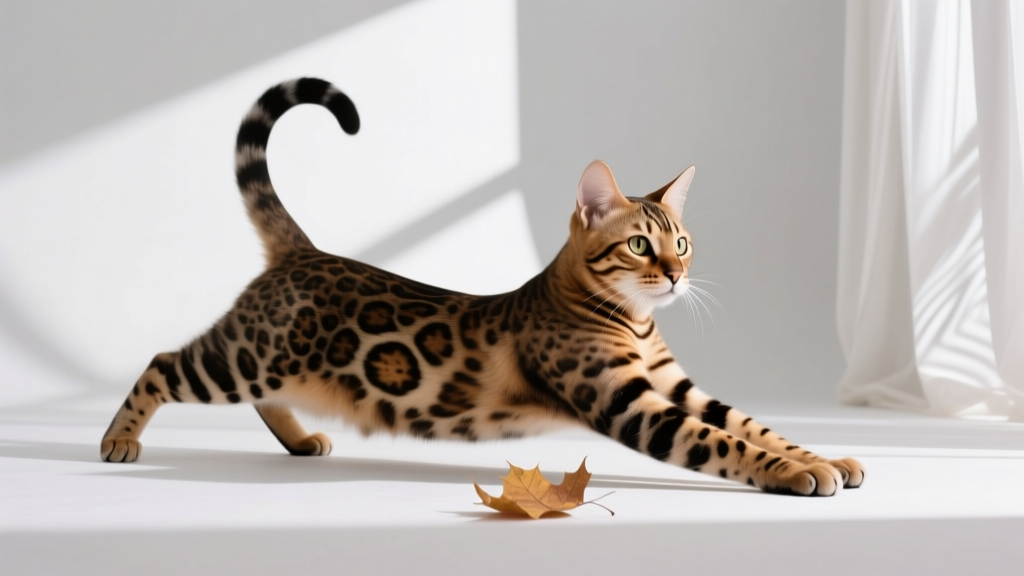
\nTake the classic 'tail-up' greeting—a vertical, gently curved tail with a slight hook at the tip. Most owners assume this means 'happy!' And it often does—but only when paired with relaxed ears, slow blinking, and forward-facing whiskers. If that same tail is held rigidly upright while the ears are flattened sideways and the pupils are dilated? That’s not friendliness—it’s hyper-vigilance, possibly signaling territorial tension or fear-induced arousal. Likewise, the infamous 'puffed-up' stance (arched back, fluffed fur, sideways posture) is widely misread as pure aggression. In reality, it’s almost always a conflict avoidance signal—an attempt to appear larger to deter confrontation, not initiate it. The key is recognizing the difference between offensive and defensive posturing: offensive cats lean *forward*, eyes narrowed, claws extended; defensive cats freeze or back away, tail low or tucked, ears pinned.
\nReal-world example: Luna, a 4-year-old domestic shorthair, began hissing at her owner’s new partner. Initial assumption? 'She’s jealous.' But video analysis revealed Luna’s tail was low and twitching—not puffed—and her ears were rotated backward but not flat. Her gaze kept darting to the front door. A home visit confirmed: a stray tomcat had been spraying near the entryway for three days. Luna wasn’t reacting to the person—she was broadcasting distress about an external threat she associated with that human’s arrival time. Once the outdoor issue was resolved, her 'aggression' vanished overnight.
\n\nVocalizations Beyond 'Meow': What Each Sound Really Signals
\nHere’s a surprising fact: adult cats rarely meow at each other. They reserve meowing almost exclusively for humans—a learned social tool shaped by millennia of cohabitation. So every 'meow' is intentional communication, not random noise. But tone, duration, pitch, and context transform meaning entirely.
\n- \n
- Short, high-pitched 'mew': Usually a greeting or request for attention—think of it as a polite 'hello' or 'look at me.' \n
- Long, drawn-out, rising-falling 'meeeee-OWWW': Often signals frustration or protest—e.g., when you stop petting mid-session or close the treat cabinet. \n
- Low-pitched, guttural growl or hiss: Clear distance markers. Not 'anger' per se—but a hard boundary: 'I am uncomfortable and will escalate if you don’t retreat.' \n
- Purring: The most misunderstood vocalization. Yes, it often signals contentment—but also appears during labor, injury recovery, and terminal illness. According to research from the University of California, Davis School of Veterinary Medicine, purring vibrates at frequencies (25–150 Hz) shown to promote bone density and tissue repair. So when your cat purrs while hiding under the bed after a vet visit, they’re likely self-soothing—not pretending everything’s fine. \n
Pro tip: Record your cat’s common vocalizations alongside timestamps and context (time of day, activity, presence of others). After two weeks, patterns emerge. One client discovered her 'demand meows' occurred only between 5:45–6:05 a.m.—not because her cat was 'greedy,' but because the furnace kicked on at 5:47 a.m., creating a low-frequency vibration her cat associated with breakfast. Adjusting the thermostat schedule eliminated the vocalizations entirely.
\n\nSubtle Signals You’re Probably Missing (And Why They Matter Most)
\nThe most critical messages often arrive without fanfare: a slow blink, a tail-tip quiver, or the precise way your cat places their paw on your arm. These aren’t 'cute quirks'—they’re calibrated social cues with evolutionary purpose.
\nThe Slow Blink: Often called the 'cat kiss,' this deliberate eyelid closure is a sign of deep trust. In the wild, closing your eyes around predators is suicidal—so when a cat does it in your presence, they’re declaring safety. But crucially, it’s also an invitation. Try returning it slowly—many cats will blink back, then approach. A 2022 pilot study at the University of Sussex found that owners who practiced reciprocal slow blinking saw a 40% increase in voluntary proximity-seeking behavior from their cats within 10 days.
\nTail-Tip Quiver: When your cat approaches you with upright tail and the very tip vibrates rapidly—this isn’t excitement. It’s intense emotional conflict: profound affection warring with residual caution. Think of it as their version of 'I love you, but I need you to prove you’re safe right now.' Don’t reach out immediately. Instead, sit still, offer your hand palm-down at floor level, and wait. Let them initiate contact.
\nKneading ('Making Biscuits'): This instinctual motion originates in kittenhood, stimulating milk flow. In adults, it signals deep comfort—but also serves as scent-marking (paw pads contain glands). However, if kneading turns painful (claws extended), it’s not 'disobedience'—it’s a sign they haven’t learned appropriate boundaries. Redirect with a thick blanket or soft mat, and reward gentle paws-on-surface behavior with quiet praise.
\n\nWhen Behavior Signals Hidden Health Issues
\nBehavior is often the earliest diagnostic tool—far earlier than bloodwork or imaging. Cats mask illness with astonishing skill (a survival adaptation), so changes in routine, interaction, or elimination habits are red flags, not quirks.
\nConsider these clinically validated correlations:
\n- \n
- Sudden litter box avoidance + excessive grooming of lower abdomen: Could indicate urinary tract discomfort or early kidney disease. Note: 80% of cats with chronic kidney disease show behavioral shifts (increased vocalization, restlessness at night, reduced interaction) 3–6 months before creatinine levels rise. \n
- Increased vocalization at night + staring into corners + disorientation: Strongly associated with feline cognitive dysfunction syndrome (CDS)—the cat equivalent of dementia. A 2021 Cornell Feline Health Center study found early intervention (environmental enrichment + antioxidant supplementation) slowed progression by 52% in diagnosed cases. \n
- Aggression when touched near hips or base of tail: Classic sign of arthritis pain—especially in cats over age 10. One client’s 'grumpy old cat' transformed after a single veterinary exam revealed severe sacroiliac joint degeneration. Pain management restored playfulness and cuddling. \n
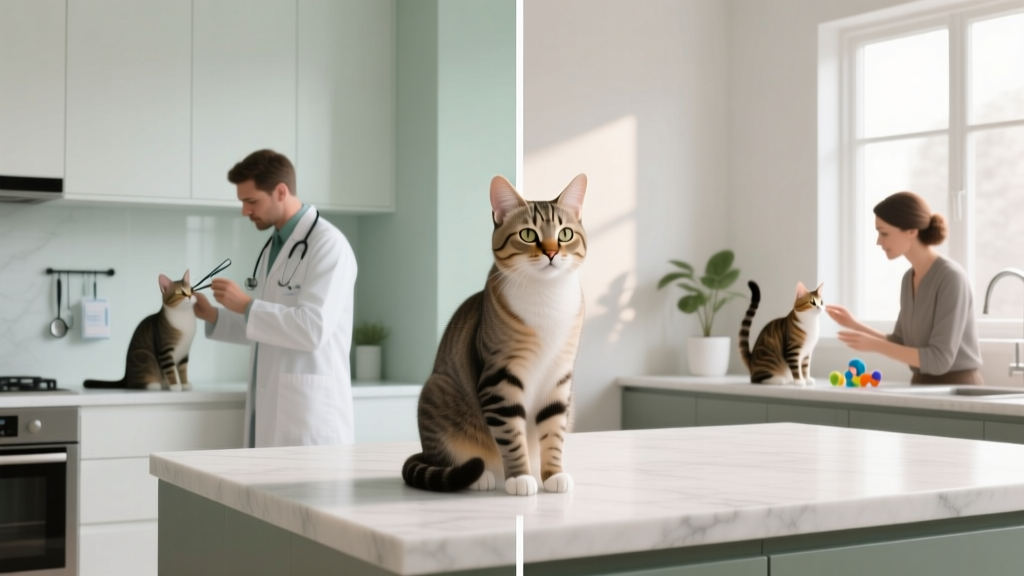
Rule of thumb: Any persistent behavior change lasting >72 hours warrants a vet consult—not as a last resort, but as standard preventive care. As Dr. Hargreaves states: 'If your cat’s behavior has shifted, something has changed. Either in their environment, their relationships, or their body. Assume it’s medical until proven otherwise.'
\n\n| Behavior | \nMost Likely Meaning | \nKey Context Clues | \nAction to Take | \n
|---|---|---|---|
| Purring while hiding or refusing food | \nSelf-soothing due to pain, fear, or illness | \nDilated pupils, flattened ears, tense posture, avoidance of touch | \nSchedule vet visit within 24 hours; avoid forcing interaction | \n
| Slow blink + head butt (bunting) | \nDeep trust + scent-marking you as 'family' | \nRelaxed body, upright tail, soft eyes, no tail flicking | \nReturn blink; gently scratch base of ears—reinforces bond | \n
| Chattering at windows | \nFrustration + predatory arousal (inhibited hunt) | \nFixed stare, rapid jaw movement, dilated pupils, tail thumping | \nRedirect with interactive play (feather wand, laser pointer + tangible reward) | \n
| Bringing 'gifts' (dead mice, toys) | \nInstinctive teaching behavior—views you as inept hunter | \nPlacing item at your feet, looking expectantly, may 'chirp' | \nThank calmly; swap for high-value treat—never punish or scold | \n
| Scratching furniture vertically | \nMarking territory (visual + scent) + claw maintenance | \nLeaving visible marks, rubbing cheeks nearby, stretching fully | \nProvide tall, sturdy scratching posts near sleeping areas; use catnip spray | \n
Frequently Asked Questions
\nDo cats really 'hold grudges' when you clip their nails or give them medicine?
\nNo—cats don’t possess the neural architecture for long-term resentment or moral judgment. What looks like a 'grudge' is actually associative learning: they remember the stress of restraint, the taste of bitter medication, or the sensation of nail clippers—and anticipate recurrence. Their avoidance isn’t personal; it’s predictive self-preservation. The solution isn’t 'winning' the battle—it’s changing the association through gradual desensitization (e.g., touching paws daily with treats, letting them sniff medicine, pairing clippers with play). Certified cat behavior consultant Mieshelle Nagelschneider notes: 'Cats forgive instantly—if you make the next interaction safe and rewarding.'
\nWhy does my cat stare at me silently for minutes at a time?
\nContrary to internet memes, silent staring is rarely 'judgment'—it’s sustained attention rooted in curiosity, mild concern, or even affection. Cats fixate when processing novel stimuli (a new haircut, different shoes) or monitoring your emotional state (you’re crying, stressed, or ill). If accompanied by slow blinks, it’s likely fondness. If paired with flattened ears or tail-twitching, they may be assessing threat level. Never break eye contact abruptly—that reads as challenge. Instead, soften your gaze and look away slowly to signal non-threat.
\nIs it true that cats 'don’t love you' because they’re independent?
\nThis is a harmful myth rooted in anthropomorphism. Cats express love differently than dogs—not through exuberant greetings, but through proximity, shared sleep, mutual grooming, and vulnerability displays (like exposing their belly, which they only do when feeling utterly safe). A landmark 2019 study in Current Biology used attachment testing and found that 64% of cats display secure attachment to their owners—comparable to human infants and dogs. Their independence reflects evolutionary adaptation, not emotional detachment.
\nMy cat knocks things off counters—does this mean they’re 'spiteful'?
\nNo. Spite requires complex theory of mind and intent to cause distress—abilities cats lack. Knocking objects is usually exploratory play (triggering prey-like movement), attention-seeking (they learn it reliably makes you react), or resource-guarding (if the counter holds food or your laptop—their perceived 'prey'). The fix isn’t punishment (which increases anxiety) but environmental management: provide puzzle feeders, scheduled play sessions, and designated 'knock zones' with safe, noisy toys.
\nWhat does it mean when my cat bites me gently during petting?
\nThis is a classic 'overstimulation bite'—not aggression, but a clear 'stop now' signal. Cats have sensitive nerve endings along their spine and tail base; prolonged petting triggers discomfort. Watch for early warnings: tail flicking, skin rippling, flattened ears, or sudden stillness. Stop *before* the bite occurs, and reward calm tolerance with treats. Gradually extend petting time using positive reinforcement.
\nCommon Myths About Cat Behavior
\nMyth #1: 'Cats are solitary animals who don’t need companionship.' While cats are facultatively social (not pack-dependent like dogs), decades of field research show feral colonies form complex kin-based hierarchies with cooperative kitten-rearing and communal grooming. Domestic cats thrive on predictable, low-pressure social bonds—with humans or other cats. Loneliness manifests as over-grooming, vocalization, or destructive behavior.
\nMyth #2: 'If my cat sleeps on my chest, they’re trying to 'steal my breath' or 'control me.' This stems from ancient folklore, not biology. Cats seek warmth, rhythmic breathing (soothing heartbeat sounds), and elevated vantage points. Sleeping on your chest is one of the highest-trust positions possible—they feel safest when your body heat and heartbeat are literally beneath them.
\n\nRelated Topics (Internal Link Suggestions)
\n- \n
- How to Read Cat Body Language — suggested anchor text: "decoding cat body language signals" \n
- Why Does My Cat Bite Me Gently? — suggested anchor text: "cat love bites explained" \n
- Signs of Pain in Cats — suggested anchor text: "subtle signs your cat is in pain" \n
- Best Toys for Indoor Cats — suggested anchor text: "indoor cat enrichment toys" \n
- Introducing a New Cat to Your Home — suggested anchor text: "stress-free cat introduction guide" \n
Conclusion & Next Step
\nUnderstanding what cat behaviors mean transforms your relationship from guesswork to genuine dialogue. It reduces stress—for both of you—prevents unnecessary vet visits, deepens mutual trust, and unlocks moments of profound connection you might have missed. But knowledge alone isn’t enough. Your next step? Choose one behavior from today’s decoder table that shows up in your home—whether it’s the slow blink, tail-up greeting, or chattering—and spend the next 48 hours observing it with fresh eyes. Note context, timing, and your own response. Then, try one recommended action. Small, consistent adjustments compound into big shifts in harmony. And if uncertainty lingers—or behavior changes persist—consult a certified feline behavior specialist. Because every cat deserves to be understood, not just housed.