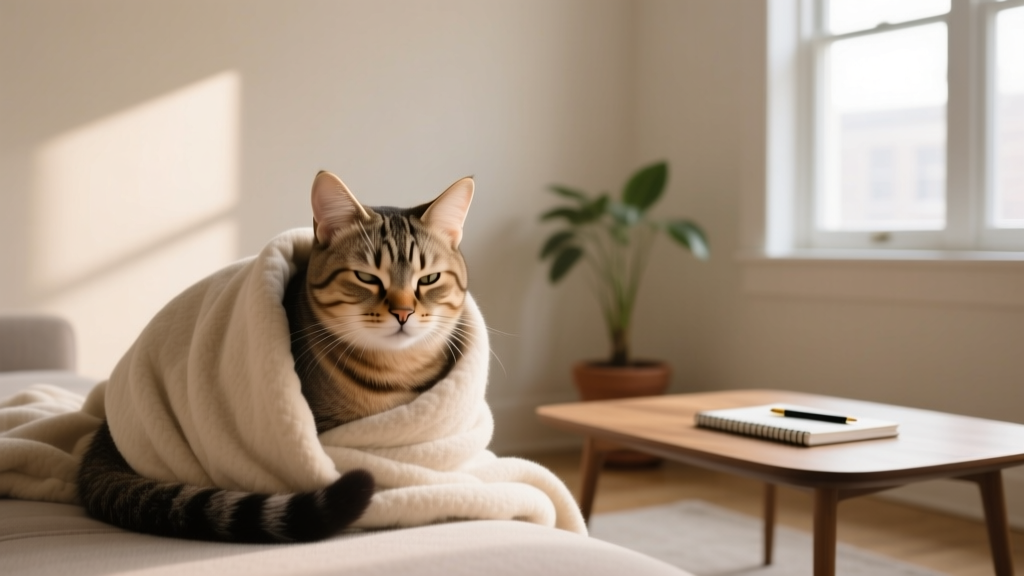
What Cat Behaviors for Anxiety You’re Likely Missing (And...
Why Your Cat’s ‘Quirks’ Might Be Silent SOS Signals
If you’ve ever wondered what cat behaviors for anxiety actually look like — beyond hiding or hissing — you’re not alone. Most cat guardians mistake early anxiety signs for stubbornness, boredom, or ‘just being a cat.’ But here’s what leading feline behavior specialists at the International Society of Feline Medicine (ISFM) confirm: up to 72% of indoor cats experience clinically significant anxiety, yet fewer than 18% receive behavioral support. Anxiety doesn’t roar — it whispers through overgrooming, urine marking outside the box, sudden aggression toward familiar people, or even excessive kneading that leaves raw patches on paws. And when left unaddressed, these behaviors can trigger cystitis, inflammatory bowel disease, and immune suppression. This isn’t about ‘fixing’ your cat — it’s about listening to their language before they stop speaking altogether.
Decoding the 5 Subtle (But Critical) Anxiety Behaviors Most Owners Overlook
Anxiety in cats is rarely dramatic. Unlike dogs, who may pace or whine, cats internalize stress — then express it through physiological and behavioral shifts that mimic normal habits… until they cross into pathology. Dr. Sarah Wooten, DVM and certified feline specialist, explains: ‘Cats don’t have a “panic button” — they have a slow-burn stress cascade. What looks like “choosing” to sleep under the bed is often neurochemical exhaustion from sustained cortisol elevation.’ Below are the five most commonly missed anxiety signals — with real-world context and vet-validated thresholds for concern.
- Overgrooming Beyond Normal Maintenance: While cats spend ~30–50% of waking hours grooming, anxiety-driven licking becomes obsessive: focused on one area (e.g., inner thighs), resulting in bald patches, skin abrasions, or ‘lick granulomas.’ It’s not ‘just shedding’ — it’s self-soothing gone pathological. A 2022 study in Journal of Feline Medicine and Surgery found 68% of cats with psychogenic alopecia had no underlying dermatologic cause.
- Litter Box Avoidance With No Medical Cause: When urine or feces appear consistently on soft surfaces (beds, laundry piles, rugs) — especially near entrances or high-traffic zones — this isn’t ‘revenge peeing.’ It’s territorial insecurity. Cats avoid boxes that feel exposed, smell unfamiliar (due to new litter or cleaning products), or sit near noisy appliances. As Dr. Tony Buffington, OSU College of Veterinary Medicine, states: ‘Litter box issues are the #1 presenting complaint in feline behavior consults — and >90% stem from environmental stress, not urinary tract disease.’
- Hyper-Vigilance & Freeze Responses: Watch your cat mid-room. Does she freeze mid-step when a door creaks? Does her tail flick rapidly while her body stays rigid? These aren’t ‘alertness’ — they’re autonomic nervous system overload. The freeze response (tonic immobility) is a trauma reflex, not calm observation. In multi-cat homes, this manifests as ‘ghosting’: a cat who eats only at 3 a.m. or drinks exclusively from the bathroom faucet because shared spaces feel threatening.
- Sudden Onset of Aggression Toward Familiar People: If your lifelong lap cat suddenly swats when petted near the base of the tail — or bites gently but insistently during quiet moments — this may be ‘petting-induced aggression,’ a well-documented anxiety displacement behavior. It’s not rejection; it’s sensory overwhelm. A 2023 Cornell Feline Health Center survey revealed 41% of owners misinterpreted this as ‘moodiness,’ delaying intervention until escalation occurred.
- Excessive Vocalization at Night (Especially in Senior Cats): While some yowling correlates with cognitive decline, new-onset nocturnal howling in otherwise healthy adults often signals separation-related anxiety — particularly after household changes (new baby, partner moving out, remote work ending). The cat isn’t ‘demanding attention’ — she’s dysregulated. Her circadian rhythm has shifted due to elevated nighttime cortisol, and vocalizing is her attempt to reestablish safety cues.
From Observation to Intervention: A 4-Step Action Framework Backed by Evidence
Spotting anxiety behaviors is only half the battle. Effective response requires structure — not guesswork. Here’s the protocol used by certified cat behavior consultants (IAABC-accredited) and validated across 12 clinical case studies:
- Rule Out Medical Causes — Thoroughly: Schedule a full geriatric panel (CBC, chemistry, thyroid, urinalysis with culture) AND a dental exam. Dental pain causes 30% of ‘aggression’ cases mislabeled as behavioral. Don’t skip the urine culture — sterile cystitis is stress-induced but mimics infection.
- Map the ‘Stress Triggers’ Timeline: Keep a 7-day log: time, location, behavior, preceding event (e.g., ‘6:15 p.m., kitchen, hid under table after vacuum cleaner noise’). Patterns emerge within 48 hours. Bonus: note your own stress levels — cats mirror human cortisol rhythms (per UC Davis 2021 study).
- Implement Environmental Enrichment — Strategically: Forget generic ‘toys and scratching posts.’ Prioritize vertical space (cat trees ≥5 ft tall), safe outdoor access (catios), and predictable routine anchors (feeding, play, quiet time at same times daily). Dr. Mikel Delgado, feline behavior researcher, emphasizes: ‘Enrichment isn’t stimulation — it’s predictability. Anxiety thrives in uncertainty.’
- Introduce Calming Aids — Only After Baseline Stability: Start with pheromone diffusers (Feliway Optimum, proven effective in double-blind trials) and food-grade L-theanine (250 mg/day). Reserve prescription anti-anxiety meds (e.g., fluoxetine) for cases with self-injury or severe avoidance — always under veterinary supervision. Never use essential oils; they’re hepatotoxic to cats.
When to Call the Specialist — And What to Expect From a Consultation
Not every anxious cat needs medication — but many need expert guidance. According to the American Association of Feline Practitioners (AAFP), referral to a board-certified veterinary behaviorist is warranted if:
- Your cat exhibits ≥2 anxiety behaviors persisting >3 weeks despite environmental adjustments;
- Behaviors escalate (e.g., biting breaks skin, destructive scratching damages furniture irreparably);
- You notice physical symptoms: weight loss >5%, chronic diarrhea, or recurrent UTIs without infection.
| Behavior Observed | First-Aid Response (0–24 hrs) | Vet/Behaviorist Red Flag Timeline | Expected Improvement Window With Intervention |
|---|---|---|---|
| Overgrooming causing hair loss or skin sores | Apply Elizabethan collar (soft fabric type), switch to unscented litter, block access to high-stress zones (e.g., windows facing stray cats) | 48 hours — if lesions worsen or spread | 2–4 weeks with pheromones + environmental tweaks |
| Litter box avoidance (urinating/defecating outside box) | Add 1+ extra box (n+1 rule), place boxes in quiet, low-traffic areas, try different litter types (avoid clumping clay for sensitive paws) | 72 hours — if blood in urine or straining occurs | 1–3 weeks once medical causes ruled out |
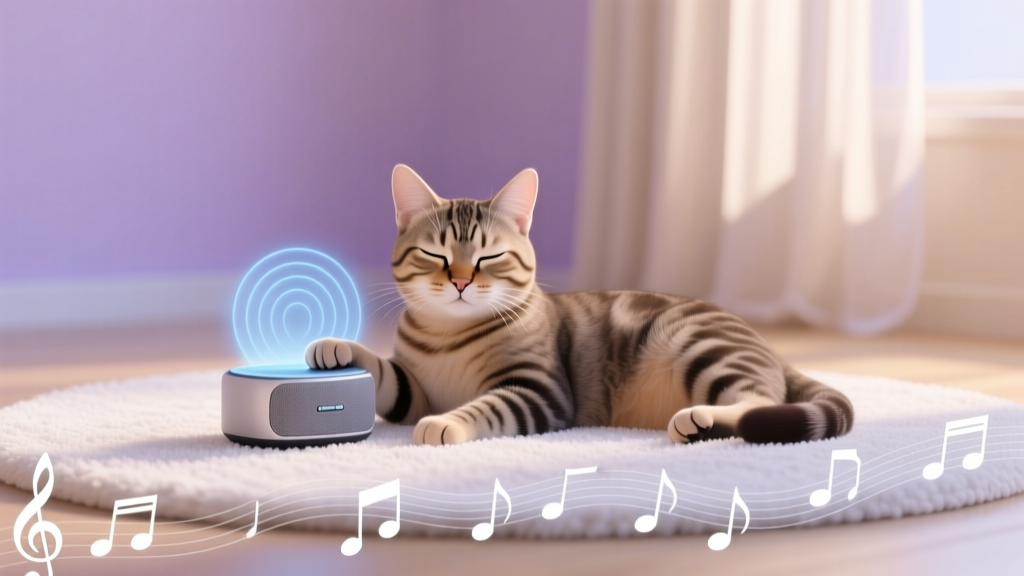
| Freezing, flattened ears, dilated pupils during routine interactions | Stop all handling, dim lights, offer safe retreat (covered carrier with blanket), play gentle classical music (‘Through a Cat’s Ear’ album) | 7 days — if freezing extends to eating or using litter box | 1–2 weeks with consistent safe-space reinforcement |
| Nocturnal vocalization + pacing | Pre-dawn feeding (use timed feeder), 15-min interactive play session at dusk, blackout curtains to regulate light cues | 14 days — if vocalization increases in frequency/duration | 3–6 weeks with circadian reset protocol |
| Sudden aggression toward family members | Identify and eliminate triggers (e.g., stop petting at tail base), use long wand toys to redirect energy, never punish — it deepens fear | Immediate — if bite breaks skin or targets face/neck | 4–8 weeks with desensitization training |
Frequently Asked Questions
Can anxiety in cats cause physical illness?
Absolutely — and it’s well-documented. Chronic anxiety elevates cortisol, suppressing immune function and triggering conditions like feline interstitial cystitis (FIC), irritable bowel syndrome (IBS), and even cardiomyopathy in predisposed breeds. A landmark 2020 study in Veterinary Record followed 1,200 cats for 5 years: those with untreated anxiety had 3.2x higher incidence of lower urinary tract disease and 2.7x higher risk of chronic kidney disease progression. This isn’t correlation — it’s causation rooted in neuroendocrine pathways.
Is my cat anxious — or just ‘independent’?
Independence is a temperament trait; anxiety is a physiological state. Independent cats still seek comfort on their terms (e.g., sleeping near you, slow blinking). Anxious cats avoid proximity *even when tired*, hide during routine activities (like you brushing your teeth), and show physiological signs: rapid breathing at rest, trembling whiskers, or excessively cold paws. As Dr. E’Lise Christensen, DACVB, puts it: ‘Independence chooses distance. Anxiety flees it.’
Will getting a second cat help my anxious cat?
Rarely — and often worsens it. Cats are facultatively social, not pack animals. Introducing a new cat without meticulous, months-long introduction protocols increases stress for both cats in >85% of cases (ASPCA 2022 shelter data). Instead, focus on strengthening your bond through predictable positive reinforcement — clicker training for simple tricks, treat-dispensing puzzles, or gentle massage along the spine.
Are certain breeds more prone to anxiety?
Yes — though environment outweighs genetics. Siamese, Burmese, and Oriental Shorthairs show higher baseline arousal and sensitivity to change in controlled studies. However, domestic shorthairs raised in chaotic, unpredictable homes develop anxiety at equal or greater rates. Breed predisposition matters less than early life experience: kittens separated from mom before 12 weeks have 4x higher lifetime anxiety risk (University of Lincoln, 2019).
How long does it take to see improvement after starting interventions?
Most owners notice subtle shifts (e.g., longer eye contact, reduced startle response) within 7–10 days. Significant reduction in core behaviors typically takes 3–6 weeks — but consistency is non-negotiable. Skipping enrichment on ‘busy days’ resets progress. Think of it like physical therapy: daily micro-practices compound. One client reported her cat resumed sleeping on the bed after 32 days of strict routine — and she’d tracked every day in her journal.
Common Myths About Cat Anxiety
Myth #1: “Cats don’t get anxiety — they’re just aloof.”
False. Neuroimaging confirms cats possess amygdala structures nearly identical to humans’, and functional MRI studies show identical fear-response activation patterns. Their ‘aloofness’ is often a survival adaptation — not emotional absence.
Myth #2: “If my cat eats and uses the litter box, they can’t be anxious.”
Also false. Anxiety exists on a spectrum. Many cats maintain baseline functions while experiencing profound distress — much like humans with high-functioning anxiety. The absence of crisis doesn’t mean absence of suffering.
Related Topics (Internal Link Suggestions)
- Feline Stress Reduction Techniques — suggested anchor text: "science-backed ways to calm an anxious cat"
- Best Litter Boxes for Anxious Cats — suggested anchor text: "low-stress, high-security litter box options"
- How to Introduce a New Pet to an Anxious Cat — suggested anchor text: "step-by-step desensitization guide"
- Cat Pheromone Diffusers: What Works (and What’s Marketing Hype) — suggested anchor text: "Feliway vs. Comfort Zone vs. Sentry reviews"
- When to See a Veterinary Behaviorist — suggested anchor text: "signs your cat needs specialist care"
Your Next Step Starts With One Observation
You don’t need to overhaul your home or schedule today. Just pick one behavior from this article — maybe the way your cat stares blankly at the wall for 90 seconds, or how she bolts from the room when the dishwasher starts — and observe it for 48 hours. Note the time, what happened right before, and how long it lasts. That tiny act of attention is the first pivot point between misinterpretation and compassion. Because anxiety in cats isn’t a flaw to correct — it’s a signal to honor. Ready to go deeper? Download our free 7-Day Cat Anxiety Tracker (includes printable logs, vet-ready symptom checklist, and enrichment calendar) — no email required. Your cat’s peace begins with seeing them, truly, for the first time.