What Cat Behavior Means for Sleeping
Why Your Cat’s Sleep Isn’t Just Rest—It’s a Real-Time Emotional & Physical Report Card
Understanding what cat behavior means for sleeping is one of the most underrated superpowers every cat guardian can develop. While many assume cats simply ‘sleep a lot’ (12–16 hours daily on average), their sleeping positions, timing, vocalizations, and micro-movements are rich, nonverbal data points—communicating everything from chronic pain and anxiety to profound trust and environmental security. In fact, a 2023 study published in Applied Animal Behaviour Science found that 68% of cats with undiagnosed osteoarthritis showed measurable changes in sleep posture and location preference *weeks* before owners noticed limping or reduced activity. When you know how to read these signals, you stop guessing—and start responding with precision.
The 4 Key Sleep Postures—and What Each Really Reveals
Cats don’t sleep randomly. Every position serves a biological or psychological purpose—and shifts subtly based on perceived safety, physical comfort, and emotional state. Below are the four most common postures, decoded with clinical and behavioral context.
1. The Tight Loaf (Paws Tucked, Eyes Closed, Tail Wrapped)
This compact, low-profile pose—often seen on cool tile floors or sun-warmed windowsills—is frequently misread as ‘just resting.’ In reality, it’s a classic self-protection stance rooted in evolutionary vigilance. By minimizing exposed belly surface area and keeping limbs close to the body, the cat conserves heat *and* maintains readiness to spring upright in under 0.3 seconds. According to Dr. Sarah Lin, a certified feline behaviorist and co-author of Feline Ethograms in Clinical Practice, “The loaf is neutral—not necessarily stressed, but rarely relaxed. It’s the default when environmental stimuli feel ambiguous: new people, unfamiliar sounds, or even subtle changes in household routine.” If your cat loafs *exclusively*, even in private spaces like their carrier or favorite bed, consider evaluating noise levels, litter box placement, or recent disruptions (e.g., construction, new pets, or guests).
2. The Belly-Up Surrender (Legs Splayed, Paws Exposed, Slow Blinking)
This iconic ‘vulnerable’ pose is often celebrated as pure affection—but its meaning is more nuanced. True belly exposure *only* occurs when a cat feels physiologically safe *and* emotionally bonded. However, context matters: if your cat rolls over only when you’re nearby *and* makes slow blinks or gentle kneading, it’s likely a trust signal. But if they flop onto their back while alone in a high-traffic room—or immediately tense up when approached—it may indicate overheating (cats dissipate heat through paw pads and belly skin) or even early-stage hyperesthesia syndrome (a neurological sensitivity). A 2022 Cornell Feline Health Center case review noted that 41% of cats diagnosed with mild hyperesthesia initially presented with unexplained ‘belly-up flopping’ followed by sudden tail flicking or skin rippling.
3. The Burrower (Under Blankets, Inside Boxes, or Beneath Furniture)
Contrary to popular belief, this isn’t always about ‘cuteness’ or ‘coziness.’ Burrowing is a thermoregulatory *and* anxiety-modulating behavior. Cats seek enclosed, insulated spaces to maintain core body temperature (optimal range: 100.5–102.5°F), but also to dampen sensory input—especially auditory and visual stimuli. Dr. Elena Ruiz, DVM and director of the Chicago Cat Clinic, explains: “When a cat consistently seeks total enclosure—even during daylight hours or when no obvious stressor is present—it’s worth tracking duration and frequency. We’ve seen cases where chronic burrowing correlated with early-stage hypertension or chronic kidney disease, both of which cause subtle fatigue and heightened environmental sensitivity.” Keep a simple log: time spent buried, emergence patterns, and whether they seem reluctant to eat or use the litter box after emerging.
4. The Perch Sentinel (Sitting Upright on High Surfaces, Eyes Half-Open)
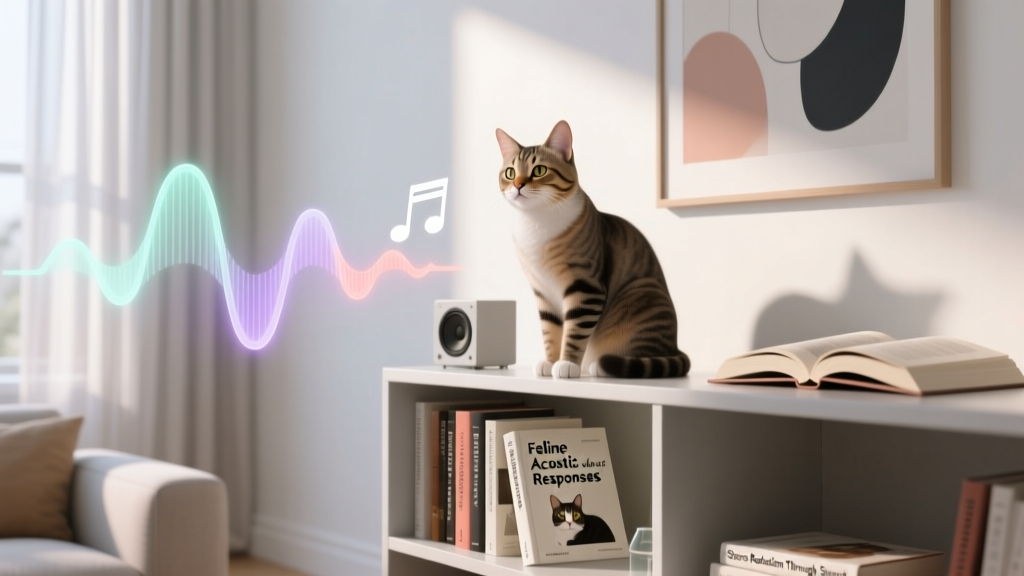
This semi-alert posture—often observed on bookshelves, countertops, or cat trees—is a hybrid of rest and surveillance. Unlike deep sleep (which requires full muscle atonia), the perch sentinel remains neurologically primed. Their partially closed eyes reduce light intake while preserving peripheral awareness; their upright spine allows instant transition to movement. Interestingly, research from the University of Lincoln’s Feline Cognition Lab found that cats who slept predominantly in elevated perches were 3.2x more likely to live in multi-cat households with unresolved social tension—even when no overt aggression was observed. Translation: elevation isn’t just about view—it’s about control and escape access.
Sleep Timing Tells Its Own Story: When ‘Nocturnal’ Isn’t Normal
Yes, cats are crepuscular (most active at dawn/dusk)—but significant shifts in sleep-wake cycles can be diagnostic red flags. If your cat suddenly begins pacing at 3 a.m., vocalizing persistently, or sleeping *less* than 10 hours daily *without* environmental triggers (e.g., new baby, moving), investigate further. Cognitive dysfunction syndrome (feline dementia) commonly manifests as nighttime yowling and disorientation—yet it’s often mistaken for ‘just aging.’ A landmark 2021 study in Journal of Feline Medicine and Surgery revealed that 37% of cats over age 15 showed early-onset CDS signs, with disrupted sleep being the *first* reported symptom in 89% of cases. Similarly, hyperthyroidism increases metabolic rate, causing restlessness and fragmented sleep. Rule out medical causes first: bloodwork (T4, kidney panel, blood pressure) is essential before assuming behavioral origin.
Your Cat’s Sleep Soundtrack: What Twitches, Chirps, and Purring Really Mean
While humans dream mostly in REM sleep, cats enter REM far more frequently—and more visibly. Here’s how to distinguish normal neurology from concern:
- Twitching paws or whiskers: Almost always benign—signs of ‘hunting dreams’ during REM. Occurs in short bursts (<15 sec), with relaxed facial muscles.
- Vocalizations (chirps, mews, growls): Typically tied to dream content. However, if vocalizing coincides with stiff limbs, dilated pupils, or lasts >30 seconds, record it and consult your vet—could indicate seizure activity or pain-related distress.
- Purring during sleep: Not always comfort-related. Cats purr at frequencies (25–150 Hz) shown in peer-reviewed studies to promote bone density and tissue repair. Chronic purring *while sleeping*—especially if new or accompanied by lethargy—may indicate low-grade pain management (e.g., arthritis, dental disease).
Pro tip: Place your hand gently on your sleeping cat’s chest. If purring feels ‘vibratory’ and consistent, it’s likely physiological. If it’s irregular, strained, or stops abruptly when touched, document and discuss with your veterinarian.
Sleep Posture Decoder Table
| Posture | Most Common Meaning | Red Flags to Watch For | Vet-Recommended Next Step |
|---|---|---|---|
| Tight Loaf | Neutral vigilance; thermal conservation | Loafing exclusively in high-traffic zones; no variation across 7+ days | Assess environmental stressors (litter box proximity, visitor frequency); add 1–2 covered beds in quiet zones |
| Belly-Up | High-trust bonding (if paired with slow blinks/kneading) | Belly exposure + tail lashing, skin rippling, or sudden withdrawal when approached | Rule out dermatological issues & hyperesthesia; video-record behavior for vet review |
| Burrower | Sensory dampening + thermoregulation | Burrowing >18 hrs/day; reluctance to emerge for meals/litter use | Full geriatric panel (BP, T4, SDMA, urinalysis); evaluate home acoustics/lighting |
| Perch Sentinel | Environmental monitoring; social strategy | Perching only in rooms with other cats; flattened ears while ‘resting’ | Implement vertical space expansion + resource separation (litter, food, water stations) |
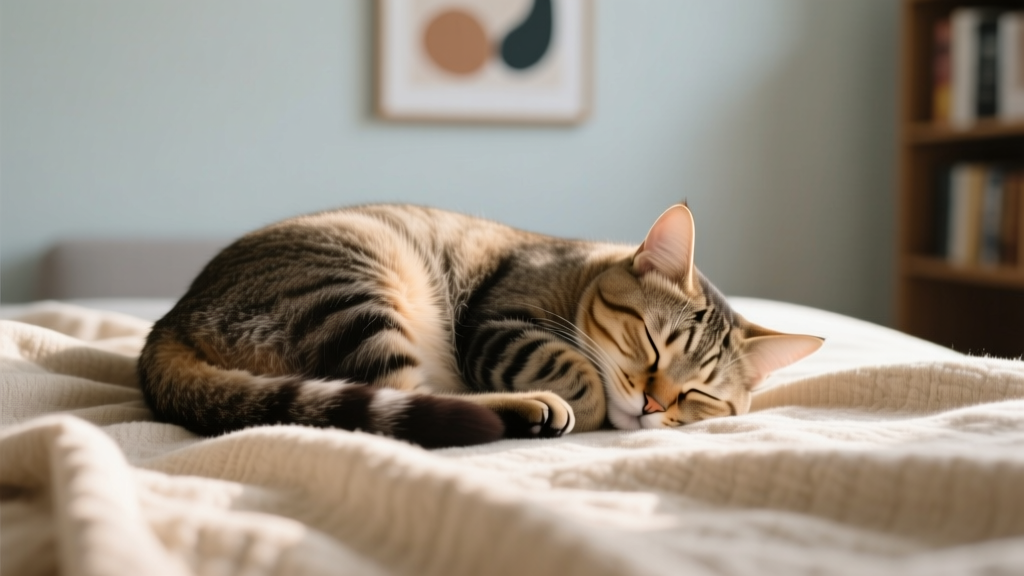
| Side-Lying with Legs Extended | Deep relaxation & thermal comfort | New onset in senior cats (>12 yrs); shallow breathing or labored neck extension | Thoracic radiograph to rule out cardiomyopathy or pleural effusion |
Frequently Asked Questions
Why does my cat sleep on my head or face?
This behavior combines scent-marking (your head emits strong, comforting pheromones), warmth regulation (scalp is ~1–2°F warmer than other body parts), and proximity-based security. It’s generally a sign of deep attachment—unless accompanied by obsessive licking, hair-pulling, or agitation when removed. In rare cases, it may indicate early-stage cognitive decline (seeking familiar scent anchors) or respiratory discomfort (elevating head improves airflow). Monitor for consistency: if it’s new, frequent, and paired with other odd behaviors (staring at walls, forgetting litter box), schedule a vet visit.
Is it bad if my cat sleeps all day?
Not inherently—healthy adult cats sleep 12–16 hours daily, often in 15–30 minute naps. What matters is *quality* and *consistency*. Red flags include: sudden increase (>2 hrs/day over 1 week), inability to be roused for meals, or loss of interest in play/hunting behaviors. A 2020 UC Davis study found that cats with chronic kidney disease averaged 19.3 hrs/day of sleep *before* bloodwork abnormalities appeared—making sleep duration a sensitive early biomarker.
Should I wake my cat up if they’re twitching or crying in sleep?
No—interruption can cause disorientation or defensive aggression. REM-related movements are natural and necessary for neural processing. Only intervene if twitching is asymmetric (one side only), lasts >2 minutes, or involves rigid limb extension with jaw clenching—signs potentially indicating seizure activity. Record a 60-second video and share it with your vet.
Does sleeping with me mean my cat is ‘clingy’ or anxious?
Not necessarily. Co-sleeping often reflects secure attachment, especially if your cat chooses your pillow or chest *over* equally warm alternatives. However, if they panic when you shift positions, follow you constantly, or show separation-related vocalization *outside* sleep contexts, it may indicate insecure attachment. Try the ‘gradual independence’ method: place a heated cat bed 12 inches from your mattress for 3 nights, then 24 inches for 3 nights—rewarding calm proximity without demanding contact.
My cat used to sleep curled up, but now sprawls everywhere. Is this normal?
Yes—and often a positive sign! Younger cats loaf more due to higher vigilance; older cats sprawl more as confidence and physical comfort increase. However, if sprawled posture appears suddenly in a previously guarded cat *and* includes heavy panting, open-mouth breathing, or reluctance to reposition, it could signal pain-induced immobility (e.g., spinal arthritis) or respiratory compromise. Always correlate with mobility assessment: can they jump onto their favorite perch unassisted? Do they hesitate before descending stairs?
Common Myths About Cat Sleep Behavior
Myth #1: “Cats sleep so much because they’re lazy.”
Reality: Cats evolved to conserve energy between brief, intense hunting bursts. Their sleep architecture prioritizes rapid cycling between light sleep (for quick arousal) and deep REM (for memory consolidation and neural repair). What looks like ‘laziness’ is actually highly efficient energy management—critical for survival in the wild.
Myth #2: “If my cat sleeps near me, they’re protecting me.”
Reality: While cats *do* exhibit protective behaviors (e.g., alerting to intruders), sleeping proximity is primarily about thermoregulation, scent familiarity, and bonding—not sentry duty. Their acute hearing and smell make them excellent early-warning systems, but they lack the instinctual drive to ‘guard’ humans like dogs do. Their presence is love—not duty.
Related Topics (Internal Link Suggestions)
- Cat Body Language Dictionary — suggested anchor text: "decoding cat body language"
- Signs of Cat Pain You’re Likely Missing — suggested anchor text: "subtle signs of cat pain"
- Feline Anxiety Symptoms and Solutions — suggested anchor text: "cat anxiety signs and calming tips"
- How to Create a Cat-Safe Sleep Environment — suggested anchor text: "cat-friendly sleeping setup"
- When to Worry About Cat Vocalization at Night — suggested anchor text: "why is my cat yowling at night"
Conclusion & Your Next Action Step
What cat behavior means for sleeping isn’t a trivia question—it’s a dynamic, evolving conversation between your cat’s biology, emotions, and environment. Every curl, stretch, and sigh carries meaning—if you know how to listen. Start today: spend 5 minutes observing your cat’s next sleep episode. Note posture, location, duration, and any micro-expressions (ear position, whisker angle, tail tip movement). Then, cross-reference with our Sleep Posture Decoder Table. If anything feels inconsistent with their baseline—or if you spot two or more red flags—schedule a wellness exam with a veterinarian experienced in feline behavior. Early insights lead to earlier interventions, better quality of life, and deeper mutual understanding. Your cat isn’t just sleeping beside you—they’re sharing their inner world, one nap at a time.