Is bad behavior on cats really 'bad'? What your cat's...
Why 'Is Bad Behavior on Cats' Is the Wrong Question—And What to Ask Instead
\nWhen you search 'is bad behavior on cats', you're likely feeling overwhelmed, confused, or even guilty—especially if your cat has recently started scratching your sofa, ambushing your ankles at dawn, or avoiding the litter box. But here’s the truth no one tells you upfront: there is no such thing as 'bad behavior' in cats. There’s only unmet need, unaddressed stress, or misunderstood communication. What looks like misbehavior is almost always a symptom—not the problem itself. And mislabeling it as 'bad' delays real solutions, damages trust, and can even worsen the issue through punishment-based responses that increase fear and anxiety.
\nFeline behavior isn’t arbitrary. Every paw swipe, yowl, or inappropriate elimination follows evolutionary logic honed over 9,000 years of domestication—and yet, we still treat cats like tiny, furry dogs. According to Dr. Mikel Delgado, certified cat behavior consultant and researcher at UC Davis, 'Cats don’t misbehave to spite us. They behave to survive, communicate, or cope. When we call it “bad,” we stop listening—and that’s when problems escalate.'
\n\nWhat ‘Bad Behavior’ Really Means: The 4 Core Triggers
\nBefore reaching for sprays, deterrents, or rehoming websites, pause and ask: What need isn’t being met? Veterinary behaviorists consistently identify four underlying drivers behind behaviors commonly labeled 'bad':
\n\n- \n
- Stress & Environmental Overload: Cats are prey animals with finely tuned threat-detection systems. A new baby, loud construction, or even rearranged furniture can trigger chronic low-grade stress—manifesting as overgrooming, urine marking, or aggression. \n
- Pain or Undiagnosed Medical Issues: Up to 40% of cats showing sudden 'behavioral' changes have an underlying medical condition—from UTIs and arthritis to dental disease or hyperthyroidism. As Dr. Sarah Heath, European Veterinary Specialist in Behavioral Medicine, emphasizes: 'Always rule out pain first. A cat doesn’t know how to say “my hip hurts”—so it says it with biting.' \n
- Unmet Behavioral Needs: Indoor cats require daily outlets for hunting, climbing, scratching, and territorial patrol. Deprived of these, they invent their own—like shredding curtains (vertical scratching), pouncing on toes (prey drive), or kneading blankets obsessively (self-soothing). \n
- Learned Communication: Cats are masterful operant learners. If meowing at 5 a.m. gets you up to feed them—or if swatting your hand stops you from brushing them—they’ll repeat it. This isn’t defiance; it’s effective problem-solving. \n
The 7-Step Response Framework (No Punishment Required)
\nForget correction. Start with compassion + curiosity. Here’s what top-certified feline behavior consultants (IAABC, ACVB) recommend—step-by-step, with real-world application:
\n\n- \n
- Document the ABCs: For 3–5 days, log each incident using the Antecedent-Behavior-Consequence model. Example: Antecedent = You sit on the couch → Behavior = Cat scratches armrest → Consequence = You say “no” and move away. You’ll often spot patterns—like scratching only when you’re seated, signaling a need for vertical territory nearby. \n
- Rule Out Medical Causes: Schedule a vet visit with a focus on behavior. Request bloodwork, urinalysis, and a physical exam—including orthopedic assessment. Mention specific timing (e.g., 'only at night,' 'after visitors leave')—this helps differentiate medical vs. behavioral roots. \n
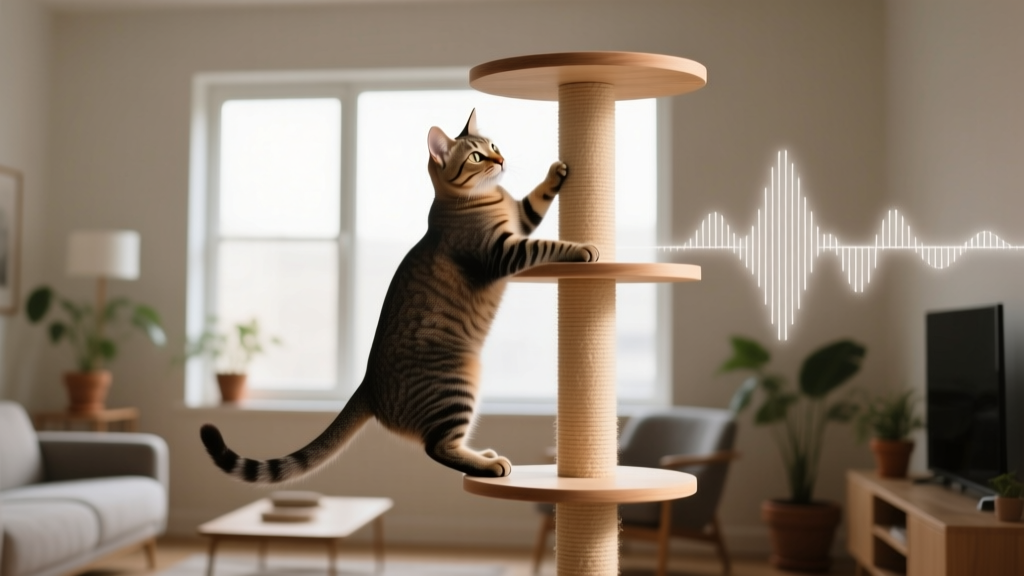
- Enrich the Environment Strategically: Not just toys—purpose-built zones. Create a 'Hunt Zone' (food puzzle + feather wand session), a 'Lookout Zone' (cat tree near window with bird feeder view), and a 'Safe Retreat Zone' (covered bed + Feliway diffuser). A 2022 study in Applied Animal Behaviour Science found cats with ≥3 enriched zones showed 68% fewer stress-related behaviors in 6 weeks. \n
- Redirect, Don’t Repress: Never punish scratching—but provide irresistible alternatives. Place sisal posts *next to* the scratched furniture (not across the room), rub with catnip, and reward with treats when used. For biting during play, end interaction immediately and offer a wand toy—teaching 'hands are not prey.' \n
- Reset Litter Box Trust: If eliminating outside the box, audit all 5 Litter Box Commandments: 1) One box per cat + 1 extra, 2) Uncovered, 3) Scooped daily, 4) Placed in quiet, low-traffic areas (never next to washer/dryer), 5) Filled with 2–3 inches of unscented clumping litter. Replace boxes every 12 months—plastic absorbs odors cats detect but we can’t. \n
- Use Positive Reinforcement Consistently: Reward calm, desired behaviors *in the moment*: sitting beside you, using a scratching post, entering carrier voluntarily. Use high-value treats (freeze-dried chicken, tuna flakes)—not kibble. Timing matters: reward within 1.5 seconds of the behavior. \n
- Know When to Call a Specialist: If aggression is directed at people or other pets, if urine marking involves spraying (vertical surfaces), or if self-mutilation occurs (excessive licking, hair loss), consult a board-certified veterinary behaviorist—not just a trainer. These require clinical intervention, sometimes including medication (e.g., fluoxetine) alongside behavior modification. \n
When 'Bad Behavior' Is Actually a Cry for Help: Real Case Studies
\nLet’s ground this in reality. These aren’t hypotheticals—they’re cases documented by the Cornell Feline Health Center and adapted with privacy protections:
\n\n- \n
- Mittens, 4-year-old domestic shorthair: Started urinating on laundry piles after her owner adopted a second cat. Vet ruled out UTI. Behaviorist observed Mittens avoided shared litter boxes and hid when the new cat entered rooms. Solution: Added two new boxes in separate, quiet locations + vertical space for separation. Within 10 days, accidents stopped. Root cause: Territorial insecurity, not spite. \n
- Jasper, 7-year-old Maine Coon: Began biting ankles at 5 a.m. daily. Bloodwork revealed early-stage osteoarthritis in his hips. Pain management (joint supplements + gabapentin) + morning play sessions reduced biting by 95%. Root cause: Pain-induced irritability, misread as 'attention-seeking.' \n
- Luna, 2-year-old rescue: Scratched walls instead of posts. Video review showed she approached posts but sniffed and walked away. Owner switched to a taller, sturdier post wrapped in jute (not carpet) and placed it beside her favorite napping spot. She used it within 48 hours. Root cause: Inadequate substrate and placement—not 'disobedience.' \n
Decoding Common 'Bad Behaviors': What They Signal & How to Respond
\nBelow is a practical, evidence-based reference table summarizing the top five behaviors owners label 'bad'—with root causes, red flags requiring vet attention, and immediate action steps. Use this as your first-response guide:
\n\n| Behavior | \nMost Likely Root Cause | \nVet Visit Needed? | \nFirst 3 Actions to Take | \n
|---|---|---|---|
| Scratching furniture/carpets | \nNormal claw maintenance + territorial marking + stretching | \nNo—unless sudden onset or accompanied by limping/licking paws | \n1. Place sturdy vertical/horizontal scratchers beside targeted items 2. Rub with silvervine or catnip 3. Reward use with treats + praise | \n
| Biting or swatting during petting | \nOverstimulation (petting-induced aggression) or pain | \nYes—if new, worsening, or paired with vocalization/flinching | \n1. Watch for tail flicking, skin rippling, ear flattening 2. Stop petting *before* signs appear 3. Redirect to toy play post-petting | \n
| Urine marking (spraying on walls/doors) | \nStress-induced territorial signaling (intact cats may also mark due to hormones) | \nYes—to rule out UTI, cystitis, or kidney disease | \n1. Neuter/unspay if intact 2. Identify & reduce stressors (new pets, construction, guests) 3. Clean soiled areas with enzymatic cleaner (never ammonia-based) | \n
| Aggression toward people or other pets | \nFear, redirected aggression, play aggression, or pain | \nYes—always, especially if escalating or causing injury | \n1. Avoid direct eye contact; give space 2. Identify triggers (e.g., certain sounds, handling, times of day) 3. Consult veterinary behaviorist for safety plan | \n
| Excessive vocalization (especially at night) | \nCognitive decline (senior cats), attention-seeking, hearing loss, or anxiety | \nYes—if new in senior cats (>10 yrs) or paired with disorientation | \n1. Rule out medical causes (hyperthyroidism, hypertension) 2. Provide structured daytime play + food puzzles 3. Ignore nighttime calls—don’t reinforce with attention | \n
Frequently Asked Questions
\nWhy does my cat suddenly start acting 'bad' after years of calm behavior?
\nSudden behavioral shifts are rarely random—and almost always signal change. Common triggers include undiagnosed pain (arthritis, dental disease), cognitive dysfunction in seniors, environmental stressors (new pet, home renovation, moving), or even subtle shifts in routine (you working later, changing your scent with new soap). A 2023 Journal of Feline Medicine & Surgery study found 73% of cats with abrupt behavior changes had at least one previously undetected medical condition. Always start with a full veterinary exam—including blood pressure and thyroid panel for cats over age 8.
\nWill getting another cat fix my cat’s 'bad behavior'?
\nNot usually—and often makes things worse. Introducing a second cat without careful, species-appropriate protocol (which takes 2–6 months) frequently increases stress, triggers resource guarding, and escalates aggression or urine marking. Cats are facultatively social—not pack animals. Unless your cat shows consistent, positive interest in other cats (e.g., chirping at windows, rubbing against visitor cats), adding a companion is unlikely to resolve behavior issues and may compound them. Focus on enriching your current cat’s world first.
\nAre spray bottles or shouting effective for stopping 'bad behavior'?
\nNo—and they’re actively harmful. Spray bottles damage trust, increase fear-based aggression, and teach cats to associate you with punishment. Shouting triggers their prey response, heightening anxiety. Research from the University of Lincoln confirms punishment-based methods correlate with higher rates of chronic stress behaviors (hiding, overgrooming, aggression) and lower human-cat bond quality. Positive reinforcement and environmental adjustment work significantly faster and more sustainably.
\nMy cat only acts out around certain people—why?
\nCats read body language, scent, and energy with astonishing precision. A visitor who moves quickly, looms over the cat, or wears strong perfume may trigger fear or defensiveness—even if they ‘love cats.’ Children’s unpredictable movements are especially threatening. It’s not personal—it’s perception. Teach guests to sit quietly, avoid direct eye contact, and let the cat approach. Offer treats for calm proximity. This builds positive associations—not submission.
\nCan diet affect my cat’s behavior?
\nYes—indirectly but significantly. Diets high in fillers, artificial preservatives, or excessive carbohydrates can contribute to inflammation and gut dysbiosis, which emerging research links to anxiety-like behaviors in cats. Omega-3 fatty acids (EPA/DHA) support neural health, while tryptophan-rich proteins aid serotonin production. A 2021 pilot study in Frontiers in Veterinary Science noted calmer baseline behavior in cats fed a novel-protein, low-carb diet for 8 weeks—but always consult your vet before dietary changes, especially with kidney or urinary history.
\nCommon Myths About Cat Behavior
\nThese misconceptions delay real progress—and harm the human-cat bond:
\n- \n
- Myth #1: “Cats misbehave to get revenge.” Cats lack the cognitive capacity for vengeful intent. They don’t connect your absence or scolding to past events. What looks like ‘revenge peeing’ is stress-induced marking triggered by your return (new scent, disrupted routine) or anxiety about your departure. \n
- Myth #2: “If I ignore bad behavior, it will go away.” Ignoring doesn’t erase the underlying need—it often amplifies it. A cat scratching because of unmet climbing needs won’t stop; it may shift to more destructive outlets. Ignoring only works for attention-seeking behaviors *if* you simultaneously reinforce alternative behaviors. Otherwise, it’s passive neglect—not training. \n
Related Topics (Internal Link Suggestions)
\n- \n
- Understanding Cat Body Language — suggested anchor text: "how to read your cat's tail, ears, and eyes" \n
- Best Cat Enrichment Toys for Indoor Cats — suggested anchor text: "indoor cat enrichment ideas that actually work" \n
- When to See a Veterinary Behaviorist — suggested anchor text: "signs your cat needs a behavior specialist" \n
- Litter Box Problems: A Step-by-Step Fix Guide — suggested anchor text: "why cats stop using the litter box" \n
- Cat Anxiety Symptoms and Natural Calming Solutions — suggested anchor text: "signs of anxiety in cats and vet-approved remedies" \n
Conclusion & Your Next Step
\n'Is bad behavior on cats' isn’t a question about morality—it’s a plea for understanding. What looks like defiance is usually distress. What seems irrational is deeply biological. And what feels like failure is often just missing information. You don’t need to be perfect. You just need to shift your lens: from judgment to curiosity, from correction to collaboration. Start today—not with a spray bottle, but with a notebook. Track one behavior for 48 hours using the ABC method. Then, schedule that vet visit—even if you ‘think’ it’s behavioral. Because the kindest, most effective thing you can do for your cat isn’t to fix them. It’s to see them clearly, meet their needs faithfully, and rebuild trust, one gentle, informed choice at a time. Your next step? Download our free 5-Day Cat Behavior Tracker (PDF) — includes printable ABC logs, enrichment checklists, and vet conversation prompts.