How to Understand Cat's Behavior for Grooming
Why Reading Your Cat’s Grooming Cues Isn’t Optional — It’s Lifesaving
\nIf you’ve ever been scratched mid-brush, watched your cat bolt from the tub, or wondered why your otherwise affectionate cat freezes when you reach for the comb, you’re not failing at grooming — you’re missing critical behavioral signals. How to understand cat's behavior for grooming is the foundational skill that separates safe, cooperative care from chronic stress, skin damage, and eroded trust. Unlike dogs, cats rarely vocalize discomfort before escalating; instead, they communicate through micro-expressions — a half-inch tail twitch, a slow blink that turns into a hard stare, ears rotating backward like satellite dishes locking onto threat. Ignoring these isn’t just inconvenient: it’s physiologically harmful. Chronic low-grade stress from forced grooming suppresses immune function, triggers overgrooming (leading to bald patches or dermatitis), and can even contribute to feline lower urinary tract disease (FLUTD), according to a 2023 study published in Journal of Feline Medicine and Surgery. This isn’t about ‘making grooming easier’ — it’s about honoring your cat’s autonomy while keeping them healthy.
\n\nThe 3-Second Stress Scan: Reading Your Cat’s Pre-Grooming Body Language
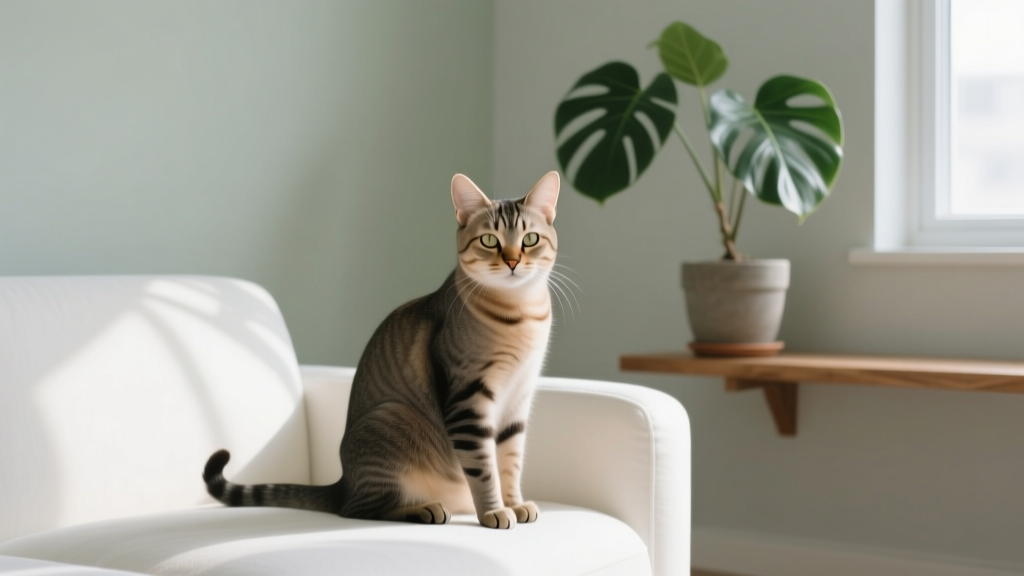
\nBefore you touch a brush or open the shampoo bottle, perform what certified feline behaviorist Dr. Mikel Delgado calls the ‘3-Second Stress Scan’ — a rapid, holistic assessment of posture, facial expression, and movement. This isn’t guesswork; it’s observational science grounded in ethology (the study of animal behavior). Start by observing from 3–4 feet away — never approach head-on or hover. Here’s what to look for:
\n- \n
- Ears: Forward-facing = relaxed curiosity. Slightly sideways or ‘airplane’ position = mild uncertainty. Flattened against the skull (‘airplane ears’) = acute fear or aggression brewing — stop immediately. \n
- Tail: Upright with slight quiver = greeting/acceptance. Low and stiff = tension. Rapid, whip-like flicks = rising frustration — this is your last warning before biting or fleeing. \n
- Eyes & Pupils: Slow blinks = trust. Wide-open eyes with dilated pupils = hyperarousal (even if the cat appears still). Constricted pupils in bright light? Often signals pain or anxiety — especially relevant if your cat has arthritis or dental issues making grooming painful. \n
- Body Posture: Weight evenly distributed, loose shoulders = ready. Crouched low with tucked hindquarters = preparing to flee. Rigid ‘frozen’ stance? That’s not calm — it’s tonic immobility, a trauma response where the cat feels trapped and helpless. \n
A real-world example: Luna, a 6-year-old domestic shorthair, would tolerate brushing for 90 seconds — then freeze, flatten her ears, and hiss. Her owner assumed she was ‘just difficult.’ A veterinary behavior consult revealed Luna had undiagnosed sacroiliac joint pain. Brushing near her base of tail triggered sharp discomfort, and her ‘freezing’ wasn’t stubbornness — it was a pain-induced shutdown. Once treated and paired with targeted desensitization (see next section), Luna now voluntarily leans into brushing sessions.
\n\nDesensitization & Counterconditioning: The 5-Minute Daily Ritual That Builds Grooming Trust
\nForcing grooming teaches cats one thing: humans = unpredictability + pain. But neuroscience shows we can rewire associations using classical conditioning — pairing neutral or mildly stressful stimuli (e.g., the sight of a brush) with high-value rewards (tuna paste, catnip spray, or gentle chin scratches). This isn’t ‘tricking’ your cat; it’s giving their nervous system new data. Certified cat behavior consultant Ingrid Johnson emphasizes consistency over duration: “Five minutes daily beats 30 minutes once a week. Your cat’s amygdala doesn’t track calendar days — it tracks repetition and predictability.”
\nHere’s how to implement it, step-by-step:
\n- \n
- Phase 1 (Days 1–3): Place the brush on the floor 3 feet from your cat while offering treats. No interaction — just proximity + reward. Goal: brush = good things happen. \n
- Phase 2 (Days 4–7): Hold the brush loosely in your hand while offering treats. If your cat looks away or licks lips (a stress signal), pause and reset. Never advance until they make voluntary eye contact or approach. \n
- Phase 3 (Days 8–14): Touch the brush to your cat’s shoulder — for 1 second max — then immediately reward. Repeat 3x per session. If they lean in or purr, extend to 2 seconds next time. \n
- Phase 4 (Ongoing): Gradually increase contact time and area (neck → back → sides), always stopping before stress signs appear. Never go past the ‘point of no return’ — the moment their tail starts flicking or ears swivel back. \n
Key nuance: Reward timing is non-negotiable. Treat must land within 1 second of the desired behavior (e.g., tolerating brush contact). Delayed rewards teach confusion. Use high-value, non-crumbly treats like FortiFlora sprinkles or salmon paste — avoid kibble, which lacks salience.
\n\nGrooming Resistance vs. Medical Pain: When ‘Behavior’ Is Actually a Symptom
\nHere’s a hard truth many owners miss: Any sudden change in grooming tolerance is a red flag for underlying illness or injury. Cats mask pain exquisitely — a behaviorist might see ‘aggression,’ but a veterinarian sees a fractured rib, an abscess under the fur, or a UTI causing abdominal tenderness. According to Dr. Tony Buffington, DVM, PhD, Professor Emeritus at Ohio State’s College of Veterinary Medicine, “Over 70% of cats presenting with ‘behavioral’ grooming issues have an undiagnosed medical condition — most commonly osteoarthritis, dental disease, or dermatological infections.”
\nRed flags that demand a vet visit before behavior training:
\n- \n
- New sensitivity to touch in one specific area (e.g., flinching only when brushing the left flank) \n
- Excessive licking, chewing, or hair loss in a localized patch \n
- Vocalizing (yowling, growling) during grooming — especially if previously silent \n
- Changes in litter box habits, appetite, or sleep patterns alongside grooming resistance \n
Don’t assume age-related stiffness explains everything. A 2022 Cornell Feline Health Center study found that 91% of cats over age 10 show radiographic evidence of osteoarthritis — yet only 12% display obvious limping. Pain often manifests as ‘grumpiness’ or avoidance of handling. Always rule out medical causes first. As Dr. Buffington states: “You wouldn’t train a dog with a broken leg to ‘like’ walking. Why expect a cat to ‘like’ being touched where it hurts?”
\n\nStep-by-Step Grooming De-escalation Protocol
\nEven with perfect prep, stress can spike mid-session. This table provides a real-time, evidence-based response framework used by veterinary technicians and certified groomers. Each action is tied to observable behavior and physiological outcomes — not guesswork.
\n| Observed Stress Signal | \nImmediate Action (Within 3 Seconds) | \nTool/Resource Needed | \nExpected Outcome Within 60 Sec | \n
|---|---|---|---|
| Rapid tail flicking or thumping | \nStop all contact. Step back 3 feet. Offer a high-value treat without reaching — toss it gently toward the cat. | \nPre-portioned treats (e.g., 3–4 tuna bits in a small dish) | \nCat resumes normal breathing; tail slows or goes still. If tail continues flicking >10 sec, end session. | \n
| Ears flattened, pupils dilated, body frozen | \nTurn sideways (reducing perceived threat), speak softly (“Easy now”), and offer a warm towel draped over their back — not covering head. Leave space to retreat. | \nSoft, unscented cotton towel | \nRespiratory rate decreases; ears rotate slightly forward within 30–45 sec. If no change, remove towel and leave room for 5 min. | \n
| Hissing, low growl, or air-snapping | \nImmediately cease all interaction. Quietly exit the room. Close door. Wait minimum 15 minutes before re-engaging — even if cat seems calm. | \nNone — prioritize safety and space | \nHeart rate normalizes; cat resumes self-grooming or napping. Re-entry should begin with Phase 1 desensitization (brush on floor). | \n
| Overgrooming post-session (excessive licking, bald spots) | \nDocument location/duration. Reduce next session by 50%. Introduce environmental enrichment (food puzzle, vertical space) to redirect stress energy. | \nPhone camera, enrichment toys | \nReduced frequency/intensity of overgrooming episodes within 3–5 days. If persists >1 week, consult vet for dermatological or anxiety evaluation. | \n
Frequently Asked Questions
\nWhy does my cat tolerate brushing from strangers but bite me?
\nThis is incredibly common — and deeply revealing. Cats don’t generalize trust across humans. Your cat likely associates you with routine handling (vet visits, nail trims, medication) that *has* been stressful in the past, creating a negative conditioned response. Strangers lack that history. To rebuild, start fresh: use only positive-only interactions for 2 weeks (no restraint, no vet tools, no forced handling). Let your cat initiate contact. Over time, you’ll overwrite old associations — but it requires consistency and zero coercion.
\nIs it okay to use sedation or calming sprays for grooming?
\nOnly under direct veterinary supervision — and rarely as a first-line solution. Calming sprays (Feliway) may reduce ambient stress but won’t override acute fear during physical handling. Oral sedatives like gabapentin require precise dosing and carry risks (e.g., respiratory depression in brachycephalic breeds). Board-certified veterinary behaviorist Dr. Karen Overall stresses: “Sedation treats the symptom, not the cause. It’s like putting duct tape on a cracked pipe — the leak remains. Address the root behavioral trigger first.” Reserve sedation for medically necessary procedures (e.g., severe matting requiring clipping) — not routine maintenance.
\nMy senior cat hates brushing — is this just ‘old age’?
\nNo — it’s almost certainly pain or sensory decline. Older cats develop thinner skin, reduced elasticity, and heightened sensitivity to touch due to nerve degeneration. They may also have diminished vision or hearing, making sudden movements startling. Switch to ultra-soft tools (rubber grooming mitts, not metal combs), limit sessions to 60–90 seconds, and focus on areas they enjoy (chin, cheeks). Always check for lumps, scabs, or temperature changes during handling — early cancer detection saves lives.
\nCan I train my kitten to love grooming?
\nAbsolutely — and the window is narrow. Begin desensitization at 8–12 weeks, when neural plasticity is highest. Handle paws, ears, and mouth daily for 10 seconds each, pairing with treats. Introduce brush near them at 10 weeks — never on them. By 16 weeks, most kittens accept brief, gentle strokes. Miss this window? It’s harder, but not impossible — adult cats retain learning capacity, just with more ingrained associations to unlearn.
\nWhat’s the #1 grooming mistake owners make?
\nIgnoring the ‘consent test.’ Before every session, place your hand near (not on) your cat’s shoulder. If they lean in, blink slowly, or rub against you — proceed. If they turn away, freeze, or flick their tail — stop. This simple act respects agency and prevents escalation. As feline specialist Dr. Sarah Heath says: “Cats aren’t pets who need training. They’re partners who deserve negotiation.”
\nCommon Myths About Cat Grooming Behavior
\nMyth 1: “If my cat lets me brush them, they must be fine with it.”
\nFalse. Many cats endure grooming through learned helplessness — especially those with histories of rescue or early trauma. They freeze rather than fight because fighting has failed before. True consent looks like active participation: leaning in, purring, kneading, or seeking more contact — not passive tolerance.
Myth 2: “Cats who overgroom are just stressed — it’s behavioral, not medical.”
\nDangerously incomplete. While stress contributes, overgrooming (psychogenic alopecia) accounts for less than 20% of cases, per the 2021 International Society of Feline Medicine (ISFM) guidelines. The majority stem from allergies (flea, food, environmental), bacterial/fungal infections, or parasitic mites (e.g., Notoedres cati). Always rule out dermatological causes first with skin scrapings and allergy testing.
Related Topics (Internal Link Suggestions)
\n- \n
- Reading feline body language beyond grooming — suggested anchor text: "cat body language decoder" \n
- Safe at-home cat nail trimming techniques — suggested anchor text: "how to trim cat nails without stress" \n
- When to choose professional cat grooming vs. DIY — suggested anchor text: "professional cat grooming guide" \n
- Signs of cat anxiety and natural calming solutions — suggested anchor text: "cat anxiety symptoms and relief" \n
- Feline dental care at home: what really works — suggested anchor text: "cat tooth brushing tips" \n
Your Next Step: Build One Trust Brick Today
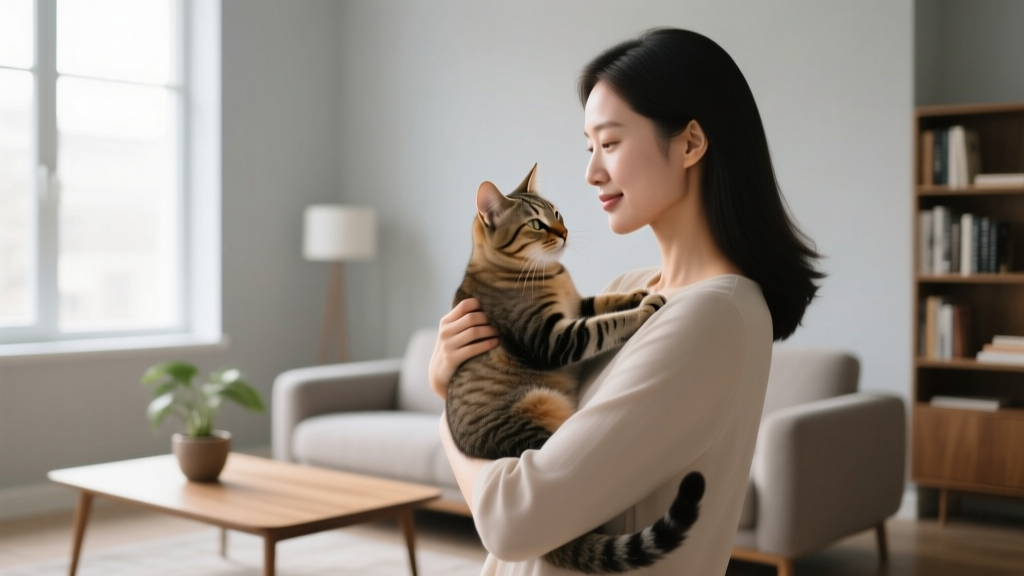
\nYou don’t need to overhaul your entire grooming routine tomorrow. Start with one tiny, powerful act: the 3-Second Stress Scan before your next interaction. Observe — truly observe — your cat’s ears, tail, and eyes for 3 full seconds. Write down what you see. That single act shifts you from handler to student, from controller to collaborator. Understanding your cat’s behavior for grooming isn’t about perfection; it’s about presence. It’s choosing to ask permission instead of assuming consent. And every time you honor their ‘no,’ you strengthen the bond that makes future care possible. So tonight, before bedtime, sit quietly nearby and watch your cat breathe. Notice the rhythm. The stillness. The quiet dignity. That’s where trust begins — long before the brush ever touches fur.