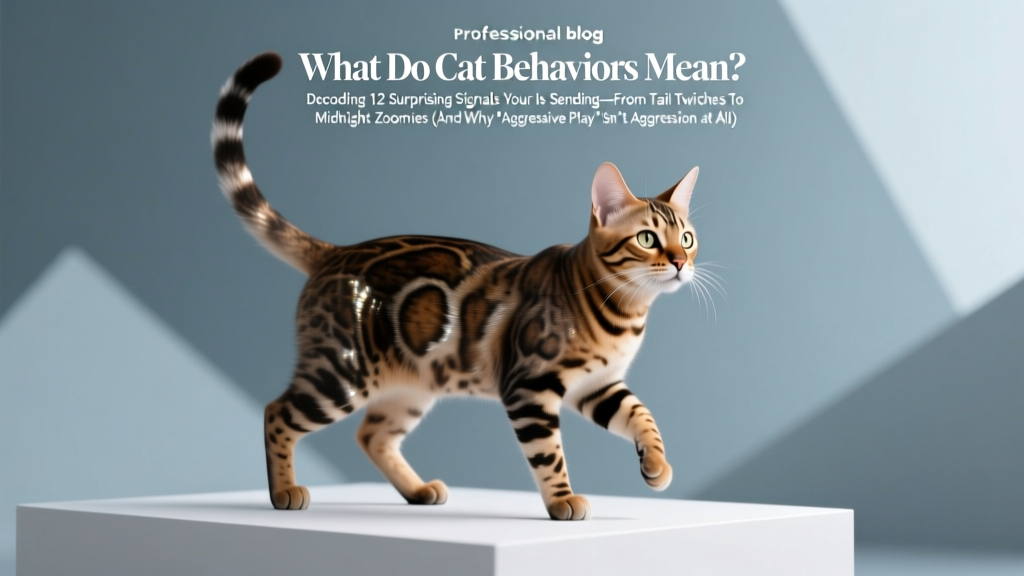
How to Understand Cat Behavior Versus Human Expectations
Why Your Cat Isn’t ‘Acting Out’ — They’re Speaking a Language You Haven’t Learned Yet
\nIf you’ve ever asked yourself how to understand cat behavior versus your own assumptions—or those of friends, family, or even outdated pet advice—you’re not alone. Over 68% of first-time cat owners misinterpret key stress signals within the first three months, according to a 2023 Cornell Feline Health Center survey. That misunderstanding doesn’t just cause frustration—it leads to avoidable rehoming, unnecessary vet visits, and eroded trust between cats and caregivers. Cats don’t communicate through words, guilt, or people-pleasing. They communicate through micro-expressions, spatial choices, scent marking, and physiological responses honed over 9,000 years of evolution. This guide bridges that gap—not by teaching you to ‘train’ your cat, but by helping you listen to their oldest, most reliable dialect: behavior.
\n\n1. The ‘Versus’ Trap: Why Human Logic Fails With Feline Communication
\nWe instinctively project human motivations onto cats: ‘She’s ignoring me because she’s mad,’ ‘He knocked that vase off the shelf to get back at me,’ or ‘She’s rubbing on my leg to show love.’ But these interpretations ignore evolutionary biology. Domestic cats retain 95.6% of their wild ancestor’s neural wiring (per a 2022 Nature Ecology & Evolution genomic study), meaning their ‘social’ behaviors serve survival—not sentiment. When your cat stares silently from across the room, it’s rarely judgment—it’s assessment. When they bite gently during petting, it’s not aggression—it’s a species-specific ‘off switch’ signal.
\nDr. Sarah Wooten, DVM and certified feline behavior consultant, explains: ‘Cats don’t have a concept of “disobedience.” What looks like defiance is almost always either unmet environmental need, sensory overload, or misaligned interaction timing. Their behavior isn’t versus us—it’s operating on a different operating system entirely.’
\nHere’s how to recalibrate:
\n- \n
- Replace assumptions with observation: For 48 hours, log every time your cat does something puzzling—e.g., sudden sprinting, hiding after greeting, or avoiding the litter box. Note time of day, location, recent human activity, and any preceding stimuli (doorbell, vacuum, visitor). \n
- Ask ‘what changed?’ not ‘why did they do that?’ Cats respond to shifts in routine, scent, sound frequency (they hear up to 64 kHz—twice our range), and vertical space access. A ‘bad mood’ is usually an unaddressed variable. \n
- Use the 3-Second Rule: Before initiating contact, pause for three seconds and observe ear position, tail base tension, and pupil dilation. If ears are forward and pupils relaxed? Proceed. If ears swivel sideways or tail tip flicks rapidly? Pause and offer choice (e.g., ‘Would you like chin scritches—or space?’). \n
2. Decoding the Big 5: Body Language Signals Most Commonly Misread
\nForget vague terms like ‘happy’ or ‘angry.’ Feline communication operates on a spectrum of thresholds—calm, alert, conflicted, fearful, and defensive. Below are the five highest-stakes signals, decoded with veterinary behavioral science context:
\n- \n
- Slow Blinking: Often called the ‘cat kiss,’ this is a deliberate, low-risk social signal indicating trust—not fatigue. In multi-cat households, cats slow-blink to de-escalate tension. Try returning it: hold eye contact, blink slowly twice, pause, blink again. If your cat reciprocates within 5 seconds, trust is building. \n
- Tail Position & Motion: A vertical tail with quivering tip = intense excitement (often pre-marking); a low, stiff tail held close to the body = conflict or fear; a puffed tail = full defensive arousal. Crucially: a gently waving tail tip while sitting still often means ‘I’m focused—but not threatened.’ \n
- Ear Orientation: Forward = engaged curiosity. Sideways (‘airplane ears’) = acute anxiety or overstimulation—stop petting immediately. Flat-back = imminent defensive action (hissing, swatting). But note: some breeds (like Scottish Folds) have naturally folded ears—always assess in context with other signals. \n
- Pupil Dilation: Wide pupils aren’t always fear—they indicate high arousal, which could be play, hunting focus, or stress. Pair with body posture: dilated pupils + crouched body + flattened ears = fear. Dilated pupils + upright stance + twitching tail = predatory focus. \n
- Chattering/Jaw-Clacking: This rapid teeth-clicking sound isn’t frustration—it’s a motor pattern linked to the killing bite. It occurs when cats see prey they can’t reach (birds at windows). It’s neurologically hardwired, not emotional commentary. \n
3. The Versus Framework: Real-Life Scenarios & What to Do Instead
\nLet’s move beyond theory. Here are three frequent pain points—and how shifting your perspective changes everything:
\nCase Study: Maya, 28, adopted Luna, a 2-year-old rescue. Luna would hiss when Maya reached into her carrier during vet visits—even though she’d purr while being held. Maya assumed Luna ‘hated’ carriers. After consulting a certified cat behaviorist, she learned: Luna associated the carrier with loss of control (being lifted abruptly, car motion, unfamiliar smells). The hissing wasn’t aggression—it was a last-ditch ‘I need autonomy’ signal.\n
The fix? Maya left the carrier out 24/7 with soft bedding, added treats inside daily, and practiced ‘carrier walks’ (lifting gently for 10 seconds, then releasing). Within 12 days, Luna entered voluntarily. No sedation needed.
\nThis illustrates the core principle: how to understand cat behavior versus human-centric narratives means asking ‘What safety need is unmet?’ before ‘What emotion are they expressing?’
\nApply this framework to these scenarios:
\n- \n
- Scratching furniture: Versus ‘destroying my couch’ → It’s about claw maintenance, territory marking (scent glands in paws), and stretching muscles. Solution: Provide vertical + horizontal scratchers near resting areas, use catnip or silvervine spray, and protect furniture with double-sided tape—not punishment. \n
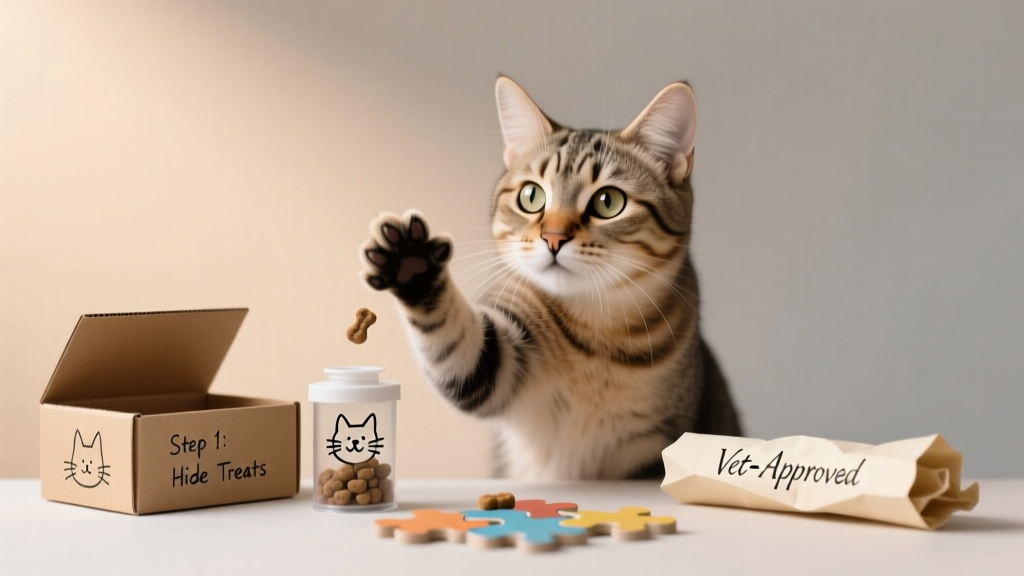
- Waking you at 4 a.m.: Versus ‘being annoying’ → Cats are crepuscular (most active at dawn/dusk) and may be hungry, bored, or seeking play. Solution: Feed a timed meal right before bedtime, provide interactive puzzle feeders, and engage in 15 minutes of vigorous play at dusk to satisfy hunting instincts. \n
- Urinating outside the litter box: Versus ‘revenge peeing’ → This is almost always medical (UTI, arthritis) or environmental (box too small, wrong litter texture, location near noisy appliances). Rule out health issues first with your vet—then audit the box: Is it scooped daily? Is there one per cat plus one extra? Is it in a quiet, low-traffic area? \n
4. Your Visual Reference: Cat Behavior vs. Human Interpretation Comparison Table
\n| Observed Behavior | \nCommon Human Misinterpretation | \nVeterinary Behavioral Explanation | \nActionable Response | \n
|---|---|---|---|
| Rolling onto back, exposing belly | \n“She wants belly rubs!” | \nBelly exposure is a high-trust signal—but also a vulnerable position. Most cats tolerate only brief, gentle strokes if initiated by them. Sudden rubbing triggers defensive reflexes. | \nOffer slow hand near paw (not belly). If cat bats your hand toward belly, proceed with 2-second strokes. Stop if legs tense or tail flicks. | \n
| Bringing dead mice/birds to your bed | \n“He’s gifting me… or mocking me?” | \nAn instinctive tutor behavior: mother cats bring prey to kittens to teach hunting. Your cat sees you as inept—and is trying to help. | \nThank calmly (“Good job!”), then dispose quietly. Redirect with daily 10-minute interactive play using wand toys to fulfill hunting drive. | \n
| Head-butting (bunting) your face | \n“She’s being affectionate like a dog.” | \nCats deposit facial pheromones (F3) via glands on cheeks/temples. Bunting marks you as safe, familiar, and part of their colony—not submission or adoration. | \nReturn bunts gently. Avoid strong perfumes or soaps that disrupt scent bonding. | \n
| Chewing plastic bags or cords | \n“He’s bored or teething.” | \nOften linked to early weaning trauma, nutritional deficiency (especially fiber), or compulsive disorder. Not typical play—requires vet evaluation. | \nRule out pica with bloodwork. Offer high-fiber food (e.g., pumpkin puree), safe chew toys (dental chews, sisal), and increase foraging opportunities. | \n
| Sitting in boxes, sinks, or empty paper bags | \n“It’s just silly cat logic.” | \nEnclosed spaces reduce stress by limiting attack angles and retaining body heat (optimal temp: 86–97°F). Boxes lower cortisol levels by up to 37% (2015 Utrecht University study). | \nProvide multiple covered beds, cardboard boxes (no handles), and elevated perches with partial enclosures. | \n
Frequently Asked Questions
\nDo cats really hold grudges if I scold them?
\nNo—cats lack the neural architecture for long-term resentment. What appears as a ‘grudge’ is usually associative learning: if scolding happens near a specific location (e.g., kitchen counter), they’ll avoid that spot—not you. Punishment damages trust and increases anxiety-related behaviors. Positive reinforcement (treats for jumping on designated perches) is 4.2x more effective for long-term change, per 2021 Journal of Veterinary Behavior research.
\nWhy does my cat stare at me without blinking?
\nSustained, unblinking eye contact is a low-level threat signal in cat language—equivalent to staring down a rival. If your cat holds your gaze, they’re assessing your intentions. To diffuse tension, slowly blink or look away for 2 seconds. This signals non-threat and often prompts them to approach.
\nIs it true that cats don’t love their owners like dogs do?
\nThey love differently—not less. fMRI studies (2020, Emory University) show cats experience attachment similar to human infants: they seek proximity, show distress when separated, and use owners as ‘secure bases’ during novelty. But their expression prioritizes autonomy over constant physical contact. A cat sleeping beside you, following you room-to-room, or bringing you toys are profound signs of bonded love.
\nHow long does it take to truly understand my cat’s unique behavior?
\nMost cats reveal consistent patterns within 4–8 weeks of stable routine and patient observation. However, depth of understanding grows continuously. Keep a simple journal: date, behavior, context, your response, their reaction. Review weekly. You’ll spot patterns—e.g., ‘Luna grooms excessively after video calls’ (stress from voices) or ‘Leo vocalizes more when rain starts’ (barometric pressure sensitivity). This isn’t guesswork—it’s data-informed empathy.
\nCan older cats learn new communication cues?
\nAbsolutely. Neuroplasticity remains active throughout life. A 12-year-old cat can learn that a specific click means ‘treat coming’ or that your crouched posture signals ‘safe to approach.’ Consistency and positive association are key—never force interaction. Senior cats may need extra time due to hearing/vision changes, so pair verbal cues with gentle touch or visual signals (e.g., hand gesture).
\nCommon Myths About Cat Behavior
\n- \n
- Myth #1: “If my cat purrs, they must be happy.” Purring occurs during labor, injury, fear, and illness—not just contentment. It’s a self-soothing mechanism linked to frequencies (25–150 Hz) that promote bone density and tissue repair. Always assess purring in context: Is the cat trembling? Hiding? Refusing food? Then it’s likely distress-purring. \n
- Myth #2: “Cats are solitary and don’t need companionship.” While independent, cats form complex social bonds. Colony-living feral cats share grooming, allomothering, and coordinated hunting. Indoor cats deprived of positive social interaction often develop stereotypic behaviors (excessive licking, pacing). If adopting a second cat, prioritize age/temperament matching—not just ‘they’ll figure it out.’ \n
Related Topics (Internal Link Suggestions)
\n- \n
- Interpreting cat vocalizations — suggested anchor text: "what different cat meows and chirps really mean" \n
- Cat stress signs and solutions — suggested anchor text: "silent signs your cat is stressed (and how to fix it)" \n
- Building trust with a fearful cat — suggested anchor text: "how to earn a scared cat's trust in 30 days" \n
- Enrichment ideas for indoor cats — suggested anchor text: "indoor cat enrichment checklist: 12 vet-approved activities" \n
- When to consult a feline behaviorist — suggested anchor text: "7 red flags that mean it's time to call a cat behavior specialist" \n
Your Next Step: Start Today With One Signal
\nYou don’t need to master every nuance overnight. Pick one behavior from this guide—slow blinking, tail position, or ear orientation—and commit to observing it for 72 hours. Jot down three instances where you caught it, what preceded it, and how you responded. Notice patterns. That tiny act of intentional attention rewires your brain to see your cat not as a puzzle to solve, but as a partner communicating clearly—if you know the grammar. Ready to go deeper? Download our free Cat Body Language Quick-Reference Cheatsheet—with annotated photos, audio examples of vocalizations, and printable observation logs.