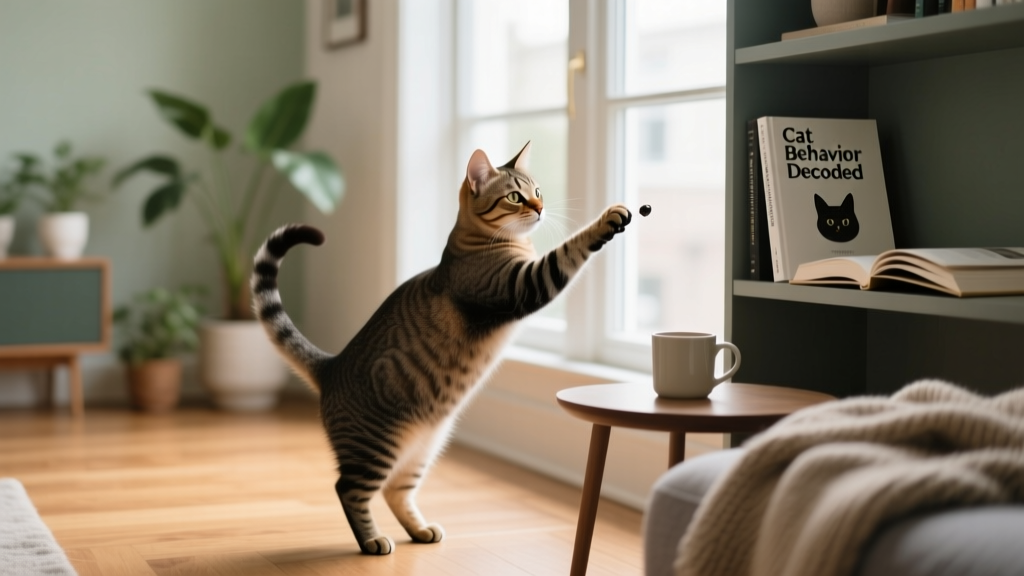
How to Stop Your Cat from Manipulative Behaviors
Why Your Cat Isn’t Trying to Control You—But You *Can* Change the Pattern
If you’ve ever stared bleary-eyed at 4:17 a.m. while your cat paws your face, chirps insistently, then drops a toy on your pillow like a tiny, furry hostage negotiator—you’re not alone. How to stop your cat from manipulative behaviors is one of the most-searched feline behavior queries among new and seasoned cat guardians alike—not because cats are secretly Machiavellian, but because their communication style often clashes with human expectations. What feels like manipulation is almost always learned behavior reinforced over time: your cat discovered that meowing at the bedroom door gets breakfast 8 seconds faster, or that knocking things off shelves earns immediate attention—even if it’s scolding. The good news? These patterns aren’t hardwired. With consistency, empathy, and neurobiologically sound techniques, you can gently reshape them—without breaking trust or resorting to punishment.
What ‘Manipulative’ Really Means (and Why It’s a Misnomer)
Let’s start with a crucial truth: cats don’t possess the cognitive architecture for human-style manipulation—the kind involving intent to deceive, long-term scheming, or understanding another’s mental state to exploit it. According to Dr. Sarah Heath, a European Board-Certified Veterinary Behaviourist, ‘Cats operate on associative learning and operant conditioning—not theory of mind. When your cat wakes you up at dawn, they’re not plotting—they’re responding to a reliable cause-and-effect pattern you’ve unintentionally taught them.’
That ‘manipulative behavior’ label usually describes three common patterns:
- Attention-seeking escalation: Persistent meowing, pawing, or object-knocking when ignored.
- Resource-demanding: Vocalizing or blocking paths when food, play, or lap access is delayed.
- Contextual persistence: Repeating behaviors (e.g., scratching furniture near your desk) only when you’re present or working.
These aren’t signs of defiance—they’re signals your cat feels uncertain, under-stimulated, or has learned that high-effort behaviors yield faster rewards. And yes, they *can* be unlearned. But first—you must stop reinforcing them, even accidentally.
The 3-Second Rule: How to Break the Reinforcement Loop
Every time you respond to a demand behavior—even with ‘no,’ eye contact, or moving away—you’re delivering reinforcement. A 2022 study published in Applied Animal Behaviour Science tracked 67 indoor cats over 8 weeks and found that owners who reacted within 3 seconds of vocalizations saw a 217% increase in frequency over time. Why? Because to a cat, *any* response = reward.
Enter the 3-Second Rule:
- Pause: When your cat begins a demand behavior (e.g., meowing at the food bowl before scheduled feeding), freeze. Don’t make eye contact. Don’t say ‘shh’ or ‘no.’ Don’t even shift your weight.
- Wait: Count silently to three. Breathe. Observe whether the behavior stops—or escalates.
- Redirect—only after silence: Once your cat pauses *voluntarily*, immediately offer an alternative: a puzzle feeder, a feather wand tap, or quiet petting—if appropriate. This teaches them that calmness—not clamor—triggers positive outcomes.
This works because it flips the script: instead of rewarding noise, you’re rewarding stillness. One client, Maya (a remote worker with two Siamese cats), applied this for 11 days. Her ‘alarm-clock yowling’ dropped from 5x/night to zero by Day 9—and her cats began sleeping through until her natural wake-up time. ‘They didn’t get mad,’ she told us. ‘They just… figured out the rules.’
Enrichment Over Enforcement: Building a ‘Boredom-Proof’ Daily Routine
Here’s what most guides miss: ‘manipulative’ behaviors spike when cats lack environmental agency. A 2023 University of Lincoln survey of 1,242 cat households revealed that cats with less than 20 minutes of interactive play per day were 3.8x more likely to exhibit attention-demanding behaviors than those with structured enrichment.
It’s not about playing more—it’s about playing smarter. Cats need predatory sequence fulfillment: stalk → chase → pounce → bite → kill → eat → groom → sleep. Skipping steps (e.g., only using laser pointers without a ‘kill’ toy) leaves them frustrated and hyper-vigilant.
Try this daily rhythm (adaptable for multi-cat homes):
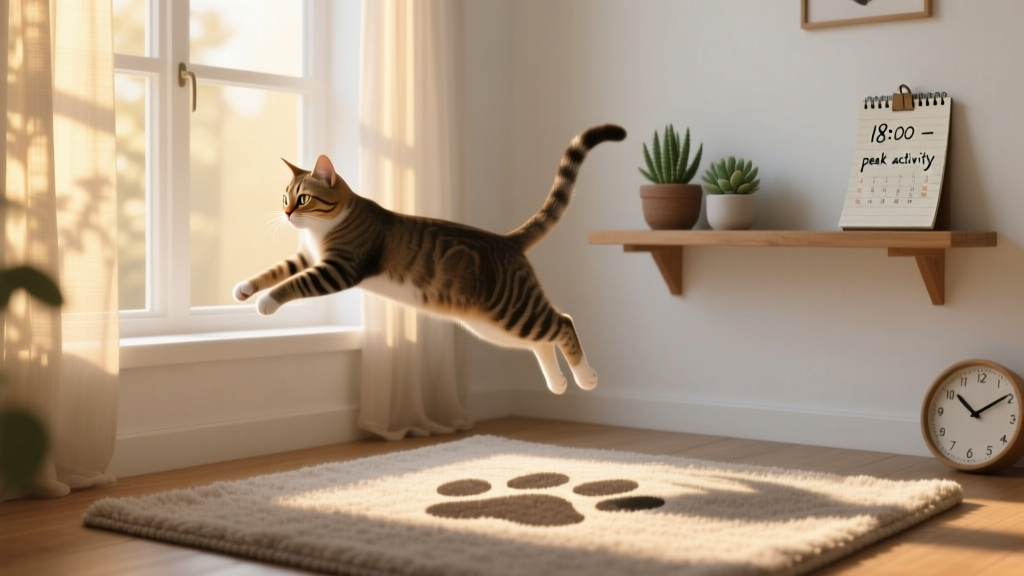
- Pre-dawn (5:30–6:00 a.m.): 5-minute ‘hunt’ with a treat-dispensing mouse toy—satisfies pre-sunrise energy surge.
- Morning (8:00 a.m.): 10-minute interactive session with wand toy + ending in ‘kill’ (let them bite a plush toy; reward with kibble).
- Afternoon (2:00 p.m.): Rotate 2–3 puzzle feeders (e.g., Outward Hound Fun Feeder + slow-feeder ball) filled with meals.
- Evening (7:00 p.m.): 7-minute ‘bonding wind-down’: gentle brushing + quiet lap time *only if cat initiates*.
Crucially: never use food as a bribe *during* demand behavior. Instead, feed meals exclusively through enrichment tools—so eating itself becomes an engaging activity, not a transaction.
When ‘Manipulation’ Masks Medical Need: Red Flags You Can’t Ignore
Sometimes, what looks like calculated manipulation is actually pain, anxiety, or neurological change. Senior cats (7+ years) may vocalize excessively due to hypertension, hyperthyroidism, or cognitive dysfunction syndrome (feline dementia). A 2021 Cornell Feline Health Center review found that 41% of cats presenting with ‘demand meowing’ had underlying medical conditions—including dental disease so severe they’d paw at their mouths, then redirect to owners.
Consult your vet *before* behavior training if your cat shows:
- New-onset vocalization (especially at night) in cats over age 7
- Increased clinginess paired with hiding, litter box avoidance, or appetite shifts
- Staring into space, disorientation, or pacing
- Over-grooming in one spot or sudden aggression toward familiar people
As Dr. Tony Buffington, Professor Emeritus at Ohio State’s College of Veterinary Medicine, puts it: ‘If the behavior started suddenly—or changed in intensity—rule out physiology first. Behavior is always the last diagnosis, not the first.’
| Step | Action | Tools Needed | Expected Outcome (by Day 7) |
|---|---|---|---|
| 1 | Log every ‘manipulative’ incident for 48 hours: time, trigger, your response, cat’s reaction. | Notes app or printable tracker sheet | Identify top 2 recurring patterns (e.g., ‘meows at closed door before breakfast’) |
| 2 | Introduce ‘quiet zone’ protocol: ignore demand behaviors for 3+ seconds; reward silence with click/treat *only* during calm moments. | Clicker or verbal marker (‘yes!’); low-calorie treats (e.g., freeze-dried chicken bits) | 30–50% reduction in targeted behavior frequency |
| 3 | Replace one daily meal with a puzzle feeder; add 1x 5-min interactive play session timed 30 mins before typical demand window. | Puzzle feeder (e.g., Trixie Activity Flip Board); wand toy with replaceable feathers | Cat initiates play independently; less focus on human-as-resource |
| 4 | Install automatic feeder for morning meal; use white noise machine at night to buffer early-morning vocalizations. | Wi-Fi-enabled feeder (e.g., PetSafe FroliCat Pures); sound machine or app | Eliminates timing-based reinforcement; reduces sleep disruption by ≥70% |
Frequently Asked Questions
Do cats hold grudges if I ignore their demand behaviors?
No—cats don’t process rejection as personal offense. They assess outcomes: ‘Did ignoring me lead to food? No. Did sitting quietly lead to food? Yes.’ Their ‘grudge’ is simply repeated failure to achieve a goal. Within 3–5 consistent sessions, most cats pivot to the rewarded behavior. One shelter study observed cats switching from door-pawing to sitting beside the feeder in under 72 hours when silence was reliably reinforced.
Is it okay to use a spray bottle or loud noise to stop manipulative behavior?
No—absolutely not. Startle-based corrections damage trust, increase anxiety, and often worsen the behavior long-term. The American Veterinary Society of Animal Behavior (AVSAB) explicitly opposes punishment for demand behaviors, citing strong evidence of increased fear-based aggression and redirected stress (e.g., urine marking, inter-cat conflict). Positive reinforcement builds security; punishment builds confusion.
My cat only does this with me—not my partner. Why?
This is extremely common and points directly to learning history. If you’re the one who typically feeds, plays, or responds to vocalizations, your cat has formed a stronger stimulus-response association with you. It’s not favoritism—it’s efficiency. To balance this, have your partner initiate 80% of play sessions and feeding for 2 weeks while you step back. Most cats generalize the new rules across humans within 10–14 days.
Will neutering/spaying reduce manipulative behaviors?
Only if the behavior is hormonally driven (e.g., yowling during heat cycles, territorial spraying). For attention- or resource-based behaviors—which make up >92% of ‘manipulative’ cases—spay/neuter has no measurable effect. A 2020 Journal of Feline Medicine & Surgery meta-analysis confirmed this across 14,000+ sterilized cats. Focus on environment and reinforcement history—not biology.
How long until I see real change?
Most owners report noticeable improvement within 5–7 days. Full habit reversal typically takes 2–4 weeks of consistent application. Key predictor of success? Owner consistency—not cat ‘personality.’ As certified cat behavior consultant Ingrid Johnson notes: ‘I’ve seen formerly ‘impossible’ cases resolve in 12 days—not because the cat changed, but because the human stopped accidentally teaching the wrong lesson.’
Common Myths About Cat ‘Manipulation’
Myth #1: “My cat is doing this to punish me.”
Cats lack the cognitive capacity for punitive intent. What looks like revenge (e.g., peeing on your bed after travel) is almost always stress-related marking triggered by routine disruption—not moral judgment.
Myth #2: “If I give in just once, it’ll ruin everything.”
While consistency speeds progress, occasional slips won’t erase training. What matters is your *overall pattern*. If you reinforce silence 9 out of 10 times, your cat will still learn the rule—especially when paired with enrichment. Perfection isn’t required; reliability is.
Related Topics (Internal Link Suggestions)
- Understanding Cat Body Language — suggested anchor text: "what your cat's tail flick really means"
- Best Puzzle Feeders for Intelligent Cats — suggested anchor text: "top 5 vet-recommended slow feeders"
- How to Stop Cats From Waking You Up Early — suggested anchor text: "the 5 a.m. wake-up call solution"
- Cat Anxiety Signs and Natural Remedies — suggested anchor text: "silent stress signals in cats"
- Multi-Cat Household Harmony Guide — suggested anchor text: "reducing competition for attention"
Your Next Step Starts With One Quiet Moment
You now know the truth: your cat isn’t manipulating you—they’re asking, in the only language they have, for predictability, engagement, and safety. How to stop your cat from manipulative behaviors isn’t about control. It’s about clarity. It’s about replacing accidental reinforcement with intentional connection. So tonight—before bed—spend 90 seconds observing your cat without interacting. Notice where they choose to rest, how they blink slowly, what toys they carry to you unprompted. That’s the real relationship: not transactional, but trusting. Ready to begin? Download our free 7-Day Demand-Behavior Tracker & Enrichment Planner (includes printable logs, video demos, and vet-approved toy checklist) — and take your first calm, confident step tomorrow morning.