How to Stop Cat Behavior That’s Driving You Crazy
Why \"How to Stop Cat Behavior\" Is the Wrong Question—And What to Ask Instead
If you’ve ever typed how to stop cat behavior into Google at 3 a.m. after your feline shredded your favorite armchair—or ambushed your ankles mid-stride—you’re not alone. But here’s the crucial truth most pet owners miss: cats don’t misbehave—they communicate. What looks like ‘bad behavior’ is almost always an unmet need: stress, boredom, pain, territorial insecurity, or confusion about boundaries. Trying to ‘stop cat behavior’ without understanding its root cause is like silencing a smoke alarm instead of checking for fire. In this guide, we’ll move beyond quick fixes and punishment-based myths to evidence-based, compassionate strategies that resolve the *why*, not just the *what*—so your cat feels safe, understood, and fulfilled.
Step 1: Decode the Message Behind the Misstep
Before reaching for deterrent sprays or scolding, pause and play detective. Every persistent behavior has a function. According to Dr. Sarah Hargrove, DACVB (Diplomate of the American College of Veterinary Behavior), “Over 85% of so-called ‘problem behaviors’ in cats are either anxiety-driven or environmentally triggered—not willful disobedience.” Start with a 72-hour behavior log: note time, location, what preceded it (e.g., doorbell rang, dog entered room), your cat’s body language (dilated pupils? flattened ears? tail flicking?), and what happened immediately after (did you pick them up? did they flee?). Patterns emerge fast. For example:
- Scratching furniture → Often signals stress, lack of appropriate vertical territory, or a need to mark scent via claw glands.
- Urinating outside the litter box → Top causes include urinary tract discomfort (rule out UTI first!), box aversion (dirty box, wrong litter type, poor placement), or inter-cat conflict.
- Aggression toward people or other pets → Frequently stems from redirected arousal (e.g., seeing an outdoor cat through the window), fear-based triggers, or overstimulation during petting.
Real-world case: Luna, a 4-year-old Siamese, began swatting at her owner’s face each morning. A behavior log revealed it always followed the sound of the coffee grinder—a high-frequency noise she associated with being startled as a kitten. Once her owner switched to a quieter grinder and offered a calming treat ritual before brewing, the aggression vanished in 5 days.
Step 2: Redesign the Environment—Not the Cat
Cats are obligate environmental engineers. They don’t adapt to our homes—they expect their homes to adapt to *them*. The most effective way to stop cat behavior isn’t training—it’s redesigning space, routine, and resources to meet feline ethology. Certified Feline Behaviorist Mieshelle Nagelschneider emphasizes: “Cats aren’t broken. Their environment is.” Prioritize these three pillars:
- Vertical Territory: Install wall-mounted shelves, cat trees, or window perches—at least one per cat, plus one extra. Height reduces conflict and offers security. A 2022 study in Applied Animal Behaviour Science found cats with ≥3 elevated resting spots showed 63% less inter-cat aggression and 41% fewer destructive scratching incidents.
- Resource Separation: Place food, water, litter boxes, and sleeping areas far apart—and never in corners or high-traffic zones. The ‘Rule of 3’ applies: 3 litter boxes (for 2 cats), 3 water stations (including at least one fountain), and 3 feeding zones (to prevent guarding). Litter boxes should be uncovered, large (1.5x your cat’s length), and scooped twice daily.
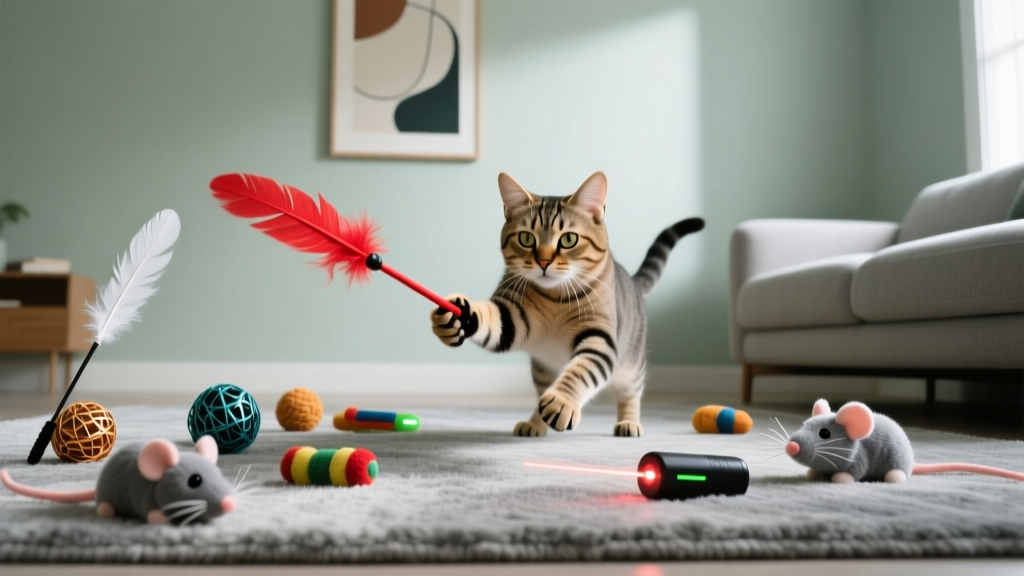
- Sensory Enrichment: Rotate toys weekly, use puzzle feeders for 30% of meals, and introduce novel scents (catnip, silver vine) or visual stimuli (bird feeder outside a window, fish tank video on tablet). Boredom is a leading driver of attention-seeking or compulsive behaviors like wool-sucking.
Pro tip: Use motion-activated deterrents *strategically*—not to punish, but to protect. Place double-sided tape or aluminum foil on couch arms *only while simultaneously offering a nearby, irresistible alternative* (e.g., a plush cat bed beside the sofa with a heating pad inside). This teaches choice—not fear.
Step 3: Communicate in Cat Language—Not Human Commands
Scolding, spraying water, or saying “no” doesn’t translate to cats. Their communication is rooted in body language, scent, and consequence—not verbal instruction. Instead, master these four feline-friendly techniques:
- Positive Reinforcement Timing: Reward desired behavior *within 1 second* of it occurring. Use high-value treats (freeze-dried chicken, tuna flakes) and pair with a distinct marker sound (a click or soft ‘yes!’). Example: If your cat uses the scratching post, click + treat *immediately*—not after you’ve stood up or walked away.
- Redirect, Don’t Repress: When your cat bites during play, end interaction *calmly*, then toss a wand toy across the room. This satisfies predatory drive without associating hands with prey. Never use hands as toys—even kittens learn bite inhibition best when redirected early.
- Consistency Over Correction: All household members must respond identically. If one person lets the cat sleep on the bed but another shoves them off, the cat experiences unpredictable consequences—increasing anxiety and behavioral volatility.
- Calming Signals: Blink slowly, lower your posture, and avoid direct eye contact to signal safety. When your cat approaches, sit still and let them initiate contact. This builds trust faster than any treat.
Mini case study: Milo, a rescue tabby, attacked ankles at dusk. His owner learned this was ‘evening zoomies’—a natural burst of energy. Instead of yelling, she instituted a 15-minute interactive play session with a feather wand at 5:30 p.m. daily, followed by a meal. Within 9 days, the attacks dropped from 5x/day to zero.
Step 4: Rule Out Medical Causes—Before Assuming It’s Behavioral
This step is non-negotiable. Pain, thyroid disease, arthritis, dental issues, and cognitive decline (especially in cats over 10) frequently manifest as behavior changes. A 2023 Cornell Feline Health Center survey found that 42% of cats referred for ‘aggression’ or ‘litter box avoidance’ had underlying medical conditions—including chronic kidney disease and hyperthyroidism—that resolved the behavior once treated.
Red-flag symptoms demanding immediate vet evaluation:
- Sudden onset of vocalizing at night (possible hypertension or cognitive dysfunction)
- Increased urination/straining (UTI, bladder stones, diabetes)
- Licking or biting a specific body area (pain or skin allergy)
- Changes in appetite, grooming, or sociability
Ask your veterinarian for a full senior panel if your cat is 7+, including blood pressure, T4, SDMA (kidney health), and urinalysis. Don’t assume ‘it’s just age’—many conditions are highly manageable when caught early.
| Behavior | Most Likely Cause | First Action Step | Vet Visit Needed? |
|---|---|---|---|
| Scratching furniture | Stress, lack of vertical territory, or unsharpened claws | Add 2+ tall scratching posts near favorite napping spots; trim claws every 10–14 days | No—unless accompanied by limping or bleeding |
| Urinating outside box | Medical issue (70%), box aversion (25%), or social stress (5%) | Thoroughly clean accidents with enzymatic cleaner; add new box in quiet, low-traffic area | Yes—rule out UTI/kidney disease first |
| Biting during petting | Overstimulation (tail flicking, skin twitching = warning signs) | Stop petting at first sign of agitation; offer treat to end interaction positively | No—unless sudden onset or accompanied by vocalization/pain response |
| Excessive grooming or hair loss | Pain, allergies, or anxiety-induced OCD | Check for fleas, skin redness, or lumps; record grooming duration/frequency | Yes—dermatology or behavior consult recommended |
| Howling at night | Hearing loss, hypertension, cognitive decline, or attention-seeking | Provide nighttime enrichment (food puzzle, window perch); check blood pressure | Yes—especially if new in senior cats |
Frequently Asked Questions
Why does my cat suddenly start peeing on my bed?
This is rarely ‘revenge’—it’s almost always a distress signal. Common causes include urinary tract discomfort (which makes the cool, absorbent mattress feel soothing), anxiety from a new pet or baby, or marking due to perceived threats (e.g., outdoor cats visible through windows). First, rule out medical causes with a vet visit and urine test. Then, make the bed less appealing (cover with plastic or aluminum foil temporarily) while increasing security elsewhere—add a cozy, enclosed bed near your sleeping area and use Feliway diffusers in the bedroom.
Will neutering/spaying stop aggressive or spraying behavior?
It often helps—but only if done *before* the behavior becomes habitual. Neutering reduces testosterone-driven spraying in males by ~90% when performed before 6 months. However, if spraying persists past 1 year, it’s likely become a learned stress response or territorial habit—and requires environmental and behavioral intervention, not just surgery. Spaying females eliminates heat-related yowling and restlessness, but won’t resolve fear-based aggression.
Are spray bottles or citronella collars effective for stopping cat behavior?
No—and they’re actively harmful. Spray bottles create fear-based associations (you = threat), damaging your bond and increasing anxiety-related behaviors. Citronella collars deliver unpredictable, aversive stimuli that can trigger panic, especially in sensitive or elderly cats. The American Veterinary Society of Animal Behavior (AVSAB) explicitly opposes punishment-based tools, stating they “suppress behavior without addressing cause—and increase risk of aggression and avoidance.” Positive reinforcement and environmental modification are safer, more effective, and supported by decades of peer-reviewed research.
How long does it take to stop cat behavior using these methods?
Most owners see meaningful improvement within 7–14 days when consistently applying environmental changes and positive reinforcement. However, deeply ingrained behaviors (e.g., chronic litter box avoidance lasting >6 months) may require 6–12 weeks—and benefit from consultation with a board-certified veterinary behaviorist (DACVB). Patience isn’t passive waiting—it’s daily observation, gentle adjustment, and celebrating micro-wins (e.g., ‘Today she sniffed the new scratching post!’).
My multi-cat household is chaotic—how do I stop fighting between cats?
Introduce cats gradually—even if they’ve lived together for years. Use scent-swapping (rubbing towels on each cat, then placing them in the other’s space), parallel feeding (meals on opposite sides of a closed door), and controlled visual access (cracked door with baby gate). Ensure resource separation (see Step 2) and provide escape routes—cats need vertical exits to de-escalate. A 2021 study in Journal of Feline Medicine and Surgery found that households implementing structured reintroduction protocols reduced aggression by 78% within 3 weeks.
Common Myths About Stopping Cat Behavior
Myth #1: “Cats can’t be trained.” Cats absolutely can be trained—with the right motivators and timing. They learn fastest using positive reinforcement (treats, play, praise) and respond poorly to coercion. Clicker training works exceptionally well for teaching ‘come,’ ‘high-five,’ or even using a toilet (though not recommended for health reasons).
Myth #2: “If I ignore bad behavior, it’ll go away.” Ignoring rarely resolves behavior—it often worsens it. Unmet needs don’t vanish; they escalate. A cat ignored when seeking attention may progress from meowing to knocking items off shelves. Proactive redirection and environmental support—not neglect—is the humane, effective path.
Related Topics (Internal Link Suggestions)
- Cat Stress Signs and Solutions — suggested anchor text: "signs your cat is stressed"
- Best Litter Box Setup for Multi-Cat Homes — suggested anchor text: "litter box rules for multiple cats"
- How to Introduce a New Cat Without Fighting — suggested anchor text: "introducing cats safely"
- Feline Anxiety Treatments: Natural & Veterinary Options — suggested anchor text: "cat anxiety remedies"
- DIY Cat Enrichment Ideas on a Budget — suggested anchor text: "cheap cat enrichment ideas"
Your Next Step Starts With One Observation
You now know that how to stop cat behavior isn’t about control—it’s about clarity, compassion, and cohabitation. The most powerful tool you have isn’t a spray bottle or a training collar. It’s your curiosity. So tonight, before bed, sit quietly for 5 minutes and watch your cat—not to judge, but to notice: Where do they choose to sleep? What do they sniff first when entering a room? When do their ears swivel toward sounds you can’t hear? That observation is your first data point in building a life where both of you feel safe, seen, and deeply understood. Ready to go deeper? Download our free Feline Behavior Tracker PDF—complete with printable logs, vet question checklists, and enrichment calendars—to turn insight into action, one day at a time.