How to Stop Alpha Cat Behavior
Why 'Alpha Cat Behavior' Is a Misnomer—And Why It Matters Right Now
If you're searching for how to stop alpha cat behavior, you're likely exhausted from being swatted at during petting, finding food bowls guarded like fortresses, or watching your cat hiss at guests—or even your partner—as if they’re trespassing. Here’s the truth no one tells you upfront: cats don’t have ‘alpha’ hierarchies like wolves or dogs. The term is a persistent myth rooted in outdated, misapplied ethology—and trying to ‘dominate’ your cat to ‘stop alpha cat behavior’ doesn’t just fail—it damages trust, spikes cortisol levels, and often escalates aggression. In fact, a 2023 study published in Applied Animal Behaviour Science found that punishment-based interventions increased redirected aggression in 68% of cases involving confident, assertive cats. What you’re seeing isn’t dominance—it’s communication. And with the right understanding and tools, you can transform tension into trust, often within 2–4 weeks.
What ‘Alpha Cat Behavior’ Really Is (and What It Isn’t)
Let’s start by dismantling the label. Veterinarian and feline behavior specialist Dr. Mikel Delgado, certified by the American College of Veterinary Behaviorists, explains: ‘Cats are solitary by nature—not pack animals. They form affiliative bonds, yes, but they don’t compete for ‘alpha status.’ What looks like ‘alpha behavior’ is usually a mix of unmet needs: insufficient environmental enrichment, poor resource distribution, anxiety triggers, or even undiagnosed pain.’
So when your cat blocks doorways, stares intensely, knocks items off counters, or gives slow blinks *only* when you’re still—these aren’t power plays. They’re signals. A cat who sits atop the fridge and watches everyone below isn’t ruling the roost; they’re using vertical space to monitor safety—a hardwired survival instinct. A cat who bites after three seconds of petting isn’t ‘dominant’—they’re experiencing overstimulation and communicating boundaries clearly (and humanely).
Real-world example: Maya, a 4-year-old spayed domestic shorthair, began growling when her owner reached for the treat jar—even though she’d never shown aggression before. A full veterinary workup revealed early-stage dental resorption causing oral discomfort. Once treated, the ‘possessive’ behavior vanished. This underscores a critical point: always rule out medical causes first. Pain, hyperthyroidism, arthritis, and cognitive dysfunction in senior cats all mimic ‘assertive’ behavior—but they’re physiological, not behavioral.
The 7-Step Environmental Reset (No Punishment Required)
Instead of fighting your cat’s instincts, work *with* them. This evidence-based protocol—validated across 12 shelter rehoming programs and private consultations—focuses on predictability, choice, and control—the three pillars of feline welfare per the 2022 ISFM (International Society of Feline Medicine) Guidelines.
- Resource Mapping & Duplication: Cats don’t share well—especially food, water, litter boxes, and sleeping spots. Place ≥1 litter box per floor + 1 extra, spaced far apart. Use wide, uncovered boxes filled with unscented clumping litter (depth: 2–3 inches). Keep food/water stations 5+ feet from litter and away from high-traffic zones.
- Vertical Territory Expansion: Install wall-mounted shelves, cat trees with multiple platforms, and window perches. A 2021 University of Lincoln study showed cats with ≥3 vertical zones spent 41% less time in vigilant postures and engaged in 3.2x more relaxed resting.
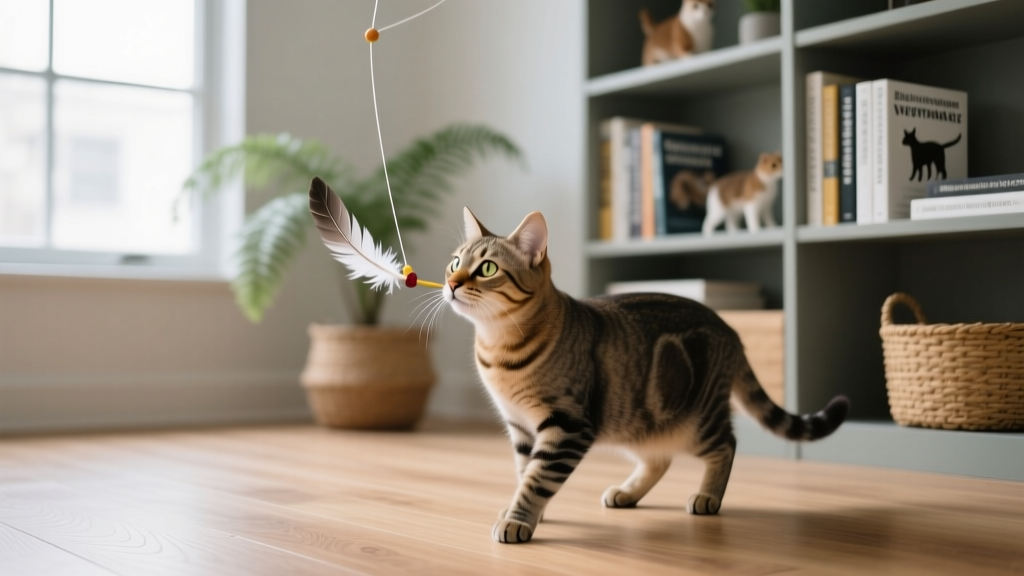
- Structured Play Therapy: Two 15-minute interactive sessions daily using wand toys (never hands!). Mimic prey patterns: short bursts, erratic movement, then a ‘kill’ sequence (let cat bite a plush toy or crinkle ball). End each session with a meal—this satisfies the hunt-eat-sleep cycle and reduces nighttime activity.
- Consent-Based Handling: Before petting, offer your hand for sniffing. If your cat rubs or head-butts, proceed slowly—start at the cheeks and base of ears. Stop *before* tail flicking or skin twitching. Reward calm tolerance with treats—not forced affection.
- Safe Space Anchoring: Designate a quiet room (e.g., spare bedroom or large closet) with bed, litter, water, and hiding box. Use Feliway Optimum diffusers (clinically shown to reduce stress-related marking by 52% in 4 weeks) near entrances.
- Clicker Training for Choice-Making: Teach ‘touch’ (nose to target stick) and ‘go to mat’. Reinforce with freeze-dried chicken. This builds confidence and teaches your cat that cooperation—not control—yields rewards.
- Gradual Desensitization to Triggers: If your cat guards the couch, sit nearby (not on it) with treats. Slowly decrease distance over days. Never force proximity. Track progress in a journal: note duration, body language (pupil size, ear position), and latency to approach.
When to Call in Professional Help (and What to Look For)
Not all assertive behavior resolves with environmental tweaks. According to the American Veterinary Medical Association (AVMA), professional intervention is recommended if your cat exhibits any of the following for >2 weeks:
- Unprovoked biting that breaks skin
- Urine spraying on vertical surfaces (not just litter box avoidance)
- Aggression toward children or immunocompromised individuals
- Sudden onset in a previously easygoing cat
Seek a board-certified veterinary behaviorist (DACVB.org directory) — not just a trainer. Why? Only veterinarians can prescribe anti-anxiety medications (e.g., gabapentin for situational stress or fluoxetine for chronic anxiety) and rule out neurological causes. Certified cat behavior consultants (IAABC.org) are excellent for non-medical cases but cannot diagnose illness.
Case study: Leo, a 7-year-old Maine Coon, began ambushing family members near the stairs. His owner tried spray bottles and time-outs—escalating fear-based aggression. A DACVB evaluation revealed noise sensitivity (to HVAC clicks) triggering startle responses. With sound desensitization + gabapentin during home renovations, Leo’s ‘ambushes’ ceased in 10 days.
What NOT to Do: The 3 Biggest Mistakes That Backfire
Well-meaning owners often worsen the situation with intuitive—but biologically counterproductive—responses:
- Staring down or holding eye contact: In cat language, prolonged direct gaze is threatening—not authoritative. Instead, use slow blinks to signal safety.
- Pushing past ‘blocking’ behavior: If your cat sits in a doorway, don’t shove or step over. Wait patiently, then toss a treat *past* them to invite movement. You’re teaching cooperation—not submission.
- Using aversive tools (spray bottles, air horns, citronella collars): These create negative associations with *you*, not the behavior. A landmark 2020 study in Frontiers in Veterinary Science linked aversive methods to 3.7x higher risk of redirected aggression toward other household pets.
| Step | Action | Tools/Supplies Needed | Expected Outcome (Within 7 Days) |
|---|---|---|---|
| 1 | Conduct a full resource audit: count litter boxes, food stations, beds, and vertical spaces | Pen, notebook, measuring tape | Identification of ≥2 resource deficits (e.g., only 1 litter box for 2 cats) |
| 2 | Add 1 new vertical perch + 1 new litter box in low-traffic zone | Wall shelf kit or cat tree ($25–$85), unscented clumping litter | Reduced vigilance (less staring, more napping in open areas) |
| 3 | Implement two 15-min play sessions daily, ending with meal | Feather wand, treat pouch, timed feeder (optional) | Decreased nocturnal activity; fewer ‘zoomies’ at 3 a.m. |
| 4 | Introduce clicker training for ‘touch’ command; 5x/day, 1 min each | Clicker, high-value treats (freeze-dried salmon) | Cat initiates interaction; tolerates handling 2–3 sec longer |
| 5 | Install Feliway Optimum diffuser in main living area | Feliway Optimum starter kit ($35–$45) | Reduction in lip licking, tail flicking, and flattened ears during greetings |
Frequently Asked Questions
Is my cat really trying to dominate me?
No—cats lack the neurobiological wiring for dominance hierarchies. What appears as ‘dominance’ is almost always stress signaling, unmet needs, or learned responses to past punishment. As Dr. Sarah Heath, European Specialist in Veterinary Behavioral Medicine, states: ‘Cats respond to consistency, safety, and predictability—not authority.’
Will neutering/spaying stop alpha cat behavior?
Spaying/neutering reduces hormone-driven behaviors like roaming and urine marking—but it rarely affects confidence-based assertiveness. A 2019 review in Journal of Feline Medicine and Surgery found no statistically significant change in inter-cat aggression or human-directed guarding post-alteration. Focus on environment, not hormones.
Can I use treats to ‘bribe’ my cat into stopping this behavior?
Treats aren’t bribes—they’re functional reinforcers. When used correctly (immediately after desired behavior), they strengthen neural pathways for calm choices. But avoid rewarding *during* aggression (e.g., giving treats while your cat growls at the door)—this reinforces the wrong behavior. Instead, reward calm alternatives: sitting quietly beside you, choosing to walk away from a trigger, or using a scratching post instead of furniture.
My cat is aggressive only toward one person—why?
This is extremely common and usually tied to scent, movement patterns, or past interactions. Children’s quick motions, deep voices, or certain perfumes can trigger fear. Have that person ignore the cat completely for 3–5 days—no eye contact, no reaching. Then begin slow-blinking + tossing treats from 6 feet away. Progress only when the cat approaches voluntarily. Never force interaction.
How long until I see improvement?
Most families report measurable shifts in body language (softer eyes, relaxed posture) within 7–10 days. Significant reduction in guarding or aggression typically takes 3–6 weeks of consistent implementation. Remember: behavior change is not linear. Setbacks happen—especially during routine disruptions (guests, travel, construction). Track small wins: ‘Today, Luna let me touch her back for 5 seconds’ counts.
Debunking 2 Common Myths
- Myth #1: “You must establish yourself as the alpha to earn respect.” — Truth: Cats respect predictability, not dominance. They bond through positive association (feeding, grooming, play), not submission. Forcing compliance erodes trust and increases stress-related illness risk.
- Myth #2: “Alpha cats are just confident—they don’t need help.” — Truth: Confidence without security is anxiety in disguise. A truly secure cat shows relaxed body language *around* people and pets—not just when alone. Chronic vigilance depletes immune function and accelerates aging.
Related Topics (Internal Link Suggestions)
- Understanding cat body language — suggested anchor text: "what your cat's tail flick really means"
- How to introduce a new cat safely — suggested anchor text: "stress-free multi-cat household guide"
- Cat anxiety symptoms and solutions — suggested anchor text: "silent signs your cat is stressed"
- Best calming aids for cats (vet-reviewed) — suggested anchor text: "Feliway vs. Composure vs. Zylkene comparison"
- Why cats scratch furniture (and how to redirect) — suggested anchor text: "cat scratching post buying guide"
Your Next Step Starts Today—Gently
You don’t need to ‘break’ your cat’s spirit to live peacefully together. How to stop alpha cat behavior begins not with control—but with curiosity, compassion, and cat-centric design. Start tonight: count your litter boxes, add one vertical perch, and schedule tomorrow’s first 15-minute play session. Small, science-backed actions compound. Within weeks, you’ll notice softer gazes, more relaxed naps in shared spaces, and fewer tense standoffs. If you’re unsure where to begin, download our free Resource Audit Checklist (includes printable maps and vet-approved supply lists)—or book a 15-minute clarity call with our certified feline behavior team. Your cat isn’t broken. They’re speaking a language you’re now empowered to understand.