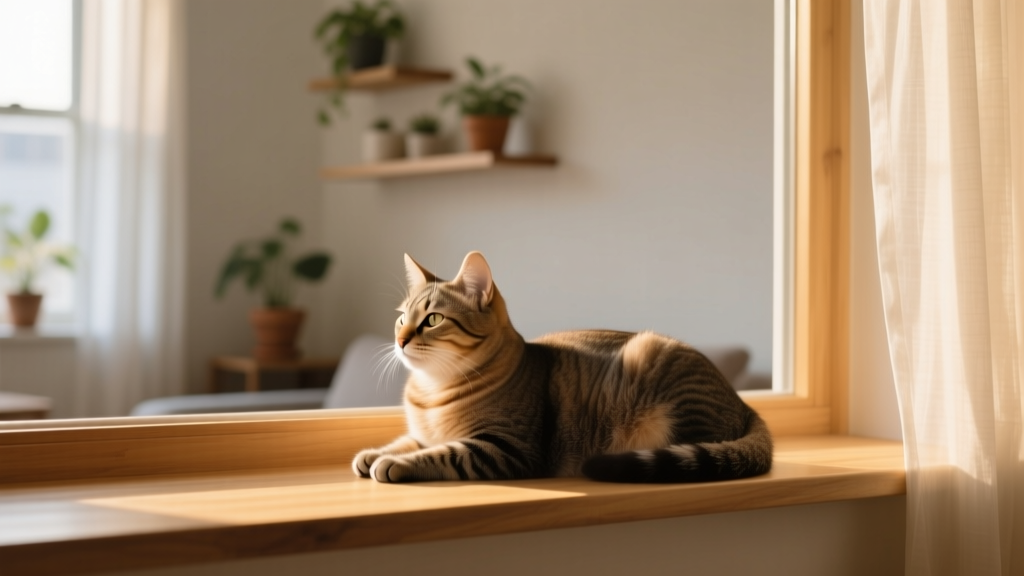
Why 'How to Punish a Cat for Bad Behavior' Is the Wrong...
Why 'How to Punish a Cat for Bad Behavior' Is the Wrong Question — And What to Do Instead
If you've ever typed how to punish a cat for bad behavior into a search bar — especially after finding shredded couch cushions, a knocked-over plant stand, or your favorite shoes mysteriously chewed — you're not alone. But here’s the critical truth most pet owners miss: punishment doesn’t correct cat behavior — it damages your relationship, increases anxiety, and often makes the problem worse. Cats don’t operate on guilt, shame, or moral reasoning; they respond to immediate consequences, environmental cues, and emotional safety. What looks like 'bad behavior' is almost always unmet needs — boredom, stress, pain, territorial insecurity, or confusion about expectations.
According to Dr. Meghan Herron, DVM, DACVB (Diplomate of the American College of Veterinary Behavior), 'Punishment-based techniques are not only ineffective in cats but carry documented risks of fear-based aggression, urine marking, and avoidance behaviors that can persist for months or years.' In fact, a 2022 study published in Frontiers in Veterinary Science found that cats subjected to physical or vocal reprimands were 3.7× more likely to develop chronic stress-related illnesses like feline idiopathic cystitis (FIC) within six months.
This isn’t about permissiveness — it’s about precision. The most effective cat behavior solutions aren’t punitive; they’re diagnostic, empathetic, and rooted in feline ethology. In this guide, we’ll walk you through exactly how to decode your cat’s signals, replace unwanted behaviors with desirable ones, and build a home environment where good behavior becomes the natural default — not the result of fear.
Step 1: Rule Out Medical Causes — Before You Assume It’s 'Behavior'
What many owners label as 'bad behavior' is actually the first sign of an underlying health issue. A 2023 survey by the International Cat Care Foundation revealed that 68% of cats exhibiting sudden litter box avoidance, excessive grooming, or aggression had at least one undiagnosed medical condition — most commonly arthritis, dental disease, hyperthyroidism, or urinary tract inflammation.
Before implementing any behavioral strategy, schedule a full veterinary exam including bloodwork, urinalysis, and orthopedic assessment — especially if your cat is over age 7 or the behavior appeared abruptly. Consider this real-world case: Luna, a 9-year-old Siamese, began swatting at her owner’s ankles and hiding under the bed. Her veterinarian discovered painful cervical spondylosis — spinal degeneration causing nerve irritation. Once treated with anti-inflammatories and environmental modifications (ramps, low-entry litter boxes), her 'aggression' vanished entirely.
Key red flags requiring immediate vet attention:
- Sudden onset of inappropriate elimination (outside the box)
- Excessive vocalization, especially at night
- Changes in appetite, grooming, or sleep patterns
- Aggression toward people or other pets without obvious trigger
- Overgrooming leading to bald patches or skin lesions
Step 2: Decode the 'Why' — Not Just the 'What'
Cats rarely act out without cause. Their behavior is functional — it serves a purpose. The key to sustainable change is identifying the function behind the action. Veterinarian and certified cat behavior consultant Mikel Delgado, PhD, explains: 'Every behavior has a motivation: access to something (food, attention, play), escape from something (stress, pain, noise), or sensory stimulation (chasing, scratching, chewing).'
Here’s how to conduct a simple 3-day behavior audit:
- Log every incident: Time, location, what happened immediately before/after, who was present, and your cat’s body language (ears forward? tail flicking? pupils dilated?)
- Identify antecedents: Was there loud noise? A visitor? Another pet nearby? An empty food bowl?
- Identify consequences: Did the cat get attention (even negative)? Access to a forbidden surface? Escape from a stressful situation?
Common functions — and evidence-based alternatives:
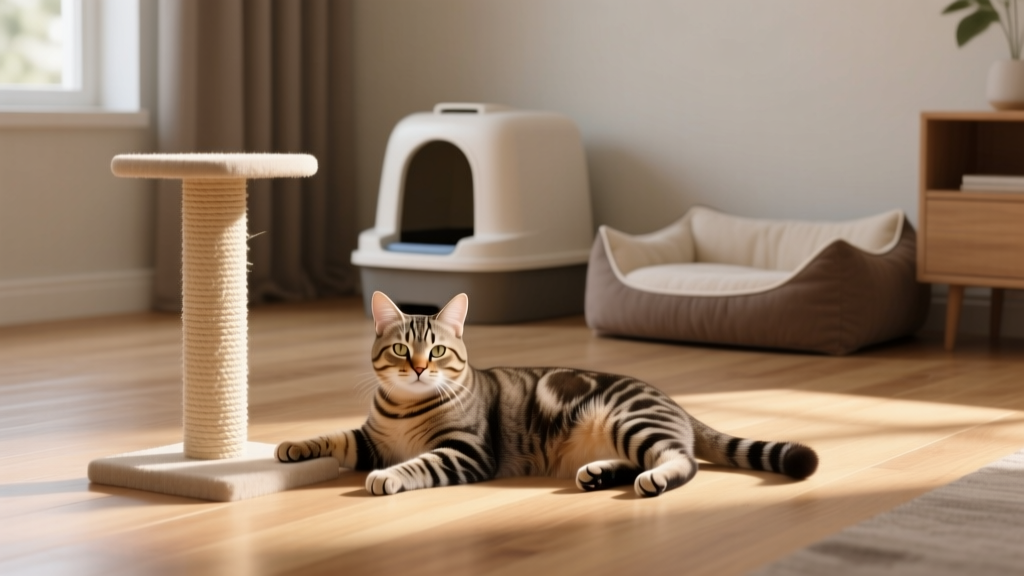
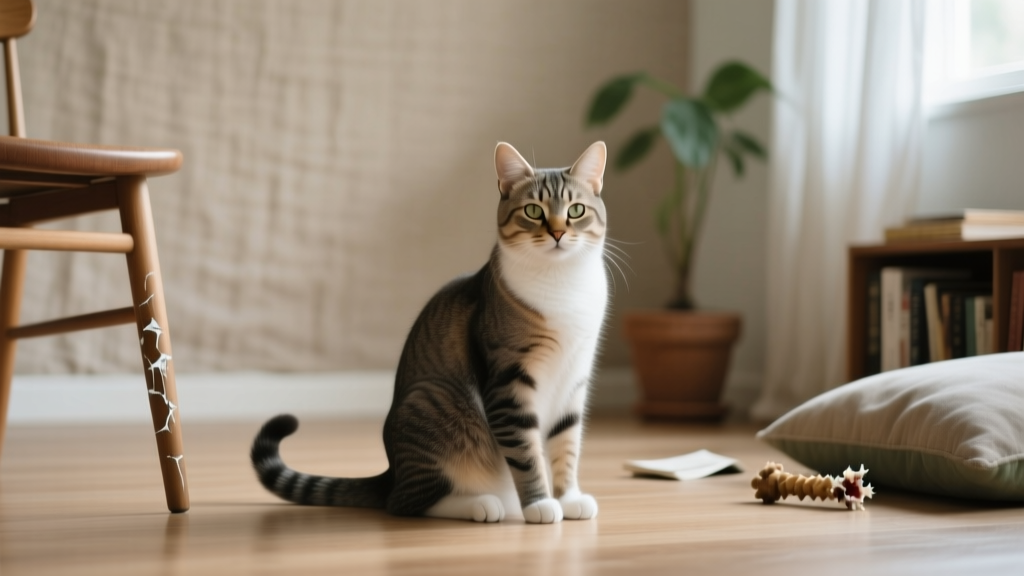
- Scratching furniture: Not defiance — it’s scent-marking, nail maintenance, and stretching. Solution: Provide vertical + horizontal scratching posts near sleeping areas, use Feliway Classic diffusers to reduce territorial stress, and apply double-sided tape temporarily to off-limit zones.
- Biting during petting: Overstimulation — not aggression. Cats have low tolerance for prolonged tactile input. Watch for ear flattening, tail twitching, or skin rippling. Stop petting *before* those signs appear, and reward calm tolerance with treats.
- Attacking ankles at dawn: Predatory drive meets circadian rhythm. Cats hunt at dawn/dusk. Redirect with scheduled interactive play (feather wands, laser pointers followed by treat rewards) 15 minutes before bedtime and again at sunrise.
Step 3: Replace, Don’t Repress — Positive Reinforcement Protocols That Stick
Punishment suppresses behavior temporarily — but positive reinforcement builds new neural pathways. When you reward a desired alternative *immediately* (within 1–2 seconds), you strengthen the association between the action and the reward. The gold standard? Clicker training paired with high-value treats (freeze-dried chicken, tuna flakes).
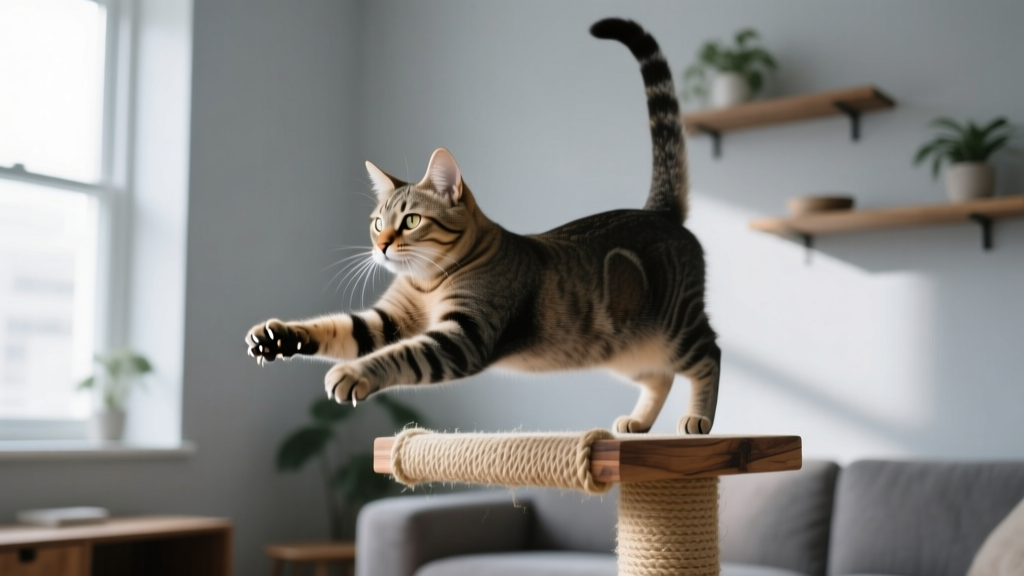
Case study: Oliver, a 3-year-old domestic shorthair, jumped onto kitchen counters to steal food. His owner tried spray bottles and shouting — he became more sneaky, then started hissing when approached. After switching to positive reinforcement, she placed a designated 'counter perch' (a sturdy cat tree ledge) next to the counter and rewarded him *only* when he sat there calmly. Within 11 days, he chose the perch 94% of the time — and never returned to the counter for food-seeking.
Three foundational reinforcement strategies:
- Target training: Teach your cat to touch a stick or your finger on cue. This builds focus, impulse control, and becomes the foundation for teaching 'leave it', 'go to mat', or 'come when called'.
- Environmental enrichment stacking: Combine multiple stimuli — puzzle feeders + window perches + rotating toys + daily play sessions. A 2021 University of Lincoln study showed cats with enriched environments exhibited 72% fewer stress-related behaviors over 8 weeks.
- Click-and-treat shaping: Break complex behaviors into micro-steps. To teach 'enter carrier', reward: looking at carrier → stepping one paw inside → entering fully → closing door briefly → rewarding inside. Never rush — each step should be mastered before progressing.
| Behavior Concern | Immediate Action (First 72 Hours) | Long-Term Strategy (Weeks 1–4) | Vet/Professional Recommendation |
|---|---|---|---|
| Litter box avoidance | Thoroughly clean soiled areas with enzymatic cleaner; add 1+ extra box (n+1 rule); place box in quiet, low-traffic zone | Switch litter type (unscented, fine-grain clay); elevate box for arthritic cats; install Feliway Optimum diffuser in bathroom | Rule out UTI, kidney disease, or constipation. If unresolved after 2 weeks, consult a board-certified veterinary behaviorist. |
| Destructive scratching | Block access to target furniture with aluminum foil or vinyl carpet runners (nubby side up); offer cardboard scratchers near sleeping areas | Install tall, stable sisal posts near windows; trim nails every 10–14 days; use Soft Paws nail caps if needed | Dr. Tony Buffington, DVM, DACVN: 'Scratching is non-negotiable for cats. Your goal isn’t to stop it — it’s to redirect it to appropriate surfaces.' |
| Play aggression (biting, pouncing) | End all hands-on play immediately when biting occurs; redirect to wand toy; ignore for 30 seconds post-bite | Implement two 10-minute interactive play sessions daily; end with treat reward; provide solo play options (food puzzles, treat balls) | Never use hands or feet as toys. Kittens learn bite inhibition through littermates — if adopted young, mimic that feedback with consistent redirection. |
| Attention-seeking yowling | Do not respond vocally or visually during yowling; wait for 3+ seconds of silence, then reward quietly with treat or chin scratch | Establish predictable feeding/play routine; use automatic feeders for dawn meals; enrich nighttime with puzzle feeders | Chronic yowling in senior cats warrants thyroid panel and cognitive function screening — early dementia presents similarly. |
Frequently Asked Questions
Is it ever okay to yell at or squirt water on my cat?
No — and here’s why it backfires. Yelling triggers acute stress responses: elevated cortisol, suppressed immune function, and increased heart rate. A 2020 study in Applied Animal Behaviour Science measured salivary cortisol in cats exposed to simulated 'scolding' — levels spiked 217% and remained elevated for over 4 hours. Water spraying doesn’t teach the cat what to do instead; it teaches them to fear *you*, or to avoid the behavior only when you’re present. Worse, many cats associate the spray with the location — not their action — leading to avoidance of entire rooms or litter boxes.
My cat peed on my bed — does that mean they’re 'getting back at me'?
No — cats don’t seek revenge. Urine marking on bedding is almost always a sign of profound insecurity or stress. Your bed carries your strongest scent — by marking it, your cat is attempting to 'reclaim' safety in a world that feels unpredictable. Common triggers include new pets, construction noise, changes in your work schedule, or even subtle shifts in household hierarchy. Address the root stressor first — not the symptom.
What’s the fastest way to stop my cat from biting during petting?
The fastest method is *anticipation*, not reaction. Learn your cat’s individual 'overstimulation threshold' — watch for the telltale signs: tail thumping, skin twitching along the back, flattened ears, or sudden stillness. End petting sessions 3–5 seconds *before* those signs appear, and reward calm departure with a treat. Consistency over 7–10 days resets their expectation. Bonus: Offer a 'petting pause' toy (like a small plush mouse) to hold while you stroke — gives them an outlet for tactile energy.
Can I train an older cat? I’ve heard it’s too late.
Absolutely — and often more successfully than kittens. Senior cats are less impulsive and more motivated by routine and comfort. A landmark 2023 Cornell Feline Health Center trial showed cats aged 8–15 responded equally well to clicker training as 6-month-olds when using food motivation tailored to their preferences (e.g., warmed wet food for seniors with reduced smell sensitivity). Patience and consistency matter far more than age.
Common Myths About Cat Discipline
Myth #1: “Cats need to know who’s boss.”
False. Cats are not pack animals with dominance hierarchies like dogs. They’re solitary hunters who coexist through resource partitioning and mutual tolerance. Attempting to assert 'dominance' (e.g., holding down, staring down, alpha rolls) induces terror — not respect — and erodes trust irreparably.
Myth #2: “If I don’t punish, my cat will walk all over me.”
Also false. Boundaries are set through environmental design and positive reinforcement — not force. A cat who reliably uses a scratching post, stays off counters, and greets guests calmly does so because those choices are consistently rewarded and supported, not because they fear consequences.
Related Topics (Internal Link Suggestions)
- Understanding Cat Body Language — suggested anchor text: "what your cat's tail flick really means"
- Best Puzzle Feeders for Boredom-Driven Behavior — suggested anchor text: "top 5 slow-feeders veterinarians recommend"
- When to See a Veterinary Behaviorist — suggested anchor text: "signs your cat needs expert behavioral help"
- Feline Stress Reduction Techniques — suggested anchor text: "how to lower your cat's cortisol naturally"
- Kitten Socialization Timeline — suggested anchor text: "the critical 2–7 week window every owner must know"
Your Next Step Starts With One Observation
You now know that how to punish a cat for bad behavior is a question built on outdated assumptions — and that real, lasting change begins not with correction, but with curiosity. Your next move? Grab a notebook and spend just 10 minutes today observing one recurring behavior — no judgment, no reaction. Note what happens *right before*, what your cat does, and what happens *right after*. That tiny data point is your first clue to the true need beneath the surface. Then, pick *one* strategy from this guide — maybe adding an extra litter box, installing a scratching post by the sofa, or scheduling two 5-minute play sessions — and commit to it for 7 days. Track changes. Celebrate small wins. Because the most powerful tool you have isn’t a spray bottle or a stern voice — it’s your willingness to understand, adapt, and meet your cat where they are. Ready to build that trust? Start your free 7-day Cat Behavior Tracker download below — complete with printable logs, video tutorials, and vet-reviewed checklists.