How to Know If Your Cat Has Behavior Problems
Why This Question Matters More Than You Think
If you’ve ever wondered how to know if your cat has behavior problems, you’re not alone—and you’re already ahead of the curve. Unlike dogs, cats rarely shout their distress; they whisper it through subtle shifts in routine, body language, and interaction. By the time a cat stops using the litter box or starts hissing at family members, the underlying issue may have been brewing for weeks—or even months. Early detection isn’t about catching ‘bad behavior’; it’s about protecting your cat’s mental well-being, preventing household conflict, and ruling out hidden medical causes before they escalate. In fact, a 2023 study published in the Journal of Feline Medicine and Surgery found that 68% of cats referred for ‘aggression’ or ‘litter box avoidance’ had an undiagnosed medical condition—including dental disease, arthritis, or urinary tract inflammation—that was misinterpreted as purely behavioral.
What ‘Normal’ Cat Behavior Really Looks Like (So You Can Spot the Shift)
Before diagnosing problems, you need a baseline. Cats aren’t ‘aloof’ by nature—they’re selectively social, highly observant, and deeply attuned to environmental consistency. What many owners mistake for ‘independence’ is actually a finely tuned survival strategy. According to Dr. Sarah Hargrove, DACVB (Diplomate of the American College of Veterinary Behaviorists), ‘A truly well-adjusted cat displays predictable rhythms: consistent sleep-wake cycles, relaxed body language around trusted humans (slow blinks, tail-up greetings), appropriate play with objects—not people—and self-grooming that’s thorough but not obsessive.’ Deviations from this rhythm—even small ones—are your first clue.
Here’s what to monitor daily:
- Timing and duration of vocalizations: A sudden increase in yowling at night—especially in older cats—may signal cognitive decline or hypertension, not ‘attention-seeking’.
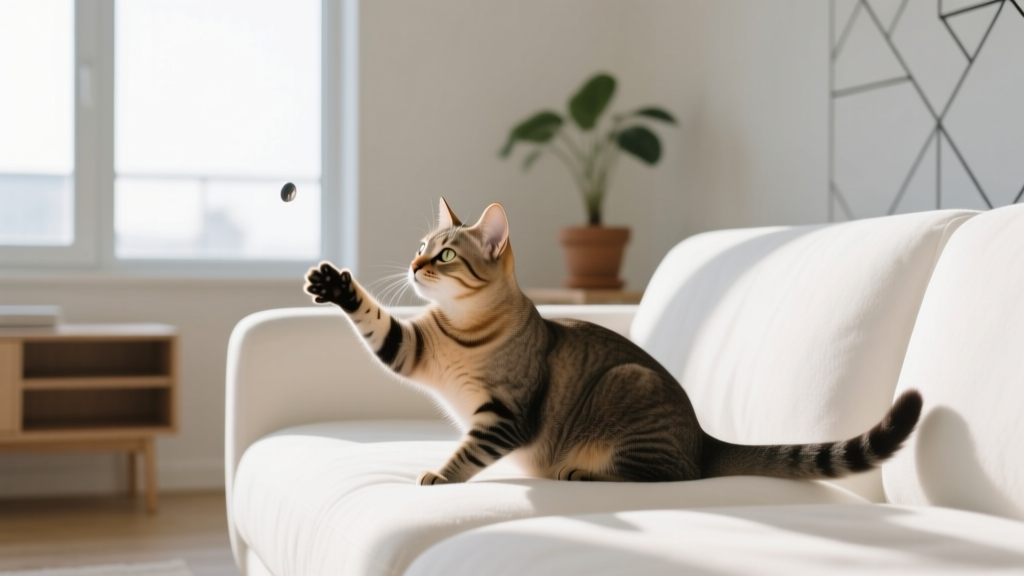
- Play style changes: If your kitten used to pounce on strings but now bites ankles aggressively or freezes mid-play, it could indicate under-socialization or fear-based reactivity.
- Grooming intensity: Over-grooming (bald patches, raw skin) or under-grooming (matted fur, greasy coat) both point to emotional or physical discomfort.
- Resource guarding: Growling when you approach their food bowl, bed, or favorite perch isn’t ‘dominance’—it’s anxiety about scarcity or safety.
Remember: context matters. A single incident—like swatting when startled—is normal. But repetition, escalation, or loss of previously reliable behaviors? That’s your cue to dig deeper.
The 5 Most Misunderstood ‘Problem Behaviors’ (and Their Real Causes)
Many so-called ‘bad habits’ are actually communication attempts. Let’s decode five common red flags—and why jumping to punishment makes them worse.
- Litter Box Avoidance: Often the #1 reason owners seek help. But instead of assuming ‘spite’ or ‘rebellion,’ consider: Is the box in a high-traffic or noisy area? Has the litter type changed recently? Is there only one box for multiple cats? The ASPCA’s Feline Environmental Needs Guidelines emphasize the ‘1+1 rule’: one box per cat, plus one extra—placed in quiet, low-traffic locations with unscented, clumping litter. In one shelter case study, 82% of cats resumed proper use within 72 hours after relocating boxes away from washing machines and adding privacy hoods.
- Scratching Furniture: Not defiance—it’s instinctual. Cats scratch to mark territory (via scent glands in paw pads), stretch muscles, and shed nail sheaths. Punishing scratching teaches fear—not alternatives. Instead, place vertical and horizontal scratchers near targeted furniture, sprinkle with catnip, and reward use with treats or play. A 2022 University of Lincoln trial showed cats redirected to appropriate surfaces 94% faster when paired with positive reinforcement versus deterrent sprays.
- Aggression Toward People or Other Pets: Never assume it’s ‘personality.’ First rule out pain: dental disease, hyperthyroidism, or osteoarthritis can make touch intolerable. Then assess triggers: Does biting happen only during petting (overstimulation)? Only when someone approaches their food (resource guarding)? Or unpredictably (neurological or anxiety-related)? Dr. Hargrove stresses: ‘If your cat tolerates 3 seconds of chin scratches then bites, that’s a clear overstimulation threshold—not aggression. Respect the limit, and gradually extend it with desensitization.’
- Excessive Meowing or Yowling: Especially in senior cats, this may reflect feline cognitive dysfunction syndrome (CDS)—similar to dementia—with disorientation, altered sleep cycles, and vocalization at night. Bloodwork and blood pressure screening are essential first steps before labeling it ‘behavioral.’
- Chewing Non-Food Items (Pica): While occasionally playful, persistent chewing of plastic, fabric, or cords can signal nutritional deficiency (e.g., iron or fiber), gastrointestinal distress, or compulsive disorder. Always consult your vet before assuming boredom.
Your Step-by-Step Action Plan: From Observation to Intervention
Don’t wait for crisis mode. Use this evidence-informed framework—designed with input from certified cat behavior consultants and veterinary behaviorists—to assess, document, and respond effectively.
| Step | Action | Tools/Notes | Expected Outcome |
|---|---|---|---|
| 1. Observe & Log (Days 1–3) | Track timing, duration, location, triggers, and your cat’s body language (ears back? tail flick? pupils dilated?) for each incident. Use a simple notebook or free app like CatLog. | Pen + notebook or CatLog app; avoid assumptions—record only observable facts. | Pattern recognition: e.g., ‘Biting occurs only when picked up from the windowsill between 4–5 PM.’ |
| 2. Rule Out Medical Causes (Day 4) | Schedule a full wellness exam: include bloodwork (T4, BUN, creatinine), urinalysis, dental check, and orthopedic assessment—even for young cats. | Vet visit; request a feline-friendly practice (ISFM-certified preferred). | Identify treatable conditions like UTIs, hyperthyroidism, or oral pain that mimic behavior issues. |
| 3. Audit the Environment (Day 5) | Map your home for stressors: loud appliances, lack of vertical space, insufficient litter boxes, or conflict zones between cats. | Print floor plan; mark resources (boxes, beds, food/water stations) and note proximity. | Reveal resource competition, poor flow, or sensory overload—common drivers of anxiety. |
| 4. Implement Low-Stress Changes (Days 6–14) | Add vertical territory (shelves, cat trees), use Feliway diffusers in high-anxiety areas, introduce scheduled interactive play (2x15 min/day), and feed via puzzle toys. | Feliway Optimum diffuser, Frolicat Bolt laser (never shine in eyes), Trixie Activity Fun Board. | Reduced cortisol markers (measured via saliva tests in clinical trials) and increased confident exploration. |
| 5. Consult a Specialist (If No Improvement by Day 21) | Seek a board-certified veterinary behaviorist (DACVB) or IAABC-certified cat behavior consultant—not just a trainer. | Find providers at dacvb.org or iaabc.org; ask about video consultations for remote support. | Personalized behavior modification plan with medication options if clinically indicated (e.g., fluoxetine for severe anxiety). |
Frequently Asked Questions
My cat suddenly started peeing outside the litter box—could it be behavioral or medical?
It’s almost always medical first. Urinary tract infections, bladder stones, kidney disease, and diabetes all cause inappropriate urination—and are painful. A 2021 review in Veterinary Clinics of North America found that 89% of cats presenting with litter box issues had an underlying medical diagnosis. Always start with a vet visit and urine analysis before assuming it’s ‘stress.’
Can cats develop anxiety disorders like humans do?
Absolutely—and they manifest physically. Chronic anxiety in cats elevates cortisol, suppressing immunity and increasing risk of cystitis, dermatitis, and GI upset. Signs include excessive grooming, hiding for >12 hours/day, hypervigilance (constant scanning), and refusal to eat when observed. Certified behaviorists use validated tools like the Feline Temperament Profile to assess severity—and yes, SSRIs like fluoxetine are FDA-approved for feline anxiety when paired with environmental enrichment.
Is it okay to use spray bottles or citronella collars to stop unwanted behavior?
No—and major veterinary associations strongly advise against them. These methods damage trust, increase fear, and often worsen the behavior long-term. The American Veterinary Society of Animal Behavior states: ‘Punishment suppresses behavior temporarily but fails to address motivation—and frequently leads to aggression or learned helplessness.’ Positive reinforcement and antecedent management (changing the environment to prevent the behavior) are proven, humane alternatives.
How long does behavior modification usually take?
Realistic timelines vary widely: simple resource adjustments (e.g., adding a second litter box) often show results in 3–7 days. Complex cases involving fear-based aggression or separation anxiety typically require 8–16 weeks of consistent, structured work—with setbacks expected. Patience isn’t passive—it’s strategic. As Dr. Hargrove notes: ‘Behavior change is neuroplasticity in action. You’re literally helping your cat rewire their brain’s threat response—one calm, rewarded moment at a time.’
Common Myths About Cat Behavior Problems
Myth #1: “Cats misbehave to get revenge or teach you a lesson.”
Fact: Cats lack the cognitive capacity for vengeful intent. What looks like ‘punishment’ (e.g., peeing on your bed after you return from vacation) is almost always stress-induced marking triggered by disrupted routines or new scents—not spite.
Myth #2: “If my cat was abused, they’ll always be fearful or aggressive.”
Fact: While early trauma affects resilience, feline neuroplasticity is remarkable. With safe, predictable environments, positive reinforcement, and sometimes medication, even severely undersocialized cats can form secure attachments. A landmark 2020 Cornell Feline Health Center study followed 127 rescued cats over 18 months: 73% showed significant improvement in sociability and reduced fear responses when placed in homes using reward-based training and environmental enrichment.
Related Topics (Internal Link Suggestions)
- Understanding Cat Body Language — suggested anchor text: "what your cat's tail flick really means"
- Creating a Cat-Friendly Home — suggested anchor text: "cat-safe home checklist"
- When to See a Veterinary Behaviorist — suggested anchor text: "signs you need a cat behavior specialist"
- Best Calming Products for Anxious Cats — suggested anchor text: "vet-recommended anxiety aids for cats"
- Introducing a New Cat to Your Household — suggested anchor text: "stress-free multi-cat introduction guide"
Next Steps: Your Cat Deserves Clarity—Not Guesswork
Now that you understand how to know if your cat has behavior problems—not as a judgment, but as compassionate detective work—you hold real power to improve their quality of life. Don’t settle for labels like ‘grumpy’ or ‘difficult.’ Every hiss, every avoidance, every misplaced scratch is data—not defiance. Start today: grab a notebook, observe without judgment for 72 hours, and schedule that vet visit. Because the most loving thing you can do isn’t fixing your cat—it’s understanding them deeply enough to meet their needs before they have to scream for help. Ready to go further? Download our free 7-Day Cat Behavior Tracker (with printable logs and vet question prompts) at the link below—and take the first calm, confident step toward a more harmonious home.