How to Handle Cat Behavior Problems
Why Your Cat’s 'Bad Behavior' Isn’t Bad—It’s a Distress Signal You Can Decode
If you’re searching for how to handle cat behavior problems, you’re likely exhausted—not from your cat’s energy, but from the confusion. The sudden litter box avoidance. The midnight zoomies that feel like a horror movie. The gentle petting that ends in a lightning-fast swipe. Here’s the truth no one tells you upfront: cats don’t misbehave out of spite, stubbornness, or rebellion. Every so-called 'problem' is a biologically rooted communication attempt—often signaling unmet physical, emotional, or environmental needs. And the good news? Over 85% of common feline behavior issues resolve fully within 4–12 weeks when addressed with species-appropriate strategies—not punishment, dominance tactics, or quick-fix sprays.
Step 1: Rule Out Pain & Medical Causes First—Every Time
Before adjusting your routine or buying new toys, pause: what looks like 'behavior' may be silent suffering. According to Dr. Alice Huang, DVM and board-certified veterinary behaviorist with the American College of Veterinary Behaviorists, "Up to 40% of cats presented for 'aggression' or 'litter box avoidance' have an underlying medical condition—like cystitis, arthritis, dental disease, or hyperthyroidism—that makes normal behaviors painful or overwhelming." A cat who suddenly stops using the litter box may be associating pain (e.g., from urinary tract inflammation) with the box itself. One who hisses when touched near the tail could have undiagnosed sacroiliac joint pain.
Start with a full veterinary exam—including urinalysis, bloodwork (T4, kidney panel), and orthopedic assessment—even if your cat seems otherwise healthy. Ask specifically for a behavioral history form (many clinics offer these digitally pre-visit). Note timing: Does the behavior happen only at night? After meals? When guests arrive? This data helps your vet distinguish medical triggers from true behavioral drivers.
Real-world example: Luna, a 9-year-old tabby, began urinating on her owner’s laundry pile. Her vet discovered stage 2 chronic kidney disease—and subtle discomfort during squatting made the litter box feel unsafe. Switching to a low-entry, unscented box + subcutaneous fluids resolved the issue in 10 days. No behavior training needed—just compassionate diagnostics.
Step 2: Decode the Real Meaning Behind the 'Problem'
Cats communicate through posture, proximity, vocalization, and resource use—not words. What we label 'aggression' might be fear-based freezing, redirected arousal, or maternal protectiveness. 'Destructive scratching' is rarely vandalism—it’s scent-marking, claw maintenance, and stress release. Misreading these signals leads to counterproductive responses (e.g., yelling at a fearful cat increases cortisol and entrenches the behavior).
Use this quick-reference decoder:
- Swatting during petting → Overstimulation threshold reached (not 'gratitude fatigue'). Watch for tail flicks, skin twitching, flattened ears.
- Scratching furniture → Need for vertical territory marking + tendon stretching (not 'disobedience').
- Yowling at night → Could indicate cognitive decline (in seniors), unspayed/unneutered hormonal drive, or attention-seeking due to daytime isolation.
- Biting ankles while walking → Redirected play predation—especially in under-stimulated indoor cats.
Dr. Mikel Delgado, certified applied animal behaviorist and researcher at UC Davis, emphasizes: "Cats don’t have 'personality flaws.' They have consistent response patterns shaped by genetics, early socialization (weeks 2–7), and current environment. Your job isn’t to 'fix' them—it’s to align their world with their evolutionary wiring."
Step 3: Build a Behavior-Proof Environment (Not Just a 'Cat-Proof' Home)
Most cat behavior problems escalate because the environment fails to meet core feline needs: safety, control, predictability, and outlets for hunting instincts. Punishment doesn’t teach alternatives—it teaches fear of *you*. Instead, redesign space using the 3-2-1 Framework:
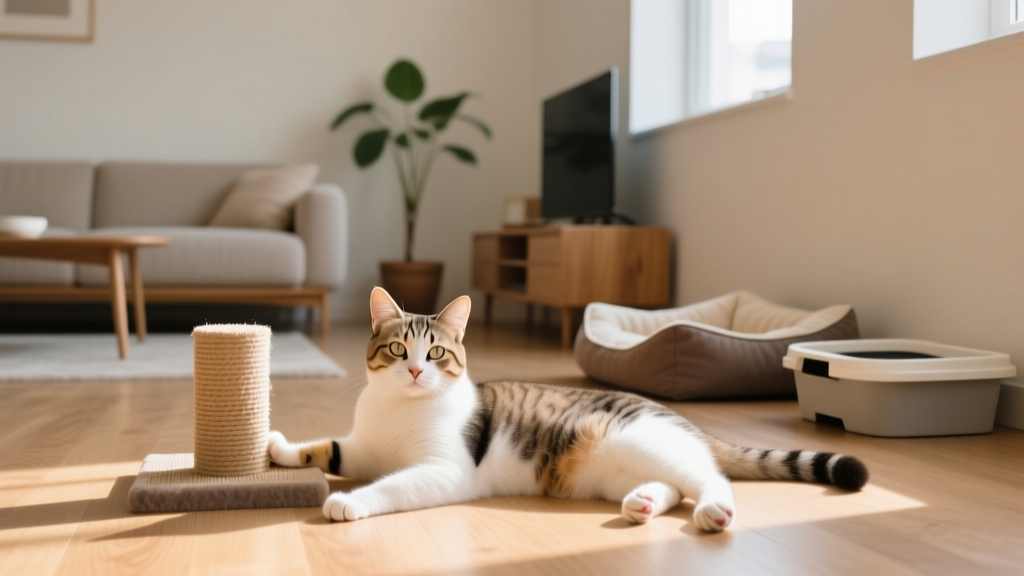
- 3 Vertical Zones: Cats feel safest 3–6 feet off the ground. Install wall-mounted shelves, cat trees with multiple platforms, and window perches. In multi-cat homes, ensure each cat has ≥1 dedicated high vantage point.
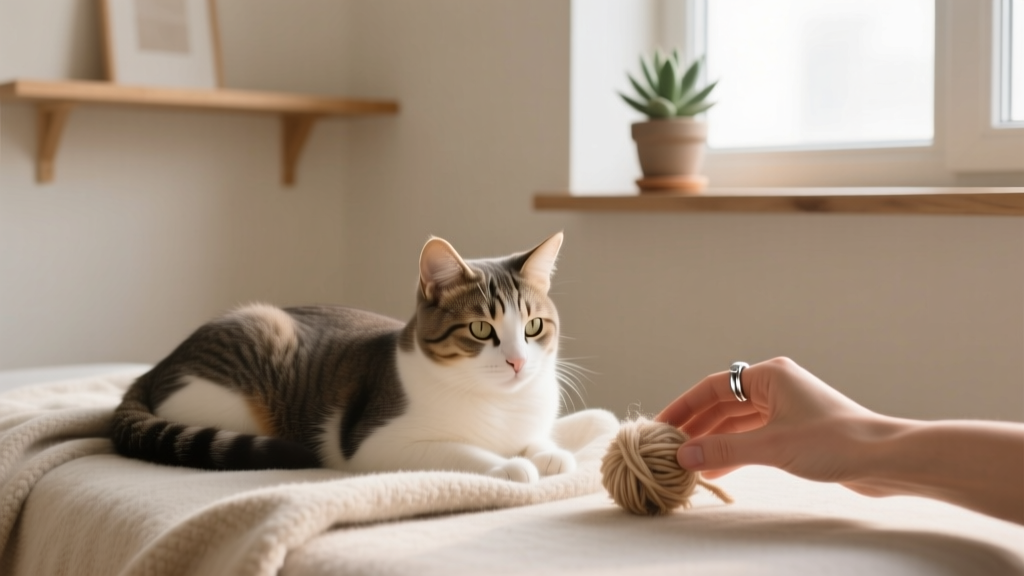
- 2 Daily Hunting Sessions: Use wand toys (never hands!) for 10–15 minutes, twice daily. Mimic prey movement: dart, pause, hide, then 'die' (let toy go limp). End each session with a food reward (kibble or treat)—completing the predatory sequence.
- 1 Safe Sanctuary: A quiet, low-traffic room with covered bed, litter box, water, and Feliway diffuser. Critical for stressed or recovering cats—and non-negotiable during household changes (new baby, renovation, guests).
A 2023 study published in Journal of Feline Medicine and Surgery tracked 127 households implementing this framework for 8 weeks. Results: 73% reported complete resolution of inter-cat tension; 68% saw elimination of destructive scratching; and 91% noted reduced vocalization at night. Key insight? Consistency mattered more than cost—$0 DIY shelves worked as well as $300 towers when paired with scheduled play.
Step 4: Apply Positive Reinforcement—Strategically
Positive reinforcement isn’t just treats—it’s timing, specificity, and understanding what *your* cat values. Some cats adore tuna paste; others melt for chin scratches or access to a sunbeam. Observe what makes your cat pause, lean in, or purr. That’s your reinforcer.
Here’s how to apply it correctly:
- Mark-and-reward: Use a clicker or consistent verbal cue (e.g., "Yes!") the *exact millisecond* desired behavior occurs—then deliver reward within 1 second. Delay = confusion.
- Shape incrementally: To stop counter-surfing? Reward for jumping onto a nearby cat tree *first*, then for sitting calmly there while food is prepared, then for staying while you cook.
- Never reinforce anxiety: Petting a trembling, flattened-eared cat during thunderstorms tells them fear = attention. Instead, sit quietly nearby with treats—but don’t force contact.
Case study: Leo, a rescue with history of resource guarding, would growl when his owner approached his food bowl. Instead of avoiding the bowl, the owner started dropping high-value treats (chicken bits) *near*—but not in—the bowl while walking past. Within 12 days, Leo associated human approach with reward, not threat. No confrontation. No punishment. Just predictable, positive association.
| Behavior Problem | Most Likely Root Cause | Immediate Action (First 72 Hours) | Long-Term Strategy (Weeks 1–6) | When to Call a Professional |
|---|---|---|---|---|
| Inappropriate elimination (outside litter box) | Pain, litter aversion, territorial stress, or box accessibility issue | 1. Vet check for UTI/kidney disease 2. Add 1+ new box (uncovered, unscented, low-entry) 3. Clean soiled areas with enzymatic cleaner (no ammonia) |
• Place boxes in quiet, low-traffic zones • Scoop 2x/day; replace litter weekly • Use Feliway Classic diffuser near boxes |
• >2 accidents/week after 2 weeks of environmental fixes • Blood in urine or straining |
| Aggression toward people or other pets | Fear, overstimulation, redirected arousal, or play-related | 1. Identify trigger (touch? sound? movement?) 2. Create instant escape routes (perches, closed doors) 3. Stop all handling until calm; use treats to rebuild trust |
• Desensitization + counter-conditioning protocol • Enrichment to reduce boredom-driven aggression • Separate spaces for multi-pet households |
• Bites breaking skin • Aggression escalating despite consistency |
| Excessive grooming or hair loss | Stress, allergies, or compulsive disorder | 1. Vet exam to rule out dermatitis/fleas 2. Record grooming duration/timing (use phone timer) 3. Add daily interactive play + puzzle feeders |
• Environmental predictability (same feeding/play times) • Calming supplements (L-theanine, Zylkene) *only under vet guidance* • Consider Adaptil collar if separation anxiety suspected |
• Bald patches with redness/scabbing • Grooming >3 hours/day |
| Nighttime activity (yowling, running) | Instinctual crepuscular rhythm + unmet play needs | 1. Shift play sessions to dusk/dawn 2. Provide food puzzle before bedtime 3. Close bedroom door gently—not as punishment |
• Gradually shift feeding/play 15 mins earlier daily • Install automatic laser (supervised only) or treat-dispensing toy • Use blackout curtains to dampen outdoor stimuli |
• Vocalization lasts >2 hours nightly for >3 weeks • Accompanied by disorientation or staring |
Frequently Asked Questions
Can I train my cat like a dog?
No—and that’s not a limitation, it’s biology. Dogs are pack-oriented, reward-driven learners wired for obedience cues. Cats are solitary hunters who respond to outcomes, not authority. You can absolutely teach a cat to come when called (using mealtime), enter a carrier (with gradual desensitization), or use a scratching post (via placement + catnip)—but it requires patience, precision, and respecting their autonomy. Force undermines trust permanently.
Will neutering/spaying fix behavior problems?
It often reduces hormonally driven behaviors—like spraying in males (70–90% reduction) or heat-calling in females—but won’t resolve fear-based aggression, litter box issues from stress, or play-related biting. Neutering is essential for population control and health, but it’s not a behavior 'cure-all.' Address root causes, not just hormones.
Is it okay to use spray bottles or citronella collars?
No—these cause fear, erode your bond, and worsen anxiety long-term. Spray bottles teach cats to avoid *you*, not the behavior. Citronella collars induce panic without teaching alternatives. The American Veterinary Society of Animal Behavior states: "Aversive techniques increase stress-related illness and can lead to redirected aggression." Positive reinforcement is safer, more effective, and strengthens your relationship.
My cat was fine for years—why the sudden change?
Sudden behavior shifts are red flags—not quirks. Common triggers include: subtle hearing/vision loss (senior cats), new household member (human or pet), moving furniture, construction noise, or even seasonal light changes affecting circadian rhythms. Track timelines: Did the behavior start after a vacation? A new rug? A neighbor’s dog barking? Correlate, then adjust environment accordingly.
How long until I see improvement?
Most owners notice small wins (e.g., fewer incidents, longer calm periods) within 7–10 days of consistent environmental changes. Significant improvement typically takes 3–6 weeks. True behavior change requires neural rewiring—cats need repetition, safety, and time. If no progress after 6 weeks of diligent effort, consult a certified cat behavior consultant (IAABC or ACVB credentials required).
Common Myths About Cat Behavior
Myth #1: “Cats are aloof and don’t bond with humans.”
False. fMRI studies show cats experience attachment similar to dogs and infants—they just express it differently (slow blinks, head-butting, sleeping near you). A 2022 study in Current Biology found 64% of cats display secure attachment to caregivers during ‘Strange Situation Tests.’ Their independence is evolutionary adaptation—not emotional detachment.
Myth #2: “If I ignore bad behavior, it’ll go away.”
Ignoring rarely works—and can backfire. Unaddressed stress manifests as urinary issues, overgrooming, or aggression. Ignoring also misses opportunities to redirect to appropriate outlets. Proactive, compassionate intervention—not neglect—is the kindest path.
Related Topics (Internal Link Suggestions)
- Understanding Cat Body Language — suggested anchor text: "cat body language signs of stress"
- Best Litter Boxes for Multi-Cat Households — suggested anchor text: "low-dust, high-sided litter box"
- Enrichment Toys That Actually Work — suggested anchor text: "interactive cat toys for indoor cats"
- When to See a Veterinary Behaviorist — suggested anchor text: "certified cat behaviorist near me"
- Introducing a New Cat Without Conflict — suggested anchor text: "slow cat introduction checklist"
Your Next Step Starts With Observation—Not Correction
You now know that how to handle cat behavior problems isn’t about control—it’s about clarity, compassion, and collaboration. Your cat isn’t broken. They’re communicating in the only language they’ve ever known. So tonight, put down the spray bottle. Pick up your phone—not to search again, but to set a 2-minute timer. Sit quietly near your cat (without touching) and simply note: What do they choose to do? Where do they linger? When do their ears swivel? That tiny act of witnessing—without judgment—is where real understanding begins. And understanding is the first, most powerful step toward peace. Ready to build your personalized plan? Download our free Cat Behavior Assessment Workbook—complete with symptom tracker, environment audit checklist, and vet conversation guide.