How to Fix Cat Behavior at Home
Why 'How to Fix Cat Behavior at Home' Is the Most Urgent Question You’ll Ask This Year
If you’ve ever stared at claw marks on your sofa at 3 a.m., scooped urine from your laundry basket for the third time this week, or flinched when your usually sweet cat hissed during petting — you’re not failing as a cat guardian. You’re facing one of the most misunderstood challenges in companion animal care: how to fix cat behavior at home. Unlike dogs, cats don’t respond to dominance-based corrections or verbal scolding — and punishing them doesn’t just fail, it actively damages trust and escalates anxiety. In fact, the American Association of Feline Practitioners (AAFP) reports that over 65% of cats surrendered to shelters each year are relinquished due to 'behavioral issues' — yet 92% of those cases are fully reversible with evidence-based, species-appropriate intervention. This isn’t about training a cat like a dog. It’s about decoding feline communication, redesigning their environment for emotional safety, and meeting unmet biological needs before they erupt as 'bad behavior.'
Step 1: Rule Out Medical Causes — The Silent Saboteur
Before assuming your cat is 'acting out,' pause. What looks like defiance is often pain or illness in disguise. A 2023 study published in Journal of Feline Medicine and Surgery found that 41% of cats exhibiting sudden aggression, inappropriate elimination, or excessive vocalization had underlying medical conditions — including urinary tract infections, hyperthyroidism, dental disease, or early-stage arthritis. Dr. Sarah Wooten, DVM and certified feline specialist, emphasizes: 'A cat who starts peeing outside the box isn’t being spiteful — they’re telling you something hurts. Always start with a full veterinary workup, including bloodwork, urinalysis, and orthopedic assessment.'
Here’s what to watch for:
- Litter box avoidance: Straining, crying while urinating, blood in urine, or frequent small voids → possible UTI or FLUTD
- Sudden aggression: Growling when touched near tail base or hind limbs → potential spinal pain or arthritis
- Excessive grooming or licking one area: May indicate localized pain or dermatitis
- Vocalizing at night: Can signal hypertension, kidney disease, or cognitive dysfunction in seniors
If your vet clears medical causes, you’re ready for true behavioral intervention — and that begins with understanding feline motivation.
Step 2: Decode the 'Why' — Not the 'What'
Cats don’t misbehave — they communicate unmet needs. Every so-called 'problem behavior' serves a function. Scratching isn’t destruction; it’s scent-marking, muscle stretching, and nail maintenance. Nighttime zoomies aren’t rebellion — they’re instinctual hunting energy released after hours of daytime napping. Biting during petting? Often an overstimulation signal — many cats have low tactile tolerance thresholds (a phenomenon called 'petting-induced aggression').
Behaviorist Mikel Delgado, PhD, founder of Feline Minds, explains: 'Cats operate on a cost-benefit analysis rooted in survival. If jumping on the counter gets them attention (even negative), food scraps, or a better vantage point — the behavior is reinforced. Our job isn’t to suppress it, but to make the desired alternative more rewarding and accessible.'
Use this quick functional assessment checklist before reacting:
- Is the behavior happening in response to a trigger? (e.g., new pet, visitor, vacuum noise)
- Does it occur in a specific location or time? (e.g., only at dawn, only in the bedroom)
- What happens immediately before and after? (e.g., you leave the room → cat scratches couch → you yell → cat flees)
- Has the cat’s routine changed recently? (schedule shifts, new furniture, moving, daylight savings)
Tracking these patterns for just 3–5 days in a simple journal (or app like 'CatLog') reveals powerful insights — and often points directly to the root cause.
Step 3: Redesign the Environment — Your Cat’s Brain Needs Structure
Cats are territorial, sensory-driven creatures who thrive on predictability and control. Chronic stress — even subtle, low-grade stress — is the #1 driver of behavior problems. According to the AAFP’s 2022 Environmental Needs Guidelines, cats require five core pillars: 1) A safe place, 2) Multiple and separated key resources (litter, food, water, scratching, resting), 3) Opportunity for play and predatory behavior, 4) Positive, consistent human-cat interaction, and 5) Respect for their sense of smell.
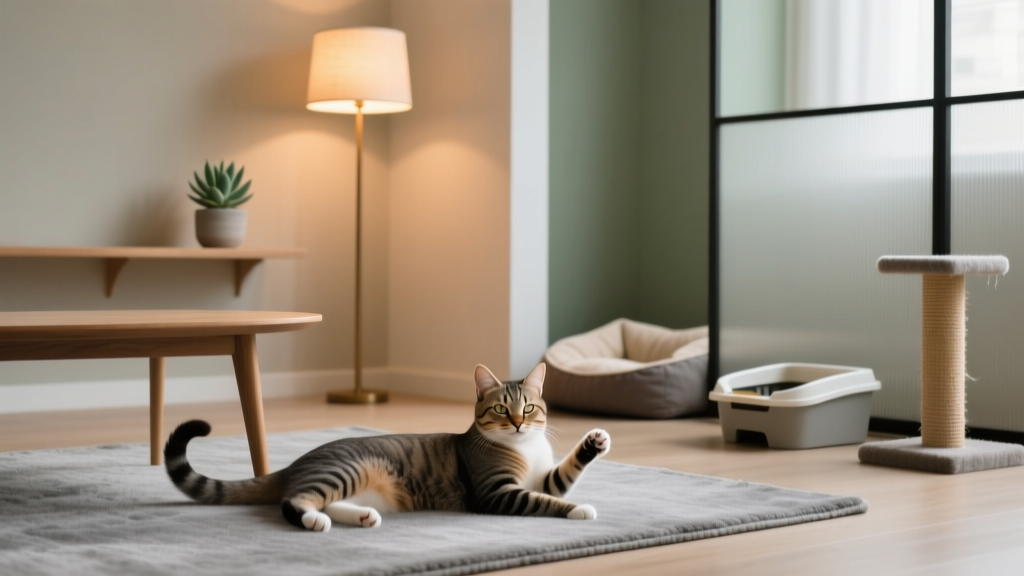
Most homes violate at least 2–3 of these pillars. For example: placing the litter box next to the washer/dryer (violates safety + smell), feeding in high-traffic kitchens (violates safety + resource separation), or having only one scratching post for two cats (violates resource access).
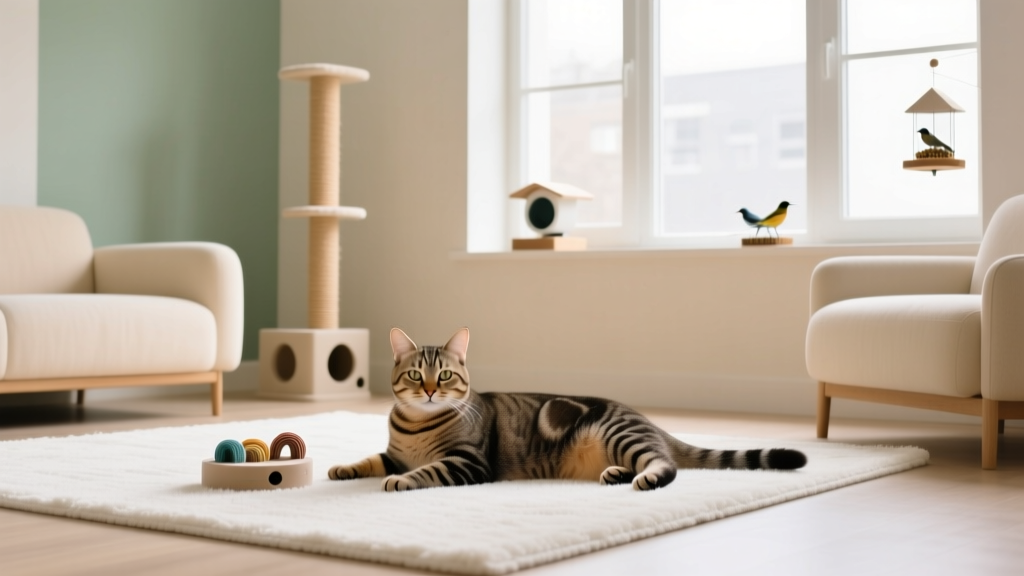
Fixing cat behavior at home starts with environmental enrichment — not training. Here’s what works:
- Vertical space: Install wall-mounted shelves or cat trees at varying heights. A 2021 University of Lincoln study showed cats with ≥3 vertical escape routes exhibited 68% less intercat aggression and 52% fewer stress-related behaviors.
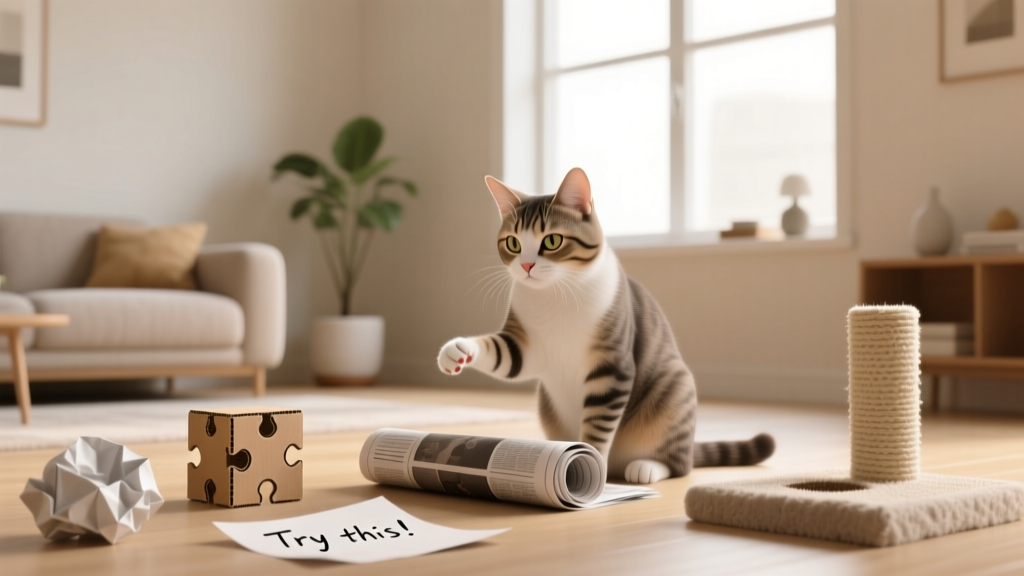
- Scratching alternatives: Offer both horizontal (corrugated cardboard) and vertical (sisal rope) options — placed near sleeping areas and entryways (where cats naturally mark). Spray with silvervine or catnip to boost appeal.
- Hunting simulation: Replace 1–2 daily meals with food puzzles or DIY 'snuffle mats.' Rotate toys weekly to prevent habituation — and always end play sessions with a 'kill' (let cat catch the toy) to satisfy predatory sequence.
- Safe zones: Designate quiet, low-traffic rooms with cozy beds, covered hideaways (like cardboard boxes with blankets), and Feliway diffusers (clinically shown to reduce stress-related marking by 45% in multi-cat homes).
Step 4: Redirect, Don’t Punish — The Reinforcement Revolution
Punishment — spraying water, yelling, clapping, or using citronella collars — doesn’t teach cats what to do; it teaches them to fear *you*. Worse, it increases cortisol levels and can create lasting associations between you and danger. Instead, use positive reinforcement and strategic redirection — backed by decades of operant conditioning research adapted for felines.
Start with the 'ABC Model':
- A = Antecedent: What sets the stage? (e.g., you sit on the couch → cat jumps up)
- B = Behavior: What does the cat do? (e.g., jumps on lap, then bites)
- C = Consequence: What happens next? (e.g., you push cat off → cat returns faster next time)
The goal: change the consequence to reinforce the *desired* behavior. Example: When your cat jumps on the counter, don’t shoo — instead, toss a treat onto their designated perch *before* they jump, then reward them for staying there. Over time, the perch becomes the default choice.
Real-world success story: Maya, a rescue tabby with severe litter box aversion, improved within 4 days after her owner replaced her single, hooded box (which trapped odors and felt like a trap) with three open boxes placed in quiet corners — and added a second daily play session using a wand toy to simulate hunting. No medication. No punishment. Just alignment with feline needs.
| Step | Action | Tools/Supplies Needed | Expected Outcome Timeline |
|---|---|---|---|
| 1. Medical Screening | Schedule comprehensive vet exam including urinalysis, CBC, thyroid panel, and orthopedic check | Vet appointment, notes on behavior timing/triggers | Results within 3–5 business days |
| 2. Environmental Audit | Map all resources (litter, food, water, scratching, resting) — ensure ≥1 per cat +1, separated by ≥6 ft | Measuring tape, notebook, smartphone camera | Audit complete in 1 hour; adjustments made in 24–48 hrs |
| 3. Enrichment Rollout | Introduce one new enrichment element daily (e.g., Day 1: vertical shelf; Day 2: food puzzle; Day 3: window perch) | Sisal post, puzzle feeder, wall shelves, Feliway diffuser | Noticeable reduction in target behavior by Day 3–5 |
| 4. Positive Reinforcement Protocol | Identify 1–2 replacement behaviors (e.g., 'go to mat' instead of scratching couch); reward every successful attempt for 7 days | High-value treats (chicken/tuna bits), clicker (optional), target stick | Consistent replacement behavior established by Day 7–10 |
| 5. Stress Monitoring & Adjustment | Track ear position, pupil size, tail flicks, and sleep location daily; adjust resources if signs of anxiety persist | Behavior log, phone timer for play sessions | Ongoing — refinement continues through Week 4 |
Frequently Asked Questions
Can I train my cat like a dog?
No — and trying to do so is counterproductive. Dogs are pack-oriented, socially motivated animals who seek approval. Cats are solitary hunters wired for autonomy and control. While cats absolutely learn through association (classical and operant conditioning), they respond best to short (<5 min), high-value, voluntary interactions — not commands, leashes, or obedience drills. Focus on shaping behavior through environmental design and reward, not commands.
Will neutering/spaying fix behavior problems?
It helps — but only for hormonally driven behaviors like spraying (in males) or yowling during heat cycles (in females). Neutering won’t resolve fear-based aggression, litter box issues caused by pain or stress, or boredom-related scratching. In fact, early spay/neuter (before 5 months) may increase risk of certain behavior issues in some cats, according to a 2022 UC Davis study. Always address root causes first.
My cat bites me when I pet them — is this normal?
Yes — and extremely common. Known as 'petting-induced aggression,' it occurs when tactile stimulation exceeds a cat’s individual threshold. Signs include tail flicking, skin twitching, flattened ears, or dilated pupils. Stop petting *before* these signals appear — and offer a treat or toy as a positive transition. Never punish — this erodes trust. Respect their 'no' as clearly as you would a human’s.
Do I need a professional cat behaviorist?
You should consult a certified professional (IAABC or ACVB credentialed) if: behavior poses safety risks (biting that breaks skin), persists >4 weeks despite consistent environmental changes, involves multiple cats in escalating conflict, or coincides with weight loss, appetite change, or lethargy. Many offer affordable remote consultations — and most insurance plans cover behaviorist referrals when initiated by a veterinarian.
Are anti-anxiety medications safe for cats?
Yes — when prescribed and monitored by a veterinarian. Medications like fluoxetine (Reconcile) or gabapentin are FDA-approved or widely used off-label for anxiety-related behaviors. They’re never standalone solutions — but paired with environmental modification, they can lower stress enough for learning to occur. Side effects are rare and typically mild (drowsiness, decreased appetite). Never use human medications without veterinary guidance.
Common Myths About Fixing Cat Behavior
Myth #1: “Cats are aloof and can’t be trained.”
False. Cats learn constantly — they just choose what’s worth their effort. With high-value rewards (tuna, chicken, play), cats readily learn names, recall cues, and complex tricks. The issue isn’t ability — it’s motivation and methodology.
Myth #2: “If I ignore bad behavior, it will go away.”
Not necessarily — and sometimes it worsens. Ignoring doesn’t remove the underlying need driving the behavior. A cat scratching the couch because it lacks appropriate outlets won’t stop just because you look away — they’ll keep scratching until the need is met elsewhere. Proactive enrichment is essential.
Related Topics (Internal Link Suggestions)
- Understanding cat body language — suggested anchor text: "what your cat's tail flick really means"
- Best cat scratching posts for destructive cats — suggested anchor text: "top 5 vet-recommended scratching surfaces"
- Multi-cat household harmony guide — suggested anchor text: "how to stop cat fighting without separation"
- Feline anxiety symptoms and natural remedies — suggested anchor text: "signs of stress in cats you're missing"
- DIY cat enrichment ideas on a budget — suggested anchor text: "12 free ways to mentally stimulate your cat"
Your Next Step Starts Today — And It’s Simpler Than You Think
Fixing cat behavior at home isn’t about perfection — it’s about partnership. It’s choosing observation over assumption, enrichment over correction, and patience over punishment. You don’t need special tools or certifications. You need curiosity, consistency, and the willingness to see your cat not as a problem to solve — but as a complex, communicative being asking for help in the only language they know. Start tonight: pick *one* step from the table above — maybe auditing your litter box placement or introducing a single food puzzle — and commit to it for 72 hours. Track what changes. Notice the subtle shifts: the relaxed blink, the chin rub on your hand, the absence of that one frustrating behavior. That’s not magic — it’s feline science, applied with compassion. Ready to build your personalized behavior plan? Download our free Home Behavior Audit Checklist — complete with printable resource maps and vet referral scripts — at [yourdomain.com/cat-behavior-checklist].