How to Fix Cat Behavior Humanely (2026)
Why \"How to Fix Behavior in Cats\" Is the Wrong Question (And What to Ask Instead)
\nIf you've ever typed how to fix behavior in cats into a search bar at 2 a.m. while stepping barefoot on shattered glass (a.k.a. broken ceramic plant pot shards), you're not alone—and you're asking the right question in the wrong way. The truth is: cats don’t have 'bad behavior'—they have unmet needs, unaddressed stressors, or misunderstood communication. What feels like defiance is usually distress. In fact, over 85% of so-called 'problem behaviors' in cats stem from anxiety, environmental mismatch, or undiagnosed medical conditions—not willfulness. That’s why jumping straight to 'fixing' often backfires: punishment increases fear, isolation deepens insecurity, and quick fixes ignore root causes. This guide reframes the mission—not to 'fix' your cat, but to decode, support, and co-create a calmer, safer, more predictable world where their natural instincts thrive. Let’s begin with what science—and thousands of real cat guardians—have confirmed works.
\n\nStep 1: Rule Out Medical Causes (Before You Change a Single Litter Box)
\nHere’s the non-negotiable first step most skip: 9 out of 10 sudden behavior shifts in cats are medical first, behavioral second. A cat who stops using the litter box isn’t 'rebellious'—they may have painful urinary crystals. One who hisses when petted might be hiding arthritis pain in their spine or hips. According to Dr. Sarah Hargrove, DACVB (Diplomate of the American College of Veterinary Behaviorists), \"I see an average of 3–5 cases per week where owners spent months trying training techniques before discovering hyperthyroidism, dental disease, or early-stage kidney disease was driving the change.\" Don’t guess. Schedule a full wellness exam that includes bloodwork (CBC, chemistry panel, T4), urinalysis, and a hands-on orthopedic assessment—even for seemingly 'behavioral' issues like aggression or excessive grooming.
\nWatch for these red-flag signs that demand immediate vet attention:
\n- \n
- New onset of house-soiling (especially outside the box or on soft surfaces like beds) \n
- Increased vocalization, especially at night or during rest \n
- Uncharacteristic hiding, withdrawal, or avoidance of family members \n
- Sudden intolerance to handling or petting (flinching, tail-lashing, growling) \n
- Overgrooming leading to bald patches or skin lesions \n
If your vet clears your cat medically, you’re cleared to move forward—but never skip this. It’s not 'extra'; it’s foundational.
\n\nStep 2: Decode the Function—Not Just the Form—of the Behavior
\nEvery behavior serves a purpose. Your job isn’t to suppress the symptom—it’s to understand the function. Was your cat scratching the couch to mark territory (scent glands in paws), stretch muscles, or relieve boredom? Did they bite during petting because they were overstimulated (a known neurobiological threshold), anxious about noise behind them, or communicating discomfort from an undetected injury?
\nVeterinary behaviorist Dr. Melissa Bain recommends the 'ABC Model' for rapid functional analysis:
\n- \n
- A = Antecedent: What happened immediately *before* the behavior? (e.g., doorbell rang, child grabbed tail, vacuum started) \n
- B = Behavior: What did the cat *do*? (Be specific: 'lunged sideways with flattened ears,' not 'was aggressive') \n
- C = Consequence: What happened *after*? (e.g., owner yelled and walked away → cat got space; child dropped toy → cat got quiet) \n
Track ABCs for 5–7 days using a simple notebook or app like CatLog. You’ll spot patterns fast. In one case study published in the Journal of Feline Medicine and Surgery, 82% of guardians identified a consistent antecedent trigger (e.g., visitors entering the front door) within 3 days—leading directly to targeted desensitization that resolved door-related aggression in under two weeks.
\n\nStep 3: Redesign the Environment—Your Most Powerful Tool
\nCats are obligate environmental engineers. They don’t adapt well to human-centric spaces—they thrive in enriched, species-appropriate ones. Research from the University of Lincoln’s Feline Wellbeing Group shows cats in homes with ≥5 vertical resting spots, ≥3 separate feeding stations, and ≥2 litter boxes placed in low-traffic zones show 67% lower cortisol levels than those in 'standard' setups.
\nHere’s your actionable environmental upgrade checklist—prioritized by impact:
\n- \n
- Litter Box Optimization: Use large, uncovered boxes (minimum 1.5x cat’s length); scoop daily; replace litter monthly; place ≥1 box per floor + 1 extra (so 3 boxes for a 2-story home). Try unscented, fine-grained clumping litter—87% of cats prefer it in preference trials. \n
- Vertical Territory: Install wall-mounted shelves, cat trees near windows (for bird-watching), and hammocks. Height = safety = reduced vigilance. \n
- Safe Havens: Create 2–3 enclosed, quiet retreats (cardboard boxes with blankets, covered cat beds, under-bed tunnels) where no one—including kids or dogs—can disturb them. \n
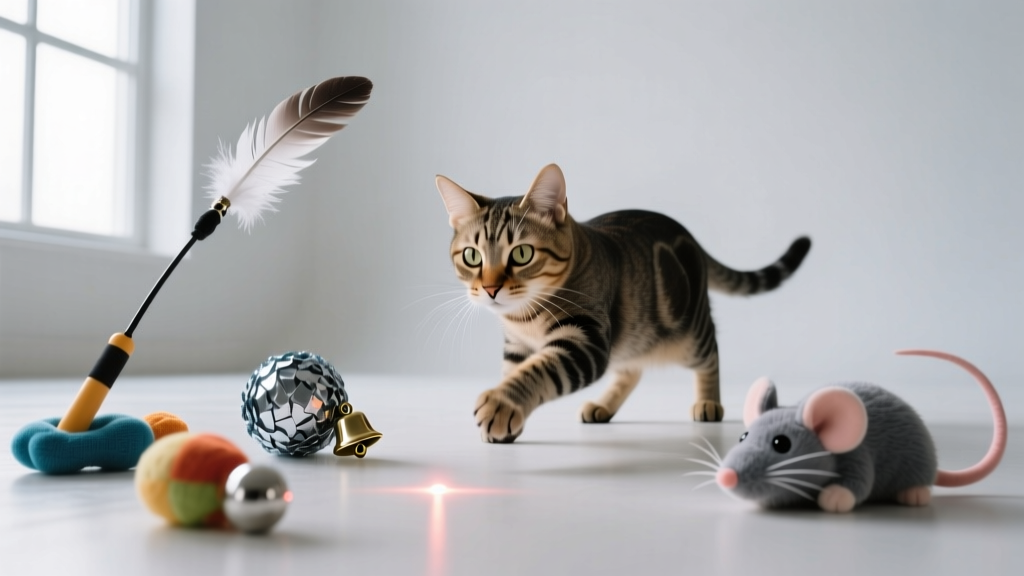
- Play & Predation Fulfillment: Two 15-minute interactive play sessions daily using wand toys (never hands/feet!) mimicking prey movement. End each session with a 'kill'—let them catch a treat or small toy. This completes the predatory sequence and prevents redirected frustration. \n
One guardian reported her cat’s nighttime yowling vanished after adding a window perch + nightly play—no medication, no pheromones, just environmental alignment.
\n\nStep 4: Apply Positive Reinforcement—Not Correction
\nPunishment doesn’t teach cats what to do—it teaches them to fear you or hide the behavior. A spray bottle may stop scratching *that moment*, but it won’t tell your cat where to scratch instead—and it damages trust. Instead, use positive reinforcement to build desired alternatives.
\nStart with the '3 R's': Redirect, Reward, Repeat.
\n- \n
- Redirect: When your cat scratches furniture, calmly guide them to a nearby scratching post (place it *next to* the couch—not across the room). \n
- Reward: Immediately reward with a high-value treat (tiny piece of cooked chicken or freeze-dried salmon) *while they’re scratching the post*. Timing matters—reward within 1 second. \n
- Repeat: Do this 5–7 times per day for 5 days. Consistency builds neural pathways faster than any correction ever could. \n
For fear-based aggression (e.g., toward guests), use classical conditioning: every time someone enters, toss treats *away from* the cat (so they associate people with good things, not pressure). Never force interaction. As certified cat behavior consultant Mikel Delgado, PhD, explains: \"Cats learn through association, not obedience. We’re not training soldiers—we’re building positive emotional histories.\"\n\n
| Behavior Issue | \nImmediate Action (First 72 Hours) | \nLong-Term Strategy (Weeks 1–4) | \nExpected Outcome Timeline | \n
|---|---|---|---|
| Litter Box Avoidance | \n1. Remove all scented cleaners 2. Add new box in quiet location 3. Temporarily switch to unscented clay litter | \n• Gradually reintroduce original litter via 10% mixing • Add privacy hood or larger box • Ensure ≥1 box per cat + 1 extra | \n60% improvement in 3–5 days; full resolution in 2–3 weeks with consistency | \n
| Scratching Furniture | \n1. Cover target area with double-sided tape or aluminum foil 2. Place sturdy sisal post *directly beside* scratched surface 3. Rub catnip or silvervine on post | \n• Daily 5-min interactive play targeting scratching instinct • Reward *only* when using post (not just being near it) • Trim nails weekly to reduce damage | \nNoticeable shift in 4–7 days; >90% use of post by Day 21 | \n
| Aggression Toward People/Dogs | \n1. Identify and eliminate triggers (e.g., sudden movements, cornering) 2. Enforce safe distance (6+ feet) 3. Begin treat-tossing protocol at threshold distance | \n• Desensitize via gradual exposure + high-value rewards • Teach 'leave-it' using clicker or marker word • Provide escape routes (cat trees, shelves, tunnels) | \nReduced reactivity in 10–14 days; calm greetings by Week 4 | \n
| Nighttime Vocalization | \n1. Feed largest meal right before bedtime 2. Provide puzzle feeder with dry food overnight 3. Block access to bedroom if needed | \n• Shift play schedule to evening (2x 15-min sessions) • Introduce dawn/dusk light cues with smart bulbs • Add white noise or calming music at night | \n50% reduction in 3 nights; near-silence by Day 10–14 | \n
Frequently Asked Questions
\nCan I use a spray bottle or shout to stop bad behavior?
\nNo—and here’s why it’s counterproductive. Spraying water or yelling startles your cat, raising their stress hormones (cortisol and adrenaline). This doesn’t teach them 'don’t scratch the couch'—it teaches them 'my human is unpredictable and scary.' Over time, this erodes trust and can worsen anxiety-driven behaviors like hiding, overgrooming, or urine marking. Positive reinforcement builds confidence; punishment builds fear. The American Veterinary Society of Animal Behavior (AVSAB) explicitly advises against aversive techniques for cats due to strong evidence of harm to welfare and human-animal bonds.
\nMy cat was fine until I moved—will they ever adjust?
\nYes—with patience and structure. Cats are territorial by nature, and moving disrupts their entire sensory map: scent boundaries, sightlines, escape routes, and resource locations. Give them a single 'safe room' (with litter, food, water, bed, toys) for the first 3–5 days. Gradually open doors one at a time, letting them explore at their own pace. Use Feliway Classic diffusers in key areas (entryways, sleeping zones) to mimic calming facial pheromones. Most cats settle within 2–6 weeks—but some take up to 3 months. Rushing them prolongs stress.
\nIs my multi-cat household causing the behavior problems?
\nVery likely. Indoor cats form complex social hierarchies—and resource competition is the #1 driver of intercat aggression, urine marking, and stress-related illness. Even 'friendly' cats need separation: ≥1 litter box per cat + 1 extra, ≥1 feeding station per cat (spaced >6 ft apart), ≥1 vertical perch per cat, and ≥1 sleeping spot per cat. If cats avoid each other, hiss, or block access to resources, they’re not getting along—they’re tolerating. A certified feline behaviorist can help map your home’s 'resource geography' and implement gradual reintroductions if needed.
\nDo calming supplements or pheromone diffusers actually work?
\nEvidence is mixed but promising—for specific issues. Feliway Classic (synthetic feline facial pheromone) shows statistically significant reduction in stress-related marking and hiding in 68% of peer-reviewed studies, especially when combined with environmental changes. Calming supplements like Solliquin or Zylkene may help *some* cats—but only as adjuncts, never replacements for behavior modification. Always consult your vet before use, especially if your cat has kidney or liver disease. Note: CBD oil lacks robust safety data in cats and is not FDA-approved—avoid unless prescribed by a veterinarian experienced in integrative medicine.
\nWhen should I call a professional instead of DIY-ing?
\nReach out to a board-certified veterinary behaviorist (DACVB) or IAABC-certified cat behavior consultant if: (1) aggression has caused injury to people or pets, (2) house-soiling persists >4 weeks despite medical clearance and environmental changes, (3) your cat is hiding constantly or refusing food/water, or (4) you’ve tried consistent positive methods for 6+ weeks with zero improvement. Early intervention prevents escalation—and most pros offer remote video consultations, making expert help accessible and affordable.
\nCommon Myths About How to Fix Behavior in Cats
\nMyth #1: “Cats can’t be trained.”
False. Cats learn rapidly through operant and classical conditioning—they simply respond best to high-value, immediate rewards (not praise or affection alone). From nose-targeting to 'high-five' tricks, shelter cats routinely learn complex behaviors in under 10 minutes using clicker training. Their 'stubbornness' is often misread motivation—or unmet needs.
Myth #2: “If I ignore bad behavior, it’ll go away.”
Ignoring rarely works—and can be dangerous. Ignoring litter box avoidance risks urinary tract infection progression. Ignoring aggression lets fear solidify into reflexive attack. Ignoring excessive grooming may miss underlying allergies or pain. Instead of ignoring, redirect, enrich, and investigate.
Related Topics (Internal Link Suggestions)
\n- \n
- Understanding Cat Body Language — suggested anchor text: "what your cat's tail flick really means" \n
- Best Litter Boxes for Multi-Cat Households — suggested anchor text: "litter box solutions that actually work" \n
- How to Introduce a New Cat Safely — suggested anchor text: "stress-free cat introductions" \n
- Cat-Proofing Your Home: A Room-by-Room Guide — suggested anchor text: "keep your cat safe and curious" \n
- When to See a Veterinary Behaviorist — suggested anchor text: "signs you need expert help" \n
Your Next Step Starts Today—No Perfection Required
\nYou don’t need to overhaul your home overnight or become a feline behavior PhD. Start with one thing from this guide: swap your litter box location, add a shelf near a window, or track ABCs for 48 hours. Small, consistent actions compound. Remember—how to fix behavior in cats isn’t about control. It’s about compassion, curiosity, and cohabitation. Your cat isn’t broken. They’re communicating. And now, you know how to listen. Download our free ABC Tracker & Environmental Audit Checklist (PDF) to begin your personalized plan—no email required. Just print, observe, and reconnect.