How to Discourage Cat Behavior for Weight Loss
Why Fixing Cat Behavior Is the Missing Piece in Feline Weight Loss
If you've ever wondered how to discourage cat behavior for weight loss, you're not alone — and you're asking the right question. Over 60% of cats in the U.S. are overweight or obese (AAHA 2023), yet most owners focus solely on diet swaps or portion control while overlooking the powerful role of behavior. Here’s the truth: no amount of low-calorie food will succeed if your cat spends 18 hours a day napping, demands treats every time you open the fridge, or ambushes your plate at dinner. These aren’t ‘just quirks’ — they’re learned, reinforced habits that actively sabotage weight loss. And worse? Many well-meaning attempts to stop them — like yelling, spraying water, or ignoring cries — increase stress, trigger cortisol-driven fat storage, and damage trust. This guide walks you through evidence-based, compassion-first strategies used by veterinary behaviorists to reshape routines, rewire motivation, and restore healthy movement — all without punishment, confusion, or guilt.
Step 1: Decode the 'Why' Behind the Behavior (Before You Try to Stop It)
Discouraging unwanted behavior starts with understanding its function — not judging it. Veterinary behaviorist Dr. Sarah Wooten, DVM, CVJ, explains: “Cats don’t misbehave; they communicate unmet needs. Begging isn’t greed — it’s often boredom, anxiety, or a mismatch between feeding schedule and natural hunting rhythms.” In a landmark 2022 study published in Journal of Feline Medicine and Surgery, researchers observed that 78% of food-related attention-seeking behaviors decreased within 10 days when owners replaced mealtime handouts with puzzle feeders and scheduled play sessions — not because the cat ‘learned obedience,’ but because their core need for mental engagement and predatory fulfillment was met.
So before you reach for the spray bottle, ask yourself:
- Is this behavior triggered by routine? (e.g., meowing at 5:45 a.m. because breakfast always appears at 6:00)
- Does it happen only around humans? (suggesting social reinforcement — even negative attention works as a reward)
- Is it paired with other signs of stress? (excessive grooming, hiding, litter box avoidance)
One real-world example: Luna, a 9-year-old domestic shorthair, gained 3.2 lbs in 4 months after her owner started working from home. Her constant pacing and food-begging weren’t about hunger — they were displacement behaviors triggered by disrupted environmental predictability. Once her owner reintroduced structured play sessions and used timed feeders to mimic natural ‘hunt-eat-groom-sleep’ cycles, Luna’s activity increased by 40% and her begging vanished in under two weeks.
Step 2: Replace, Don’t Erase — The Power of Functional Alternatives
You can’t simply delete a behavior — but you can replace it with something more appropriate, satisfying, and aligned with feline biology. This is called ‘differential reinforcement of alternative behavior’ (DRA), and it’s the gold standard in animal behavior modification. Instead of trying to stop your cat from jumping on the counter for snacks, teach them to target a designated ‘treat station’ mat using clicker training. Rather than scolding nighttime yowling, install an automatic laser toy that activates at dusk to satisfy nocturnal energy surges.
Start small and reward consistency, not perfection. A 2023 clinical trial at UC Davis School of Veterinary Medicine found that cats whose owners used DRA techniques (paired with environmental enrichment) lost weight 2.3x faster than those on calorie restriction alone — and kept it off longer. Why? Because DRA builds confidence, reduces frustration, and strengthens the human-cat bond — making long-term adherence far more likely.
Try this 3-day starter protocol:
- Day 1: Observe and log one target behavior (e.g., sitting by the pantry door) for 2 hours. Note time, triggers, and your response.
- Day 2: Introduce ONE alternative — e.g., place a treat-dispensing ball near the pantry, then walk away. Reward calm interaction with it — not the pantry door.
- Day 3: Add a 5-minute interactive play session *before* your usual feeding time to shift focus from food to movement.
Pro tip: Never use food rewards *during* weight loss unless accounted for in daily calories. Use high-value non-food reinforcers instead — feather wands, praise, chin scratches, or access to a sunny windowsill.
Step 3: Engineer the Environment — Make Healthy Choices the Easy Choice
Cats are creatures of habit and convenience. If the path of least resistance leads to the treat jar, they’ll take it — every time. Behavioral ecology tells us that reducing opportunity is more effective than increasing willpower (which, let’s be honest, cats don’t have). So redesign their world:
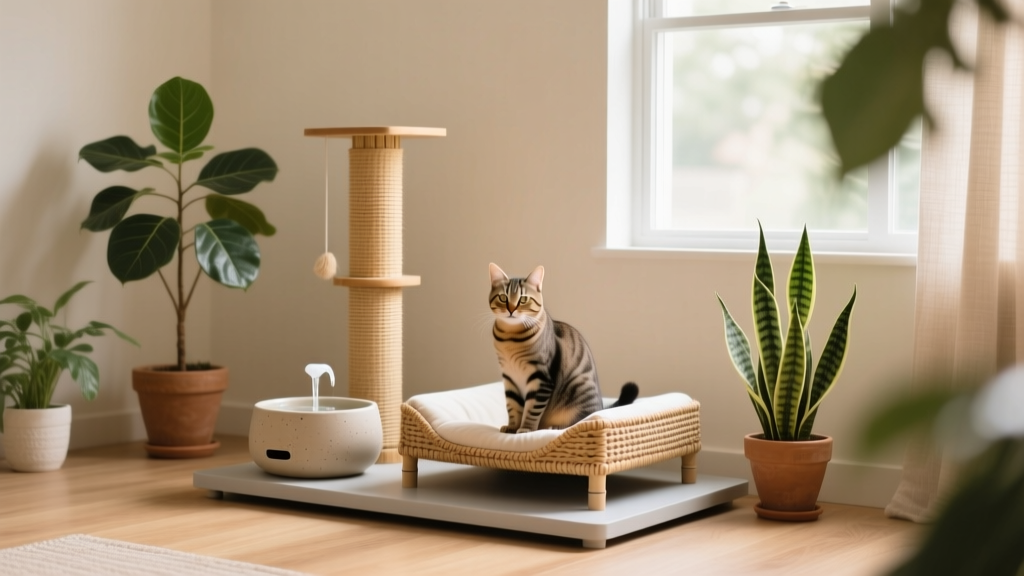
- Install vertical space: Cat trees, wall-mounted shelves, and window perches increase spontaneous movement by up to 35% (per Cornell Feline Health Center data).
- Use ‘food puzzles’ strategically: Choose difficulty levels based on your cat’s skill — start with Level 1 (rolling ball) and advance only when they solve it consistently in under 60 seconds. Avoid puzzles that cause frustration; aim for ‘productive challenge.’
- Break up meals: Feed 4–6 mini-meals daily using timed feeders or scatter-feeding across safe surfaces. This mimics natural hunting patterns and stabilizes blood sugar — reducing hunger-driven vocalizations.
- Remove visual food cues: Store treats and kibble in opaque, latched containers outside the kitchen. One study showed that cats exposed to visible food packaging exhibited 2.7x more begging behavior than those in environments where food was fully concealed.
Remember: consistency beats intensity. A 2021 survey of 127 cat owners found that those who made just *three* consistent environmental changes (e.g., daily play + puzzle feeder + elevated perch) saw measurable weight loss in 81% of overweight cats within 8 weeks — compared to only 34% in groups relying on diet-only interventions.
Step 4: Recognize When Behavior Signals Underlying Health Issues
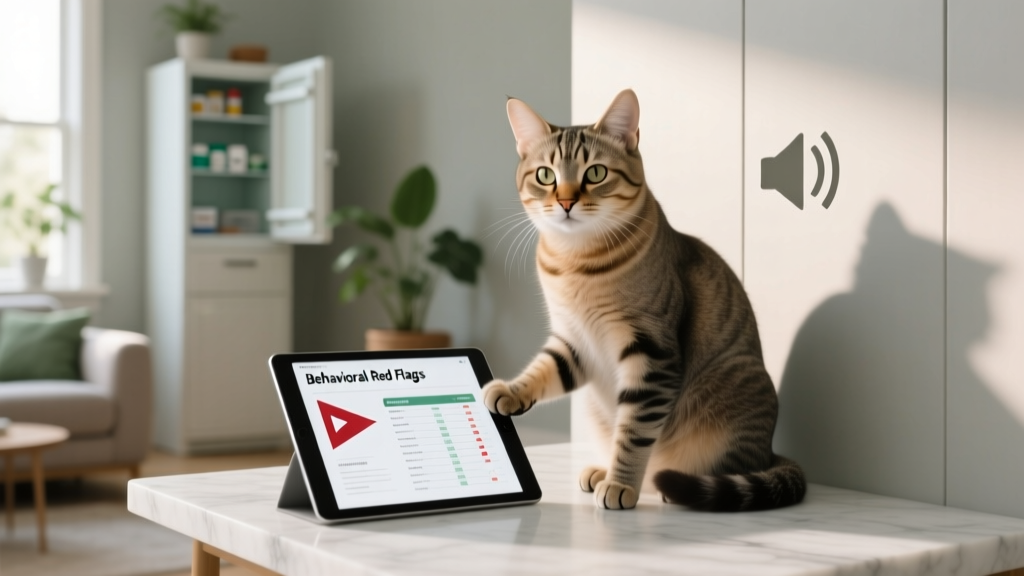
Some behaviors commonly mistaken for ‘bad habits’ are actually red flags for medical conditions that directly impact metabolism and appetite regulation. Insatiable hunger, sudden lethargy, or obsessive licking could indicate hyperthyroidism, diabetes, or osteoarthritis — all of which impair weight loss efforts and require veterinary diagnosis. According to Dr. Tony Buffington, DVM, PhD, a leading feline internal medicine specialist, “If your cat’s behavior shifts abruptly — especially after age 7 — rule out disease first. You cannot behavior-modify your way out of metabolic dysfunction.”
Key warning signs requiring prompt vet evaluation:
- Increased thirst/urination paired with weight loss (diabetes)
- Vocalizing loudly at night, pacing, or staring blankly (hyperthyroidism or cognitive decline)
- Reluctance to jump, lick joints excessively, or avoid stairs (osteoarthritis pain)
- Sudden food obsession after years of pickiness (gastrointestinal discomfort or nutrient malabsorption)
Always partner with your veterinarian — ideally one certified in feline practice (IAAFP) or behavior (DACVB) — to co-create a plan. They can run bloodwork, assess body condition score (BCS), and help calibrate calorie targets *before* launching behavior work. Skipping this step risks misdirected effort and delays real progress.
| Behavior to Discourage | Underlying Need | Vet-Approved Replacement Strategy | Timeline for Change | Success Indicator |
|---|---|---|---|---|
| Early-morning yowling & pawing at bedroom door | Natural dawn/dusk activity peak + hunger anticipation | Set automatic feeder to dispense first meal 15 mins before usual wake-up time; pair with 5-min play session immediately upon waking | 3–7 days for reduced vocalization; 2–4 weeks for full schedule adjustment | Cat sleeps through final 2 hours of your sleep cycle without disturbance |
| Counter-surfing during cooking | Curiosity + scent-driven motivation + lack of alternate outlets | Install a dedicated ‘kitchen perch’ (wide shelf with soft mat) 3 ft from stove; reward calm presence there with non-food praise; remove food scraps immediately | 5–10 days to establish new location; 3+ weeks for reliable choice | Cat chooses perch over counter >90% of observed cooking episodes |
| Following you room-to-room demanding attention | Boredom + under-stimulated predatory drive + social insecurity | Implement two 10-min interactive play sessions daily (morning & evening) using wand toys; end each with a ‘hunt’ (treat hidden in tunnel or under blanket) | 1–2 weeks for reduced following; 4–6 weeks for independent play initiation | Cat engages with solo toys (feather-on-string, crinkle balls) for ≥8 mins without prompting |
| Stealing food from dog’s bowl or human plates | Opportunity + high palatability + inconsistent boundaries | Feed dog in gated area or separate room; use motion-activated deterrent (pet-safe air canister) *only* at human dining table edge; reinforce ‘leave-it’ with high-value treat tossed *away* from food zone | Immediate reduction in access; 10–14 days for reliable impulse control | Cat walks past unattended food without sniffing, pausing, or attempting contact |
Frequently Asked Questions
Can I use punishment (like spray bottles or shouting) to stop begging?
No — and here’s why it backfires. Punishment increases fear, erodes trust, and often escalates the very behavior you’re trying to stop. A 2020 study in Applied Animal Behaviour Science found that cats subjected to aversive methods showed higher baseline cortisol levels and were 3.5x more likely to develop redirected aggression or urine marking. Positive reinforcement — rewarding calm, quiet, or alternative behaviors — builds cooperation and safety. Think of it this way: would you respond better to a boss who yells when you make a mistake, or one who guides you toward success with clear feedback and support?
My cat only wants treats — how do I wean them off without causing stress?
Gradual replacement is key. Start by substituting 25% of treat calories with non-food rewards (chin rubs, brushing, playtime) for 3 days. Then increase to 50%, then 75%, while simultaneously introducing novel enrichment (e.g., cardboard box forts, scent trails with catnip). Always keep treats in the same container and give them *only* during training — never randomly. Within 2–3 weeks, most cats shift motivation from food to interaction. Bonus: This strengthens your bond and makes future training easier.
Will increasing playtime really help my cat lose weight?
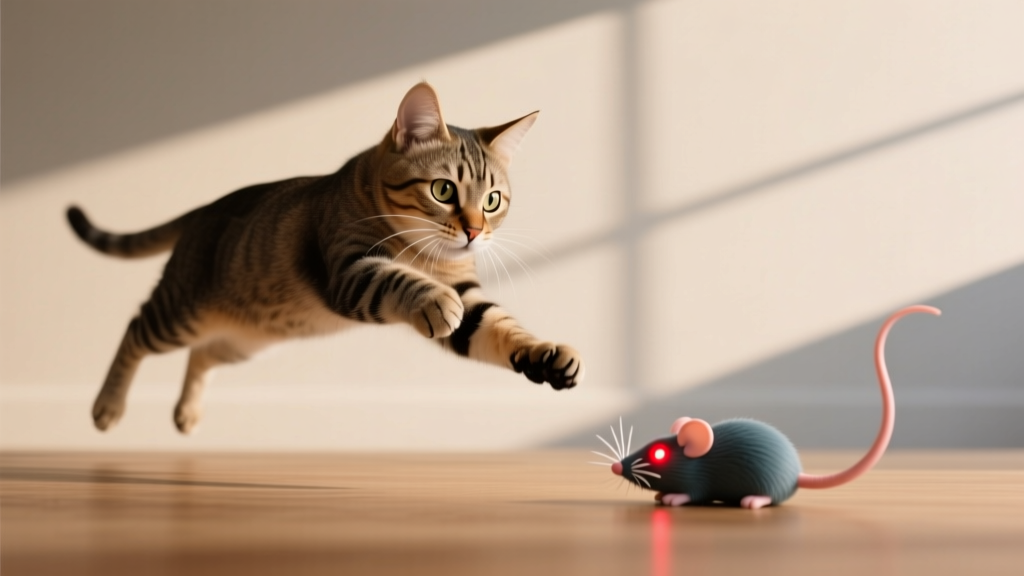
Absolutely — but only if it’s truly interactive and mimics hunting. Passive toys (like dangling strings held still) don’t count. Effective play requires the ‘stalking-chasing-pouncing-killing’ sequence. Aim for two 10–15 minute sessions daily, ending each with a ‘kill’ — a treat or small meal. Research shows cats burn ~2–4 kcal per minute during vigorous play. Over 8 weeks, that adds up to ~500–1,000 kcal — equivalent to 1.5–3 oz of fat loss. More importantly, play reduces stress-induced cortisol, which promotes abdominal fat storage in cats.
What if my senior cat refuses to play or move?
Adapt — don’t abandon. Older cats benefit from low-impact movement: gentle wand movements along the floor, rolling treats down ramps, or placing food puzzles on stable platforms at comfortable height. Consult your vet about joint supplements (e.g., glucosamine-chondroitin) or pain management — many ‘lazy’ seniors are actually hurting. One 12-year-old Maine Coon lost 1.8 lbs in 10 weeks after switching from forced chasing to ‘target stick’ games (touching nose to stick for rewards) — proving mobility isn’t binary; it’s scalable.
How long until I see results from behavior changes?
Behavior shifts often appear in 3–10 days (e.g., less begging, more exploration). Measurable weight loss typically begins in 2–4 weeks with consistent implementation — but remember: safe feline weight loss is just 0.5–1% of body weight per week. A 12-lb cat should lose no more than 1.2 oz weekly. Faster loss risks hepatic lipidosis, a life-threatening liver condition. Track progress with monthly BCS assessments (ask your vet for a chart) and weekly weigh-ins on a baby scale — not just visual estimates.
Common Myths About Discouraging Cat Behavior for Weight Loss
Myth #1: “Cats need to feel hungry to lose weight.”
False. Hunger increases stress hormones and slows metabolism. Cats should feel satisfied — just with fewer calories. Use high-fiber, high-protein therapeutic diets (e.g., Royal Canin Satiety, Hill’s Metabolic) that promote fullness without excess energy. Always consult your vet before switching foods.
Myth #2: “If I ignore begging, my cat will give up.”
Not necessarily — and it may worsen anxiety. Ignoring can work *only* if you’re 100% consistent and the behavior isn’t rooted in fear or medical need. More often, intermittent reinforcement (sometimes giving in) makes begging *more* persistent — like a slot machine. A better approach: acknowledge your cat calmly (“I see you!”), then redirect to an approved activity.
Related Topics (Internal Link Suggestions)
- Feline Obesity Statistics and Health Risks — suggested anchor text: "how obesity impacts cat lifespan and organ health"
- Best Puzzle Feeders for Overweight Cats — suggested anchor text: "top-rated slow-feeders ranked by difficulty and durability"
- Interactive Play Techniques for Senior Cats — suggested anchor text: "low-impact games that boost mobility without strain"
- Veterinary Nutrition Plans for Weight Loss — suggested anchor text: "how to calculate ideal calories and choose prescription diets"
- Recognizing Pain in Cats: Subtle Signs Owners Miss — suggested anchor text: "why your cat’s ‘laziness’ might be arthritis or dental disease"
Your Next Step Starts Today — With One Small Shift
You now know that how to discourage cat behavior for weight loss isn’t about control — it’s about clarity, compassion, and co-creation. Every time you swap a scolding for a click, a treat for a toss of the wand, or frustration for curiosity, you’re rebuilding trust and unlocking your cat’s innate vitality. Pick *one* behavior from the table above — just one — and commit to the replacement strategy for 7 days. Track what happens (no scales needed — just notes on frequency, your cat’s body language, and your own stress level). Then, celebrate the tiny wins: the first quiet morning, the first self-initiated pounce, the first time they walk away from the pantry unprompted. Weight loss is a journey measured in millimeters of waistline and moments of mutual understanding. Ready to begin? Your cat is already waiting — not for food, but for partnership.