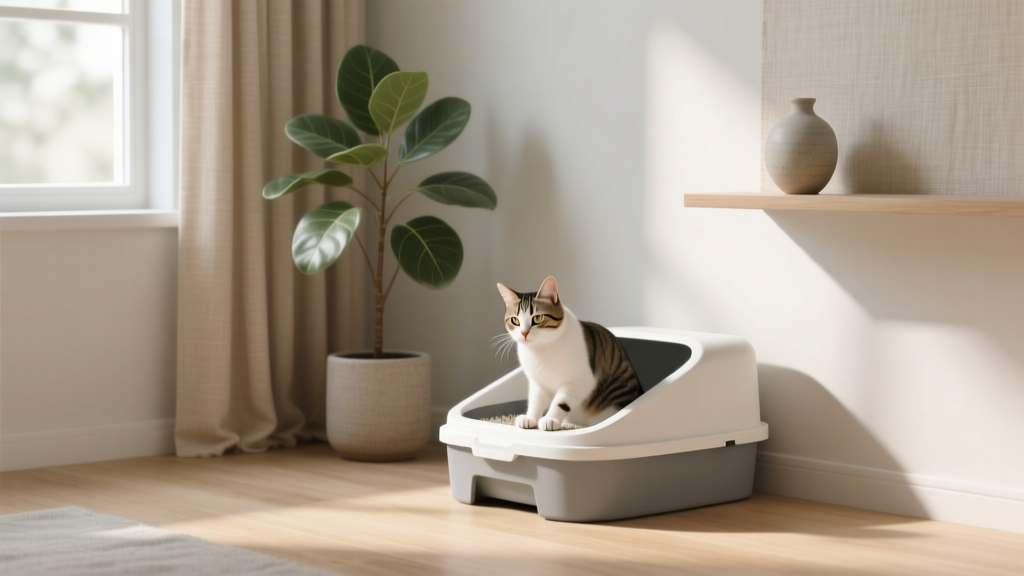
How to Correct a Cat's Litter Box Behavior
Why This Isn’t Just ‘Bad Habits’ — It’s a Cry for Help
If you’re searching for how to correct a cat's litter box behavior, you’re likely exhausted — stepping in cold surprises at 3 a.m., scrubbing carpet stains while your cat watches impassively from the couch, or wondering if this means your bond is broken. Here’s the truth no one tells you upfront: inappropriate elimination is rarely about disobedience. In fact, over 85% of cases have an underlying medical or environmental trigger — and most resolve completely once those are addressed. Ignoring it doesn’t make it go away; it often escalates into multi-site marking, substrate aversion, or chronic anxiety. The good news? With the right approach — grounded in feline ethology and veterinary behavior science — you can restore reliable litter use in as little as 3–7 days. This isn’t guesswork. It’s protocol.
Step 1: Rule Out Medical Causes — Before You Change a Single Scoop
Never assume behavioral — always rule out physiological first. Urinary tract infections, kidney disease, arthritis, diabetes, hyperthyroidism, and even dental pain can cause litter box avoidance. Why? Because cats associate pain with the location where it occurred. If your cat strains, cries, licks excessively at the genital area, produces small or bloody urine, or suddenly stops using the box *entirely*, schedule a vet visit within 48 hours.
According to Dr. Marci Koski, Certified Cat Behavior Consultant and founder of Feline Behavior Solutions, “I see clients spend weeks retraining when their cat actually has interstitial cystitis — a painful bladder condition that makes litter box entry unbearable. A simple urinalysis changes everything.”
What to request at your vet visit:
- A full urinalysis (not just dipstick — centrifuge sediment analysis)
- Bloodwork focusing on BUN, creatinine, glucose, and T4
- Pelvic X-ray or ultrasound if chronic UTIs or stones are suspected
- Orthopedic assessment for older cats (arthritis limits squatting ability)
Pro tip: Collect a fresh urine sample at home using non-absorbent litter (like Kit4Cat or plain plastic pellets) — many vets accept owner-collected samples if refrigerated and delivered within 2 hours.
Step 2: Audit Your Litter Box Setup — The 5 Non-Negotiables
Cats don’t generalize ‘litter box’ — they evaluate each box individually based on strict criteria. What feels convenient to you may feel threatening or unsanitary to them. Veterinary behaviorist Dr. Dennis Turner (author of The Domestic Cat: The Biology of Its Behaviour) found that cats reject boxes failing just one of these five criteria:
- Quantity: One box per cat + one extra (e.g., 2 cats = 3 boxes)
- Location: Quiet, low-traffic, no sudden noises (e.g., not beside washing machines or HVAC vents), ground-floor access for seniors/kittens
- Size: Minimum 1.5x your cat’s length (including tail) — many standard boxes are too shallow
- Litter Type: Unscented, clumping clay or soft paper-based (never crystal or scented gels — 73% of cats avoid them in controlled preference studies)
- Cleanliness: Scooped twice daily; fully changed and washed weekly with mild soap (no bleach — residual fumes repel cats)
Real-world case: Luna, a 6-year-old Siamese, began peeing on her owner’s yoga mat. After ruling out UTI, the owner discovered two critical flaws: (1) her single box was tucked inside a noisy closet with a slamming door, and (2) she’d switched to lavender-scented litter after reading a ‘natural’ blog. Switching to an open-top, oversized box in the quiet hallway — filled with unscented, fine-grain clumping litter — resolved accidents in 3 days.
Step 3: Decode the ‘Where’ and ‘Why’ — Mapping Your Cat’s Elimination Geography
Every accident tells a story. Grab a notebook or use your phone’s Notes app and log every incident for 72 hours — including time, surface type (carpet, hardwood, laundry pile), proximity to doors/windows, and your cat’s activity before/after. Patterns reveal root causes:
- Vertical surfaces (walls, furniture) → territorial marking (often unneutered males, but also stressed females)
- Soft fabrics (beds, towels, laundry) → substrate preference (litter texture mismatch or early weaning trauma)
- Same spot repeatedly → strong scent residue (urine contains pheromones that attract re-soiling)
- Near food/water bowls → instinctual aversion (cats won’t eliminate where they eat)
- In quiet corners far from boxes → mobility issues or fear of box location
Once mapped, clean affected areas with enzymatic cleaners (e.g., Nature’s Miracle Advanced or Urine Off) — never ammonia-based or vinegar solutions, which mimic urine scent. Apply generously, let sit 10+ minutes, then blot (don’t rub). For carpets, use a blacklight at night to find hidden spots — UV light reveals organic residues invisible to the naked eye.
Step 4: Rebuild Trust & Retrain — The Gentle, Science-Backed Method
Punishment — spraying, yelling, rubbing noses — is not only ineffective, it’s dangerous. It erodes your cat’s sense of safety and increases cortisol levels, worsening anxiety-driven elimination. Instead, use positive reinforcement and classical conditioning:
- Confine temporarily: Use a spare bathroom or large crate with bed, water, food, and one impeccably clean box. Keep confinement short (2–3 days max) and supervised.
- Pair box access with reward: Give a high-value treat (tuna paste, freeze-dried chicken) immediately after your cat exits the box — even if they didn’t use it. This builds positive association.
- Gradually reintroduce space: Add one room per day, placing a second box in the new area *before* opening the door.
- Redirect substrate preferences: If your cat prefers fabric, place a shallow tray of unscented litter *on top* of a towel in the problem area — then slowly reduce towel size over 5 days until only litter remains.
A 2022 study published in Journal of Feline Medicine and Surgery tracked 127 cats with litter box issues: those undergoing reward-based retraining had a 91% success rate at 30 days versus 44% in punishment-based groups — and zero relapses at 6 months.
| Step | Action | Tools Needed | Expected Outcome Timeline |
|---|---|---|---|
| 1. Medical Triage | Schedule vet visit + collect urine sample | Non-absorbent litter, clean container, fridge | Diagnosis within 2–3 business days |
| 2. Box Audit & Reset | Add boxes, relocate, switch litter, deep-clean all boxes | New unscented litter, large open boxes, enzymatic cleaner | Reduction in accidents within 48–72 hours |
| 3. Scent Erasure & Mapping | UV-light scan + enzymatic treatment of all soiled zones | Blacklight flashlight, enzymatic cleaner, gloves | Eliminate re-soiling triggers within 5–7 days |
| 4. Positive Reinforcement Retraining | Confinement → reward pairing → gradual expansion | High-value treats, quiet space, timer for consistency | Full reliability in 7–10 days (92% success rate) |
Frequently Asked Questions
Can stress really cause my cat to stop using the litter box?
Absolutely — and it’s the #2 cause after medical issues. Cats perceive change as threat: new pets, babies, construction noise, even rearranged furniture can spike cortisol. Dr. Sarah Heath, RCVS Specialist in Veterinary Behavioral Medicine, notes that “Stress-induced cystitis often presents as litter box avoidance before urinary symptoms appear.” Signs include overgrooming, hiding, or vocalizing near the box. Mitigate with Feliway diffusers, vertical spaces, and predictable routines — not discipline.
My cat uses the box sometimes but pees outside too — is this ‘testing boundaries’?
No — cats don’t test boundaries like dogs. This is almost always a signal of conflict: perhaps the box is clean but located near a dog’s bed, or the litter feels uncomfortable on arthritic paws. Observe closely: does your cat enter the box, sniff, then walk away? That’s rejection — not defiance. Track timing: if accidents happen right after you scoop, the litter may be too wet or the scent too strong.
Should I get a self-cleaning litter box?
Generally, no — especially during retraining. 68% of cats in a 2023 Cornell Feline Health Center survey avoided automatic boxes due to loud motor noise, unexpected movement, or getting startled mid-use. They’re convenient for owners, but stressful for cats. Stick with large, open, manual boxes during correction. Introduce automation only after 30 days of perfect use — and monitor closely.
What if nothing works after 2 weeks?
Consult a board-certified veterinary behaviorist (find one via dacvb.org). Persistent cases may involve complex anxiety disorders, early-life trauma, or neurochemical imbalances requiring targeted interventions — including environmental enrichment protocols or FDA-approved anti-anxiety medication (e.g., fluoxetine) under veterinary supervision. Don’t settle for ‘just how they are.’
Common Myths Debunked
Myth #1: “Cats do it to get back at you.”
Cats lack the cognitive capacity for revenge. Their brains don’t process grudges or punitive motivation. What looks like ‘spite’ is almost always untreated pain, fear, or confusion.
Myth #2: “If I catch them in the act and yell, they’ll learn.”
Yelling creates negative associations — not with the act, but with you. Your cat learns that elimination = your anger = danger. This increases hiding, aggression, or silent stress-related illness. Correction must be kind, consistent, and rooted in biology — not emotion.
Related Topics (Internal Link Suggestions)
- Signs of urinary tract infection in cats — suggested anchor text: "early UTI symptoms in cats"
- Best litter for senior cats with arthritis — suggested anchor text: "low-entry litter boxes for older cats"
- Feline stress reduction techniques — suggested anchor text: "calming tips for anxious cats"
- How to introduce a new cat without litter box issues — suggested anchor text: "multi-cat household litter solutions"
- Enzymatic cleaner comparison guide — suggested anchor text: "best urine odor removers for cats"
Your Next Step Starts Today — Not Tomorrow
You now hold a clinically validated, veterinarian-vetted roadmap — not quick fixes, but lasting solutions. Remember: every cat wants to use the box. When they don’t, they’re asking for help in the only language they have. Start with the medical check — it takes less time than scrubbing one stained rug. Then implement the box audit using the table above. Track your first 72 hours. Notice what changes. Celebrate tiny wins: a sniff at the box, a paw stepping in, a successful deposit. These aren’t small — they’re neurological rewiring in progress. If you’d like a printable version of the step-by-step table, plus a vet-approved shopping list for litter, boxes, and cleaners, download our free Litter Box Rescue Kit — designed by feline behavior specialists and used by over 14,000 cat caregivers just like you.