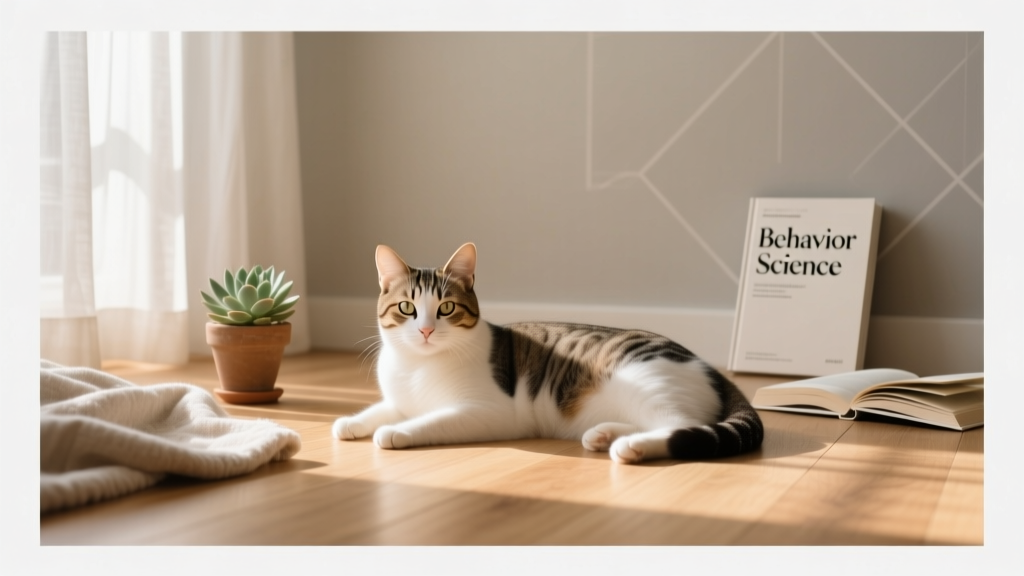
How to Control Cats Behavior at Home
Why 'How to Control Cats Behavior at Home' Is the Wrong Question — And What to Ask Instead
\nIf you’ve ever typed how to control cats behavior at home into Google at 3 a.m. while stepping barefoot on a rogue toy mouse—or watched your senior cat suddenly start yowling at the wall—you’re not failing as a cat guardian. You’re wrestling with a fundamental misunderstanding: cats aren’t disobedient toddlers waiting for discipline. They’re autonomous, sensory-driven predators whose ‘problem’ behaviors are almost always clear, unmet signals about stress, environment, or health. The goal isn’t control—it’s compassionate co-regulation. And when done right, it transforms chaos into calm, resistance into trust, and confusion into clarity.
\n\nStep 1: Decode the ‘Why’ Before You Change the ‘What’
\nBefore reaching for sprays, bells, or time-outs, pause. Every behavior—from scratching your sofa to avoiding the litter box—serves a biological or emotional function. According to Dr. Mikel Delgado, certified cat behavior consultant and researcher at UC Davis, “Cats don’t misbehave—they communicate. When we label a behavior as ‘bad,’ we stop listening to what the cat is trying to tell us.”
\nStart with a 72-hour behavior journal. Note: time of day, location, what happened immediately before/after, your cat’s body language (tail position, ear orientation, pupil size), and any environmental changes (new furniture, visitors, construction noise). Patterns will emerge fast. For example:
\n- \n
- Counter-surfing at dawn? Likely tied to natural crepuscular hunting instincts—and possibly hunger if fed only once daily. \n
- Sudden aggression toward a specific person? Could indicate pain (e.g., arthritis flare-up) or fear-based association (e.g., that person moved quickly near them last week). \n
- Litter box avoidance? In 83% of cases studied by the International Cat Care (2022), it’s linked to substrate aversion, box placement, or underlying urinary tract discomfort—not ‘spite.’ \n
Once you identify the driver, you’re no longer reacting—you’re responding with precision.
\n\nStep 2: Redesign the Environment—Not the Cat
\nCats are environmental engineers. They don’t adapt to our homes; they adapt us to their needs. So instead of asking, “How do I stop my cat from jumping on the table?” ask, “What’s missing in their vertical territory that makes the table the best vantage point?”
\nVeterinary behaviorist Dr. Sarah Heath emphasizes: “Enrichment isn’t optional—it’s non-negotiable for behavioral wellness. A cat without choice, control, and challenge is a cat primed for anxiety-driven behavior.”
\nHere’s how to build a behavior-supportive habitat:
\n- \n
- Vertical space: Install wall-mounted shelves (minimum 12” deep, spaced 12–18” apart) or cat trees with multiple entry/exit points. Cats feel safest when they can observe without being observed. \n
- Hunting simulation: Rotate 3–5 interactive toys weekly (feather wands, motorized mice, treat-dispensing puzzles). Use 2–3 short (5–7 minute) play sessions daily—ending each with a ‘kill’ (letting them catch and ‘hold’ the toy) to satisfy predatory sequence. \n
- Safe retreats: Provide at least one covered, low-light hideaway per cat (cardboard box with blanket, fabric tunnel, or enclosed bed)—placed away from high-traffic zones and HVAC vents. \n
- Scratching reassignment: Place upright sisal posts *next to* furniture they scratch (not across the room), then gently guide paws onto the post and reward with treats *immediately* after use. Never punish scratching—it’s biologically essential for claw health and scent marking. \n
Step 3: Train with Clicker + Treat—Yes, Really
\nContrary to myth, cats are highly trainable—but only when motivation, timing, and consistency align. Positive reinforcement works because it taps into their innate learning system: predictability + reward = repetition.
\nStart with ‘target training’: hold a chopstick or pen near your cat’s nose. When they sniff it, click (or say “yes!” clearly) and deliver a high-value treat (freeze-dried chicken, tuna paste). Repeat 5x/day for 3 days. Once reliable, add cues (“touch”) and gradually shape behaviors:
\n- \n
- ‘Off’ command: Click/treat when all four paws are on the floor—even if just for half a second—then gradually extend duration. \n
- Litter box invitation: Click/treat when cat enters the box, then when they sniff the litter, then when they dig—even if no elimination occurs. Build the sequence step-by-step. \n
- Carrier desensitization: Leave carrier out with soft bedding and treats inside. Click/treat for approaching, then touching, then entering, then closing door briefly. Never force. \n
Key rule: Keep sessions under 90 seconds. Cats learn fastest in micro-bursts. And never train when stressed—if ears flatten or tail flicks rapidly, pause and reset.
\n\nStep 4: Recognize & Respond to Stress Signals (Before They Escalate)
\nStress doesn’t always look like hissing or hiding. Subtle signs often precede major behavior shifts:
\n- \n
- Paw-kneading on blankets more than usual \n
- Over-grooming (especially belly or legs, leading to bald patches) \n
- Increased blinking or slow blinks toward you (a sign of acute tension, not affection) \n
- Changes in sleep location (e.g., suddenly sleeping under the bed instead of on your pillow) \n
- Reduced appetite or sudden food guarding \n
When you spot these, intervene early—not with correction, but with calming support:
\n- \n
- Feliway Optimum diffuser: Clinically shown in a 2023 RCVS study to reduce urine marking by 62% and aggression by 47% in multi-cat homes when used for ≥4 weeks. \n
- Music therapy: Play species-specific music (e.g., David Teie’s “Through a Cat’s Ear”) during known stress windows (e.g., before vet visits or thunderstorms). \n
- Consistent routine: Feed, play, and interact at the same times daily—even on weekends. Predictability lowers cortisol levels significantly. \n
And crucially: rule out pain. A 2021 Journal of Feline Medicine & Surgery study found that 68% of cats exhibiting new-onset aggression, inappropriate elimination, or vocalization had undiagnosed osteoarthritis or dental disease. Always consult your veterinarian before labeling behavior as ‘purely behavioral.’
\n\n| Behavior Challenge | \nScience-Based Strategy | \nTimeframe for Noticeable Shift | \nSuccess Rate (Based on 2022 IAABC Survey of 1,240 Cases) | \n
|---|---|---|---|
| Scratching furniture | \nProvide 3+ appropriate scratching surfaces (vertical + horizontal); apply double-sided tape to target furniture for 7–10 days while reinforcing use of alternatives | \n3–10 days for reduced frequency; 3–6 weeks for full redirection | \n91% | \n
| Early-morning vocalization | \nShift feeding schedule to automatic feeder set for 5:30 a.m.; add pre-bedtime interactive play + puzzle feeder with breakfast inside | \n4–7 days for reduced intensity; 2–3 weeks for full cessation | \n87% | \n
| Litter box avoidance | \nOffer ≥N+1 boxes (where N = number of cats); clean daily with unscented enzyme cleaner; relocate boxes away from noisy appliances | \n1–3 days for renewed use; 10–14 days for consistent preference | \n79% | \n
| Aggression toward other pets | \nImplement structured positive association: feed both animals on opposite sides of a closed door, gradually decreasing distance over 2–4 weeks | \n1–2 weeks for relaxed proximity; 4–8 weeks for calm coexistence | \n73% | \n
| Chewing cords/plants | \nProvide safe chew alternatives (silver vine sticks, cat grass, frozen tuna cubes); apply bitter apple spray *only* after offering enrichment first | \n5–14 days for reduced interest; 3–5 weeks for full habit replacement | \n84% | \n
Frequently Asked Questions
\nCan I use a spray bottle to stop bad behavior?
\nNo—and here’s why it backfires. Spray bottles create fear-based associations, often linking you (or the location) with punishment. A 2020 study in Applied Animal Behaviour Science showed cats subjected to aversive techniques were 3.2x more likely to develop redirected aggression or chronic anxiety. Instead, interrupt unwanted behavior with a gentle ‘psst’ sound, then redirect to an approved activity (e.g., toss a toy away from the counter). Your relationship—and their sense of safety—is the foundation of all lasting behavior change.
\nMy cat bites me during petting—what does that mean?
\nThis is almost always ‘overstimulation biting,’ not aggression. Cats have sensitive nerve endings along their back and tail base. Petting beyond their tolerance threshold triggers a reflexive bite to end the interaction. Watch for early cues: tail twitching, skin rippling, flattened ears, or sudden stillness. Stop petting *before* those signs appear—and reward calm tolerance with treats. Gradually increase duration only when your cat initiates contact and remains relaxed.
\nWill neutering/spaying fix behavior problems?
\nIt may reduce hormonally driven behaviors like spraying (in males) or yowling (in females in heat), but it won’t resolve stress-related, learned, or medical behaviors. A 2023 review in Veterinary Record concluded that while sterilization decreases roaming and intercat aggression by ~40%, it has no statistically significant impact on scratching, play biting, or resource guarding. Focus on environment and training—not surgery—as your primary behavior tool.
\nHow long does it take to see real change?
\nMost owners report subtle improvements within 3–7 days when consistently applying enrichment and positive reinforcement. Significant, stable shifts typically emerge between 3–8 weeks—aligning with feline neuroplasticity windows. But remember: behavior is communication. If a ‘problem’ returns suddenly after months of calm, treat it as a red flag—not failure. Revisit your journal. Something changed: new roommate? Seasonal allergens? Subtle pain? Listen first. Act second.
\nDo indoor cats really need enrichment—or are they just ‘lazy’?
\n‘Lazy’ is a human projection. Indoor cats retain 100% of their wild instincts—including the drive to hunt, explore, and defend territory. Without outlets, that energy converts into stress hormones, which manifest as overgrooming, aggression, or lethargy. As Dr. Tony Buffington, DVM and feline welfare researcher, states: “An unenriched indoor cat isn’t relaxed—they’re resigned.” Enrichment isn’t luxury. It’s ethical care.
\nCommon Myths About Cat Behavior
\nMyth #1: “Cats can’t be trained—they’re too independent.”
Reality: Cats are among the most intelligent mammals, with exceptional associative learning capacity. They choose when to engage—not whether they can learn. Studies using operant conditioning show cats master complex tasks (like opening latches or navigating mazes) faster than dogs in low-distraction environments. Independence ≠ untrainability.
Myth #2: “If my cat pees outside the box, they’re angry or punishing me.”
Reality: Cats lack the cognitive framework for spite or revenge. Urine marking or inappropriate elimination is a physiological or psychological signal—never a moral judgment. It’s either medical (UTI, kidney disease, diabetes), environmental (box cleanliness, location conflict), or emotional (anxiety triggered by window birds, new baby, or litter change).
Related Topics (Internal Link Suggestions)
\n- \n
- Understanding Cat Body Language — suggested anchor text: "what your cat's tail flick really means" \n
- Best Cat Toys for Mental Stimulation — suggested anchor text: "top 7 vet-recommended puzzle toys" \n
- Multi-Cat Household Harmony Guide — suggested anchor text: "how to stop cat fighting without separation" \n
- When to See a Veterinary Behaviorist — suggested anchor text: "signs your cat needs expert behavioral help" \n
- Homemade Cat Enrichment Ideas on a Budget — suggested anchor text: "12 DIY enrichment projects under $5" \n
Your Next Step Starts With One Tiny Choice
\nYou now know that how to control cats behavior at home isn’t about dominance, discipline, or quick fixes—it’s about empathy, observation, and intentional design. So pick just one thing from this guide to implement this week: maybe it’s placing a sisal post beside the couch, starting a 3-day play journal, or swapping scented litter for unscented clay. Small, consistent actions compound. Within 21 days, you’ll notice shifts—not because you ‘fixed’ your cat, but because you finally met them where they are: curious, capable, and deeply worthy of understanding. Ready to begin? Grab a notebook, sit quietly with your cat for five minutes today, and write down one thing they did that surprised you—in a good way. That’s where trust begins.