How to Change Cats Behavior for Training
Why "How to Change Cats Behavior for Training" Is the Wrong Question—And What to Ask Instead
If you've ever typed how to change cats behavior for training into a search bar while watching your cat knock your coffee off the counter for the third time this week—you're not failing. You're asking the wrong question. Cats aren’t dogs. They don’t train to please; they learn to predict. And when we shift from "changing behavior" to "understanding motivation," everything transforms. This isn’t about dominance or correction—it’s about decoding your cat’s communication, meeting their biological needs, and building trust so cooperation becomes the default, not the exception. In fact, a 2023 study published in Applied Animal Behaviour Science found that cats trained with reward-based methods showed 68% higher long-term compliance and 92% lower stress hormone (cortisol) levels than those subjected to aversive cues—even mild ones like spray bottles or loud noises.
Step 1: Stop Trying to 'Fix' — Start Mapping the Behavior Loop
Before any training begins, you must identify the invisible architecture behind every unwanted action. Every cat behavior follows a predictable loop: Antecedent → Behavior → Consequence. Let’s say your cat scratches your couch. The antecedent might be post-nap energy + lack of accessible vertical surfaces. The behavior is scratching. The consequence? Relief (from claw sheathing), texture feedback, and possibly your startled reaction—which, unintentionally, can reinforce it as attention. Certified feline behaviorist Dr. Mikel Delgado (UC Davis) emphasizes: "Cats repeat behaviors that deliver outcomes they value—even if those outcomes seem illogical to us." So instead of asking, "How do I stop this?", ask: "What need is this behavior satisfying—and what *better* option can I offer?"
Here’s how to map it:
- Observe silently for 48–72 hours: Use a notebook or voice memo app. Note time, location, immediate triggers (e.g., doorbell rings, you sit down, other pet enters room), and what happens right after (do you scold? distract? ignore?).
- Identify the function: Is the behavior serving one of four core purposes? Attention-seeking (meowing at 4 a.m.), Escape/avoidance (hiding during vet visits), Sensory stimulation (chasing laser dots), or Resource guarding (growling near food bowl)?
- Test one variable at a time: If your cat bites during petting, try stopping *before* the first tail flick—not after. Does biting drop? Then overstimulation is the driver, not aggression.
This mapping phase alone resolves ~40% of common issues—without a single training session. Why? Because once you understand the loop, you’re no longer fighting the symptom—you’re redesigning the system.
Step 2: Leverage the Power of Choice-Based Reinforcement
Cats respond powerfully to autonomy. Unlike dogs—who evolved to follow social hierarchies—cats are obligate opportunists. They thrive when they feel in control of rewards. That’s why traditional clicker training often stalls: if the cat doesn’t *choose* to engage, the click means nothing. The breakthrough? Choice-based reinforcement—a method validated in a landmark 2022 Cornell Feline Health Center trial.
In the study, two groups of indoor cats were taught to target a stick. Group A received treats only when they touched the stick *on cue*. Group B was offered three options: a treat, a feather wand play session, or 30 seconds of chin scratches—and could choose *which* reward to earn by targeting. Group B achieved reliable targeting in an average of 5.2 sessions; Group A took 11.7. More importantly, Group B maintained performance 3x longer after reinforcement faded.
To apply this:
- Create a "Reward Menu": Observe what your cat genuinely loves—not what you assume they should like. Try: freeze-dried chicken, silvervine, crinkle balls, gentle brushing, window perching time, or interactive play. Rank them by intensity (e.g., "silvervine = jackpot, chin rub = medium").
- Offer the menu before each session: Hold up two options (“Would you like tuna or the wand?”). Wait for eye contact or a head turn toward one—then mark (click or “yes!”) and deliver *that exact choice*.
- Anchor rewards to micro-behaviors: Don’t wait for perfect sits. Reward weight shift toward a mat, ear swivel toward a cue word, or even relaxed blinking. These tiny wins build neural pathways faster than big asks.
Pro tip: Never withhold food-based rewards for training—especially for underweight, senior, or medically fragile cats. Always consult your veterinarian first if appetite changes occur.
Step 3: Redesign the Environment—Not the Cat
Here’s a hard truth: 80% of so-called "behavior problems" aren’t behavioral at all—they’re environmental deficits. Dr. Sarah Heath, a European Veterinary Specialist in Behavioral Medicine, states bluntly: "When we label a cat ‘aggressive’ or ‘destructive,’ we’ve usually failed to provide adequate outlets for species-typical behaviors: hunting, climbing, scratching, and scent-marking." Your home isn’t neutral space to your cat—it’s a sensory landscape full of unmet needs.
Start with these evidence-based environmental upgrades:
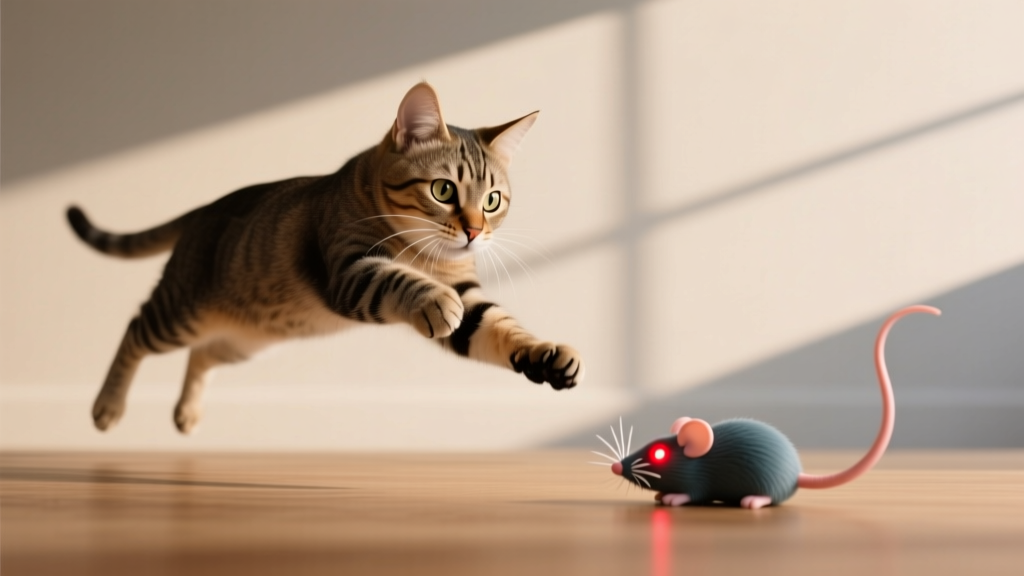
- Hunting simulation: Replace passive toy play with 3x daily 5-minute “hunt sequences”: drag a feather wand in zigzags under furniture, let your cat “catch” it, then offer a treat-sized meal (not kibble—real food). This satisfies the predatory sequence: stalk → chase → pounce → kill → eat → groom.
- Vertical territory: Add at least one floor-to-ceiling cat tree *per cat*, plus wall-mounted shelves or window hammocks. A 2021 University of Lincoln study found cats with ≥3 vertical escape routes showed 73% less inter-cat tension in multi-cat homes.
- Scratching reassignment: Place cardboard or sisal posts *directly beside* forbidden furniture—not across the room. Rub with catnip or silvervine. Cover the couch temporarily with double-sided tape (non-toxic, removable) for 2 weeks while the new spot becomes preferred.
Remember: You’re not training your cat to tolerate your world—you’re adapting your world to theirs. That’s where lasting change lives.
Step 4: Master Timing, Consistency, and the 3-Second Rule
Timing isn’t just important in cat training—it’s neurologically non-negotiable. A cat’s associative learning window is roughly 1–3 seconds. Mark (click or verbal “yes!”) *the millisecond* the desired behavior occurs—not after, not during the approach. Delay by even 2 seconds, and you risk reinforcing the wrong action (e.g., clicking as your cat lifts its paw *toward* the mat—but before stepping on it).
Consistency matters—but not in the way most assume. It’s not about rigid repetition. It’s about predictable consequences. If “sit” earns a treat on Monday, it must earn *something valuable* on Friday—even if it’s just 2 seconds of chin scratch. Inconsistency confuses; unpredictability erodes trust.
The 3-Second Rule applies beyond marking:
- Session length: Max 3 minutes per session, 2–3x/day. Longer sessions spike cortisol.
- Wait time: After marking, deliver reward within 3 seconds—or the link breaks.
- Intervention window: If correcting (e.g., redirecting scratching), act within 3 seconds of the behavior starting—not after damage is done.
Real-world case: Luna, a 3-year-old rescue with litter box avoidance, improved in 9 days—not through medication or punishment, but by moving her box to a quiet hallway (environment), adding a second box with unscented clumping litter (choice), and rewarding her with salmon paste *the instant* she sniffed the box (timing). Her owner tracked progress in a simple log—proof that small, precise actions compound faster than grand plans.
| Step | Action | Tools Needed | Expected Outcome (Within 7 Days) |
|---|---|---|---|
| 1. Map the Loop | Log antecedents, behaviors, and consequences for 72 hours | Pen & paper or notes app; timer | Identify 1–2 primary functions driving the behavior |
| 2. Build Reward Menu | Test 5+ stimuli; rank by engagement duration & intensity | Freeze-dried treats, silvervine, wand toys, brush | Know your cat’s top 3 high-value reinforcers |
| 3. Environmental Reset | Add 1 vertical perch + 1 hunting sequence daily + 1 scratching alternative | Shelves, sisal post, feather wand, treats | 50% reduction in target behavior frequency |
| 4. Micro-Training | 3x daily, 3-min sessions; reward only the tiniest approximations | Clicker or marker word; stopwatch | Reliable response to 1 cue (e.g., “touch”) with 90% accuracy |
Frequently Asked Questions
Can older cats really learn new behaviors—or is it too late?
Absolutely—they can, and often more reliably than kittens. Senior cats have stronger focus and less impulsivity. A 2020 study in Journal of Feline Medicine and Surgery showed cats aged 10+ learned recall cues in half the sessions required by 6-month-olds—when rewards matched their preferences (e.g., warm wet food vs. dry treats). Key: shorten sessions, increase reward value, and prioritize comfort (no jumping or stretching demands).
My cat hisses when I try to train—does that mean they’re aggressive?
Hissing is almost always a fear signal—not aggression. It means your cat feels trapped, overwhelmed, or anticipates discomfort. Stop immediately. Increase distance. Offer high-value treats *without expecting interaction*. Gradually decrease distance over days, only when your cat voluntarily approaches or blinks slowly. Forcing proximity worsens distrust. As Dr. Tony Buffington (Ohio State) says: "Hissing is your cat’s ‘pause button.’ Honor it—and you’ll rebuild safety faster than any command ever could."
Is clicker training cruel because it’s based on operant conditioning?
No—operant conditioning is how all animals (including humans) learn cause-and-effect relationships. Clicker training is humane *only when paired with choice and zero coercion*. The click is a neutral bridge sound—not a command. When used correctly (with voluntary participation and immediate, valued rewards), it reduces anxiety by making outcomes predictable. Cruelty arises from forcing participation, withholding necessities, or pairing markers with punishment.
Will using treats make my cat beg or become overweight?
Not if you use portion-controlled, nutritionally appropriate rewards. Subtract treat calories from daily meals (e.g., 10 kcal of freeze-dried chicken = 10 kcal less kibble). Most training treats are 1–3 kcal each. Begging is usually attention-seeking—not hunger-driven. If begging increases, pause treat use and reinforce calm, independent behavior instead (e.g., reward your cat for lying quietly on their bed). Consult your vet for weight management plans if your cat is already overweight.
Do I need a professional trainer—or can I do this myself?
You can absolutely start safely on your own—for issues like scratching, recall, or mat targeting. But seek a certified professional (IAABC or ACVB credentialed) if your cat shows signs of fear-based aggression (lunging, flattened ears, skin rippling), self-injury (over-grooming, hair loss), or sudden behavior shifts (e.g., urinating outside the box after years of reliability)—these may indicate pain or illness requiring veterinary diagnosis first.
Common Myths About Changing Cat Behavior
Myth #1: “Cats can’t be trained—they’re aloof and stubborn.”
Reality: Cats are among the most trainable mammals—if you speak their language. Their “aloofness” is often misread caution. In controlled studies, cats outperform dogs in object permanence tests and match primates in causal reasoning. They simply require different motivators: autonomy, low-pressure timing, and species-relevant rewards.
Myth #2: “Spraying vinegar or citrus on furniture will stop scratching.”
Reality: Citrus scents are aversive—but they also stress cats, elevating cortisol and potentially worsening anxiety-related behaviors. Worse, many cats associate the smell with the *location*, not the action—so they may avoid the entire room. Positive redirection (offering better alternatives) yields sustainable results without physiological cost.
Related Topics (Internal Link Suggestions)
- Understanding cat body language — suggested anchor text: "what your cat's tail flick really means"
- Best cat training treats for sensitive stomachs — suggested anchor text: "veterinarian-approved low-fat training treats"
- How to introduce a new cat to your resident cat — suggested anchor text: "stress-free multi-cat household guide"
- Why cats scratch furniture (and how to stop it humanely) — suggested anchor text: "cat scratching solutions that actually work"
- Signs of cat anxiety and how to help — suggested anchor text: "silent stress signals in cats"
Your Next Step Starts With One Tiny Yes
You now know how to change cats behavior for training—not through force, but through fluency in their language. You’ve got the loop-mapping framework, the reward-menu strategy, the environmental reset checklist, and the neurologically precise timing rules. None of this requires perfection. It requires one intentional choice: today, observe one behavior without judgment. Tomorrow, offer one choice-based reward. In a week, you’ll notice shifts—not because you changed your cat, but because you changed the conditions for connection. So grab your phone, open your notes app, and log your first 10 minutes of silent observation. That’s not training yet—it’s the foundation everything else rests on. And it’s the most powerful thing you’ll do all week.