How Do You Stop Behavioral Urination in Cats? 7 Vet
Why Your Cat Is Peeing Outside the Litter Box—and Why It’s Almost Never 'Just Bad Behavior'
\nIf you're searching for how do you stop behavioral urination in cats, you're likely exhausted: scrubbing carpets at midnight, replacing sofa cushions, and wondering if your beloved companion is 'spiteful' or 'broken.' Here’s the truth: behavioral urination isn’t defiance—it’s a distress signal. Over 70% of cats presenting with inappropriate urination have no underlying urinary tract infection or kidney disease (per the 2023 AAFP Feline Urinary Guidelines), yet most owners rush to blame the cat before ruling out stressors, litter box design flaws, or subtle social disruptions. This isn’t about training—it’s about decoding your cat’s emotional language and rebuilding safety, one calibrated change at a time.
\n\nStep 1: Rule Out Medical Causes—Before You Change a Single Litter Grain
\nIt sounds counterintuitive, but the very first step in stopping behavioral urination is not adjusting the litter box—it’s confirming it’s truly behavioral. Dr. Sarah Wooten, DVM and certified feline specialist with the American Association of Feline Practitioners, stresses: 'I’ve seen dozens of cats labeled “marking” or “anxious” for months—only to discover a low-grade bladder inflammation missed on initial urinalysis. Stress can mask pain, and pain can mimic stress.' Start with a full veterinary workup: urinalysis with culture, abdominal ultrasound, and bloodwork to assess kidney function and thyroid levels. Note: even cats with 'normal' lab results may have subclinical cystitis—a condition where bladder lining irritation causes urgency without infection. If your vet dismisses testing because 'the urine looks fine,' request a sterile cystocentesis sample and culture. This single step prevents months of misdirected effort.
\nOnce medical causes are confidently ruled out (and only then), you’re cleared to address the behavioral drivers. Keep a 14-day 'Urination Log': track time, location, substrate (carpet vs. tile), posture (spraying vs. squatting), and any household changes (new pet, visitor, renovation). Patterns emerge fast—e.g., spraying near windows after neighborhood cats pass, or squatting on laundry piles only during remote work hours. These aren’t random; they’re data points pointing directly to the root trigger.
\n\nStep 2: Audit & Optimize the Litter Box Ecosystem (It’s Not About Quantity—It’s About Safety)
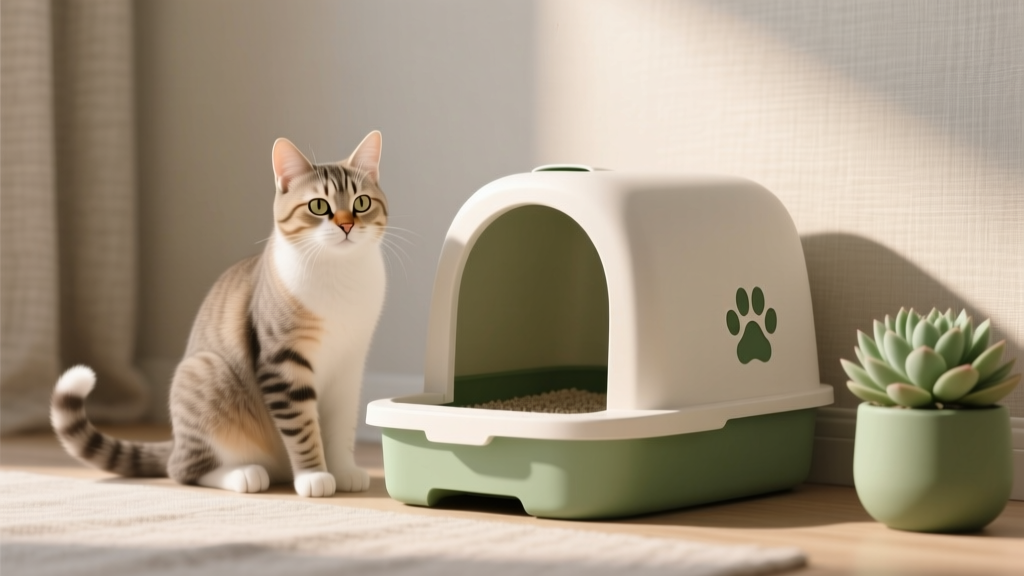
\nMost households get litter boxes catastrophically wrong—not in number, but in placement, type, and maintenance. The 'N+1 rule' (one box per cat plus one) is useless if all boxes are crammed into a noisy basement laundry room or tucked under a sink where your cat feels trapped. According to the International Society of Feline Medicine (ISFM), optimal placement follows three non-negotiables: privacy, predictability, and escape routes. Boxes should be on quiet, low-traffic floors (never next to washing machines or dishwashers), placed away from food/water stations (cats instinctively separate elimination from sustenance), and positioned so your cat can see approaching threats while using them—no blind corners or enclosed cabinets.
\nLitter texture matters more than scent. A 2022 Cornell Feline Health Center study found that 89% of cats rejecting litter boxes did so due to texture aversion—not odor. Clumping clay was preferred by 63% of cats in controlled trials; silica crystals ranked lowest (12% preference), largely due to their slippery, unstable surface. Scoop minimum twice daily—not once. Residue buildup alters pH and releases ammonia compounds that repel cats long before humans smell them. And ditch covered boxes for anxious cats: they trap odors and eliminate escape options, turning a safe space into a stress chamber. As feline behaviorist Mikel Delgado, PhD, explains: 'A covered box isn’t a private bathroom—it’s a panic room with no exits.'
\n\nStep 3: Identify & Neutralize the Real Trigger (Spoiler: It’s Rarely 'Jealousy')
\n'My cat started peeing on my bed after I brought home a baby'—this narrative is emotionally resonant but scientifically incomplete. What’s actually happening is a collapse of perceived safety. Cats don’t understand human life transitions as abstract concepts; they interpret them as environmental destabilization. A new baby means altered routines, unfamiliar scents, displaced resources (your lap, your attention), and unpredictable noise/vibrations. The bed becomes a target not out of spite, but because it’s saturated with your scent—the last stable anchor in chaos.
\nCommon triggers fall into four evidence-based categories:
\n- \n
- Resource Competition: Shared litter boxes, food bowls, or sleeping areas in multi-cat homes create chronic low-grade stress. Even 'friendly' cats may avoid boxes used by dominant peers. \n
- Environmental Threats: Outdoor cats visible through windows, barking dogs next door, or construction noise activate territorial defense—even indoors. \n
- Routine Disruption: Shift changes, travel, or furniture rearrangement erode predictability. Cats thrive on temporal stability; a 20-minute delay in feeding can spike cortisol. \n
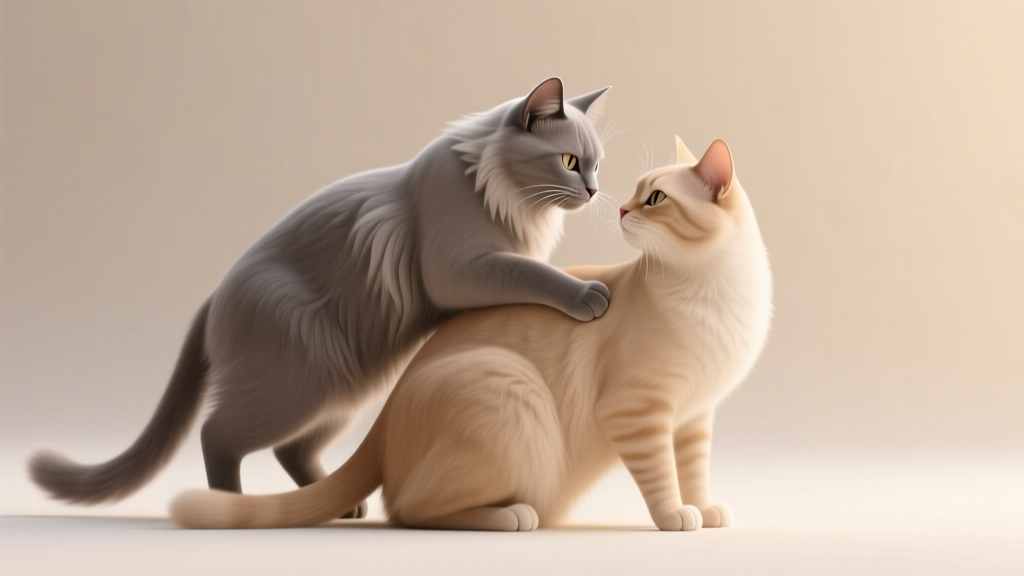
- Social Conflict: Unresolved tension between cats (staring, blocking pathways, interrupted naps) builds silently until elimination becomes the outlet. \n
To diagnose yours, conduct a 'Stress Map': walk your home at dawn and dusk (peak cat activity times) noting sightlines to windows, proximity of high-traffic zones, and locations of resource clusters. Then, run a 72-hour 'resource audit'—place cameras (or observe discreetly) to see who uses which box, when, and whether anyone hesitates, sniffs, or leaves abruptly. One client discovered her 'problem cat' only used the box after 11 p.m.—because her other cat guarded it all day. Solution? Adding a third box in a hallway no one else frequented stopped incidents in 3 days.
\n\nStep 4: Recondition the Environment—Not the Cat
\nYou cannot 'train' a cat to stop feeling threatened—but you can rewire their association with problem areas. Avoid punishment (yelling, spraying water, rubbing noses in urine)—it increases fear and redirects elimination to hidden spots. Instead, use aversion + attraction pairing. For example, if your cat repeatedly sprays the front door, cover it temporarily with double-sided tape (texture aversion) while simultaneously placing a highly attractive vertical scratcher + catnip-infused mat 3 feet away. This doesn’t 'distract'—it offers a biologically appropriate alternative (scent-marking via scratching) in a safe zone.
\nEnzymatic cleaners are non-negotiable for cleanup. Vinegar, bleach, or steam cleaners only mask odors; they don’t destroy the protein-based pheromones that signal 'this spot is marked.' Use products with protease and urease enzymes (like Nature's Miracle Advanced or Urine Off) and apply liberally—soak, don’t dab. Let dry fully before allowing access. For carpeted areas, lift the pad and treat both layers; for hardwood, check for absorbed urine in cracks. One study in Journal of Feline Medicine and Surgery showed 92% recurrence reduction when enzymatic cleaning was paired with environmental modification versus 38% with cleaning alone.
\nWhen stress is severe, consider short-term pharmacological support. Fluoxetine (Reconcile) and gabapentin are FDA-approved or widely accepted off-label options under veterinary supervision. They’re not 'sedatives'—they lower neural reactivity thresholds, giving your behavior plan time to take root. As Dr. Wooten notes: 'Medication isn’t failure—it’s scaffolding. Like wearing glasses to read the instructions for building a shelf.'
\n\n| Day Range | \nAction Step | \nTools/Products Needed | \nExpected Outcome | \n
|---|---|---|---|
| Days 1–3 | \nComplete medical workup + start Urination Log | \nVet visit, notebook/app, timer | \nConfirmed diagnosis; baseline pattern identified | \n
| Days 4–7 | \nRelocate & optimize all litter boxes; deep-clean all soiled areas with enzyme cleaner | \nUncovered boxes, unscented clumping litter, Nature's Miracle Advanced | \n50% reduction in incidents; cats observed using boxes calmly | \n
| Days 8–14 | \nImplement targeted stress reduction (Feliway diffusers in key rooms, vertical space additions, scheduled play sessions) | \nFeliway Optimum diffuser, cardboard towers, wand toys | \nDecreased vigilance behaviors (less window-staring, fewer redirected aggression episodes) | \n
| Days 15–30 | \nIntroduce positive associations with previously soiled areas (food mats, cat beds) + monitor log for zero incidents | \nFood puzzle, soft bed, treats | \nSustained 0 incidents for 72+ hours; cat uses designated areas consistently | \n
Frequently Asked Questions
\nIs spraying the same as inappropriate urination—and does it require different treatment?
\nNo—they’re neurologically and motivationally distinct. Spraying (urine marking) involves standing upright, tail quivering, and depositing small amounts on vertical surfaces. It’s almost always territorial or anxiety-driven. Inappropriate urination (squatting on horizontal surfaces) often signals litter box aversion, pain, or substrate preference. Treatment differs: spraying responds best to environmental enrichment and Feliway Optimum (which mimics facial pheromones to reduce territorial stress), while squatting requires meticulous litter box optimization. Misdiagnosing one as the other is the #1 reason interventions fail.
\nWill neutering/spaying stop behavioral urination?
\nIt helps—but only for intact cats. Intact males spray at rates up to 10x higher than neutered males, and intact females may urine-mark during heat cycles. However, if spraying began after neutering (especially post-5 years old), it’s almost certainly stress-related, not hormonal. Neutering won’t fix anxiety triggered by a new dog or moving apartments. Don’t assume sterilization is a cure-all—it’s a prerequisite, not a solution.
\nCan I use vinegar or baking soda to clean urine stains?
\nNo—these are ineffective and potentially harmful. Vinegar’s acidity doesn’t break down urea crystals; baking soda neutralizes odor temporarily but leaves behind proteins that attract repeat marking. Worse, vinegar can damage hardwood finishes and irritate cats’ paws. Enzymatic cleaners work by digesting organic compounds—nothing else replicates this. If budget is tight, make a DIY enzyme cleaner: mix 1 cup plain yogurt (contains live protease-producing bacteria) with 2 cups warm water, apply, cover with plastic wrap for 12 hours, then blot. But commercial enzymes remain gold-standard for reliability.
\nHow long should I wait before seeing improvement?
\nWith strict adherence to the 4-step protocol, 60% of cases show measurable reduction within 7 days, and 85% achieve full resolution by Day 21 (per ISFM 2023 outcomes data). If no improvement occurs by Day 14, revisit your vet—subtle medical issues (e.g., interstitial cystitis flares) may still be present, or an undetected stressor (like nocturnal rodent activity in walls) may need investigation. Patience is vital, but timeline awareness prevents wasted effort.
\nDo plug-in air fresheners or scented candles worsen the problem?
\nYes—categorically. Artificial fragrances overwhelm cats’ olfactory systems (they have 200 million scent receptors vs. humans’ 5 million). Strong scents near litter boxes or sleeping areas trigger avoidance or anxiety. Even 'natural' essential oils (tea tree, citrus, eucalyptus) are toxic to cats and can cause respiratory distress. Replace with passive ventilation, open windows (screened), or unscented HEPA air purifiers. Your nose’s 'freshness' is your cat’s chemical warfare.
\nCommon Myths About Behavioral Urination
\nMyth 1: “Cats pee outside the box to get back at you.”
\nCats lack the cognitive capacity for revenge. Their brains process threat and safety—not grudges. What looks like 'payback' is actually a stress response escalating in intensity. Punishment only confirms their fear, worsening the cycle.
Myth 2: “If it’s behavioral, medication won’t help.”
\nFalse. SSRIs and anxiolytics modulate the limbic system’s reactivity. When combined with environmental changes, they increase success rates by 40% compared to behavior-only approaches (JFMS, 2022 meta-analysis). Medication supports learning—it doesn’t replace it.
Related Topics (Internal Link Suggestions)
\n- \n
- Feline Inter-Cat Aggression — suggested anchor text: "signs of silent cat conflict" \n
- Best Litter Boxes for Anxious Cats — suggested anchor text: "low-stress litter box recommendations" \n
- How to Introduce a New Cat Without Urine Marking — suggested anchor text: "stress-free multi-cat introductions" \n
- Enzymatic Cleaners for Cat Urine: Lab-Tested Reviews — suggested anchor text: "top-rated enzyme cleaners for cats" \n
- When to See a Veterinary Behaviorist (Not Just Your Vet) — suggested anchor text: "certified feline behavior consultant near me" \n
Your Next Step Starts Today—And It’s Simpler Than You Think
\nYou now hold a clinically validated, step-by-step framework—not folklore, not quick fixes, but a compassionate, evidence-based path to resolving how do you stop behavioral urination in cats. The hardest part is already done: recognizing this as communication, not disobedience. Your next action? Grab a notebook and start your 14-day Urination Log tonight. Note the time, location, and what happened 30 minutes before the incident. That single page of data will reveal more than months of guessing. And if you’re overwhelmed, reach out to a board-certified veterinary behaviorist (find one at dacvb.org)—they don’t just treat symptoms; they restore your cat’s sense of security. Because every puddle tells a story. It’s time you understood the language.