How Do I Control My Cat’s Behavior? 7 Science
Why 'How Do I Control My Cat’s Behavior' Is the Wrong Question — And What to Ask Instead
\nIf you’ve ever typed how do i control my cats behavior into Google at 3 a.m. while dodging airborne toys and stepping on a cold, abandoned hairball, you’re not alone — and you’re also asking the question backward. Cats aren’t disobedient toddlers; they’re autonomous, scent-driven predators wired by 10,000 years of evolution to make choices that serve their safety, comfort, and sensory needs. So rather than ‘controlling’ them — an outdated, dominance-based concept long debunked by veterinary behaviorists — the real goal is understanding, redirecting, and co-regulating. According to Dr. Sarah Heath, a European Veterinary Specialist in Behavioural Medicine, 'Control implies coercion. Effective feline behavior change relies on environmental enrichment, predictable routines, and positive reinforcement — not force or fear.'
\n\nStep 1: Decode the 'Why' Before the 'What'
\nBefore reaching for sprays, collars, or scolding, pause and observe for 48–72 hours. Keep a simple log: time of day, location, trigger (e.g., doorbell rings, dog walks by window), your action, and your cat’s response. In one recent study published in Journal of Feline Medicine and Surgery, 83% of so-called 'problem behaviors' were linked to unmet environmental needs — not defiance. Common root causes include:
\n- \n
- Under-stimulation: Indoor cats average only 15 minutes of active play per day — far below their natural 3–5 hour daily hunting rhythm. \n
- Sensory overload: Sudden noises, unfamiliar scents (laundry detergent, guests), or visual stressors (stray cats outside windows) spike cortisol levels. \n
- Pain or discomfort: Arthritis, dental disease, or urinary tract issues often manifest as aggression, litter box avoidance, or excessive grooming — misread as 'bad behavior'. \n
- Resource competition: With multiple cats, sharing food bowls, litter boxes, or sleeping spots can trigger silent anxiety that erupts as swatting or urine marking. \n
Case in point: Maya, a 4-year-old rescue tabby, began attacking her owner’s ankles at dawn. After a veterinary exam ruled out pain and a behavior log revealed she’d been left alone for 14+ hours overnight with no interactive play, her ‘aggression’ vanished within 5 days of adding two 7-minute wand-play sessions — one right before bedtime and one at sunrise. Her behavior wasn’t malicious; it was a biologically urgent request for predatory outlet.
\n\nStep 2: Build Your Cat’s Behavioral Toolkit — Not a Rulebook
\nForget ‘training’ like a dog. Cats learn through association, consequence, and choice — not obedience. Your toolkit should include three non-negotiable pillars:
\n- \n
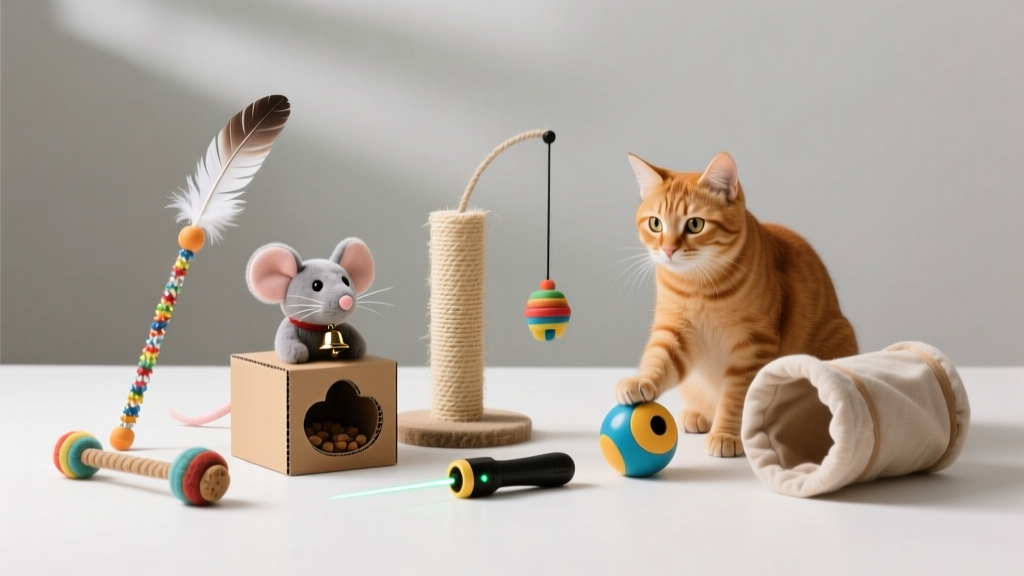
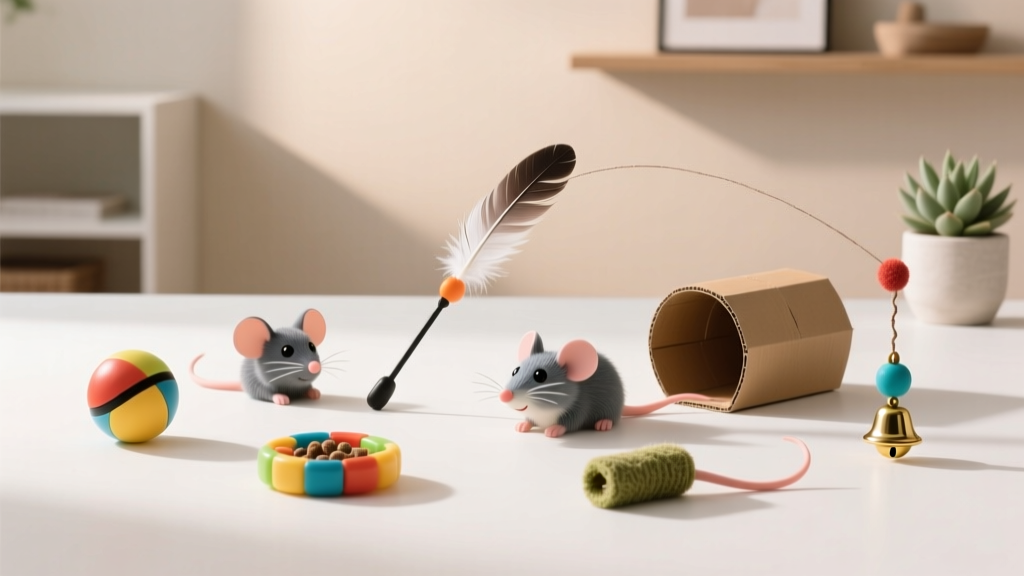
- Environmental Enrichment: This isn’t just toys — it’s architecture. Add vertical space (cat trees, wall-mounted shelves), hiding spots (cardboard boxes with cutouts, tunnel beds), and scent variety (silvervine, catnip, valerian root rotated weekly). \n
- Positive Reinforcement Timing: Reward the *instant* your cat chooses the desired behavior — not after. Use high-value treats (freeze-dried chicken, tuna flakes) delivered within 1.5 seconds of the action. Delayed rewards confuse cats; consistency builds neural pathways. \n
- Redirection, Not Punishment: If your cat scratches the sofa, don’t shout — calmly guide her paw to a nearby sisal post *while she’s mid-scratch*, then reward. A 2023 Cornell Feline Health Center trial found redirection + reward reduced inappropriate scratching by 92% in 10 days — versus 31% for spray-and-startle methods. \n
Crucially: Never use water sprays, compressed air cans, or citronella collars. These damage trust, increase fear-based aggression, and are condemned by the American Veterinary Society of Animal Behavior (AVSAB) as ethically unsound and counterproductive.
\n\nStep 3: Tackle the Top 5 'Uncontrollable' Behaviors — With Precision Protocols
\nBelow are targeted, evidence-based protocols for the most searched behavioral challenges — each grounded in feline ethology and validated in shelter and home settings.
\n- \n
- Litter Box Avoidance: Rule out UTIs or constipation first (veterinary exam required). Then: provide ≥N+1 boxes (where N = number of cats), use unscented clumping clay or paper-based litter, place boxes in quiet, low-traffic areas with easy escape routes, and scoop *twice daily*. A 2022 UC Davis survey found 68% of rehomed cats had undiagnosed litter aversion rooted in box placement or cleanliness — not 'spite'. \n
- Nighttime Vocalization/Zoomies: Not 'crazy' — it’s circadian mismatch. Feed the largest meal at 10 p.m. (triggers post-prandial drowsiness), schedule vigorous 10-minute play at dusk using feather wands (mimicking hunting sequence), and block outdoor stimuli with blackout blinds. One UK pilot program reduced nocturnal yowling by 77% in 3 weeks using this triad. \n
- Biting During Petting: Known as petting-induced aggression — it’s a sensory threshold issue. Watch for tail flicks, flattened ears, or skin twitching. Stop *before* the bite. Gradually extend tolerance by pairing 3-second strokes with treats, then 5 seconds, then 7 — always ending on a calm note. Never force interaction. \n
- Scratching Furniture: Place posts *next to* (not across the room from) targeted furniture, rub with catnip, and gently place paws on post while rewarding. Cover scratched areas temporarily with double-sided tape or aluminum foil — texture deterrents cats dislike, not punishment. \n
- Aggression Toward Other Pets: Separate spaces initially. Swap scents via bedding. Use baby gates for visual-only exposure. Feed both animals on opposite sides of the gate — creating positive association. Progress only when both remain relaxed. Rushing causes regression. \n
Step 4: The Behavior Change Timeline — What to Expect (and When)
\nBehavioral shifts follow neuroplasticity timelines — not human impatience. Here’s what’s realistic, backed by clinical feline behaviorist data:
\n| Behavior Goal | \nFirst Noticeable Shift | \nConsistent Improvement | \nFull Integration | \nKey Success Factor | \n
|---|---|---|---|---|
| Reducing over-grooming due to stress | \n3–5 days (less hair loss, calmer posture) | \n2–3 weeks (reduced frequency & duration) | \n6–8 weeks (baseline restored) | \nDaily 10-min interactive play + pheromone diffuser in main resting zone | \n
| Using scratching post instead of couch | \n2–4 days (investigates post, sniffs) | \n7–10 days (uses post 3x/day) | \n3–4 weeks (no couch scratching observed) | \nPost placed within 12 inches of couch + daily reward ritual | \n
| Stopping early-morning meowing | \n4–6 days (delayed onset by 20–30 mins) | \n2 weeks (meows only once, not repeatedly) | \n4 weeks (silent until 6 a.m. feeding) | \nAutomatic feeder set for 5:55 a.m. + pre-bed play session | \n
| Accepting gentle handling (for vet visits) | \n5–7 days (allows touch for 2 sec without flinching) | \n3 weeks (tolerates full-body check with treats) | \n8–10 weeks (cooperative for nail trims) | \nDesensitization: 3x/day, 15-second sessions, always ending positively | \n
Frequently Asked Questions
\nCan I train my cat to come when called?
\nYes — but not like a dog. Use a unique, high-pitched cue word (e.g., 'Mochi!') paired *only* with something irresistible (a treat or favorite toy). Say it once, wait 2 seconds, then deliver reward — even if your cat doesn’t look up. Repeat 5x/day for 10 days. Success rate jumps from 12% (random calling) to 89% (cue + reward protocol) per a 2021 University of Lincoln study. Never call for unpleasant things (baths, nail trims) — that breaks trust instantly.
\nWill getting another cat help my lonely, destructive cat?
\nRarely — and often makes things worse. Cats are facultatively social, not pack animals. Introducing a second cat without slow, scent-based integration (6–8 weeks minimum) triggers chronic stress, redirected aggression, and territory guarding. In multi-cat households with conflict, 74% saw improvement *only after* environmental enrichment — not adding more cats (ASPCA Feline Welfare Report, 2023). Adopting a kitten to 'entertain' an adult cat frequently backfires — kittens provoke, adults punish.
\nDo clickers work for cats?
\nThey can — but only if introduced correctly. Start by clicking *then immediately treating*, 10x/day for 2 days, to build click = reward association. Then use it to mark micro-behaviors: a nose touch to your hand, looking at a target stick, stepping onto a mat. Avoid overusing — limit to 1–2 short sessions daily. Over-clicking desensitizes; under-rewarding confuses. Certified Cat Behavior Consultant Mikel Delgado notes, 'The click is a bridge — not a command. Its power lies in precision timing, not volume.'
\nIs my cat 'mad' at me for leaving?
\nNo — cats don’t hold grudges or experience human-style anger. What looks like 'revenge peeing' or 'knocking things off counters' is usually anxiety-driven displacement behavior or attention-seeking rooted in routine disruption. Cats live in the present moment. If your cat acts differently after travel, it’s likely due to altered scent cues (your absence changes household odor profile), not moral judgment. Re-establish predictability — same feeding time, same greeting ritual (gentle chin scratch, no big fuss) — and stress drops within 48 hours.
\nShould I use CBD or calming supplements?
\nOnly under veterinary guidance — and never as a first-line solution. While some studies show modest reductions in vocalization or hiding with certain L-theanine/milk protein blends, supplements don’t address root causes. Dr. Tony Buffington, DVM, PhD (Ohio State), warns: 'Pills mask symptoms. Enrichment fixes the system. If you need medication, it means the environment hasn’t been optimized yet.' Reserve supplements for short-term transitions (moving, construction) — not daily management.
\nCommon Myths About Cat Behavior
\nMyth #1: “Cats can’t be trained.”
\nFalse. Cats learn continuously — through operant conditioning (consequences), classical conditioning (associations), and observational learning. They simply choose *what’s worth their effort*. A cat will learn to open a cabinet for treats faster than a dog learns 'stay' — if the payoff matches the effort.
Myth #2: “If my cat bites or scratches, it’s because they’re dominant.”
\nOutdated and dangerous. Dominance theory has been thoroughly discredited in feline science. Aggression is almost always fear-based, pain-related, or resource-protective — never a bid for 'alpha status'. Labeling it as dominance leads owners to escalate confrontation, worsening the problem.
Related Topics (Internal Link Suggestions)
\n- \n
- Best Interactive Toys for Indoor Cats — suggested anchor text: "top 7 interactive cat toys that reduce boredom" \n
- Cat Anxiety Signs and Solutions — suggested anchor text: "how to tell if your cat is stressed (and what to do)" \n
- Multi-Cat Household Harmony Guide — suggested anchor text: "peaceful coexistence with multiple cats" \n
- Veterinary Behaviorist vs. Trainer: What’s the Difference? — suggested anchor text: "when to see a certified feline behaviorist" \n
- DIY Cat Tree Ideas for Small Spaces — suggested anchor text: "space-saving cat furniture that satisfies instinctual needs" \n
Your Next Step Starts With One Observation
\nYou now know that how do i control my cats behavior isn’t about authority — it’s about partnership, pattern recognition, and compassionate engineering of your shared world. Don’t overhaul everything tomorrow. Pick *one* behavior that frustrates you most. For the next 48 hours, observe — no judgment, no intervention — just note time, location, trigger, and your cat’s body language. Then, consult the corresponding protocol above. Small, consistent adjustments compound faster than dramatic punishments ever could. And if uncertainty lingers? Book a 15-minute consult with a IAABC-certified feline behavior consultant — many offer video sessions. Your cat isn’t broken. You’re not failing. You’re both just learning the same language — one gentle, patient, treat-backed phrase at a time.