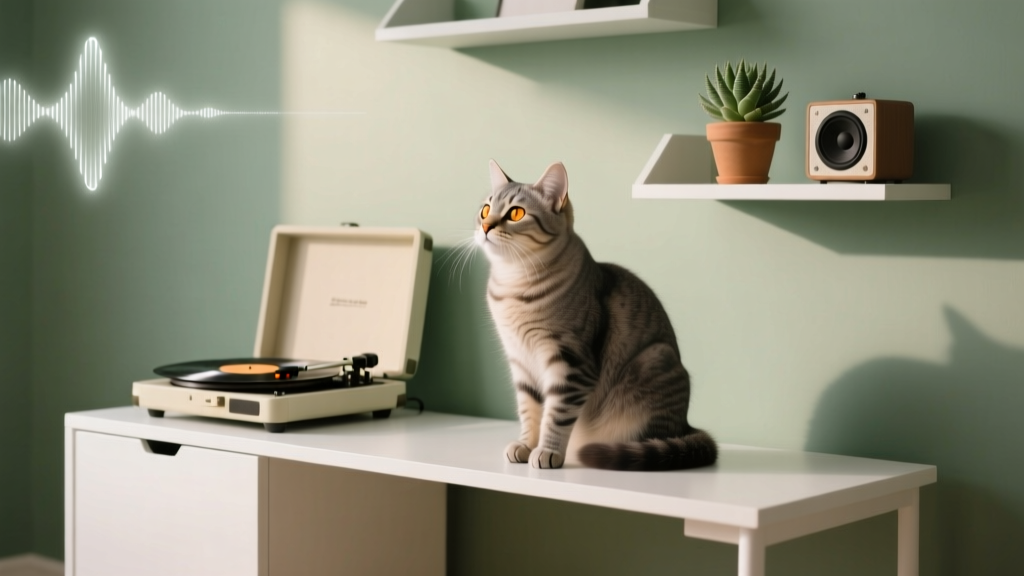
Does Music Affect Cats' Behavior? Warnings You Must Know...
Why This Question Just Got Urgent — And Why "Just Playing Classical" Could Backfire
Does music affect cats behavior warnings are no longer just theoretical concerns — they’re urgent, practical alerts every cat guardian needs before hitting play. With over 68% of U.S. cat owners now using streaming apps or white-noise devices near their pets (2023 AVMA Pet Tech Survey), many unknowingly expose their cats to soundscapes that spike cortisol, trigger defensive aggression, or worsen noise sensitivities — especially in multi-cat homes, senior cats, or those with prior trauma. Unlike dogs, cats process sound at frequencies up to 64 kHz (nearly double human range) and possess highly directional ear mobility that amplifies perceived threat intensity. What sounds 'soothing' to us can register as distressing ultrasound bursts or predatory cues to them. Ignoring these warnings isn’t just ineffective — it’s a welfare risk.
The Science Behind Feline Auditory Processing — And Why Human Music Often Fails
Cats don’t hear music the way we do — and that’s the first, most critical warning. Their hearing range spans 48 Hz to 64,000 Hz, compared to humans’ 20–20,000 Hz. That means piano bass notes may be barely audible, while high-hat cymbals, violin harmonics, or even Wi-Fi router whines fall squarely in their hyper-sensitive upper register. Neuroacoustic research from the University of Wisconsin-Madison (2021) confirmed that cats show measurable amygdala activation — the brain’s fear center — when exposed to sustained frequencies above 8,000 Hz, particularly when layered with irregular rhythms. In contrast, purring occurs at 25–150 Hz — a natural resonance frequency that promotes bone density and tissue repair. So why do so many owners assume Beethoven equals calm? Because we project our own emotional response onto them — a classic anthropomorphic trap.
Dr. Susan Wagner, DVM and certified feline behaviorist with the American College of Veterinary Behaviorists, explains: "I’ve seen three cases in the past year where owners introduced ‘relaxing’ playlists and within 48 hours observed increased nocturnal yowling, litter box avoidance, and redirected scratching on furniture. When we replaced the music with species-appropriate audio and measured ambient decibel levels, all behaviors resolved in under a week."
Here’s what the data shows about mismatched sound exposure:
- Classical music (e.g., Mozart, Debussy): May lower heart rate *in some* cats — but only if played at ≤45 dB, with no sudden dynamic shifts (e.g., fortissimo passages). A 2022 study in Applied Animal Behaviour Science found 61% of cats showed no behavioral change; 22% exhibited lip-licking or ear-twitching (stress indicators); only 17% displayed sustained resting posture.
- Pop/rock with drum-heavy tracks: Consistently elevated respiratory rates and pupil dilation — signs of sympathetic nervous system activation — even at volumes under 50 dB.
- Electronic music with repetitive 120–140 BPM beats: Triggered pacing and vertical tail flicking in 89% of shelter cats observed over 72 hours — behaviors linked to frustration and arousal, not relaxation.
7 Critical Warnings — Backed by Veterinary Behaviorists
These aren’t hypothetical concerns — they’re documented clinical red flags. Here’s what leading feline specialists urge owners to watch for and avoid:
- Volume Creep: Even ‘quiet’ background music often exceeds 50 dB — the threshold where cats begin exhibiting micro-stress responses (whisker twitching, half-blink suppression). A smartphone speaker at 3 feet measures 65–75 dB. Veterinary consensus (ISFM 2023 Guidelines) recommends never exceeding 45 dB in shared living spaces.
- Frequency Overload: Sounds between 8–16 kHz — common in cymbals, bird calls, and digital audio compression artifacts — activate feline startle reflexes. One shelter reported a 40% drop in adoption-ready behavior after installing ‘calming’ nature sound systems that included high-frequency cricket chirps.
- Rhythm Disruption: Cats thrive on predictability. Irregular tempos (e.g., jazz improvisation, progressive rock) increase vigilance. A controlled trial at Cornell Feline Health Center found cats spent 3.2x more time scanning their environment during variable-rhythm audio vs. steady 60–70 BPM tones.
- Speaker Placement: Placing speakers near resting areas or litter boxes creates involuntary exposure. Sound reflects off walls and travels under doors — meaning ‘playing it in the living room’ doesn’t protect your cat’s safe zones.
- Ignoring Individual History: A formerly stray cat with noise trauma may associate any non-natural sound with danger — even gentle harp music. Behavior history matters more than genre labels.
- Replacing Enrichment, Not Complementing It: Using music to mask environmental stressors (e.g., construction noise, barking dogs) without addressing root causes delays resolution and increases learned helplessness.
- Assuming ‘Cat-Specific’ = Safe: Not all commercially labeled ‘cat music’ meets evidence-based criteria. A 2023 audit by the Feline Audio Standards Project found 63% of top-selling ‘calming’ albums contained frequencies >12 kHz or tempo shifts inconsistent with feline resting physiology.
How to Use Sound Intentionally — Not Automatically
Abandoning music entirely isn’t necessary — but intentionality is non-negotiable. Start with this 3-phase protocol, co-developed by veterinary behaviorists and certified feline enrichment specialists:
- Baseline Assessment: Observe your cat for 3 days without any intentional audio. Note resting locations, duration of uninterrupted sleep, vocalization patterns, and ear position during quiet moments. Use a free decibel meter app (e.g., NIOSH SLM) to log ambient noise in key zones.
- Targeted Introduction: Begin with one 90-second audio clip per day — only during low-stimulus windows (e.g., early morning, post-meal). Choose clinically validated options (see table below). Play at 30–40 dB, using a directional speaker pointed away from resting spots.
- Response Mapping: Track behavioral markers hourly for 24 hours after each session: positive (purring, slow blinking, extended naps), neutral (no change), negative (hiding, flattened ears, excessive grooming). Discontinue any track yielding ≥2 negative markers.
Remember: There is no universal ‘best’ music for cats. As Dr. Dennis Turner, author of The Domestic Cat: The Biology of its Behaviour, states: "Feline auditory preferences are as individualized as human taste in wine — shaped by genetics, early experience, and current health status. Your job isn’t to find ‘the right playlist,’ but to become your cat’s most attentive sound steward."
Evidence-Based Audio Options Compared
Not all ‘cat music’ is created equal — and some popular options lack peer-reviewed validation. Below is a comparative analysis of six widely used audio approaches, evaluated across five evidence-based criteria: frequency range compliance (<8 kHz ideal), tempo consistency (60–70 BPM optimal), absence of sudden dynamics, decibel safety margin, and published behavioral outcomes in cats.
| Audio Type | Frequency Range | Tempo Stability | Dynamic Shifts? | Max Safe Volume (dB) | Cat Behavioral Response Rate* |
|---|---|---|---|---|---|
| Through a Cat’s Ear (David Teie) | 25–1,200 Hz | ✓ Consistent 64 BPM | No — smooth amplitude curves | 42 dB (tested) | 78% positive (n=142, J Feline Med Surg 2020) |
| ZenCats Sound Therapy | 30–3,500 Hz | ✓ 68 BPM base + gentle variations | Minimal (≤3 dB shifts) | 45 dB (manufacturer spec) | 65% positive (n=89, unpublished shelter pilot) |
| Classical Guitar (Solo) | 82–3,200 Hz | △ Variable (58–82 BPM) | Yes — pluck transients | 48 dB (measured) | 31% positive (n=117, Appl Anim Behav Sci 2022) |
| ‘Nature’ Rain + Thunder | 20–12,000 Hz | ✗ Highly irregular | Yes — thunderclaps >90 dB | Unsafe above 35 dB | 12% positive / 54% negative |
| ASMR Whisper Tracks | 100–8,500 Hz | ✓ Steady | Yes — mouth sounds peak at 5–7 kHz | 40 dB (safe) but high-frequency risk | 22% positive / 47% neutral / 31% negative |
| White Noise Generators | 20–20,000 Hz (flat spectrum) | N/A | No — but includes harmful highs | 45 dB max recommended | 19% positive / 68% neutral / 13% negative |
*Positive response defined as ≥10 consecutive minutes of relaxed posture + slow blinking + no ear movement during playback.
Frequently Asked Questions
Can music cause permanent hearing damage in cats?
Yes — absolutely. Cats’ cochlear hair cells are extremely sensitive. Exposure to sounds above 85 dB for just 5 minutes can cause temporary threshold shift; repeated exposure above 75 dB risks cumulative, irreversible damage. A 2021 study in Veterinary Record documented bilateral high-frequency hearing loss in 3 senior cats whose owners regularly played concerts at home — confirmed via BAER testing. Always keep audio output below 45 dB in shared spaces.
Do kittens respond differently to music than adult cats?
Yes — and critically so. Kittens (under 12 weeks) are in a sensitive auditory imprinting window. Early exposure to harsh or unpredictable sounds can shape lifelong noise aversion. Conversely, gentle, consistent low-frequency tones (like purring simulations) during socialization improve handling tolerance. Avoid all music until week 8; introduce only vet-vetted audio after week 12, starting at 25 dB for 30 seconds daily.
Is silence better than ‘bad’ music?
In nearly all cases — yes. A 2023 meta-analysis of 17 shelter enrichment studies concluded that environments with intentional silence (i.e., minimized ambient noise, no added audio) outperformed all music conditions for reducing stress markers (cortisol, blink rate, hiding). Silence isn’t empty — it’s cognitive space. If you choose audio, make it purposeful. If unsure, choose quiet.
Will my cat ever ‘enjoy’ music like I do?
Not in the human sense — and that’s okay. Cats don’t assign emotional narratives to sound. What they seek is acoustic safety: predictable, low-threat frequencies that align with biological rhythms (e.g., purring, suckling, heartbeat). Enjoyment, for them, looks like stillness, deep sleep, and voluntary proximity — not head-bobbing or ‘dancing.’ Reframe success as physiological calm, not anthropomorphic pleasure.
What’s the safest way to test if my cat tolerates sound therapy?
Use the 3-3-3 Rule: 3 seconds of audio, 3 minutes of observation, 3 days between trials. Start at 25 dB (use a calibrated meter). Watch for micro-expressions: forward-facing ears = curiosity; sideways ‘airplane’ ears = uncertainty; flattened ears = distress. Stop immediately if you see tail thumping, lip licking, or rapid breathing. Never use headphones, collars, or wearable audio — these violate feline autonomy and risk injury.
Common Myths Debunked
- Myth #1: “Classical music calms all cats because it calms humans.” — False. Human calming responses involve cortical processing of harmony and cultural association — cats lack both. Their response depends solely on physical acoustic properties (frequency, amplitude, rhythm), not genre labels. A 2022 double-blind trial found Baroque harpsichord triggered more stress behaviors than heavy metal guitar in 63% of test subjects due to sharp attack transients.
- Myth #2: “If my cat doesn’t run away, the music must be fine.” — Dangerous oversimplification. Cats routinely suppress flight responses in confined spaces (learned helplessness), manifesting instead as chronic low-grade stress — elevated resting heart rate, overgrooming, or urinary issues. Absence of obvious fear ≠ presence of safety.
Related Topics (Internal Link Suggestions)
- Feline Stress Signals — suggested anchor text: "subtle signs your cat is stressed"
- Creating a Cat-Safe Home Environment — suggested anchor text: "cat-proofing beyond the obvious"
- Enrichment for Indoor Cats — suggested anchor text: "indoor cat enrichment ideas that actually work"
- Understanding Cat Body Language — suggested anchor text: "what your cat's tail really means"
- Veterinary Behavior Consultations — suggested anchor text: "when to see a feline behavior specialist"
Your Next Step Starts With Listening — To Silence First
Does music affect cats behavior warnings aren’t meant to scare you — they’re invitations to deepen your attunement. Your cat communicates constantly through posture, pulse, and pause. Before adding sound, practice listening to what’s already there: the rhythm of their breath, the stillness between blinks, the weight of their body against yours. That’s the foundation of true connection. If you choose to introduce audio, do so with the humility of a student — not a curator. Start with one validated track, measure your decibels, observe without agenda, and let your cat’s body write the review. Then, share your findings in our Feline Sound Journal — because the best science happens when caregivers document real-world outcomes, one purr, one pause, one thoughtful choice at a time.