Do All Cats Have Strange Behaviors? The Truth Behind 7...
Why Your Cat’s \"Weirdness\" Is Actually Brilliant Evolutionary Design
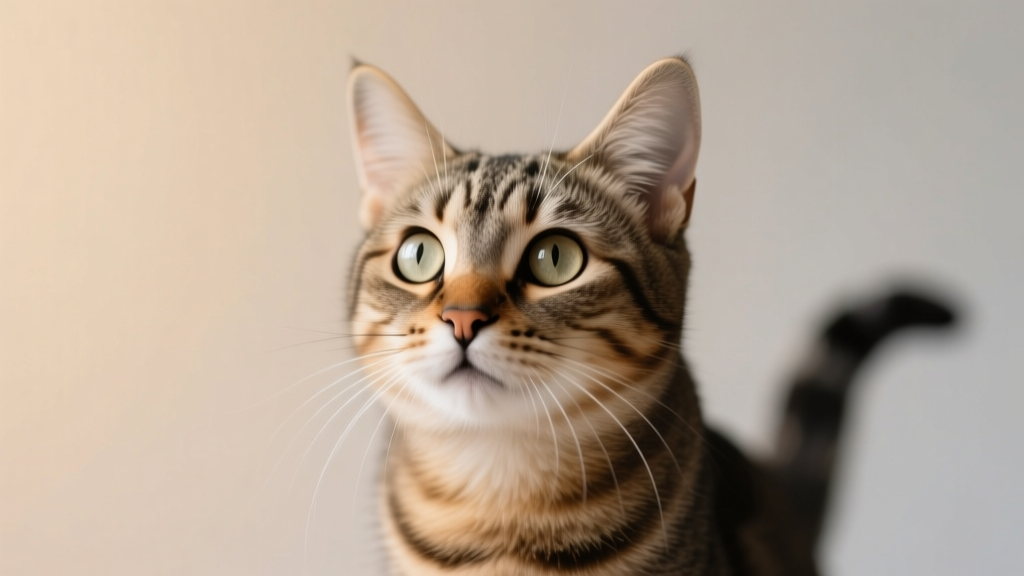
Do all cats have strange behaviors? Yes — and that’s not a flaw in your feline; it’s proof of 9,000 years of finely tuned survival instincts. What looks like midnight zoomies, obsessive tail-chasing, or staring blankly at walls isn’t randomness — it’s neurologically rich, species-specific communication shaped by evolution. In fact, a 2023 study published in Animal Cognition found that domestic cats display over 32 distinct context-dependent behavioral sequences — far more than previously documented — many of which humans misinterpret as 'odd' simply because they don’t align with canine or human social cues. If you’ve ever whispered, 'Why does my cat lick my hair then bite it?' or watched in bafflement as she brings you a dead leaf like it’s a trophy… you’re not alone. You’re witnessing a highly intelligent, sensory-driven creature operating on a different perceptual wavelength — and understanding that difference is the first step toward deeper connection, better welfare, and truly responsive care.
The Science Behind the \"Strange\": Instinct, Sensory Superpowers & Stress Signals
Cats aren’t being cryptic — they’re being precise. Their so-called 'strange behaviors' fall into three core categories: evolutionary carryovers, sensory processing differences, and environmental stress responses. Let’s unpack each.
First, evolutionary carryovers: behaviors like kneading, slow blinking, or presenting their belly (often misread as an invitation for tummy rubs) are rooted in kittenhood — kneading stimulates milk flow, slow blinking signals non-threat in high-stakes social hierarchies, and belly exposure is a vulnerability test, not consent. As Dr. Mikel Delgado, certified cat behavior consultant and researcher at the UC Davis Koret Shelter Medicine Program, explains: \"What we label 'weird' is often just behavior stripped of its original context. A cat chattering at birds isn’t frustrated — she’s rehearsing the jaw motion used to dispatch prey. That’s not odd; it’s neurologically efficient practice.\"
Second, sensory superpowers: cats hear frequencies up to 64 kHz (humans max out at 20 kHz), see in near-total darkness thanks to their tapetum lucidum, and detect subtle air currents with their whiskers — all of which mean they perceive stimuli invisible and inaudible to us. That ‘stare into the void’? She may be tracking ultrasonic rodent movement behind the wall. The sudden sprint at 3 a.m.? Likely a response to a moth’s wingbeat or a shift in barometric pressure. A 2022 Cornell Feline Health Center survey found that 78% of owners misattributed sensory-driven behaviors to ‘craziness’ — when in reality, their cat was simply experiencing a richer world.
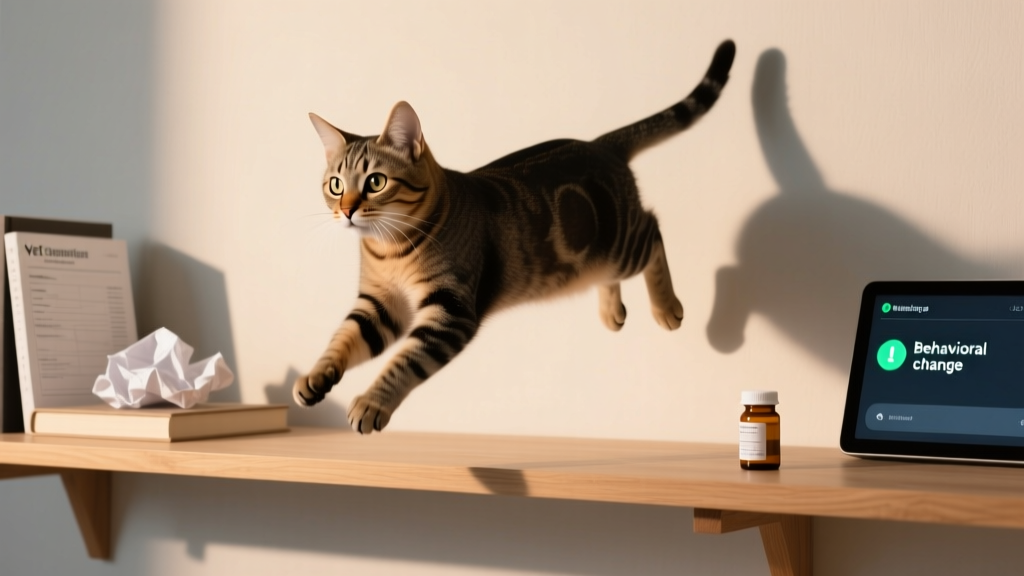
Third, environmental stress signals: this is where 'strange' becomes urgent. Overgrooming to bald patches, urine marking outside the litter box, or compulsive chewing on plastic aren’t quirks — they’re distress calls. Unlike dogs, cats rarely show overt fear or pain. Instead, they internalize — and behavior shifts are often the first, only, and most reliable indicator. According to the American Association of Feline Practitioners (AAFP), up to 65% of behavior changes in cats have an underlying medical component — from dental disease causing aggression to hyperthyroidism triggering restlessness.
Your Cat’s Top 7 \"Strange\" Behaviors — Decoded & Action-Planned
Let’s translate common head-scratchers into actionable insight — with clear guidance on what’s normal, what’s situational, and when to call your vet.
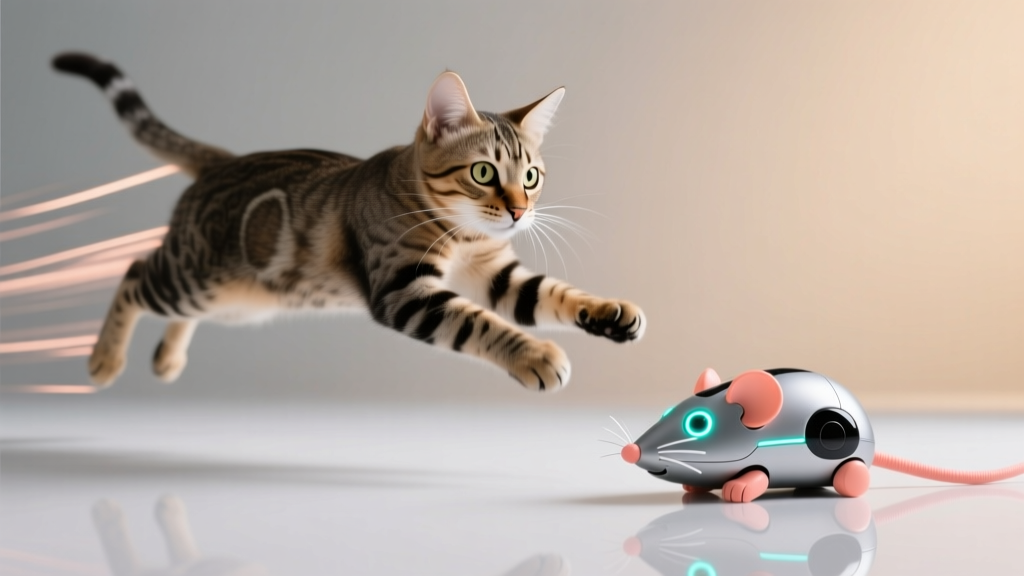
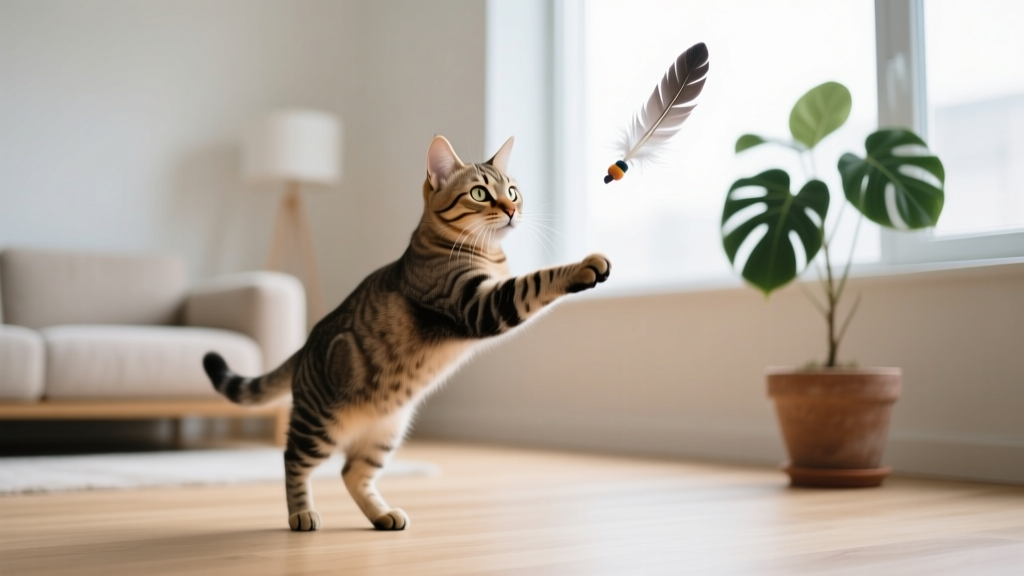
- The Midnight Zoomies: Bursts of frenetic running, leaping, and wall-scaling between 2–4 a.m. — driven by crepuscular (dawn/dusk) hunting rhythms. Action: Redirect energy with 10-minute interactive play sessions at dusk and dawn using wand toys that mimic prey movement. Avoid laser pointers alone — they create frustration without reward.
- The Blank Stare: Intense, unblinking focus on empty corners or ceiling fans. Action: Observe duration and body language. If accompanied by flattened ears, dilated pupils, or low growling, record video and consult your vet — could indicate visual hallucinations linked to neurological issues (e.g., feline cognitive dysfunction or seizures).
- The Gift-Giving Ritual: Dropping dead (or toy) mice, leaves, or socks at your feet. Action: This is a social bonding behavior — your cat sees you as an inept hunter she’s mentoring. Don’t punish or ignore. Instead, praise calmly and offer a treat *after* she drops it — reinforcing the gesture as positive communication.
- The Lick-and-Bite Combo: Gently licking your arm, then suddenly biting. Action: This is overstimulation — her grooming instinct triggers, but human skin texture or prolonged petting exceeds her tolerance threshold. Watch for tail flicking or ear twitching as early warnings. Stop petting *before* the bite — and redirect to a toy.
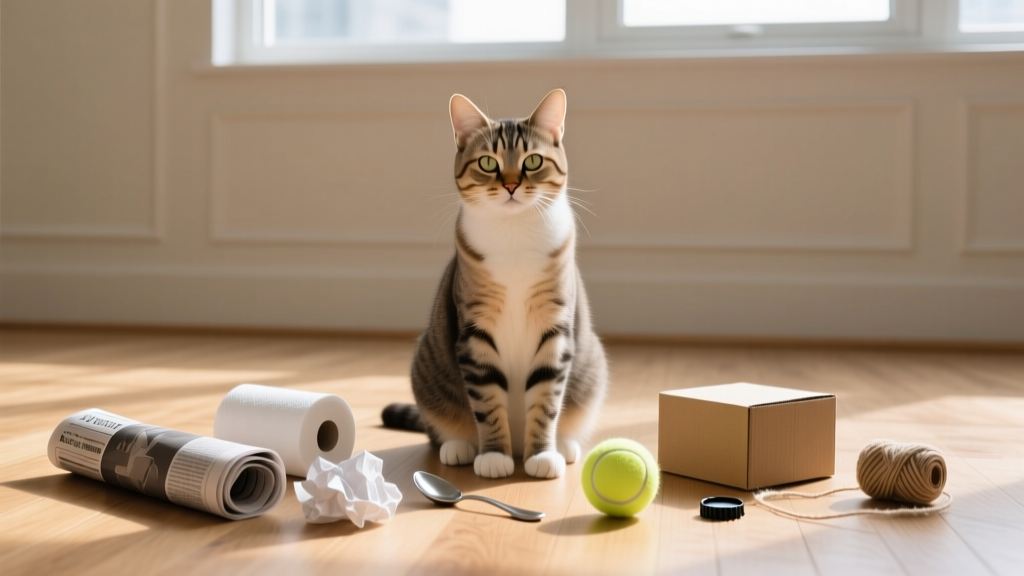
- The Box Obsession: Squeezing into impossibly small spaces — shopping bags, sink drains, taped squares on the floor. Action: Confirmed by feline ethologist Dr. Claudia Vinke: boxes reduce stress by providing enclosed, elevated vantage points. Always keep cardboard boxes accessible — but remove handles, staples, and plastic bags immediately.
- The Toilet Paper Unraveler: Obsessively shredding rolls or dragging them across floors. Action: Often boredom + tactile stimulation. Swap with safe alternatives: crinkle balls, paper towel tubes stuffed with catnip, or DIY ‘shredding stations’ (a shallow box filled with shredded paper and hidden treats).
- The Slow Blink: Deliberate, half-closed eyes held for 2+ seconds — especially when making eye contact. Action: This is a profound sign of trust. Return it slowly. Research shows mutual slow blinking reduces stress in shelter cats by 42% (Journal of Veterinary Behavior, 2021). It’s not strange — it’s love, feline-style.
When \"Strange\" Means \"Something’s Wrong\": The Vet-Vetted Red Flag Checklist
Not all odd behavior is benign. Use this evidence-based decision framework — co-developed with Dr. Tony Buffington, DVM, PhD, professor emeritus at Ohio State’s College of Veterinary Medicine — to triage concern levels.
| Behavior | Frequency/Duration Threshold | Key Context Clues | Recommended Action Timeline |
|---|---|---|---|
| Excessive vocalization (yowling, howling) | More than 3x/day, lasting >5 min, especially at night | Accompanied by pacing, disorientation, or apparent confusion; new onset in senior cats (>10 yrs) | Consult vet within 48 hours — rule out hypertension, kidney disease, or cognitive decline |
| Overgrooming leading to bald patches or skin lesions | Observed daily for >5 days, focused on one area (abdomen, flank, legs) | No fleas or skin irritation visible; occurs during quiet times (not post-play) | Vet visit within 1 week — consider dermatology + behavior consult |
| Urinating or defecating outside the litter box | Consistent for >3 episodes, in novel locations (bed, bath, hardwood) | Litter box clean and accessible; no recent household changes | Vet exam within 24–48 hours — UTI, cystitis, or arthritis may be cause |
| Compulsive tail-chasing or limb-biting | Multiple episodes daily, escalating in intensity, interfering with eating/sleeping | No external parasites; no prior history of trauma or injury | Referral to veterinary behaviorist within 1 week — possible feline hyperesthesia syndrome |
| Sudden aggression toward familiar people or pets | New onset after age 5, unprovoked, inconsistent with past temperament | No trigger visible; may include hissing/growling without warning | Vet visit same day — pain (dental, orthopedic) is the #1 cause of late-onset aggression |
Frequently Asked Questions
Why does my cat sit in sinks or bathtubs?
This is a classic thermoregulation + security behavior. Porcelain holds cool temperatures longer than floors, offering relief in warm weather — while the enclosed shape provides a den-like sense of safety. It’s also a great vantage point to monitor household activity. Unless it’s paired with excessive thirst (a sign of kidney disease or diabetes), it’s perfectly normal — and often a sign your cat trusts that space as part of her territory.
Is it weird that my cat sleeps on my chest or head every night?
Not at all — it’s biologically strategic. Your chest/head radiates warmth and steady heartbeat rhythm, mimicking the comfort of kittenhood. Plus, your breathing pattern creates gentle vibrations cats associate with safety. A 2020 University of Lincoln study found cats who sleep on owners show lower cortisol levels — indicating reduced stress. Just ensure your breathing isn’t restricted, and never force this position if your cat seems tense.
My cat stares at me and blinks slowly — should I blink back?
Absolutely — and do it deliberately. Slow blinking is scientifically validated feline ‘smiling.’ When you return it, you’re signaling non-threat and affiliation. In a landmark 2019 study published in Scientific Reports, cats were significantly more likely to approach strangers who slow-blinked versus those who maintained direct eye contact. Try it: lock eyes gently, close your eyes slowly for 2–3 seconds, then reopen. Watch her mirror you — it deepens trust faster than treats.
Do stray or feral cats have stranger behaviors than indoor pets?
They display *different*, not stranger, behaviors — shaped by necessity. Ferals may freeze instead of flee (a survival tactic against predators), avoid eye contact entirely, or exhibit extreme resource-guarding. Indoor cats, conversely, often develop ‘excess energy’ behaviors (like fabric sucking or repetitive pacing) due to under-stimulation — a phenomenon veterinarians call ‘behavioral starvation.’ Neither is ‘weirder’ — both are adaptive. The key is matching environment to instinct.
Can diet affect my cat’s behavior?
Yes — profoundly. Deficiencies in taurine, B vitamins, or omega-3s can manifest as anxiety, aggression, or lethargy. High-carb kibble diets correlate with increased irritability in multi-cat households (per a 2022 Tufts Nutrition Study). Conversely, diets enriched with L-theanine and alpha-casozepine (calming milk proteins) show measurable reductions in stress-related behaviors in clinical trials. Always discuss behavioral shifts with your vet *before* changing food — but know nutrition is a legitimate lever in behavior management.
Common Myths About Cat Behavior — Debunked
Myth #1: “Cats are aloof and don’t bond like dogs.”
False. fMRI studies show cats experience attachment to owners comparable to infants and dogs — just expressed differently. They form secure, insecure, and anxious attachment styles, confirmed via the ‘Secure Base Test’ adapted for felines. Their independence is preference, not indifference.
Myth #2: “If my cat hisses or swats, she’s being ‘spiteful.’”
Completely inaccurate. Cats lack the cognitive capacity for spite — a complex, human social emotion requiring intent to punish. Hissing, swatting, or growling are pure, immediate threat responses — communicating fear, pain, or boundary violation. Labeling it ‘spite’ delays identifying real causes like arthritis, dental pain, or environmental stressors.
Related Topics (Internal Link Suggestions)
- Understanding Cat Body Language — suggested anchor text: "cat tail positions and ear signals explained"
- How to Introduce a New Cat Safely — suggested anchor text: "step-by-step cat introduction guide"
- Best Enrichment Toys for Indoor Cats — suggested anchor text: "vet-recommended interactive cat toys"
- Signs of Pain in Cats — suggested anchor text: "subtle cat pain indicators you're missing"
- Why Does My Cat Meow So Much? — suggested anchor text: "what your cat's meows really mean"
Conclusion & Your Next Step
Do all cats have strange behaviors? Unequivocally yes — and that’s the beauty of them. Their ‘strangeness’ is a window into a sophisticated, ancient mind operating on logic, instinct, and sensory input far beyond our own. What matters isn’t eliminating the quirks — it’s learning their language. Start today: pick *one* behavior from this article that puzzles you, observe it for 48 hours using the context clues provided, and note frequency, triggers, and your cat’s body language. Then, decide: is this evolutionary elegance — or a quiet cry for help? If in doubt, reach out to your veterinarian *with your observations*. Not as a last resort — as your first, most compassionate act of care. Because the most loving thing you can do for your cat isn’t fixing her ‘weirdness.’ It’s honoring it — and protecting the being behind it.