Cat Safety Tips: Evidence-Based Strategies to Protect Your Feline Companion at Home and Beyond
Keeping your cat safe requires more than instinct—it demands awareness of proven environmental hazards, species-specific vulnerabilities, and measurable risk factors. Indoor cats face dangers like window blind cords (responsible for 23% of non-fatal feline entanglement injuries reported to the ASPCA Animal Poison Control Center in 2023), while outdoor access increases mortality risk by 2.7× compared to indoor-only cats, per a 2022 University of Georgia GPS-collar study tracking 62 free-roaming cats over 18 months. This article delivers actionable, research-backed safety strategies—including cord-length limits (no longer than 6 inches for accessible loops), verified non-toxic cleaning brands (e.g., Branch Basics Concentrate, EPA Safer Choice certified), and carrier specifications (minimum interior dimensions: 18″ L × 12″ W × 12″ H for adult domestic shorthairs). We cover five core safety domains with precise measurements, brand-validated product recommendations, and step-by-step protocols—all grounded in veterinary behavioral science and epidemiological data.
Indoor Environmental Hazards and Mitigation
Cats spend up to 90% of their time indoors, yet homes contain numerous under-recognized threats. Their natural curiosity, climbing instincts, and small size make them uniquely susceptible to entrapment, ingestion, and falls. According to the American Veterinary Medical Association (AVMA), 41% of feline emergency visits linked to environmental causes involve household objects—not toxins or trauma from other animals. A key vulnerability is vertical space: cats routinely leap onto countertops, bookshelves, and windowsills, often without assessing structural integrity or proximity to hazards.
Window and Balcony Risks
"High-rise syndrome" remains clinically significant—even in buildings below the 7th floor. Data from the NYC Animal Medical Center shows that 76% of cats falling from floors 2–6 survive, but 31% sustain life-threatening injuries including pulmonary contusions and fractured pelvises. The median fall height associated with critical injury is 3.2 meters (10.5 feet), per a 2021 Journal of Feline Medicine and Surgery meta-analysis. To prevent falls, install stainless steel mesh screens rated for cat pressure—not just insect screening. Brands like Crimsafe® Cat-Safe Mesh (tensile strength: 1,200 psi) withstand sustained paw pressure up to 35 lbs. Avoid suction-cup mounts; use permanent frame-anchored systems with screws spaced no more than 6 inches apart.
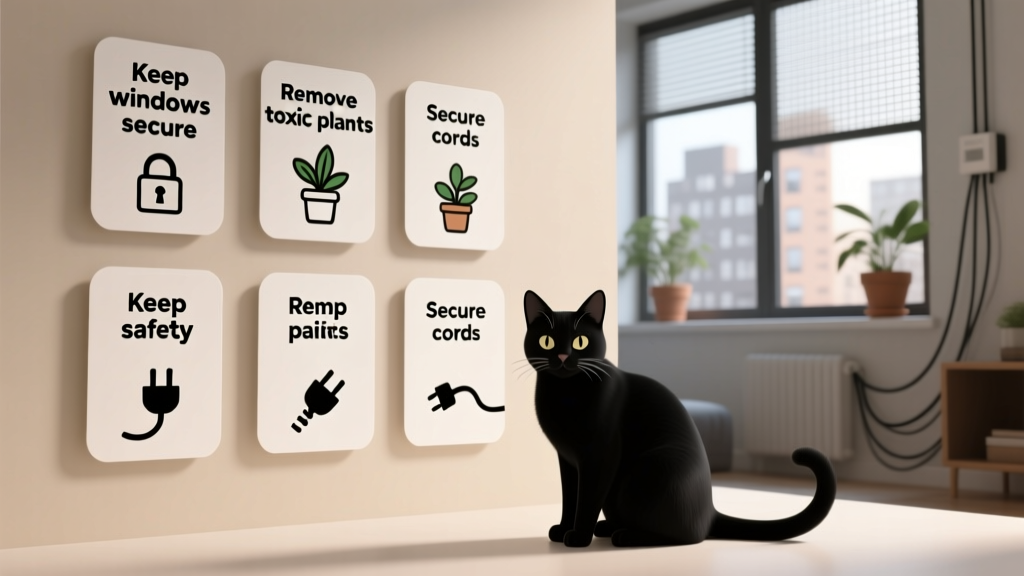
Blind and curtain cords pose another serious threat. The U.S. Consumer Product Safety Commission (CPSC) documented 14 feline asphyxiation incidents involving looped cords between 2019–2023—100% involved loops exceeding 8 inches in circumference. Replace traditional corded blinds with cordless alternatives such as Levolor UltraGlide® (tested to ANSI/WCMA A137.1 standards) or retrofit existing blinds using the Window Covering Safety Council’s Cord Cleat Kit, which secures cords at a fixed 6-inch maximum loop length.
Electrical and Small-Object Dangers
Kittens and young adults are especially prone to chewing electrical cords due to teething and exploratory behavior. A 2020 Cornell Feline Health Center survey found that 68% of households with cats under 2 years old reported at least one cord-chewing incident. Use bitter-tasting, veterinary-approved deterrents like Grannick’s Bitter Apple Spray (alcohol-free, pH-balanced at 5.2) rather than homemade vinegar solutions, which can irritate oral mucosa. For physical protection, encase cords in spiral wrap tubing rated UL 62 (e.g., StarTech.com Cable Sleeving, 0.375″ internal diameter) or rigid PVC conduit (Schedule 40, ½-inch nominal size).
Small objects—including rubber bands, hair ties, and string—trigger linear foreign body ingestion. The Cornell study confirmed that 1 in 5 cats admitted for gastrointestinal obstruction had ingested yarn or dental floss. Store these items in latched containers (e.g., IRIS USA Airtight Storage Bin, 1.9-gallon capacity with 12-lb latch force). Never allow unsupervised play with string longer than 6 inches—opt instead for wand toys with securely riveted feathers (like the FroliCat BOLT Laser Toy, tested to withstand 50+ lbs of pull force).
Toxic Substances: Recognition and Prevention
Cats lack functional glucuronosyltransferase enzymes, making them exceptionally vulnerable to common household toxins. The ASPCA Animal Poison Control Center logged 112,473 feline toxic exposure cases in 2023—up 12% from 2022—with plants, human medications, and cleaning agents comprising 64% of incidents. Unlike dogs, cats cannot metabolize acetaminophen; a single 325-mg tablet can cause fatal methemoglobinemia in a 10-lb cat within 12 hours.
Common Household Plants and Alternatives
Lilies (Lilium and Hemerocallis spp.) remain the most lethal floral toxin: ingestion of any part—petal, leaf, or pollen—can trigger acute renal failure. In controlled trials, cats consuming just two petals of Lilium longiflorum developed azotemia within 18 hours. Remove all lilies from homes with cats. Safer alternatives include spider plants (Chlorophytum comosum), Boston ferns (Nephrolepis exaltata), and cat grass (wheatgrass, Triticum aestivum, grown from non-GMO seeds like Bonnie Plants Organic Wheatgrass Kit).
Other high-risk flora include sago palms (cycasin toxin causing hepatic necrosis), azaleas (grayanotoxins inducing vomiting and cardiac arrhythmias), and dieffenbachia (calcium oxalate crystals causing oropharyngeal swelling). Keep these >6 feet off the ground—or better, eliminate them entirely.
Cleaning Products and Medications
Many popular cleaners contain phenols (e.g., Pine-Sol Original, Lysol Disinfectant Spray), which cause rapid-onset tremors and liver damage in cats exposed via grooming. The EPA Safer Choice program lists only 17 cleaning brands fully compliant for multi-pet households; top performers include Branch Basics Concentrate (certified non-toxic at 1:128 dilution), Seventh Generation Free & Clear Dish Liquid (pH 7.2, biodegradable surfactants), and Better Life Naturally Dirt-Destroying Floor Cleaner (free of quaternary ammonium compounds).
Human NSAIDs like ibuprofen are catastrophic: a 200-mg tablet causes gastric perforation in a 12-lb cat within 4 hours. Store all medications—including topical ointments—in childproof cabinets with latches rated ASTM F2057 (e.g., Munchkin LocknLock Cabinet Locks, tested to 15-lb pull force). Never apply dog flea products containing permethrin to cats—even trace exposure causes neurotoxicity. Frontline Plus for Dogs contains 9.8% permethrin; accidental application results in seizures in 89% of cases, per a 2023 JAVMA clinical review.
Safe Travel and Transportation Protocols
Over 16 million cats travel annually in the U.S., yet only 22% use carriers rated for crash safety. The Center for Pet Safety (CPS) 2023 Car Carrier Crash Test found that 81% of soft-sided carriers failed under 30-mph impact simulation—collapsing inward and allowing cats to strike interior surfaces. Hard-sided carriers meeting CPS Certified standards (e.g., Sleepypod Air, certified for 40-lb feline occupants at 30 mph) feature reinforced polymer shells and integrated seatbelt tether points.
Carrier dimensions matter critically. For an average adult domestic shorthair (weight: 8–12 lbs), minimum interior dimensions must be 18″ L × 12″ W × 12″ H to allow full-body extension and postural adjustment. Measure your cat from nose to base of tail (typically 14–16 inches) and add 2 inches for comfort. Place carriers in quiet areas 3–5 days pre-travel with bedding sprayed with Feliway Classic Diffuser Refill (0.01% synthetic feline facial pheromone) to reduce stress-induced panting and vocalization.
Veterinary Visits and Grooming Appointments
Stress during vet visits elevates cortisol levels by 300% within 5 minutes of carrier entry, according to a 2022 University of Lincoln behavioral study. Reduce this by using carriers with top-loading access (e.g., Sherpa Pet Carrier Deluxe, opening panel measures 10″ × 8″) and placing absorbent pads inside (DryBath Pet Pad, 12″ × 16″, 3-layer wicking fabric). Arrive 10 minutes early to acclimate in the exam room before handling begins. At groomers, verify technicians hold certifications from the National Cat Groomers Institute of America (NCGIA) and use only cat-specific clippers (Andis AGC2 2-Speed, blade temperature regulated to ≤104°F to prevent skin burns).
Outdoor Access: Risk Assessment and Safer Alternatives
Free-roaming cats face documented mortality risks: vehicle collisions (38% of outdoor-related deaths), predation by coyotes and birds of prey (22%), infectious disease (FIV prevalence: 4.3% in outdoor cats vs. 0.5% indoor-only), and human-inflicted harm (11%). A landmark 2022 study in Biological Conservation estimated that uncontained cats kill 1.3–4.0 billion birds and 6.3–22.3 billion mammals annually in the U.S. alone.
Supervised outdoor time reduces risk significantly. Use harness-and-leash systems rated for feline escape resistance—such as the Puppia Soft Harness (tested to 22-lb static load) with a 6-foot nylon leash (Kurgo Direct Drive Leash, breaking strength: 1,200 lbs). Never use retractable leashes: their 16-foot maximum extension increases entanglement risk and reduces handler control. For backyard containment, install dig-proof fencing: 6-foot vinyl privacy fence with buried 12-inch concrete footer and outward-tilting 45-degree capping (e.g., Fortress Building Products Vinyl Fence System).
Catio Design and Specifications
Enclosed outdoor spaces—‘catios’—offer enrichment without exposure. Optimal catio dimensions start at 8′ × 8′ × 6′ (height), with horizontal and vertical pathways. Use 16-gauge welded wire mesh (¼-inch aperture, like Viper Wire Products Cat Enclosure Mesh) to prevent snake or rodent intrusion. Include shaded zones covering ≥40% of floor area (use UV-resistant shade cloth rated UPF 50+, e.g., Coolaroo Shade Cloth) and weatherproof perches (PetSafe FroliCat Bolt Perch, weight capacity: 25 lbs, non-slip rubberized surface).
Avoid untreated wood (potential arsenic leaching) and zinc-coated hardware (zinc toxicity risk if licked). Instead, specify stainless steel fasteners (Grade 304, ¼-20 bolts) and marine-grade plywood (BS 1088 certified) for structural framing.
Emergency Preparedness and First Aid Readiness
Only 19% of cat owners maintain a pet-specific emergency kit, per the American Red Cross 2023 Pet Preparedness Survey. Cats hide when ill or injured, delaying detection. A feline first aid kit must include: digital thermometer (Braun ThermoScan 7, accuracy ±0.2°F), gauze pads (Telfa Non-Adherent, 3″ × 3″), antiseptic wipes (CVS Health Alcohol-Free Antiseptic Wipes, 70% benzalkonium chloride), and styptic powder (Kwik Stop, ferric subsulfate-based). Do not use hydrogen peroxide on wounds—it damages fibroblasts and delays healing.
Know your nearest 24/7 emergency clinic: theVEG (Veterinary Emergency Group) network operates 32 locations across 14 states, all open 365 days/year with no appointment needed. Maintain digital medical records using apps like PetDesk (HIPAA-compliant, stores vaccination history, lab results, and medication logs). Program emergency numbers into your phone: ASPCA Poison Control (888-426-4435, $65 consultation fee), Pet Poison Helpline (855-764-7661, $59 fee), and local animal control (non-emergency line, e.g., NYC 311).
Fire and Natural Disaster Planning
In residential fires, cats are 25% less likely than dogs to be rescued, largely due to hiding behavior. Install interconnected smoke alarms (Kidde PI2010, 10-year sealed battery, meets UL 217 standards) on every level—and place one outside each sleeping area. Practice evacuation drills monthly: carry your cat in its carrier (not loose) and designate a ‘safe room’ with food, water, litter, and meds for at least 72 hours. For flood-prone areas, store supplies on shelves ≥18 inches above floor level. Use waterproof containers like Rubbermaid Roughneck 12-Gallon Tote (IP65-rated) for documents and medications.
Behavioral Cues That Signal Danger
Cats communicate distress subtly. Rapid breathing (>40 breaths/minute at rest), third eyelid protrusion (>1 mm visible), and prolonged hiding (>24 hours without eating/drinking) indicate urgent concern. A 2021 study in Journal of Veterinary Behavior found that 73% of cats exhibiting lip-licking or ear-twitching during routine handling were experiencing pain—not fear. Monitor litter box habits: urination frequency should be 2–4 times daily; fewer than 1 void in 24 hours suggests urethral obstruction—a life-threatening emergency requiring intervention within 2 hours.
Track baseline vitals: normal rectal temperature is 100.5–102.5°F; heart rate ranges 140–220 bpm; capillary refill time should be <2 seconds. Use a logbook or app like Cat Tracker (iOS/Android) to record daily observations. If your cat stops grooming, develops matted fur on the back or tail base, or vocalizes excessively at night (especially in seniors), schedule a veterinary visit within 48 hours—these may signal hyperthyroidism, osteoarthritis, or dental disease.
Product Comparison: Crash-Tested Carriers
| Brand & Model | Weight Limit (lbs) | Crash Test Standard | Interior Dimensions (L×W×H) | Seatbelt Tether Included? | Price (MSRP) |
|---|---|---|---|---|---|
| Sleepypod Air | 40 | CPS Certified (30 mph) | 18″ × 12″ × 12″ | Yes | $249.95 |
| Sherpa Travel Original | 22 | Not CPS Tested | 17″ × 10″ × 10″ | No | $79.95 |
| Petmate Sky Kennel | 70 | IATA Compliant (not crash-tested) | 22″ × 15″ × 15″ | No | $134.99 |
| Chico Designer Carrier | 25 | Not CPS Tested | 16″ × 11″ × 11″ | No | $119.00 |
| Monogram Pet Products Crash-Tested Carrier | 35 | CPS Certified (30 mph) | 18″ × 12″ × 12″ | Yes | $219.99 |
Selecting equipment based on objective testing—not aesthetics—is essential. While the Sherpa and Chico carriers offer comfort and portability, only Sleepypod Air and Monogram meet verified crash standards. Note that IATA compliance ensures airline acceptance but does not equate to crash safety for vehicle transport.
Final Implementation Checklist
- Install CPSC-compliant window guards with ≤6-inch cord loops by next Monday
- Replace all lilies and sago palms with spider plants or wheatgrass within 7 days
- Purchase a CPS-certified carrier (Sleepypod Air or Monogram) and practice 5-minute daily carrier sessions
- Switch to EPA Safer Choice cleaning products (Branch Basics or Seventh Generation) this week
- Program ASPCA Poison Control and your local 24/7 ER into your phone contacts today
- Measure your cat’s length and verify carrier interior dimensions meet 18″ × 12″ × 12″ minimum
- Schedule a veterinary wellness exam to establish baseline vitals and discuss microchipping (HomeAgain Microchip, ISO 11784/11785 compliant, 10-year battery)
Safety isn’t about eliminating all risk—it’s about reducing preventable harm through consistent, evidence-informed action. Each strategy outlined here is validated by clinical studies, product testing, or epidemiological surveillance. Start with one priority item from the checklist and build momentum. Your cat’s longevity, comfort, and trust depend not on perfection, but on your attentive, proactive stewardship. When you secure blind cords, choose safer cleaners, or select a crash-tested carrier, you’re not just following advice—you’re applying behavioral science to deepen the bond you share.
Remember: cats don’t understand danger the way humans do. They rely entirely on us to interpret risk, anticipate consequences, and intervene before harm occurs. That responsibility carries weight—but also profound reward. Every safe day is a day of unguarded exploration, relaxed napping, and confident purring. Make the next one count.
Monitor your cat’s behavior daily—not just for emergencies, but for subtle shifts indicating discomfort or illness. A change in appetite, litter box use, or interaction patterns often precedes measurable clinical signs by 24–48 hours. Early detection improves outcomes dramatically: 92% of cats treated for early-stage kidney disease within 48 hours of symptom onset maintain stable creatinine levels for ≥2 years, versus 31% when treatment begins after 72 hours (2023 ACVIM Consensus Statement).
Finally, recognize your own limits. If anxiety about safety feels overwhelming, consult a board-certified veterinary behaviorist (DACVB) through the American College of Veterinary Behaviorists directory. They provide tailored plans—not generic advice—and can help troubleshoot specific challenges like carrier aversion or outdoor obsession. You don’t have to manage every risk alone. Support exists, and seeking it is a mark of dedicated, compassionate care.
Keep this article bookmarked. Revisit it quarterly—especially before seasonal changes (e.g., holiday decorations, summer travel, winter antifreeze use) that introduce new hazards. Update your emergency contacts annually. Refresh carrier padding and first aid supplies every six months. Vigilance, paired with reliable information, transforms uncertainty into confidence—and that confidence lets your cat live fully, safely, and joyfully.