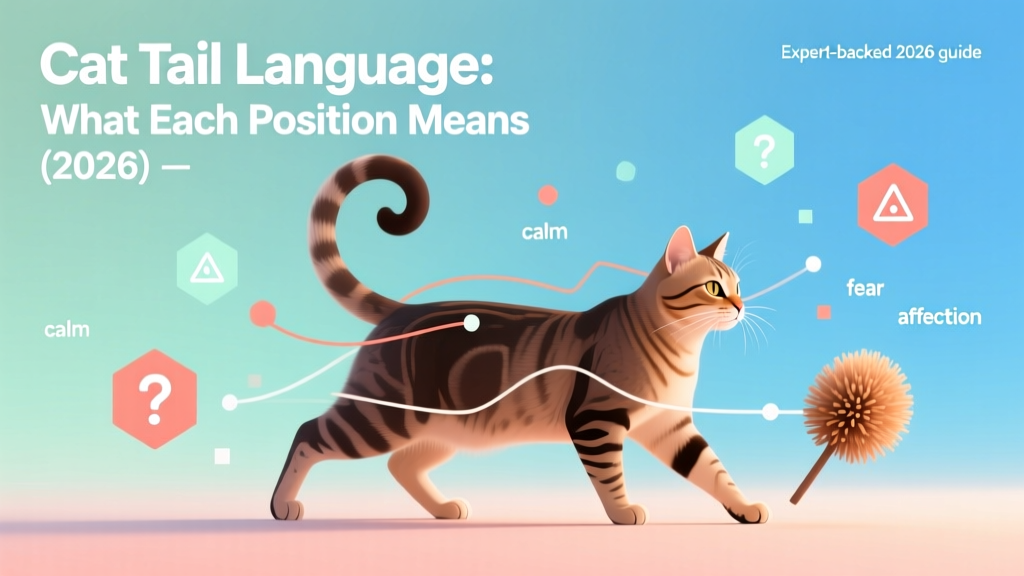
Cat Tail Language: What Each Position Means (2026)
Why Cat Tails Are Like Mood Rings
Your cat's tail is one of the most expressive parts of their body, and learning to read it is like unlocking a secret communication channel. Unlike dogs, who wag their tails primarily when excited, cats use their tails to convey a complex range of emotions — from affection and curiosity to fear and aggression. Understanding these signals can transform your relationship with your feline companion.
The 7 Key Tail Positions and Their Meanings
According to Dr. Mikel Delgado, a certified cat behavior consultant at Feline Minds, cats use seven primary tail positions to communicate their emotional state. Here's what each one means:
1. The Question Mark Tail (Upright with Curved Tip)
When your cat's tail stands straight up with a slight curve at the tip, resembling a question mark, it's one of the most positive signals you can receive. This position indicates your cat is feeling friendly, confident, and happy to see you. It's essentially your cat's way of saying "I love you" or "I'm excited to interact with you."
2. The Straight-Up Tail (Vertical)
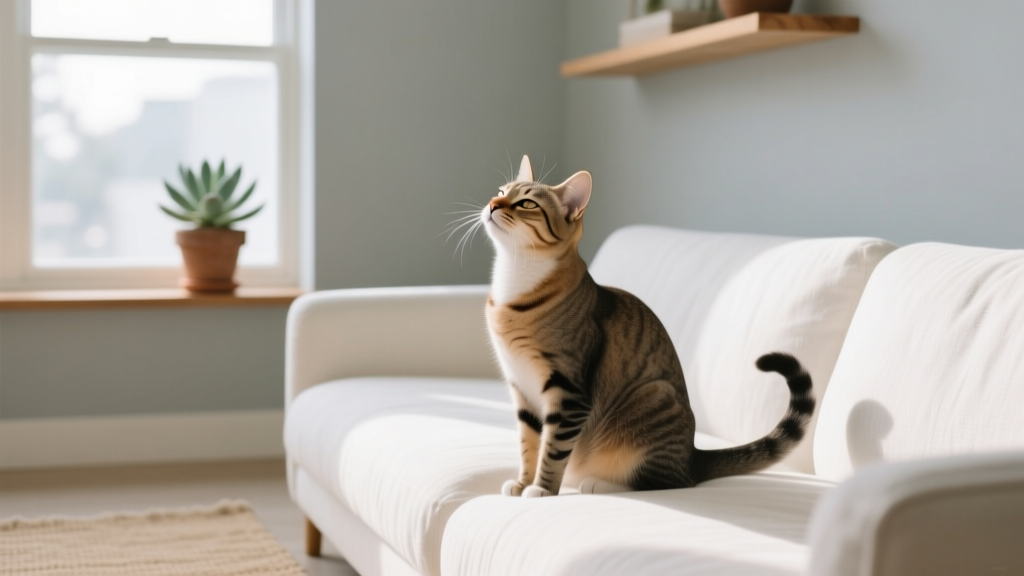
A tail held straight up without the curve signals confidence and contentment. Your cat is feeling secure in their environment and is likely in a good mood. This is the greeting position cats use when approaching trusted humans or other friendly cats.
3. The Low-Hanging Tail
When the tail is held low to the ground or tucked between the legs, it's a clear sign of fear, anxiety, or submission. Your cat may be feeling threatened, uncertain, or unwell. This position requires gentle attention and reassurance.
4. The Puffed Tail (Bottle Brush)
A tail that puffs up to two or three times its normal size is a defensive response. Your cat is trying to appear larger to ward off a perceived threat. This happens when they're startled, frightened, or preparing to defend themselves. Never approach a cat with a puffed tail — give them space to calm down.
5. The Slow Swish
A gently swishing tail indicates focused attention or mild irritation. Your cat may be watching prey, feeling slightly annoyed, or processing something in their environment. The slower the swish, the more relaxed your cat is. Faster swishing signals growing irritation.
6. The Rapid Flick or Whip
When the tail whips back and forth quickly, your cat is agitated, angry, or overstimulated. This is a warning sign that they may bite or scratch if the stimulation continues. Immediately stop petting or interacting and give them space.
7. The Wrapped Tail (Around Body or Another Cat)
When a cat wraps their tail around their own body while sitting, it can indicate contentment or self-soothing. When they wrap it around another cat or your leg, it's a sign of affection and bonding — similar to a hug in human terms.
Why Cats Puff Their Tails (And When to Worry)
Tail puffing is an involuntary response triggered by the sympathetic nervous system. When a cat perceives a threat, adrenaline causes the tiny muscles at the base of each tail hair to contract, making the fur stand on end. This makes the cat appear larger and more intimidating to potential predators.
According to a 2025 study published in the Journal of Veterinary Behavior, tail puffing occurs in 87% of cats when confronted with unfamiliar animals or loud noises. While occasional puffing is normal, frequent puffing without an obvious trigger may indicate chronic anxiety or an underlying medical condition.
"If your cat's tail is constantly puffed or they puff at minor stimuli like the sound of a door closing, it's time to consult a veterinarian or certified cat behaviorist," says Dr. Sarah Ellis, co-author of The Trainable Cat.
Context Matters: Reading the Whole Cat
Tail language should never be interpreted in isolation. Always consider the full context:
- Ears: Forward-facing ears indicate alertness or curiosity, while flattened ears signal fear or aggression
- Eyes: Dilated pupils suggest excitement or fear, while slow blinks indicate trust and relaxation
- Body posture: A relaxed, loose body with a swishing tail means playfulness, while a tense, crouched body with the same tail movement means aggression
- Vocalizations: Combine tail position with meows, purrs, hisses, or growls for a complete picture
Tail Signs That Mean "I Need a Vet NOW"
While most tail positions are emotional signals, certain tail behaviors can indicate serious medical issues requiring immediate veterinary attention:
1. Limp or Dragging Tail
If your cat's tail hangs limply or drags on the ground, it could indicate a spinal injury, nerve damage, or a condition called "limber tail syndrome." This is especially common after trauma or exposure to cold water. Seek veterinary care immediately.
2. Constant Tail Twitching at the Base
Repetitive twitching at the base of the tail, especially when your cat is resting, may indicate feline hyperesthesia syndrome or neurological issues. Record a video and consult your veterinarian.
3. Tail Held at an Odd Angle
A tail that's permanently kinked, bent, or held at an unusual angle may indicate a fracture or dislocation. Even if your cat seems comfortable, get it checked — tail injuries can lead to incontinence if left untreated.
4. Excessive Tail Chewing or Biting
If your cat is obsessively chewing or biting their own tail, it could signal pain, allergies, parasites, or a psychological condition called feline psychogenic alopecia. This requires both medical and behavioral intervention.
How to Respond to Your Cat's Tail Language
Understanding tail language is only half the equation — knowing how to respond appropriately builds trust and strengthens your bond:
- Question mark or upright tail: Greet your cat warmly, offer gentle petting, and engage in play
- Slow swish: Observe what's capturing their attention, but don't force interaction
- Rapid flick or whip: Stop petting immediately, give space, and avoid eye contact
- Puffed tail: Remove the perceived threat if possible, speak softly, and don't attempt to touch
- Low or tucked tail: Provide a safe hiding spot, speak calmly, and avoid sudden movements
Building a Deeper Connection Through Tail Awareness
Learning to read your cat's tail language is one of the most rewarding aspects of cat ownership. It transforms everyday interactions from guesswork into meaningful communication. Start by observing your cat's tail in different situations — during feeding, play, petting, and when strangers visit. Keep a journal of tail positions and the context, and you'll quickly develop an intuitive understanding of your cat's unique communication style.
Remember, every cat has their own personality and may express emotions slightly differently. The key is consistent observation and respectful response. When you honor your cat's tail signals, you're telling them "I see you, I understand you, and I respect your boundaries." That's the foundation of a lifelong, trusting relationship.