Cat Paw Tapping Your Shoulder From Behind
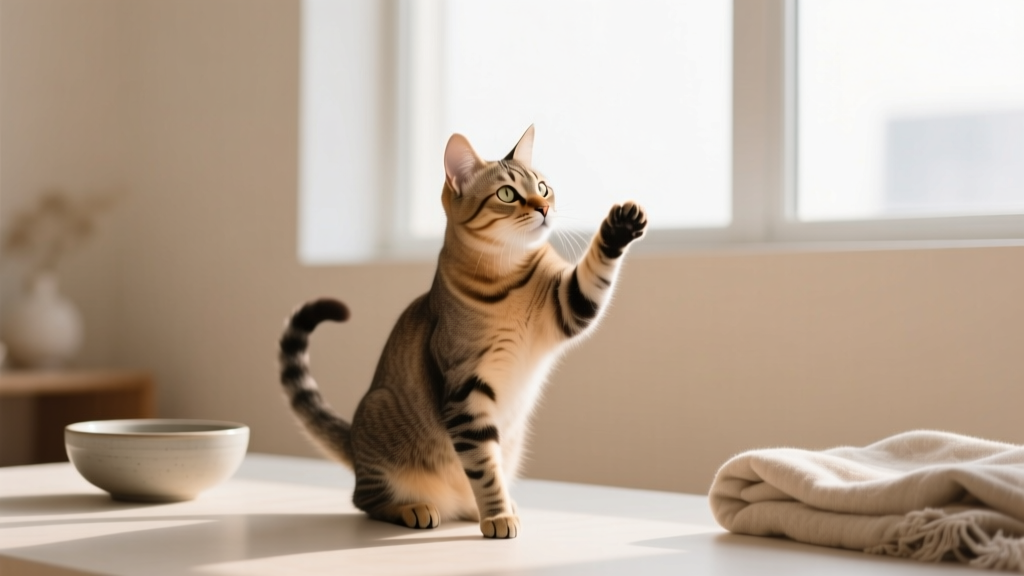
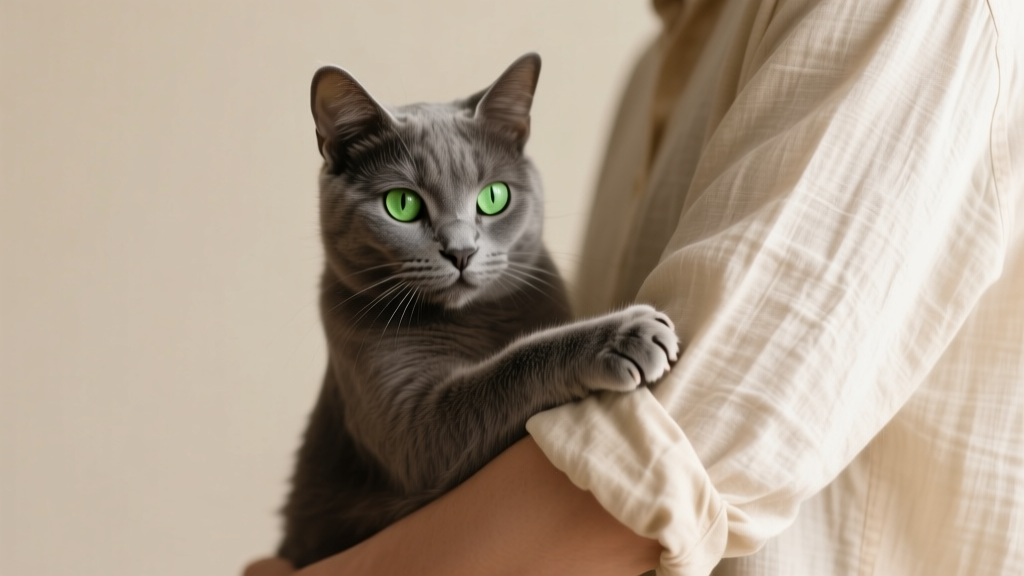
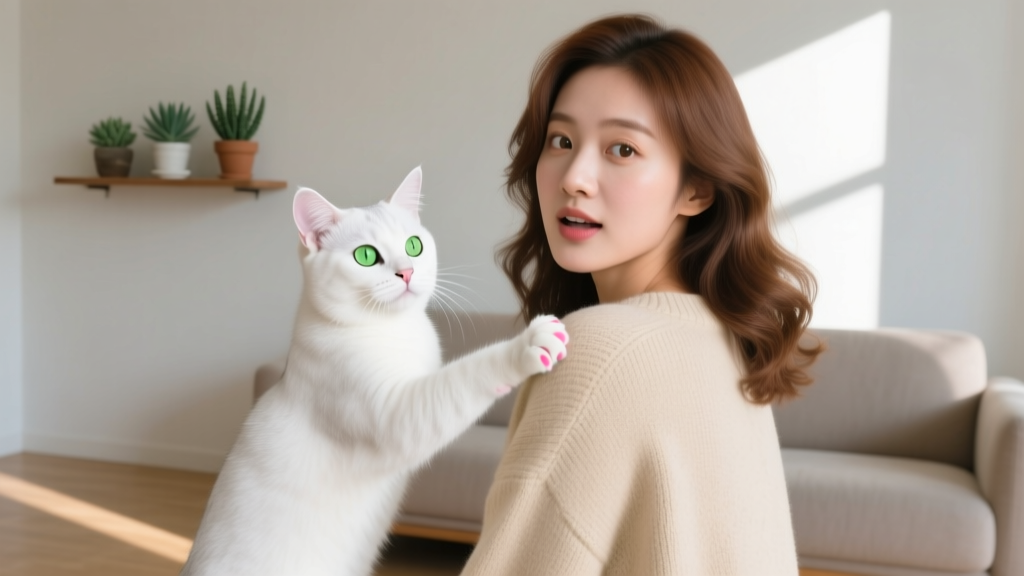
You’re at the kitchen counter, focused on chopping vegetables. Or you’re at your laptop, answering one last email. Then it happens: a soft tap-tap on your shoulder from behind. You turn around expecting… maybe a spouse, maybe a child, maybe absolutely nothing. Instead, there’s your cat—eyes wide, whiskers slightly forward, looking up at you like, “Yes? I require your attention. Immediately.”
If your cat has ever tapped your shoulder (especially from behind), you already know how oddly personal it feels. It’s not the chaotic face-rubbing of an affectionate greeting, or the dramatic meow of a hungry cat. It’s more like a tiny, polite (or not-so-polite) request. Sometimes it’s gentle. Sometimes it’s a single claw-hook that says, “I wasn’t asking.”
This shoulder-tap behavior is one of those quirks that makes living with cats feel like sharing your home with a small, furry communicator who has strong opinions about how your day should go.
The Scientific (and Evolutionary) “Why” Behind the Tap
Cats are masters of efficient communication. In the wild, making noise can attract predators or alert prey. So cats evolved to use a mix of subtle body language, scent cues, and quick physical signals to coordinate with other cats and to manage their environment.
A paw tap is one of those quick signals. It’s low-energy, targeted, and hard to ignore—especially if it lands on your shoulder while you’re facing away. From an evolutionary perspective, it makes sense: if you need another being’s attention without escalating into a loud confrontation, a touch is effective.
Domestic cats also learned something extra from living with humans: we respond to touch. Many cats discover that a paw on your body works better than meowing at your back. It’s essentially operant conditioning in action—your cat taps, you turn around, your cat gets a result. Over time, the behavior becomes part of their “communication toolkit.”
There’s also a hunting-flavored piece to this. Cats are wired to approach from angles you aren’t watching. Coming from behind is normal cat strategy: less threatening, more controlled, and—if we’re being honest—slightly dramatic.
What “Shoulder Tapping From Behind” Looks Like in Different Contexts
Not all taps are created equal. The meaning often depends on timing, body language, and what happens next. Here are common scenarios cat owners recognize instantly:
1) The “Excuse me, Human” Tap (Attention Request)
Scene: You’re on a phone call or staring at a screen. Tap. You turn. Cat blinks slowly or gives a soft meow.
What’s happening: Your cat wants interaction—petting, play, or simply acknowledgment. Many cats prefer this to vocalizing repeatedly.
2) The “Follow Me” Tap (Guiding Behavior)
Scene: Tap on the shoulder, then your cat pivots and walks a few steps, glancing back to see if you’re coming.
What’s happening: Your cat is recruiting you—often to the food bowl, a closed door, a toy under the couch, or the preferred cuddle spot. Some cats basically train you to be their assistant.
3) The “You Stopped Too Soon” Tap (Petting Control)
Scene: You pet your cat briefly, then return to your task. Tap-tap. The cat reappears like a tiny manager demanding you resume your duties.
What’s happening: Cats like to control the start and stop of interaction. A shoulder tap can be a boundary-setting tool: “Continue, please.”
4) The “Play With Me” Tap (Predatory Play Invitation)
Scene: Tap followed by a dash away, sideways hops, or a tail that’s up and twitching at the tip.
What’s happening: Your cat is trying to spark a chase game or interactive play. This is especially common with young cats or high-energy adults.
5) The “I’m Not Sure About This” Tap (Cautious Check-In)
Scene: Something changes—new guest, loud noise, new furniture. Your cat approaches from behind, taps, then retreats slightly.
What’s happening: The tap can be a cautious test. Your cat may be checking your reaction or using you as a “safe reference point.” Cats watch us more than we think.
6) The “Hey! That’s Mine” Tap (Mild Protest)
Scene: You’re doing something your cat dislikes—closing a door, packing a suitcase, removing them from the counter. Tap, possibly with claws.
What’s happening: This is a mild protest or interruption. It can be a polite warning before escalation (like meowing, blocking, or swatting).
What the Tap Says About Your Cat’s Mood and Feelings
A shoulder tap is rarely random. Think of it as your cat’s way of saying, “I want a response.” To decode it, look at the “whole cat,” not just the paw.
- Relaxed, affectionate mood: Soft tap, tail upright with a gentle curve, ears neutral, slow blink, rubbing after the tap. This often means affection or a friendly request.
- Playful, energized mood: Tap followed by zoomies, crouching, butt wiggles, or a quick dart away. Your cat is inviting action.
- Needy or bored: Repeated tapping, following you closely, vocalizing if ignored. This can signal understimulation—your cat wants engagement.
- Anxious or uncertain: Tap with a tense body, ears slightly sideways, wide pupils, low tail. Your cat may be seeking reassurance or trying to interrupt a stressful situation.
- Irritated or over-threshold: Tap that turns into a claw snag, a swat, or a fast “thump” of the paw; tail flicking; skin rippling. Your cat may be frustrated or overstimulated.
The fact that your cat chooses your shoulder is also telling. Shoulders are up high, close to your face, and usually make you turn. Your cat has learned where to “press the button.”
Related Behaviors You Might Also Notice
If you have a shoulder-tapper, you may recognize these companion quirks:
- Leg weaving: Your cat wraps around your calves as you walk—another attention and control behavior.
- “Booping” your face with a paw: Similar intention, just more direct (and occasionally rude at 5 a.m.).
- Gentle pawing at your arm/hand: A closer-range version of the tap, often to restart petting.
- Head-butting (bunting): Scent-marking and affection, often after you respond to the tap.
- Chin or cheek rub on your shoulder: Your cat may tap first, then rub to leave friendly scent signals.
- Leading you places: Tapping can be the “hook,” and then the cat walks you to the desired destination.
When It’s Normal (and When It Might Be a Concern)
Most shoulder tapping is perfectly normal—an intelligent, social strategy your cat uses because it works. Still, a few patterns deserve attention.
Usually Normal
- Gentle tapping paired with relaxed body language
- Occasional taps for attention, food, or play
- Tapping that stops when you respond appropriately
Potentially Concerning
- Sudden increase in tapping or clinginess: If your independent cat becomes intensely demanding, consider stress, environmental change, or possible medical discomfort.
- Aggressive escalation: Taps turning into frequent clawing, swatting, or biting may indicate overstimulation, frustration, or insufficient enrichment.
- Tapping at night with restless behavior: Could be boredom, but persistent nighttime agitation can also be linked to anxiety or, in older cats, cognitive changes.
- New sensitivity to touch: If your cat taps but seems uncomfortable when you pet them, or if they’re cranky about being handled, talk to a vet—pain can change social behavior.
Rule of thumb: if the tapping comes with major behavior changes (hiding, appetite shifts, litter box issues, aggression), it’s worth a closer look.
How to Respond (and Whether You Should Encourage It)
Shoulder taps can be charming—until you’re carrying hot coffee. The goal isn’t to “stop your cat from communicating.” It’s to shape the behavior into something safe and mutually pleasant.
1) Reward the Version You Like
If the tap is gentle, respond quickly with a calm acknowledgment: turn around, say their name, offer a brief pet or a toy. You’re teaching, “Soft taps work.”
2) Don’t Reward Claws on Skin
If the tap includes claws, avoid giving the cat what they want immediately. Instead:
- Freeze (don’t flail—movement can invite more grabbing)
- Calmly step away or gently remove the cat if needed
- Wait a moment, then redirect with a toy or offer attention when paws are soft
3) Provide a Clear Alternative Signal
Some cats tap because they don’t know another way to ask. You can teach:
- A target behavior: Train your cat to touch a target stick or your hand (with treats). Then they can “ask” by touching the target instead of your shoulder.
- A station: Place a small mat or perch nearby. Reward your cat for going there when they want attention.
4) Meet the Need Before the Tap Happens
If tapping occurs at predictable times (work calls, cooking, bedtime), schedule short play sessions and enrichment before those moments. A 10-minute wand-toy session can prevent 30 minutes of shoulder harassment.
5) Enrichment Helps (Especially for Smart, Social Cats)
- Interactive play (wand toys, chase games)
- Food puzzles and treat scavenger hunts
- Window perches, bird feeders outside, cat TV
- Vertical space (cat trees, shelves)
A mentally satisfied cat is less likely to “tap-beg” all day.
Fun Facts and Research-Flavored Tidbits
- Cats are excellent at learning cause-and-effect with humans. If a behavior reliably makes you turn around, it’s likely to become a habit.
- Touch is a powerful attention-getter. Many cats use tactile signals when humans are visually unavailable (like when you’re facing away).
- Some cats prefer physical communication over vocalizing. While cats often meow more at humans than at other cats, not every cat is chatty—tapping is the quieter “language option.”
- Working breeds and high-energy cats often invent jobs. If your cat is a shoulder-tapper, they may also be a “supervisor” who follows you and participates in everything.
FAQ: Cat Paw Tapping Your Shoulder From Behind
Why does my cat tap my shoulder instead of meowing?
Your cat may have learned that touch works faster than sound—especially when you’re facing away. Some cats are also naturally quieter and prefer physical communication.
Is my cat being affectionate or demanding?
It can be either (and sometimes both). A gentle tap with relaxed body language often signals affection or a friendly request. Repeated tapping with impatience—tail flicks, intense staring, or escalating pressure—leans more demanding.
How do I stop my cat from tapping me while I’m cooking or busy?
Give a predictable alternative: a nearby perch or mat, a food puzzle, or a short play session before you start. If your cat taps, avoid rewarding clawed taps; reward calm behavior or “waiting” in the designated spot.
My cat taps my shoulder at night—what does that mean?
Often it’s boredom, a shifted sleep schedule, or a learned habit (“I tap, human wakes up”). Try more daytime play, a small pre-bed meal, and consistent responses at night (calmly redirect rather than engaging in exciting play at 3 a.m.). If nighttime restlessness is new—especially in a senior cat—ask your vet.
Can shoulder tapping be a sign my cat is stressed?
It can be, particularly if it starts suddenly after a change (moving, new pet, new baby, loud construction). Watch for other stress signs like hiding, overgrooming, appetite changes, or litter box issues.
Why does my cat do it from behind?
Approaching from behind can feel safer and more effective. It also guarantees you’ll turn to look, which is exactly the response your cat wants.
That little shoulder tap is your cat’s way of reaching across the species gap and saying, “Hi. I have a request.” Once you start noticing the context—food, play, reassurance, boundaries—you’ll be able to respond in a way that makes your cat feel understood without letting them run your entire schedule (no promises, though).
Has your cat perfected the shoulder-tap technique—or invented an even funnier way to get your attention? Share your stories (and the weirdly effective tactics your cat uses) with the Cat Lovers Base community at catloversbase.com.