Cat Paw Stroking Another Cat's Head: Social Groom
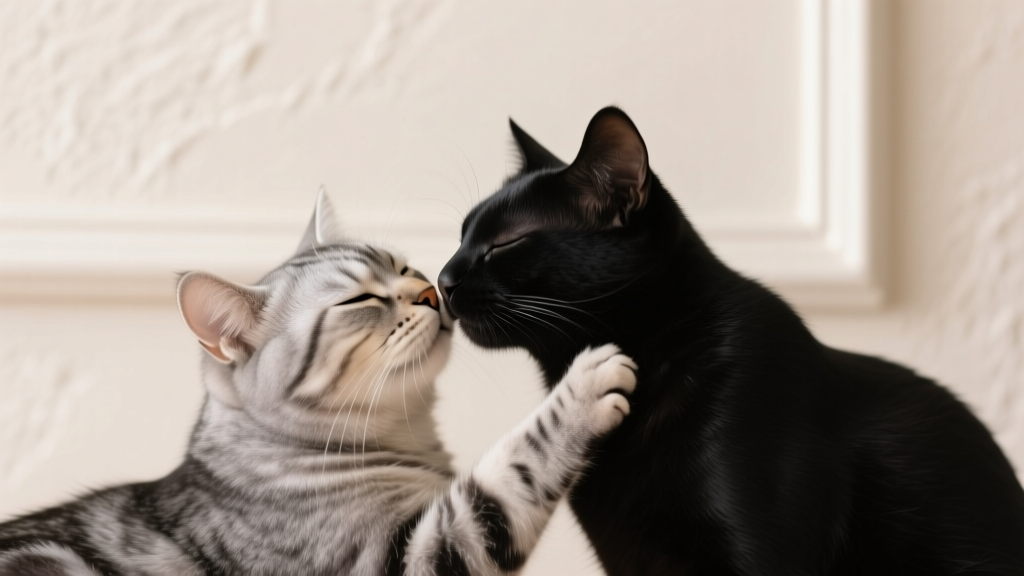
You’re on the couch, half-watching a show, when you spot it: one cat sitting like a tiny statue while the other gently reaches out… and pats their head. Not a swat. Not a “move, peasant.” More like a slow, careful stroke—sometimes followed by a few licks, sometimes not. It’s equal parts sweet and slightly ridiculous, like one cat is trying to do the other’s hair.
If you’ve ever wondered, “Is this affection? Is it dominance? Are they about to fight?” you’re not alone. This little paw-to-head gesture is one of those classic multi-cat mysteries. The good news: in most households, it’s a perfectly normal social behavior—often a form of bonding known as social grooming (or, in cat behavior terms, allogrooming).
The science and evolution behind the “paw stroke”
Cats may be famous for independence, but domestic cats are also quietly social—especially when resources are stable (food, safe resting spots, predictable humans). In nature, related female cats sometimes form colonies, cooperating around kittens and sharing space. In these social groups, cats use a whole toolkit of behaviors to reduce tension and strengthen alliances: rubbing, sleeping near each other, mutual grooming… and yes, gentle pawing.
Grooming is not just about cleanliness. In many social animals, grooming is a relationship behavior. It can:
- Reinforce familiarity (“You’re part of my safe circle.”)
- Reduce stress (the repetitive, gentle contact is calming)
- Maintain group scent (cats recognize family and friends partly by scent)
- Prevent conflict (friendly contact can defuse tension)
The paw-stroking part may be an “opening move.” Cats often begin social grooming with a bit of gentle face contact—paw to forehead, paw to cheek—before transitioning into licking. It’s a little like a cat saying, “Hold still. I’m about to be nice to you.”
There’s also a practical reason for focusing on the head: the face, ears, and top of the head are areas cats can’t groom as easily on their own. So a cooperative partner is genuinely helpful—especially for older cats, overweight cats, or cats with mild stiffness.
What the behavior looks like in different contexts
Not all paw strokes are created equal. The meaning changes depending on what happens before, during, and after the paw makes contact.
1) The “spa treatment” stroke (affectionate allogrooming)
Scene: Two cats are loafed on the bed. One cat leans in, places a paw gently on the other’s head, and slowly rubs. Then comes a series of calm licks around the ears. The receiver half-closes their eyes, maybe purrs, and doesn’t move away.
What it usually means: Bonding. Comfort. Social closeness. This is the classic “we’re friends” version.
2) The “permission check” stroke (testing the mood)
Scene: One cat approaches cautiously, reaches out with a soft paw touch to the forehead, then pauses. If the other cat stays relaxed, grooming continues. If the other cat tenses, the grooming cat backs off or changes direction.
What it usually means: A polite social probe. Cats are big on consent signals—subtle ones. The paw touch can be a way to gauge whether contact is welcome.
3) The “hold still” stroke (control within grooming)
Scene: The grooming cat places a paw on the other cat’s head and keeps it there while licking intensifies. The receiver stays mostly still, but you might notice a tiny tail flick or slight ear rotation.
What it usually means: Grooming with a dash of control. This can still be friendly, but it may also reflect a relationship where one cat tends to “direct” interactions.
4) The “overstimulation edge” stroke (grooming that may tip into a spat)
Scene: Grooming starts sweetly—paw stroke, licks—then suddenly the receiver’s ears go sideways, skin ripples, tail thumps, and bam: a hiss or a fast swat.
What it usually means: One cat got overstimulated or annoyed. Grooming can be calming, but repetitive touch can also become too much, especially for cats who prefer personal space.
5) The “social negotiation” stroke (mild dominance or resource tension)
Scene: This happens near a favorite window perch or right before dinner. One cat reaches out and strokes the other’s head, sometimes followed by grooming, sometimes followed by the other cat moving away.
What it usually means: Sometimes it’s affiliative; sometimes it’s a subtle way to manage space. Cats aren’t constantly fighting for “alpha” status, but they do negotiate access to valued spots. Paw-to-head contact can be part of that negotiation.
What it says about your cat’s mood and feelings
To read this behavior, focus on the whole cat—especially the body language “before and after.” Here are common emotional interpretations:
- Relaxed affection: Soft eyes, slow blinks, neutral ears, loose body, gentle paw pressure, grooming continues, both cats remain close afterward.
- Comfort-seeking or soothing: The grooming cat may be a little keyed up (restless pacing, mild vocalizing) and uses grooming to settle themselves and the other cat.
- Social confidence: The cat initiating may feel secure enough to enter the other’s personal space without fear of rejection.
- Mild tension masked as “polite” contact: Stiff posture, fixed stare, ears slightly rotated, tail twitching. Contact may be slow but not truly relaxed.
- Overstimulation risk: Receiver’s tail starts thumping, ears go “airplane,” skin twitches, or they turn their head sharply toward the grooming cat.
A helpful rule: Mutual grooming and mutual relaxation are the gold standard. If one cat consistently looks trapped, irritated, or bolts afterward, the meaning may be less “awww” and more “please stop touching me.”
Related behaviors you might also notice
If your cats do the paw-to-head stroke, you’ll often see other “we’re connected” behaviors in the same relationship:
- Allorubbing: Head-butting or rubbing cheeks and sides together to share scent.
- Sleeping in a pile (or at least touching): Paws overlapping, back-to-back naps, or sharing a blanket corner.
- Mutual face sniffing: Calm nose-to-nose greetings (brief and polite).
- Following and mirroring: One cat copies the other’s routines—window time, water break, nap location.
- “Grooming invitations”: A cat lowers their head, turns their cheek, or sits with their back presented as if saying, “You may begin.”
You might also see the opposite: redirected grooming, where a cat licks or paws another cat after being startled (a noise outside, a doorbell). That can be a stress outlet rather than pure affection.
When it’s normal vs when it may be a concern
In most cases, paw-stroking another cat’s head is normal social behavior. It becomes concerning when it’s part of a pattern of bullying, chronic stress, or escalating aggression.
Usually normal
- Both cats appear relaxed and can walk away freely.
- The interaction ends peacefully (they nap, separate calmly, or switch groomer/receiver roles).
- Minor corrections happen (a quick ear flick or brief “stop” swat) but don’t escalate.
Potentially concerning
- One-sided “grooming” that looks like control: The initiator pins with a paw, blocks movement, or repeatedly targets the other cat’s head/neck while the receiver looks tense.
- Frequent fights after grooming: If paw strokes often lead to yowling, chasing, or hiding, something is off.
- Signs of chronic stress: One cat avoids rooms, stops using certain resources, overgrooms themselves, urinates outside the box, or loses appetite.
- Skin irritation or bald patches: Excessive grooming—especially if concentrated in one spot—can cause fur loss or sores.
If you’re seeing stress signals, consider a check-in with your veterinarian (to rule out pain or skin issues) and a qualified cat behavior professional. Discomfort can shorten a cat’s tolerance for social contact, turning friendly grooming into cranky conflict.
How to respond (and how to encourage the good version)
If the interaction looks friendly, your job is mostly to not ruin the moment. If it looks tense, you can gently steer the household toward calmer social dynamics.
If it’s sweet and mutual
- Let it happen. This is healthy social bonding.
- Reward the calm. Later (not mid-groom), offer treats or gentle praise when both cats are relaxed together.
- Support their “group scent.” Use a soft cloth to rub each cat’s cheeks and then the other’s (if both tolerate it) to reinforce shared scent without forcing contact.
If it’s tipping toward tension
- Interrupt without drama. Use a soft sound, toss a toy, or call them for a treat—no yelling, no grabbing.
- Increase resources. More resting spots, more scratching posts, more litter boxes (the classic guideline: one per cat plus one extra), and multiple feeding/water stations reduce competition.
- Offer parallel play. Daily wand-toy sessions in the same room help cats associate each other with good feelings, at a comfortable distance.
- Watch for pain. If the “receiver” suddenly stops tolerating grooming, schedule a vet visit. Arthritis, dental pain, or skin sensitivity can change social tolerance fast.
Avoid forcing closeness—like holding one cat still so the other can “be nice.” Cats learn trust when they have choice.
Fun facts and research-flavored findings
- Allogrooming often targets the head and neck. Those are high-value social areas: scent glands around the face plus hard-to-reach grooming zones.
- It can function like social glue. In many species, grooming supports alliances and lowers tension. Cats use it more often in stable, familiar groups.
- It’s not always symmetrical. In some cat relationships, one cat grooms more than the other—sometimes due to personality, sometimes due to who feels more socially confident.
- Grooming and “minor control” can coexist. A paw resting on the head can be affectionate and a little directive at the same time—cats are nuanced like that.
FAQ: Cat paw stroking another cat’s head
Is my cat petting the other cat like a human would?
Not exactly, but it’s a fair comparison. Cats don’t “pet” with the same intention humans have, yet the paw-to-head stroke can be a gentle social touch that initiates grooming, tests boundaries, or reinforces familiarity.
Does this mean my cats are bonded?
It’s a strong hint, especially if you also see relaxed body language, shared sleeping spaces, mutual rubbing, and peaceful coexistence. One-off paw strokes can also happen between cats who are simply tolerant of each other.
Why does it sometimes turn into a fight?
Overstimulation is common. One cat enjoys grooming until they suddenly don’t—then they correct the other cat. It can also reflect underlying tension or competition. Watch for stiff posture, tail thumping, or blocked escape routes.
My cat pins the other cat’s head with a paw while grooming. Is that dominance?
It can be mild social control, but “dominance” in cats is usually more about resource access than a strict hierarchy. If the receiver looks relaxed and can leave, it’s likely normal. If the receiver looks trapped or stressed, treat it as a relationship issue to address with more resources and careful management.
Should I stop my cats when they do this?
If both cats look comfortable, no. If you notice tension building, interrupt gently before it escalates—redirect with play or treats and make sure both cats have space and escape options.
Can single cats do something similar to humans?
Yes. Some cats will place a paw on your face or head, or “pat” your hair, especially if they’re affectionate, seeking attention, or exploring with gentle touch. The same rules apply: relaxed body language is good; stiff posture or fast, intense pawing may mean “I’ve had enough” or “pay attention now.”
That little paw stroking another cat’s head is one of the most charming examples of cats being quietly social—part grooming, part communication, part relationship maintenance. The real story is in the body language: soft and sleepy equals bonding; stiff and twitchy means you may need to help them feel more secure.
Have you seen the “head pat” in your home—sweet, awkward, or a bit of both? Share your cats’ funniest grooming-and-paw-stroking moments with us on catloversbase.com. We’d love to hear who’s the household “salon owner” and who’s the long-suffering client.