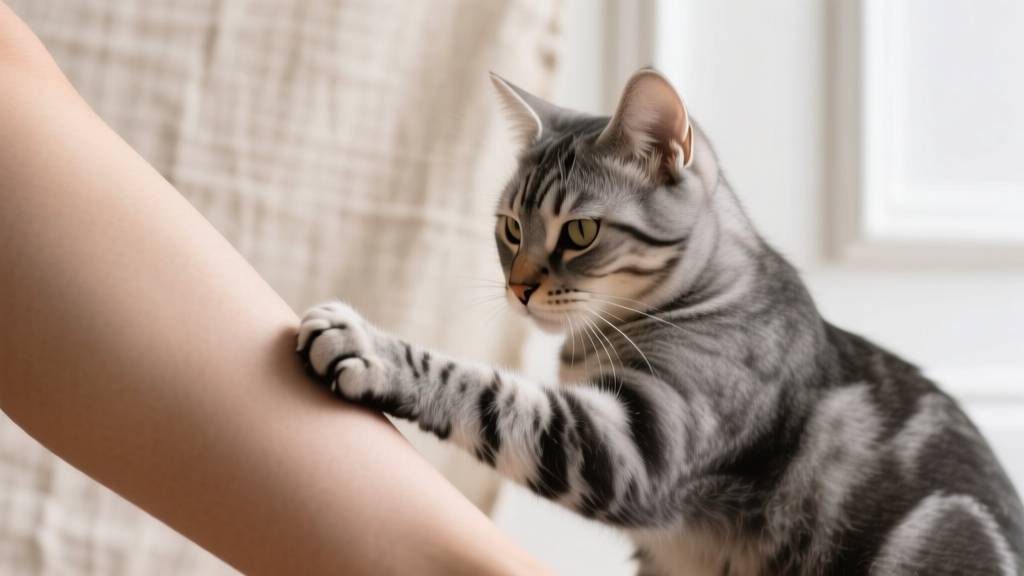
Cat Paw Bumping Your Leg: Attention Seeking Pattern
You’re standing in the kitchen, half-focused on the kettle and half-thinking about your next task, when it happens: a soft tap-tap on your calf. You glance down. Your cat is sitting politely—almost theatrically—reaching out one paw to bump your leg like a tiny, furry customer at a service counter. If you ignore it, the paw returns. Tap. Tap. Sometimes there’s a little chirp. Sometimes the claws come out just enough to make you take the hint.
If this sounds familiar, you’re not alone. Cat paw bumping is one of those behaviors that feels both adorable and mildly demanding. It’s also a surprisingly sophisticated form of communication—part attention request, part social check-in, and sometimes a genuine “Hey… are you okay?” from a creature who notices more than we give them credit for.
Why Cats Paw-Bump: The Science and Evolution Behind the Tap
Cats didn’t evolve to bark orders across the living room. They’re stealthy, close-range communicators. In the wild, a small feline can’t afford to announce itself loudly; quiet signals are safer. A gentle paw touch is low-risk, precise, and effective—perfect for a predator that values subtlety.
There’s also a social-development piece. Kittens learn early that paws get results. They knead their mother’s belly to stimulate milk flow, and they paw at siblings during play to start interactions. That “paw = response” connection gets reinforced quickly. When your adult cat taps your leg and you respond (even once), the behavior can become a reliable tool in their communication kit.
From a learning theory perspective, paw bumping is often strengthened by intermittent reinforcement—the same reason humans keep checking notifications. If your cat paws you ten times and you only respond on the third or seventh time, that unpredictability can make the behavior even more persistent. Your cat learns, “If I keep trying, it eventually works.”
Different Contexts: What the Paw Bump Looks Like in Real Life
Not all paw bumps are created equal. The context—the moment, the body language, and what happens right after—matters.
1) The “Dinner Is Late” Tap
Scenario: You’re on the couch. Your cat approaches with purpose, sits beside you, and taps your shin. You look down and they immediately lead you toward the kitchen like a tour guide.
Common clues: intense staring, pacing, tail up, repeated taps, heading toward the food area.
Meaning: a learned request for a resource (food, treats, fresh water, a clean bowl).
2) The “Pet Me, But Correctly” Tap
Scenario: Your cat hops near you, rubs their cheek on your knee, then bumps your leg with a paw—sometimes gently hooking your pant fabric to hold you in place.
Common clues: slow blink, head-butting, cheek rubs, purring, relaxed tail.
Meaning: soliciting affection or social contact. Some cats use the paw as a polite “excuse me” before they ask for scritches.
3) The “You’re Busy and I Object” Tap
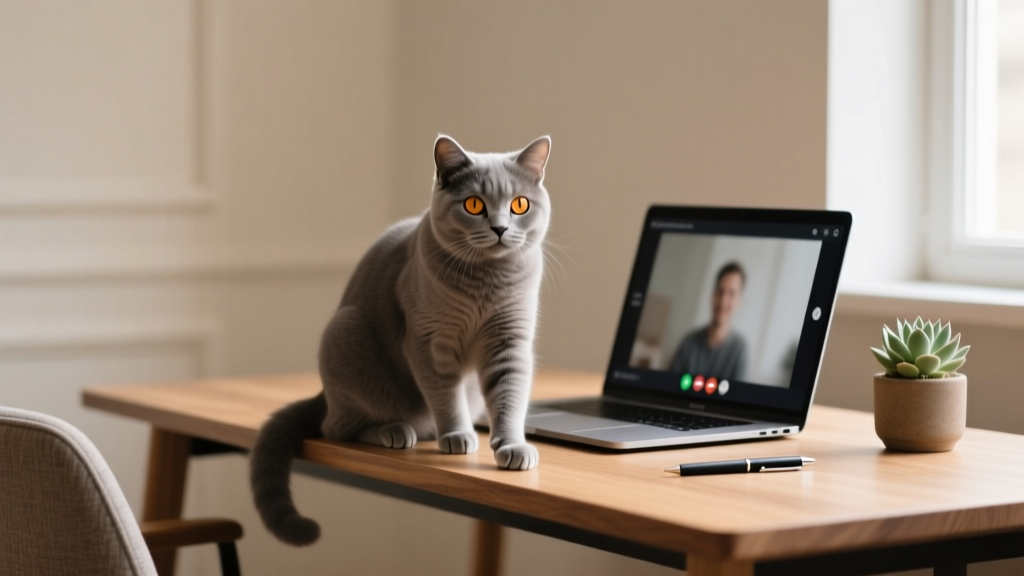
Scenario: You’re typing at your desk. Your cat sits nearby, watches, then taps your ankle. If that fails, the tap escalates into a paw on the keyboard, a dramatic sprawl across your notebook, or a direct bump to your elbow.
Common clues: hovering close, persistent tapping, interrupting your hands, vocalizing.
Meaning: attention-seeking plus frustration. Your cat has learned that interrupting is an efficient way to get engagement.
4) The “Start the Game” Tap
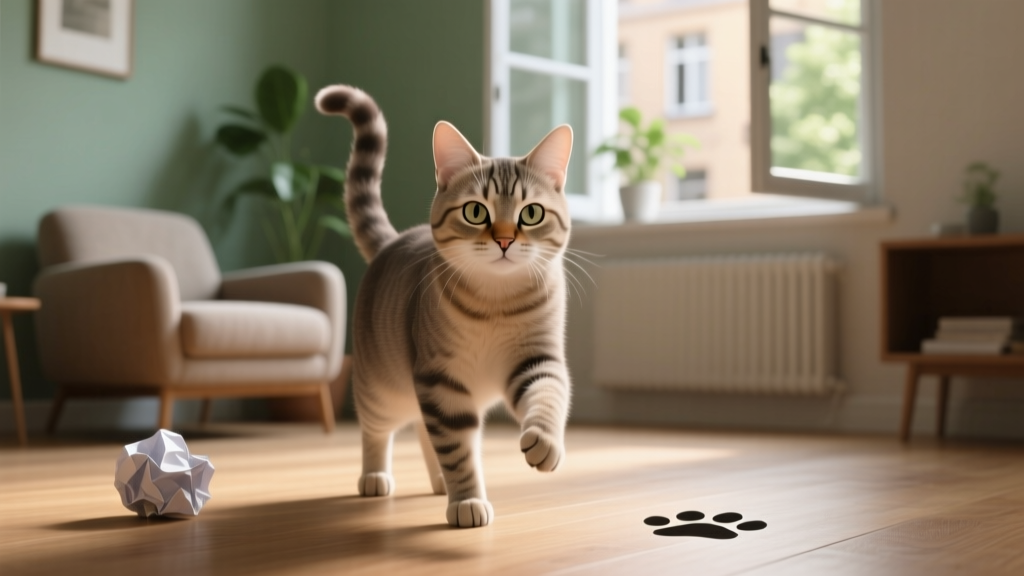
Scenario: You walk by and your cat pops a paw out from behind the couch for a quick tap—then bolts away with a look that says, “Catch me.”
Common clues: bouncy movements, sideways hops, twitchy tail tip, running off after contact.
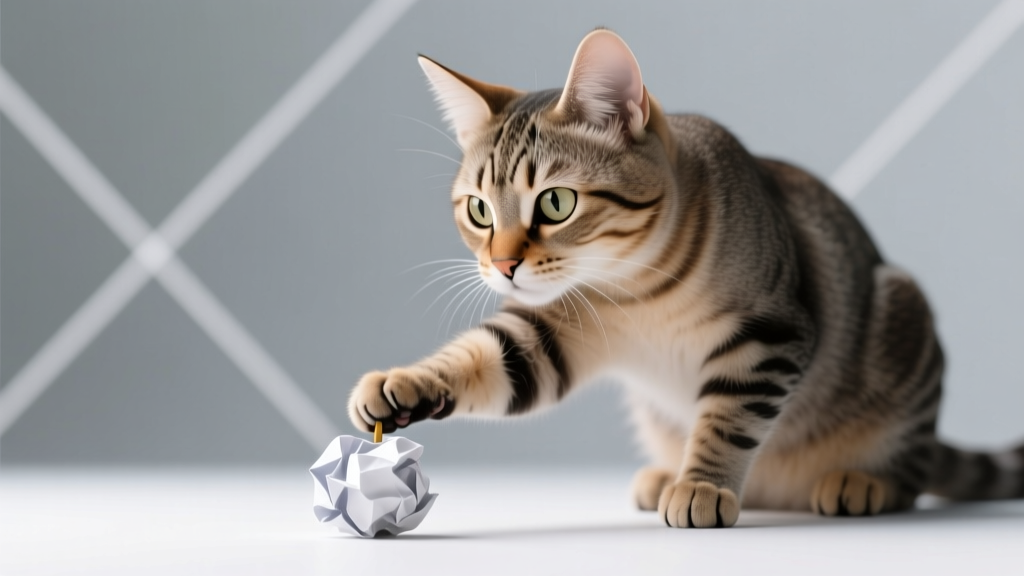
Meaning: play invitation. Many cats use a paw bump as the opening line in a chase game.
5) The “I’m Not Sure About This” Tap
Scenario: You’re holding something new—a box, a vacuum attachment, a crinkly package. Your cat reaches out and taps your leg, then looks between you and the object.
Common clues: cautious posture, ears slightly sideways, sniffing, slow approach.
Meaning: information seeking and reassurance. Some cats “check in” with their person before approaching something unfamiliar.
What It Says About Your Cat’s Mood and Feelings
A paw bump is rarely random. It’s usually one of these emotional states:
- Confident and social: relaxed body, gentle tap, maybe a purr. Your cat feels safe enough to initiate contact.
- Needy or bored: repeated tapping, hovering, escalating tactics. Your cat wants stimulation—food, play, or interaction.
- Frustrated: faster taps, claws involved, vocal complaints, tail flicking. Your cat has a goal and you’re not cooperating.
- Affectionate: tap followed by rubbing or leaning. It’s a “connect with me” moment, not necessarily a demand.
- Anxious or uncertain: cautious tap, scanning the room, ears angled. Your cat may be seeking reassurance or asking for help.
Think of the paw bump as your cat’s version of tapping you on the shoulder—polite in intention, occasionally impatient in execution.
Related Behaviors You Might Notice
Paw bumping often travels with a whole constellation of cat-to-human communication strategies:
- Leg weaving: your cat circles your ankles, mixing affection with “you’re going this way now.”
- Trilling or chirping: friendly vocalizations that often accompany requests or greetings.
- Head bunting (bunting): scent-marking and bonding behavior, often paired with paw taps.
- Gentle “grab” with the paw: a light hook of your clothing to keep you from leaving.
- Slow blinking: a calm, affiliative signal—sometimes used right before or after a paw bump.
- Love bites or nibbling: can appear if arousal rises (overstimulation or excitement) during interaction.
When Paw Bumping Is Normal (and When It Might Be a Concern)
Most of the time, paw bumping is completely normal—just your cat communicating in a way that works.
It’s typically normal if:
- The tap is gentle and your cat’s body language looks relaxed.
- The behavior is predictable (around meals, when you get home, when you sit at the desk).
- Your cat easily settles once their need is met (food, play, attention).
Consider it a concern if you notice:
- Sudden increase in pawing that feels frantic or out of character.
- Pawing paired with yowling, restlessness, or signs of distress—especially at night.
- New clinginess, following you constantly, or inability to settle.
- Pain signals: limping, guarding a paw, flinching when touched, changes in jumping habits.
- Compulsive quality: repeated pawing that seems disconnected from a clear goal, especially if your cat struggles to stop.
If the paw bumping arrives alongside appetite changes, litter box changes, hiding, aggression, or lethargy, a veterinary check is wise. Behavior is communication, but sometimes it’s also a symptom.
How to Respond (and When to Encourage It)
You can use paw bumping to strengthen your cat-human relationship—without accidentally training your cat to harass you all day.
Reward the polite version
If your cat taps gently, respond with what they want when it’s reasonable: a quick pet, a short play session, or a calm “Hi!” and a slow blink. This reinforces calm communication.
Don’t reward escalating taps
If the tap turns into clawing your leg or relentless pestering, pause. Stand still, avoid scolding (attention can be rewarding), and wait for a moment of calmer behavior—then respond. You’re teaching: “Polite works. Rough doesn’t.”
Give your cat a predictable attention routine
Many attention-seeking patterns improve when cats can count on interaction. A reliable 10-minute play session before dinner and a brief cuddle window before bed can reduce “tap-tap-tap” interruptions throughout the day.
Offer an alternative “ask”
Some cats love learning simple cues. You can teach your cat to touch a target (like a spoon or your hand) instead of your leg, then reward with play or treats. This channels the same communication into a more convenient habit.
Meet the underlying need
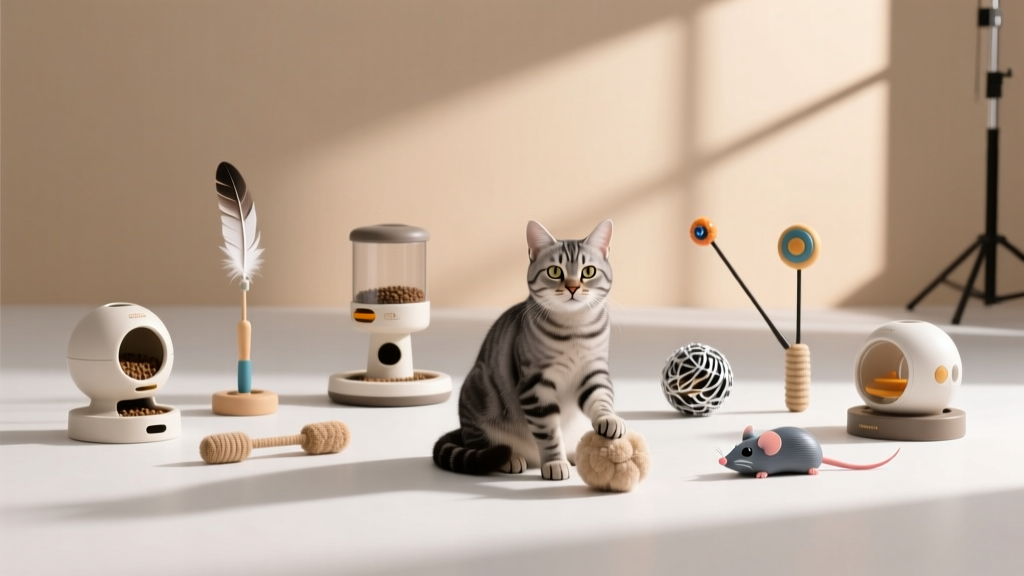
Paw bumping often means: “I’m bored,” “I’m hungry,” or “I want closeness.” Add puzzle feeders, window perches, short training sessions, and rotation of toys. A busy cat is less likely to tap you like an impatient roommate.
Fun Facts and Research-Flavored Tidbits
- Cats are excellent at learning what works on humans. They quickly map your responses: who gives treats, who gives play, who ignores them. Paw bumping can be a “customized” strategy for each person in the household.
- Physical touch can be a safe attention bid. Compared with loud vocalizing (which may attract attention from predators in the wild), a gentle tap is discreet and low-conflict.
- Your reaction matters more than you think. Even a laugh, eye contact, or “What?” can reinforce pawing in cats who are highly social and human-focused.
- Some cats are “handy” by personality. Just like some dogs use paws a lot, certain cats—often confident, curious individuals—naturally incorporate paws into communication more than others.
FAQ: Cat Paw Bumping Your Leg
Why does my cat paw my leg and then walk away?
Often it’s a quick check-in (“Notice me”), an invitation to follow (“Come with me”), or a learned habit that used to get results. Watch what happens next: do they head toward the food area, a door, or a favorite toy?
Is paw bumping a sign my cat loves me?
It can be. If it’s paired with relaxed body language, purring, cheek rubs, slow blinks, or choosing to sit near you, it’s usually affiliative—your cat initiating contact in a friendly way.
My cat’s paw bumps include claws—are they being aggressive?
Not necessarily. Many cats extend claws slightly for grip, especially on fabric. But if the claws are consistently painful or paired with tail lashing, growling, or hard staring, your cat may be frustrated or overstimulated. Respond by rewarding calm taps and avoiding reinforcement of rough behavior.
Should I ignore my cat when they paw my leg?
If the pawing is polite and you’re able to respond, acknowledging it can build trust. If it’s happening nonstop or escalating, ignoring the pushier version while rewarding calmer behavior is usually the best balance.
Why does my cat paw me more when I’m on the phone or working?
Your attention is “occupied,” which makes it more valuable. Your cat may also have learned that interruptions reliably make you look at them, talk, or move—three things cats often find rewarding.
Can paw bumping mean my cat is anxious?
Sometimes. If pawing is paired with clinginess, hiding, startle responses, or new vocalizing, consider recent changes (moves, schedule shifts, new pets) and talk with your vet if it’s sudden or intense.
That little paw on your leg is your cat doing what cats do best: experimenting, observing, and choosing the communication strategy that works. When you read the context and respond thoughtfully, paw bumping becomes less of a mystery and more of a conversation—one gentle tap at a time.
Have a cat who paw-bumps in a hilarious or oddly specific way—like only during Zoom calls, only when you’re wearing socks, or only at 3 a.m.? Share your story with fellow cat people on catloversbase.com—we’d love to hear about your cat’s signature “excuse me” tap.