Cat Chattering at Fish Tanks: Aquatic Hunting Instinct
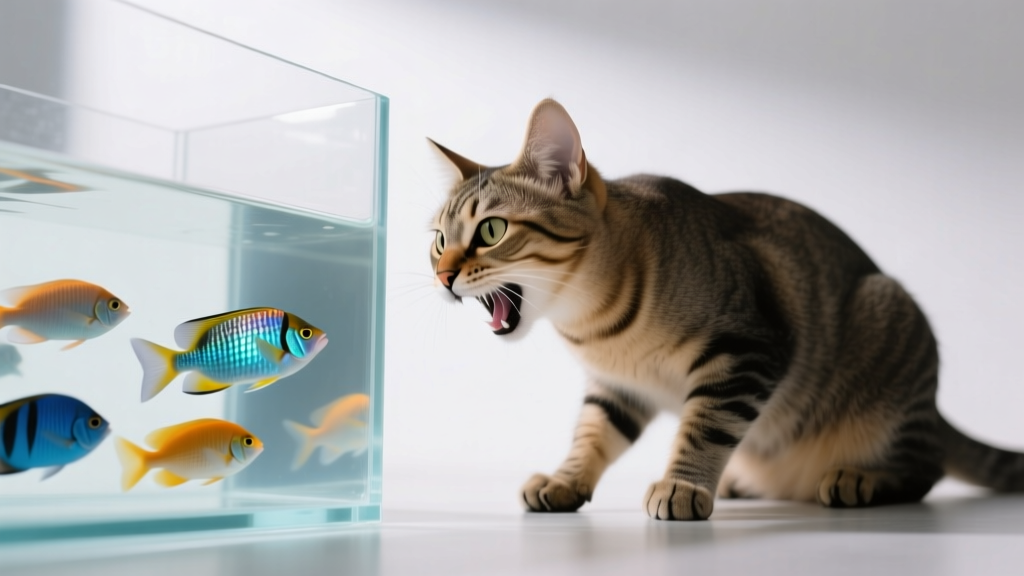
You’re on the couch, trying to relax, and there’s your cat—sitting like a tiny museum guard in front of the fish tank. Eyes wide. Tail tip twitching. Whiskers pushed forward. Then it starts: that rapid little “ek-ek-ek” sound, somewhere between a chirp, a teeth-rattle, and a squeaky toy with opinions.
If you’ve ever watched your cat chatter at your aquarium and thought, “Are you… talking to the fish?” you’re in excellent company. This behavior is incredibly common, delightfully weird, and—most of the time—perfectly normal. It’s also a window into something ancient in your cat’s brain: the hunting program that runs even when dinner comes from a can.
Why Cats Chatter at Fish Tanks (The Science and the Story Behind It)
Cat chattering is most famously seen when cats watch birds through a window. But fish tanks can be just as activating, especially because they combine two things cats find irresistible: fast movement and unreachable prey.
From an evolutionary standpoint, domestic cats are built from the blueprint of solitary hunters. Their ancestors survived by watching, stalking, and striking quickly at small animals. Even though most pet cats don’t need to hunt, their brains are still wired to:
- Lock onto movement (tiny, darting, unpredictable motions are particularly stimulating)
- Practice “prey handling” behaviors (the mental rehearsal that helps them become more efficient hunters)
- Experience frustration when prey is visible but inaccessible (hello, glass walls)
Chattering is one of those behaviors that sits right at the intersection of hunting excitement and restraint. Many behaviorists interpret it as a kind of high-arousal response: your cat’s nervous system revving up while their body stays still.
Some researchers and clinicians also speculate that chattering may relate to the rapid jaw movements cats use during a killing bite, or that it’s a mix of predatory excitement and frustration. The truth is, we don’t have one definitive explanation—but we have strong clues based on what typically triggers it: prey-like movement that the cat cannot reach.
What Cat Chattering Looks Like at a Fish Tank (And Why Context Matters)
Not all fish-tank chattering is the same. The details—posture, tail, vocalization, and what your cat does next—help you understand what’s going on.
1) The “Silent Cinema” Watcher
Your cat sits perfectly still, eyes tracking the fish like a laser. No sound. Maybe a slow tail swish.
What it often means: This is focused predatory attention without the extra “spillover” of chattering. Think of it as your cat running a hunting simulation quietly in their head.
2) The Classic “Ek-Ek-Ek” Chatter
The jaw trembles, teeth click softly, and you hear the iconic chirp-rattle sound. Your cat may lean forward, whiskers forward, eyes huge.
What it often means: High arousal: intense interest plus excitement and sometimes a dash of frustration. This is the cat equivalent of “I WANT IT.”
3) The Stalker Who “Bounces”
Your cat crouches, butt wiggles, and they do little repositioning steps. They might chatter and then try to paw at the glass.
What it often means: Hunting sequence engaged. The pawing is a problem-solving attempt—your cat is testing the barrier.
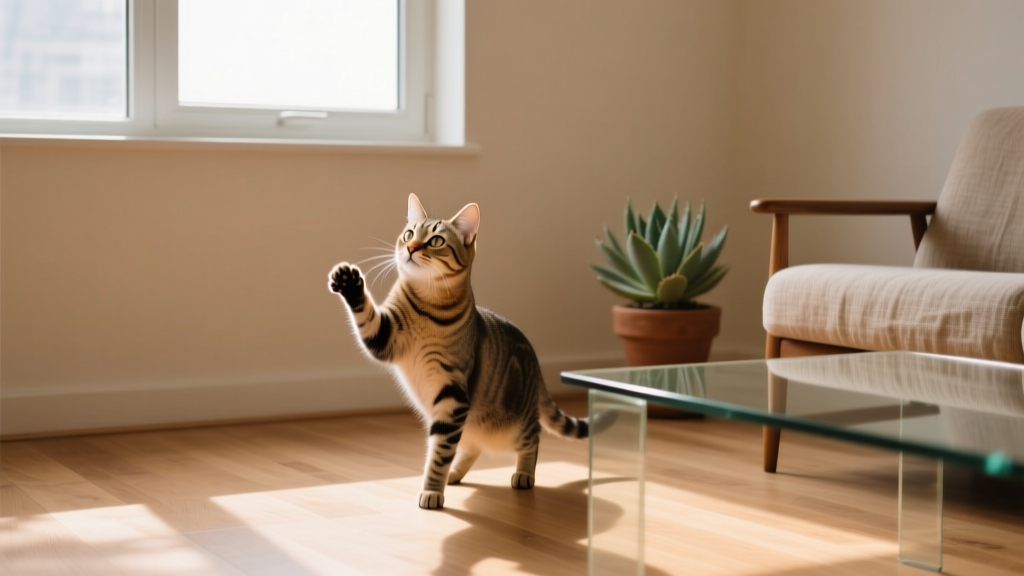
4) The “Tap-Tap” Glass Drummer
Instead of chattering, your cat taps the aquarium with a paw, sometimes repeatedly, sometimes escalating if the fish dart away.
What it often means: Curiosity plus stimulation. Some cats discover that tapping creates motion, and motion is rewarding to watch. It can become a self-reinforcing game.
5) The Social Cat Who Looks Back at You
Your cat chatters, then turns and meows at you, or checks your face as if to say, “Are you seeing this?”
What it often means: Many cats use humans as a “secure base.” Looking back can be excitement sharing, requesting help (“Open it.”), or simply checking in. Cats do communicate with us more than we give them credit for.
What Chattering Suggests About Your Cat’s Mood
Chattering at a fish tank isn’t usually “anger,” and it’s not your cat being “mean.” It’s typically a cocktail of these feelings:
- Excitement: Your cat is stimulated and engaged. This is mental enrichment in action.
- Frustration: The prey is visible but unreachable. A little frustration is normal; it’s part of the predatory system.
- Anticipation: Some cats chatter most when the fish are active, or right after feeding when movement increases.
- Curiosity: The tank is a moving, shimmering mystery box.
If your cat’s body is loose and they can disengage easily (they can walk away, eat, nap, respond to you), the behavior is generally a sign of healthy stimulation. If they seem stuck in a loop and can’t settle, that’s when you may want to adjust the environment.
Related Behaviors You Might Also Notice
Fish tanks are basically a cat magnet for a whole suite of behaviors. If your cat chatters at the aquarium, you might also see:
- Tail-tip twitching: A concentrated, “I’m calculating” movement.
- Whiskers forward (whisker “push”): Indicates interest and engagement, often seen during hunting.
- Chirping at birds through windows: Same concept, different prey.
- Teeth grinding or tiny jaw tremors: Sometimes accompanying chattering, especially during intense fixation.
- “Hunting” toys more intensely afterward: The tank can prime your cat’s predatory energy.
- Sudden zoomies: Some cats discharge that arousal by sprinting like they’ve been launched.
When Chattering at the Fish Tank Is Normal (And When It Might Be a Concern)
Normal:
- Your cat watches, chatters, then walks away on their own
- No attempts to knock over the tank or chew cords
- No obsessive pacing or frantic behavior
- The fish appear calm and are not being harassed constantly
Potential concern:
- Obsessive fixation: Your cat camps at the tank for long periods and seems unable to disengage
- Escalation to aggression: Lunging, repeated hard pawing, biting at corners, or trying to climb the stand
- Stress signals: Dilated pupils paired with tense posture, flattened ears, growling, or redirected aggression toward people or other pets
- Safety risks: The cat is jumping on lids, knocking equipment loose, or the tank setup is unstable
- Fish stress: Fish hiding constantly, rapid darting, or reduced feeding due to frequent “predator presence”
If the behavior is intense and repetitive, it’s less about “bad behavior” and more about an unmet need: your cat’s hunting brain has been activated without an outlet. That’s a solvable problem.
How to Respond (And How to Encourage the Healthy Version)
You don’t need to stop chattering entirely—think of it as your cat enjoying nature TV. Your goal is to keep it safe, non-obsessive, and not stressful for the fish.
Make the fish tank cat-safe and fish-safe
- Secure the lid: A sturdy, latched lid reduces risk if your cat jumps up.
- Stabilize the stand: Ensure it cannot wobble if a cat launches onto it.
- Manage cords: Use cord covers or route cords out of reach to prevent chewing.
- Create a “viewing zone”: Add a cat perch or bed near (not on) the tank so your cat has a designated spot.
Give your cat a better hunting outlet
- Daily play that mimics hunting: Use a wand toy and cycle through stalk → chase → pounce → “catch.”
- End with a reward: Offer a small treat or meal after play to complete the hunt sequence. This can reduce frustration.
- Rotate prey types: Some cats love “fishy” wiggle toys or toys that dart like minnows.
Prevent obsession with gentle interruptions
- Use a cue: Teach a simple “come” or name response. Reward when your cat disengages from the tank.
- Offer an alternative: Move the cat to a puzzle feeder, sniffing game, or toy scatter.
- Limit access if needed: If your cat can’t stop pawing the glass, a baby gate or closing the room for part of the day can help—paired with enrichment elsewhere.
Do not punish chattering
Chattering itself is not disobedience; it’s an emotional reflex. Punishment can increase stress and make the tank even more “charged” as an experience. You’ll get better results by giving your cat appropriate outlets and reducing risky opportunities.
Fun Facts and Research-Style Nuggets About Chattering
- Chattering is strongly linked to prey that’s visible but inaccessible. That barrier (glass window or aquarium wall) seems to be part of what makes the behavior pop.
- Not all cats chatter. Some cats are silent hunters; others are chatty commentators. Personality matters.
- Cats can show “predatory intent” without aggression. Watching and chattering doesn’t mean your cat is “violent”—it means their brain is doing what cat brains do.
- Movement patterns matter. Fish that dart, shimmer, or change direction quickly often trigger more intense focus than slow, steady swimmers.
- Chattering can be contagious in multi-cat homes. One cat fixates, another joins, and suddenly you have a feline aquarium audience.
FAQ: Cat Chattering at Fish Tanks
Why does my cat chatter at the fish tank but not at birds outside?
Cats have individual prey preferences. Some are “bird people,” some are “bug people,” and some are absolutely captivated by fish movement and the glittery light patterns. Also, the aquarium is often closer and easier to watch than outdoor birds.
Is chattering a sign my cat is stressed?
Usually it’s excitement, not distress. Watch the full body: a relaxed posture, normal breathing, and the ability to walk away suggests healthy stimulation. If your cat is tense, pacing, or unable to disengage, stress or frustration may be building.
Will my cat try to eat my fish?
If your tank has a secure lid and is stable, most cats won’t succeed even if they’re interested. However, cats are persistent problem-solvers. If your cat is climbing onto the lid, pawing openings, or targeting feeding times, upgrade the lid security and redirect with play.
Should I let my cat sit and watch the aquarium?
In many homes, yes—watching the tank can be excellent enrichment. The key is supervision at first, a secure setup, and making sure the behavior doesn’t escalate into constant harassment of the glass or attempts to access the fish.
My cat paws the glass and scares the fish. How do I stop it?
First, prevent practice: block access temporarily or provide a viewing perch at a slight distance. Then increase hunting-style play daily, especially before peak tank-watching times. Reward calm watching and teach a cue to come away from the tank for a treat or toy.
Is chattering ever a medical problem?
Chattering triggered by prey-viewing is normal. If you see jaw tremors or teeth chattering at unrelated times (resting, eating, seemingly random moments), or if it’s paired with drooling, lethargy, or unusual behavior, check in with a veterinarian to rule out dental pain or neurological issues.
The Takeaway
When your cat chatters at the fish tank, you’re seeing a tiny predator’s brain light up—curious, thrilled, a little frustrated, and very alive. With a safe aquarium setup and a good daily “hunt” routine using toys, you can turn that fish-tank fascination into a healthy enrichment ritual instead of an obsession.
If your cat has a signature aquarium routine—favorite viewing spot, dramatic chattering sessions, or a hilarious “why won’t you open it?” face—share your story with other cat people at catloversbase.com. The fish may not appreciate the commentary, but we definitely will.